Reach Out Today
Please provide your email address so that we can stay in touch and answer any questions you have! We will be reaching back out shortly.

Hear from Our Customers
Out here along Plymouth-Sorrento Road, a lot of homes sit on private wells drawing straight from the Floridan Aquifer. That means no municipal treatment step between the limestone geology under your property and your kitchen tap. What comes up is naturally high in dissolved minerals, often carries iron that stains your sinks and laundry, and in many cases brings that sulfur smell that rural Orange County homeowners have just learned to live with.
You don’t have to.
A properly installed reverse osmosis system removes the dissolved solids, heavy metals, iron compounds, and disinfection byproducts that standard filters don’t touch. If you’re on Orange County Utilities’ Western service rather than a well, the situation is different but the problem is still real. The OCUD Western system has documented detections of radium, arsenic, haloacetic acids, trihalomethanes, and lead all within legal limits, but legal and clean aren’t the same thing.
Beyond what you taste and smell, there’s the longer-term damage you don’t see. Hard mineral water slowly destroys water heaters, clogs pipes, and shortens the life of every appliance connected to your supply line. On a larger rural property where replacing a water heater or replumbing a line isn’t a quick or cheap fix, a whole-house purification system isn’t a luxury it’s protection for everything you’ve already invested in.
We don’t install water heaters, fix plumbing leaks, or run drain lines. Water treatment is the only thing on our menu. That focus means every technician who comes to your Plymouth property has seen the full range of what the Floridan Aquifer delivers in this part of Orange County high iron, sulfur odor, heavy hardness, and the disinfection byproduct profile that comes with municipal chloramine treatment and knows exactly how to address it.
We hold a BBB A-rating, a 5-star rating, and zero complaints on record. That’s not a claim it’s a public record you can verify at bbb.org before you ever make a phone call. We’re also members of the National Water Quality Association, which means the training and standards behind every installation go well beyond what a generalist plumber brings to the job.
If something isn’t right with your system six months after installation, we answer the phone and we show up. For homeowners out on Plymouth-Sorrento Road or anywhere along the US 441 corridor, that kind of follow-through isn’t something you take for granted.

It starts with a real water test not a quick hardness demo designed to justify a sale, but actual lab-grade analysis of what’s in your specific water. This matters more in Plymouth than in most places. Well water chemistry varies from property to property out here, and a system sized for one parcel on Plymouth-Sorrento Road may be entirely wrong for the one next to it. Municipal water from the OCUD Western system has its own contaminant profile.
Testing first means the system recommended for your home is built around what’s actually in your water.
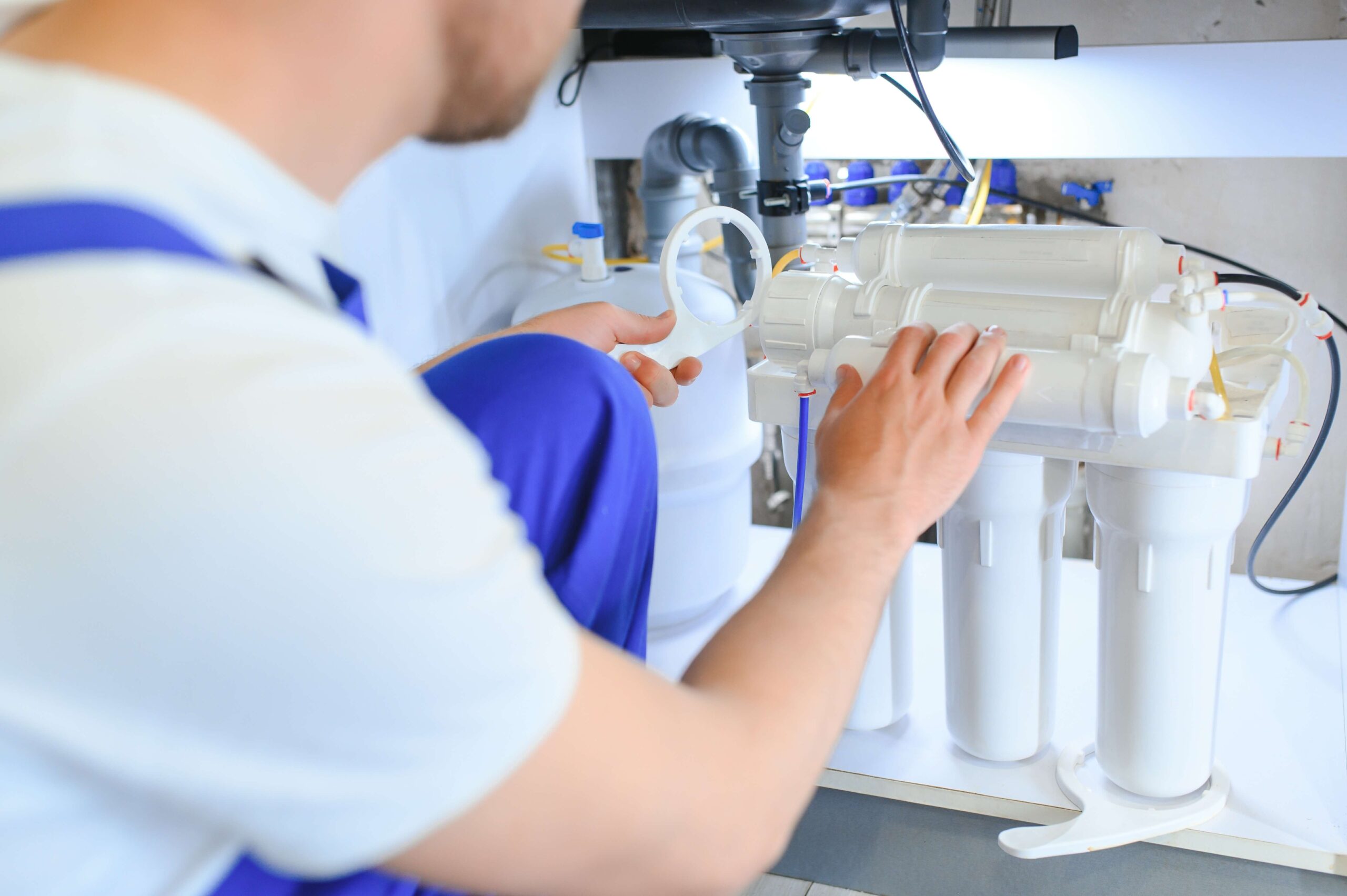
Once the analysis is done, the right system gets specified and scheduled for installation. For under-sink reverse osmosis, the work is typically straightforward and doesn’t require an Orange County building permit. Whole-house systems connected to the main supply line may require a permit through Orange County’s Building Division we handle that process so you don’t have to navigate it yourself.
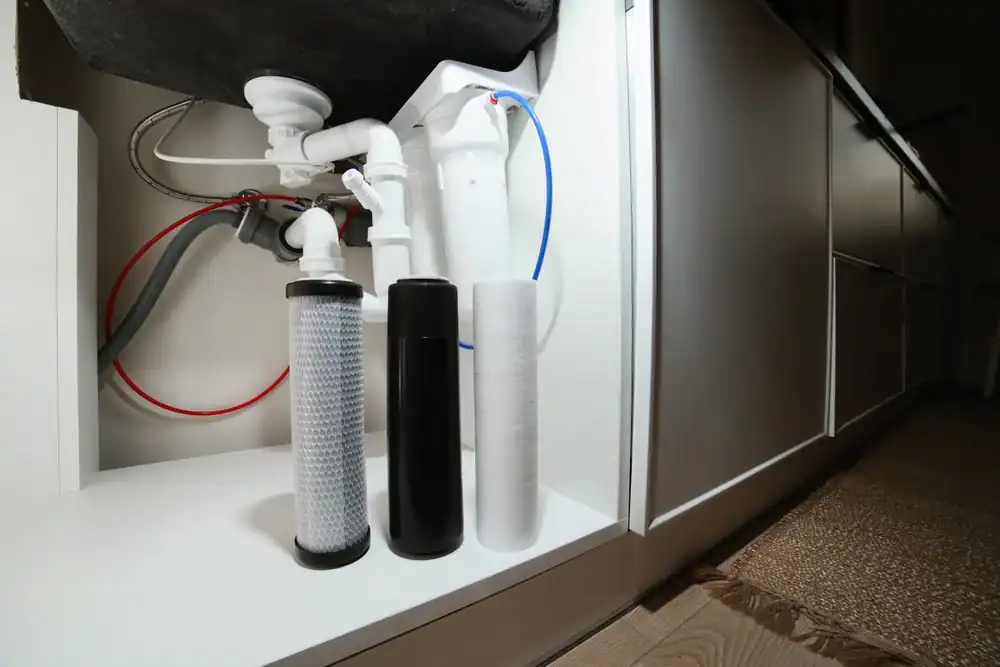
After installation, you’re not on your own. Filter replacements, membrane service, and system checkups are part of the ongoing relationship. We build systems with USA-manufactured components and they’re designed to last 15–20 years with proper maintenance. That’s not a sales line it’s the reason zero customers have filed a complaint with the BBB.
Ready to get started?
Whole-house purification is the core of what we do, and it’s the right fit for most Plymouth properties. When you’re on a larger lot with a well, a water heater, irrigation lines, and multiple bathrooms all pulling from the same supply, a single under-sink unit only solves part of the problem. A whole-house reverse osmosis or multi-stage filtration system treats the water before it reaches any fixture, any appliance, and any pipe in the house.
For homes on private wells near Plymouth, that typically means a system configured to handle iron removal, hydrogen sulfide treatment, and high dissolved solids the three most common issues with Floridan Aquifer water in northwestern Orange County. For homes on the OCUD Western municipal supply, the configuration shifts toward removing disinfection byproducts, trace heavy metals, and the chloramine compounds that standard activated carbon filters don’t fully address.
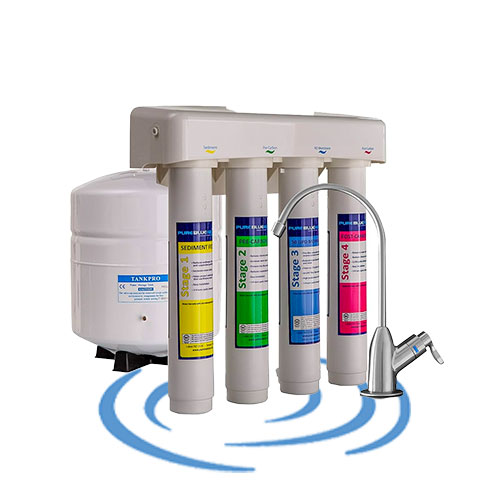
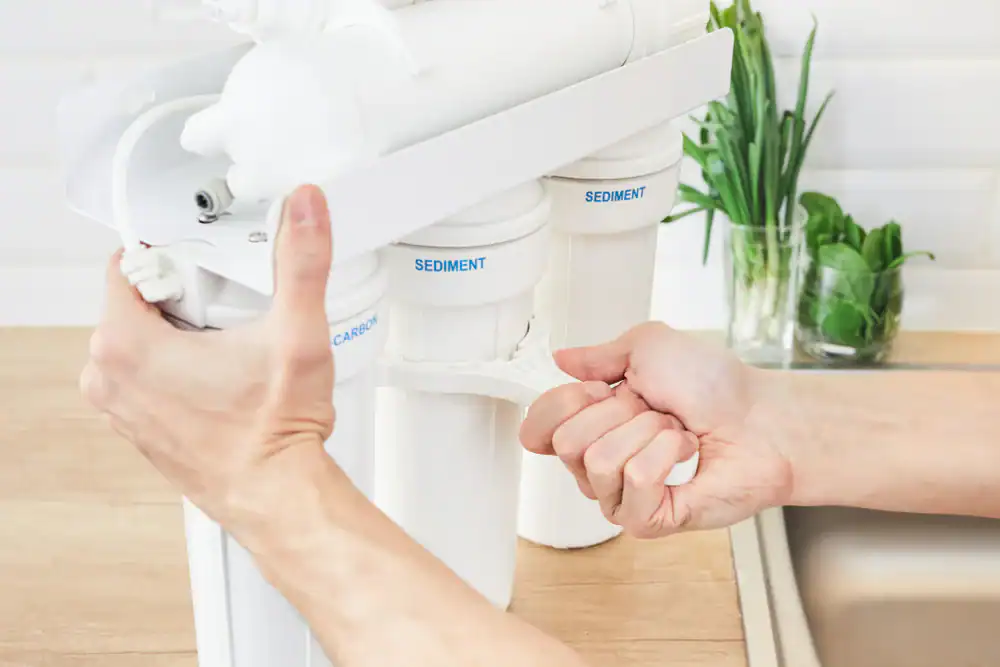
Under-sink reverse osmosis systems are also available for homeowners who want to start with drinking water purification before committing to a whole-house solution. Both options use the same quality components and the same test-first process. For active military, veterans, and first responders a community well-represented across the greater Apopka and Orange County area we offer a $500 discount, no complicated qualifications required.
Plymouth is an unincorporated community in Orange County, which means there’s no single answer that fits every property. Some homes along the US 441 corridor and closer to Apopka proper are connected to Orange County Utilities’ Western Regional Water System. Others particularly on larger parcels along Plymouth-Sorrento Road and the surrounding rural areas are on private wells drawing from the Floridan Aquifer.
If you’re not sure which applies to your property, the quickest way to find out is to check your monthly utility bill. If you’re paying Orange County Utilities for water service, you’re on municipal supply. If there’s no water utility charge and you have a pressure tank or pump system on your property, you’re on a well. Either way, the water quality challenges are real and different enough that a test before any system recommendation is the only responsible starting point.
That sulfur smell sometimes described as rotten eggs is hydrogen sulfide gas, and it’s extremely common in well water drawn from the Floridan Aquifer in this part of Orange County. The aquifer sits in a limestone and dolomite geology that naturally produces hydrogen sulfide as groundwater moves through it. It’s not a sign that your well is broken or contaminated in a dangerous way, but it is a legitimate water quality problem that affects taste, odor, and in higher concentrations can corrode copper plumbing and fixtures over time.
A properly configured treatment system typically combining an oxidizing filter or aeration step with a reverse osmosis or multi-stage filtration system downstream addresses hydrogen sulfide at the source before it reaches your taps. The key word is “properly configured.” A system sized for general hard water won’t solve a sulfur problem. That’s why we test your water first and build the recommendation around what’s actually present, not a generic solution.
Orange County Utilities’ Western Regional Water System which serves the Apopka and Plymouth corridor has documented detections of radium 226+228, arsenic, barium, lead, mercury, nitrate, fluoride, haloacetic acids, trihalomethanes, and copper. These are real detections reported in compliance data, not hypothetical concerns. They’re all within the legal limits set by the EPA, but those limits are set based on what’s technically manageable at scale, not on what’s optimal for your health at the tap.
Haloacetic acids and trihalomethanes are worth paying particular attention to. These are disinfection byproducts they form when chlorine or chloramines react with naturally occurring organic matter in the water during treatment. Long-term exposure at elevated levels is associated with health risks, and they’re not something you can taste or smell. A reverse osmosis system removes 95–99% of these compounds along with the heavy metals and dissolved solids that municipal treatment doesn’t fully eliminate. If you’re on OCUD Western service in the Plymouth area, that’s a meaningful reason to have your water tested and a system installed.
The cost depends primarily on whether you’re installing an under-sink drinking water system or a whole-house purification system, and on what your water test reveals about what needs to be treated. An under-sink reverse osmosis system for drinking water typically starts at a few hundred dollars on the low end for basic units, up to several hundred dollars installed for a quality system with a proper multi-stage configuration. Whole-house systems which are the right solution for most Plymouth properties on private wells are a more significant investment and start around $1,500 depending on the size of the home, the complexity of the water chemistry, and whether pre-treatment stages are needed for iron or sulfur.
What’s worth keeping in mind is the cost comparison over time. If your household is spending $50–$100 a month on bottled water because you don’t trust the tap, that’s $600–$1,200 a year going toward plastic bottles most of which is just municipal water run through a commercial RO system and marked up significantly. A quality installed system typically pays for itself within two to four years and lasts 15–20 years after that. The math is straightforward once you run it.
Yes, and it’s one of the more overlooked water quality risks for rural homeowners in this part of Orange County. During Central Florida’s summer rainy season which runs roughly June through September heavy rainfall can introduce surface water, bacteria, and sediment into shallow well casings, particularly on older properties or wells that haven’t been inspected recently. The water table rises quickly after sustained rain events, and if a well casing has any gaps or the surrounding grade doesn’t direct water away from the wellhead, contamination can enter the supply.
Hurricane events carry a higher risk still. Flooding can compromise well integrity entirely, and post-storm water quality testing is something every Plymouth well owner should do after any significant weather event not just when something seems off. A multi-stage filtration system with a disinfection stage provides an ongoing layer of protection between weather events, but it doesn’t replace the need for periodic well inspection and post-storm testing. We test water first for exactly this reason what’s in your water after a storm may be very different from what was there six months earlier.
Please provide your email address so that we can stay in touch and answer any questions you have! We will be reaching back out shortly.
"*" indicates required fields
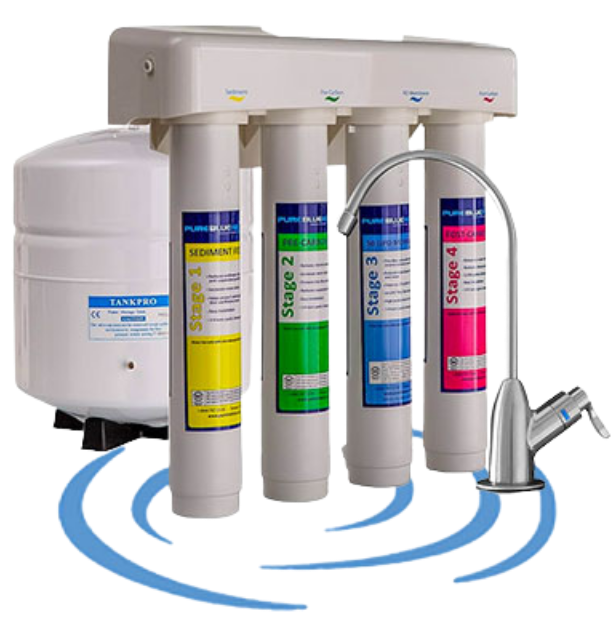
Get a free reverse osmosis drinking water system with the purchase of any whole-home water purification system.
*Cannot be combined with other offers. Mention this special when you call.