Reach Out Today
Please provide your email address so that we can stay in touch and answer any questions you have! We will be reaching back out shortly.


Hear from Our Customers
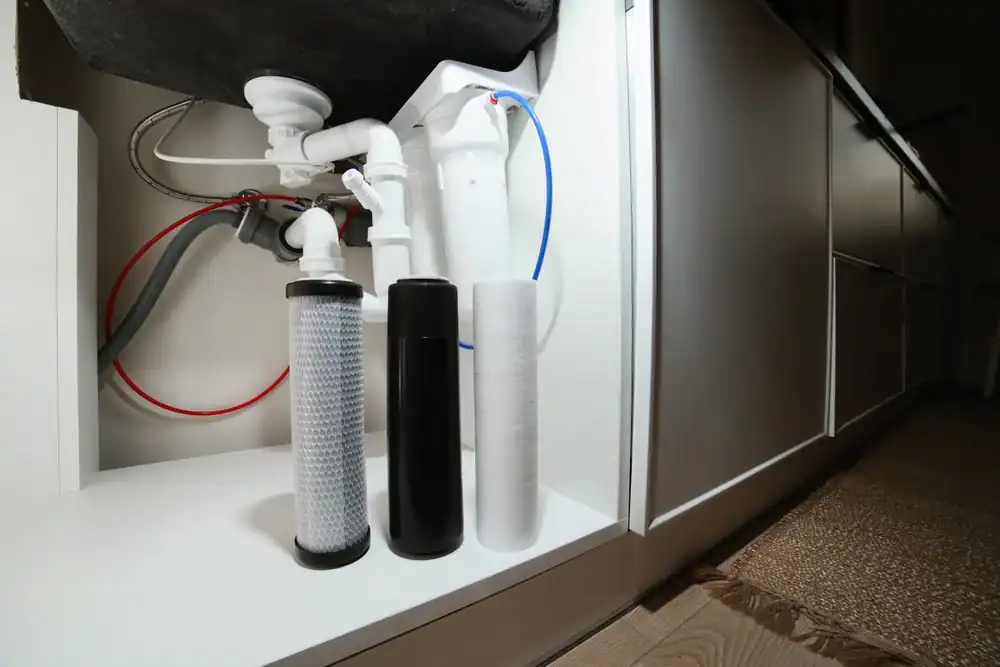
The Upper Floridan Aquifer runs beneath Orange Bend and all of Lake County, and it’s the reason your well water comes out hard, sometimes orange, and occasionally smelling like something you’d rather not drink. That’s not a plumbing problem. It’s geology.
A properly installed reverse osmosis system removes up to 99% of what’s dissolved in that water calcium buildup, iron, sulfur, agricultural residue, and the kind of stuff that quietly wears down your water heater, stains your fixtures, and makes you reach for the bottled water instead. For homeowners in Orange Bend who’ve been hauling cases from the store in Leesburg, that math changes fast. Most families spend $600 to $1,200 a year on bottled water. A whole-house RO system costs a fraction of that annually to maintain once it’s in.
If your property sits near any of Lake County’s old citrus corridors around Orange Bend, there’s another layer worth knowing about. The Florida Department of Health specifically monitors for Ethylene Di-Bromide a pesticide tied to historic grove operations in Lake County groundwater. You may never have a problem. But knowing what’s actually in your water before you decide anything is the only responsible starting point.
We’re based in Leesburg the same county as Orange Bend, just a few miles west on County Road 44. This isn’t a national company routing your call through a regional office. We’re a Lake County operation that has tested Lake County wells, dealt with Lake County water chemistry, and will still be answering the phone when your filter needs changing in year five.
Water treatment is the only thing we do. Not plumbing. Not water heaters. Not drain lines. That focus matters because it means the person testing your Orange Bend well water has done it hundreds of times in this specific region not between service calls for something else entirely.
We hold an A-rating with the Better Business Bureau, a 5-star rating, zero complaints on file, and membership in the National Water Quality Association. That’s not a combination you find often in this industry. It’s publicly verifiable at bbb.org before you ever make a call.

It starts with a real water test. Not a quick hardness check designed to justify a product recommendation an actual lab-grade analysis of what’s in your specific well. Iron levels, sulfur content, hardness, pH, potential contaminants. Orange Bend wells can vary significantly depending on depth, location, and what the surrounding land has been used for historically.
That test tells you what you’re actually dealing with before we recommend anything. From there, the system gets sized and configured for your water not pulled off a shelf and dropped in. If your Orange Bend well water has elevated iron or sulfur, the approach looks different than a home with straightforward hardness issues.
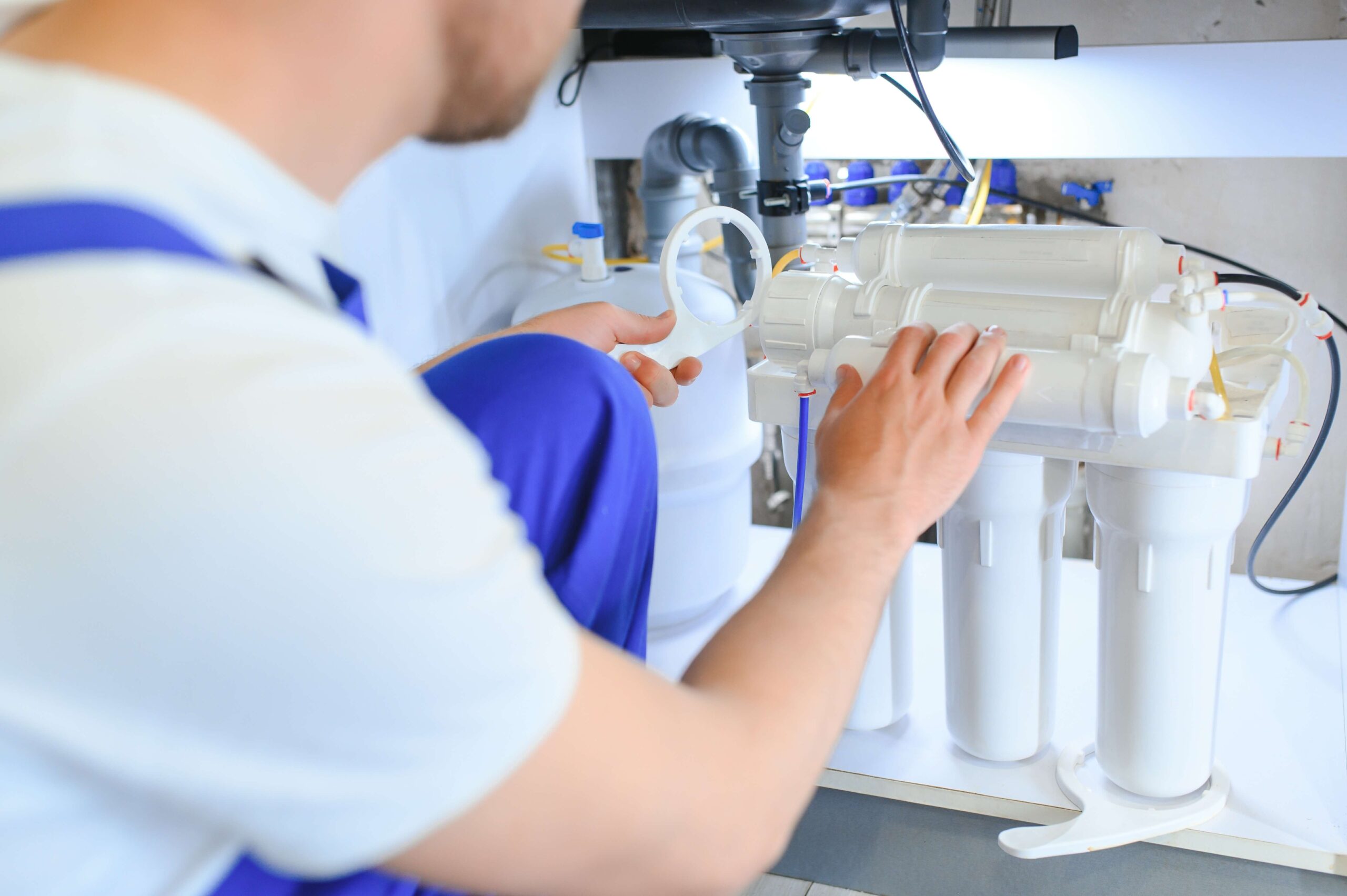
The installation itself connects to your existing plumbing. For most residential applications in unincorporated Lake County around Orange Bend, installing an RO system on an existing well doesn’t require a new permit it’s a clean, contained process. Once it’s in, you’ll know what to expect for maintenance. Filter replacements run roughly $100 to $200 a year depending on your system and water usage. The membrane itself typically lasts two to three years. We walk you through all of it before we leave and we’re local enough to come back when you need us.
Ready to get started?
There’s a difference between a reverse osmosis system installed by someone who knows Lake County water and one dropped in by a technician who’s never tested a well in Orange Bend. The Floridan Aquifer delivers calcium-magnesium-bicarbonate water that’s the technical way of saying your water is hard, mineral-heavy, and likely carrying iron or sulfur depending on your well’s depth and location. A system that isn’t configured for that specific chemistry won’t perform the way it should.
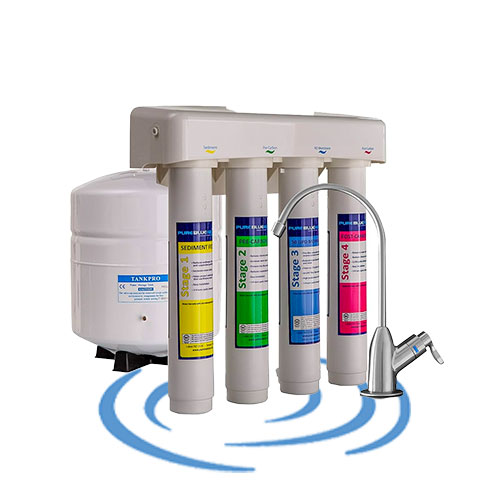
We install under-sink reverse osmosis systems for drinking water as well as whole-house purification setups for homeowners who want clean water at every tap. Whole-house systems are our specialty and the right call for Orange Bend homes where the water quality issue isn’t just at the kitchen sink but throughout the entire plumbing system. Every system we install uses NSF/ANSI 58-certified components, which is the specific certification standard that verifies an RO system actually removes what it claims to.
If you’re a veteran or active-duty military member, or a first responder, there’s a $500 discount available no complicated process, no fine print. Lake County has a significant veteran and first responder population, and this discount reflects something we actually believe in, not a promotional footnote. We also support the Tunnels to Towers Foundation, which builds mortgage-free homes for Gold Star and fallen first responder families.
It depends entirely on what’s in your specific well and the only way to know is to test it. Well water in Orange Bend draws from the Upper Floridan Aquifer, which naturally carries high levels of calcium, magnesium, and bicarbonates. That makes it hard water by default.
Depending on your well’s depth and the land use history around your Orange Bend property, you may also have elevated iron, hydrogen sulfide, tannins, or in areas near old citrus operations, trace agricultural contaminants like Ethylene Di-Bromide. None of that means your water is automatically unsafe to drink. But “not immediately harmful” and “clean, filtered drinking water” are two different standards.
Hard water with iron and sulfur won’t make you sick, but it will stain your fixtures, shorten the life of your appliances, and taste or smell bad enough that most people avoid drinking it straight from the tap. A water test tells you exactly where your well stands and from there, you can make an informed decision about what level of treatment actually makes sense for your household.
A properly installed reverse osmosis system removes 95 to 99% of dissolved contaminants by pushing water through a semi-permeable membrane at 0.0001 microns. For Orange Bend well water specifically, that means it handles the calcium and magnesium responsible for hard water scaling, dissolved iron that causes orange-brown staining, hydrogen sulfide that produces the sulfur smell common in Floridan Aquifer wells, nitrates, and a wide range of synthetic chemicals including PFAS compounds that standard carbon filters don’t touch.
It’s worth understanding what RO doesn’t do on its own. If your Orange Bend well has very high iron or heavy sulfur, those issues are typically addressed with pre-treatment upstream of the RO membrane otherwise the membrane fouls faster than it should. That’s part of why the water test matters so much before installation. The goal isn’t to sell you the most equipment it’s to configure a system that actually works for what’s in your well, not what’s in the average well somewhere else in Florida.
Yes, but the approach depends on how much sulfur you’re dealing with. Hydrogen sulfide the compound responsible for the rotten-egg smell is common in Orange Bend wells because of the bacterial activity and geological conditions in the Floridan Aquifer system. At low concentrations, an RO system with the right pre-filtration stage handles it effectively at the point of use.
At higher concentrations, a whole-house treatment solution upstream of the RO system is the better answer otherwise you’re only addressing it at one faucet while the rest of your home still has the problem. The sulfur smell is also worth taking seriously as a signal, not just a nuisance. It often indicates broader water chemistry issues worth understanding pH imbalances, iron bacteria, or other conditions that affect your plumbing over time.
Getting a full water analysis before deciding on a treatment path means you’re solving the actual problem, not just masking the most obvious symptom. We test for sulfur alongside every other relevant parameter so the recommendation is based on your Orange Bend well, not a general assumption about what Lake County water looks like.
For an under-sink reverse osmosis system serving your drinking water, you’re generally looking at a range starting around $300 to $600 for the equipment, with professional installation adding to that total. Whole-house reverse osmosis systems which we consider our specialty run higher, typically in the $1,500 to $4,000+ range depending on your home’s size, your well’s water chemistry, and whether pre-treatment equipment is needed to protect the membrane.
For Orange Bend homeowners on private wells with iron, sulfur, or hardness issues, the whole-house approach often makes more financial sense than treating only the kitchen sink. Hard water damages water heaters, washing machines, and fixtures throughout your home a single water heater replacement in Lake County runs $800 to $1,500 or more. When you factor in what you’re currently spending on bottled water and what hard water costs you in appliance wear over time, the investment looks different than the upfront number suggests.
Annual maintenance after installation runs roughly $100 to $200 per year for filter replacements, which is where the long-term math really works in your favor.
This is one of the most common questions homeowners on Lake County wells ask, and the honest answer is: it depends on what your water test shows. Water softeners and reverse osmosis systems solve different problems. A softener addresses hardness the calcium and magnesium that scale your pipes and fixtures through an ion exchange process. An RO system removes a much broader range of dissolved contaminants, including hardness minerals, but also iron, sulfur, nitrates, PFAS, and other compounds a softener won’t touch.
For many Orange Bend homes, the best outcome is a combination: a whole-house softener or pre-treatment system to handle hardness and protect the RO membrane, followed by a reverse osmosis system for drinking and cooking water. Running hard Floridan Aquifer water directly through an RO membrane without pre-treatment shortens the membrane’s lifespan and increases your maintenance costs. Our water analysis process is specifically designed to answer this question for your well not with a generic recommendation, but based on what your actual water chemistry requires.
Please provide your email address so that we can stay in touch and answer any questions you have! We will be reaching back out shortly.
"*" indicates required fields
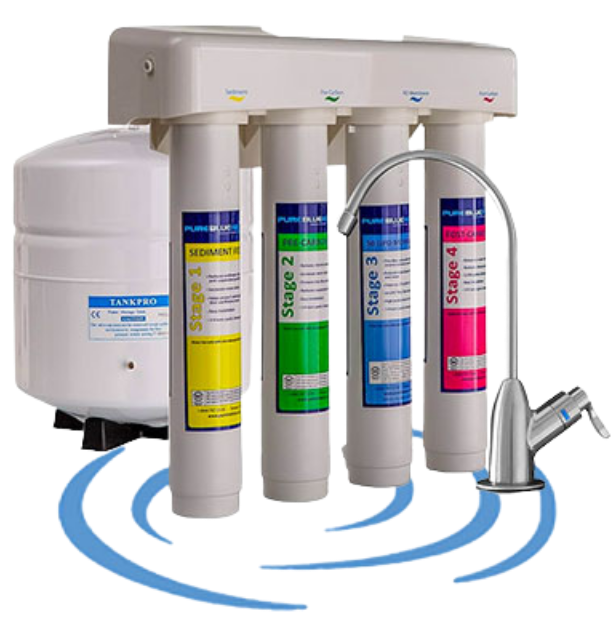
Get a free reverse osmosis drinking water system with the purchase of any whole-home water purification system.
*Cannot be combined with other offers. Mention this special when you call.