Reach Out Today
Please provide your email address so that we can stay in touch and answer any questions you have! We will be reaching back out shortly.

Hear from Our Customers
Out here in eastern Marion County, most homes aren’t connected to a city water line. You’re on a private well, and that well is pulling from the same limestone-heavy Floridan Aquifer that gives this region its character and its water problems.
Iron, sulfur, hardness, and tannins aren’t edge cases in Moss Bluff. They’re the standard. Once you’ve got a reverse osmosis system properly installed and sized for your water, the difference is immediate.
Your drinking water comes out clear and clean. No more orange ring in the toilet bowl. No more rotten egg smell when the hot water kicks on. No more white crust building up on your faucets and inside your dishwasher. If you’ve been hauling cases of bottled water home every week because the tap water isn’t something you’d actually drink, that stops too and most families find the system pays for itself within a few years just on what they were spending on bottles.
For Moss Bluff homeowners close to the Ocklawaha River or in the lake-dotted terrain in this part of the county, there’s another layer to consider: properties near waterways and high-organic-matter soil tend to see more tannins in their well water that yellow or tea-colored tint that a standard softener won’t fix. A properly staged reverse osmosis system handles that too. You get water that’s actually clean, not just softer.
We’ve been installing water treatment systems throughout Marion County for years more than 1,000 systems across the county, including homes in the rural eastern areas around Moss Bluff where the water challenges are real and the options for qualified local help are limited.
We know what Floridan Aquifer well water looks like in this part of Florida. We’ve tested it, treated it, and solved problems that other companies misdiagnosed because they didn’t bother to test first.
We hold an A-rating with the Better Business Bureau, a 5-star customer rating, and zero complaints on file something you can verify yourself at bbb.org before you ever pick up the phone. We’re also members of the National Water Quality Association, which means ongoing training in the specific chemistry of Florida well water, not just general plumbing knowledge.
Water treatment is all we do. Not plumbing. Not water heaters. Just water which means when you’re dealing with iron and sulfur coming out of a well near the Ocklawaha River corridor, you’re talking to someone who actually specializes in exactly that. We service what we sell, and we’ll still be here in Moss Bluff when you need us.

The first thing we do is a real water analysis not a quick hardness test designed to justify the most expensive system on the truck. We test for iron, sulfur, pH, hardness, tannins, bacteria, and anything else that’s affecting your water quality.
For Moss Bluff well owners, this step matters more than most people realize. Two homes a quarter mile apart can have meaningfully different water chemistry depending on well depth, proximity to the river, and the age of the casing. We need to know what’s actually in your water before we recommend anything.
Once we understand your water, we configure the right system for your home. For most Moss Bluff wells, that means a reverse osmosis drinking water system paired with appropriate pre-treatment typically iron and sulfur filtration before the water reaches the RO membrane. Skipping that pre-treatment is one of the most common reasons RO systems underperform or fail early. We don’t skip it.
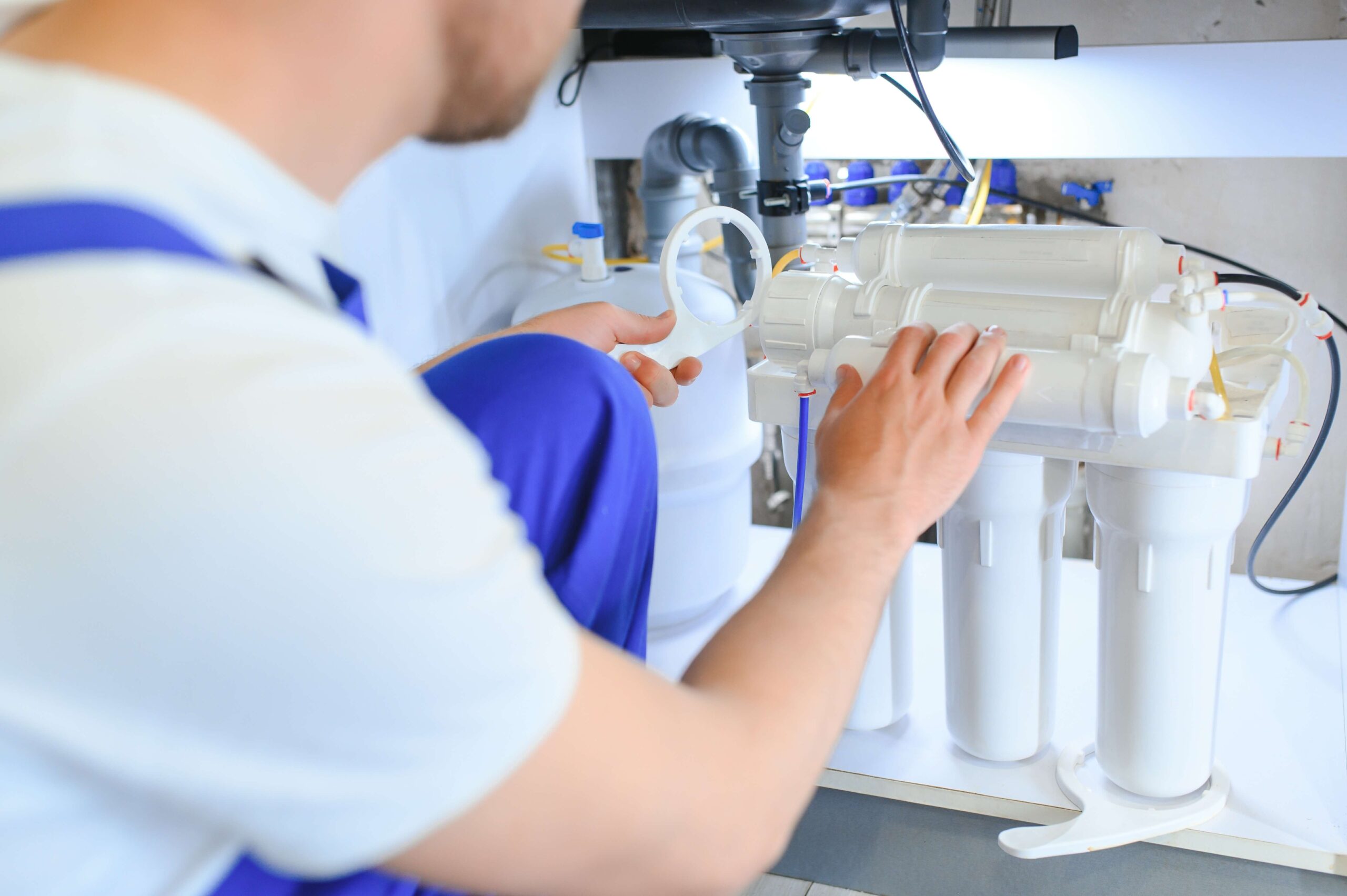
Installation is clean, straightforward, and typically completed in a single visit. We walk you through what was installed, how to maintain it, and when filters are due. We’re not a company that installs the system and disappears we remind you when service is coming up, and we come back. For homeowners in a rural, unincorporated area like Moss Bluff who’ve dealt with contractors that are impossible to reach after the sale, that follow-through is the part people tend to remember most.
Ready to get started?
A reverse osmosis system for a Moss Bluff home isn’t a one-size-fits-all install. Because you’re on well water drawing from the Floridan Aquifer, the system has to be configured around what your specific well actually produces.
That means accounting for iron levels that stain fixtures, sulfur compounds that create odor, mineral hardness that destroys appliances, and in some cases tannins from the organic-rich soil near the Ocklawaha River watershed. We build the treatment sequence around your water test results not a catalog description.
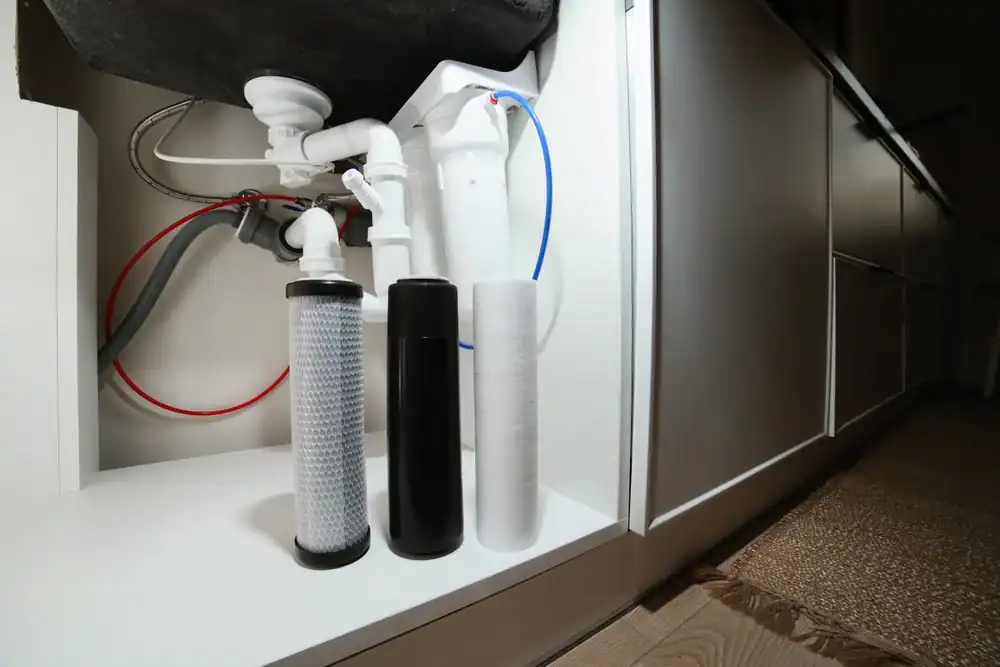
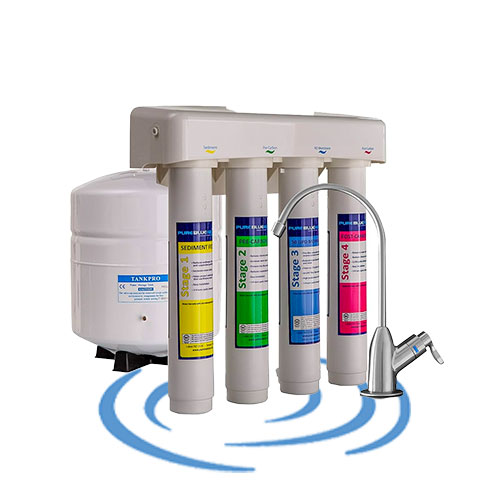
For most homes in this area, we install an under-sink reverse osmosis drinking water system as the core solution, with whole-house pre-treatment staged ahead of it to protect the membrane and extend its life. The RO system itself filters water through multiple stages sediment, carbon, and the semi-permeable membrane that removes dissolved solids, heavy metals, and contaminants down to a fraction of a micron delivering clean drinking water directly to a dedicated faucet at your sink. Properly maintained, these systems last 15 to 20 years.
If you’re an active military member, veteran, or first responder, we offer a $500 discount on installation. Marion County has a strong public service community, and Moss Bluff is no exception. That discount is a straightforward way we give something back. We also proudly support the Tunnels to Towers Foundation because the people who’ve carried the most weight deserve clean water too.
Yes but the key word is “properly configured.” A reverse osmosis membrane on its own is not designed to handle high iron or sulfur loads directly. If your Moss Bluff well water has significant iron or hydrogen sulfide, those contaminants need to be addressed with pre-treatment filtration before the water reaches the RO membrane.
When that pre-treatment is in place, a reverse osmosis system handles the rest dissolved solids, hardness minerals, nitrates, heavy metals, and other contaminants that don’t get caught by a softener or basic carbon filter alone.
This is exactly why we start with a water analysis before recommending anything. Floridan Aquifer wells in eastern Marion County can vary considerably depending on depth and location. Some wells in the Moss Bluff area have manageable iron levels that a carbon pre-filter handles fine. Others need a dedicated iron oxidation filter upstream. We size the system around what your water actually contains not what’s typical for the region in general.
A water softener and a reverse osmosis system do completely different jobs, and in many Moss Bluff homes, you actually need both working together. A water softener addresses hardness it removes calcium and magnesium through an ion exchange process, which protects your pipes, water heater, and appliances from scale buildup. That’s genuinely useful for the hard water that comes out of Floridan Aquifer wells in Marion County.
But a softener does not remove dissolved contaminants like nitrates, heavy metals, sulfur byproducts, tannins, or other dissolved solids that affect the taste, smell, and safety of your drinking water. That’s what a reverse osmosis system does. The RO membrane filters water down to the molecular level, producing clean drinking water that a softener simply can’t match.
If you already have a softener and your water still tastes off or smells wrong at the tap, that’s a strong signal that an RO drinking water system is the missing piece.
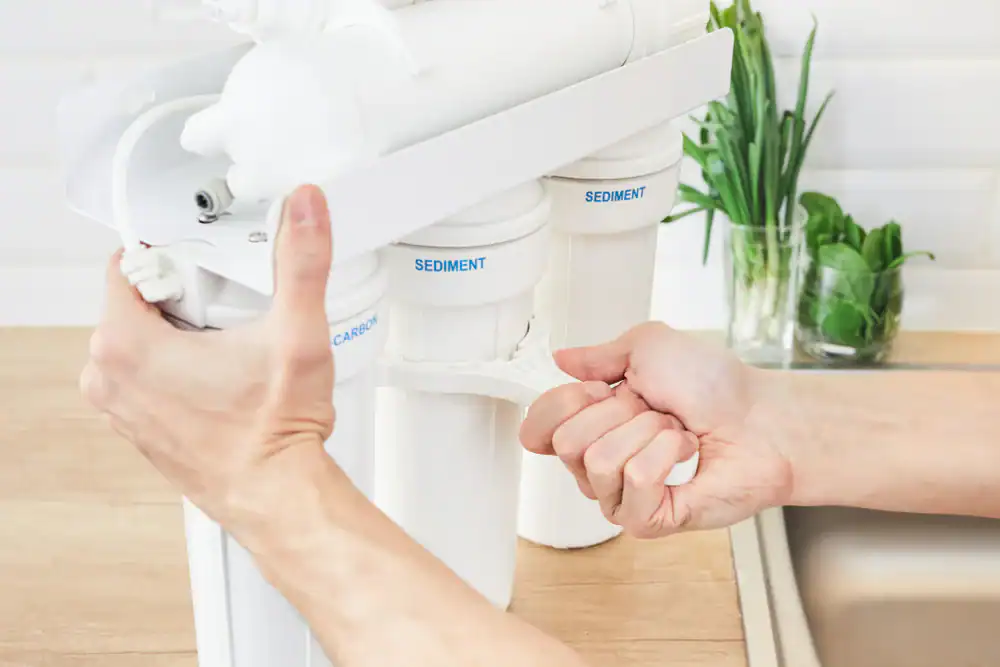
For a typical Moss Bluff home on well water, pre-filters the sediment and carbon stages that protect the RO membrane should be replaced every six to twelve months depending on your water’s contaminant load. If your well has higher-than-average iron or sediment, you’ll be on the shorter end of that range.
The RO membrane itself typically lasts two to three years before it needs replacement, though again, proper pre-treatment extends its life significantly. Florida’s climate plays a role here too. Warmer water temperatures year-round can accelerate bacterial growth in a system that isn’t maintained on schedule.
Skipping filter changes doesn’t just reduce performance it can allow a neglected membrane to become a contamination point rather than a filtration point. We track your system’s service schedule and reach out when it’s time, so you don’t have to remember it yourself. That’s part of what it means when we say we service what we sell.
For a standard under-sink reverse osmosis drinking water system in a Moss Bluff home, installation costs vary depending on the system configuration and whether pre-treatment is needed for iron or sulfur removal. Whole-house reverse osmosis systems which treat all the water entering the home, not just the drinking water at one faucet run higher depending on home size and water chemistry.
The honest way to think about it is total cost of ownership, not just the upfront number. If your household is currently spending $50 to $100 a month on bottled water, a properly installed RO system pays for itself within two to four years. After that, your ongoing cost is annual filter replacements, which typically run $100 to $200 per year. That’s a fraction of what most Marion County families spend on bottled water without even thinking about it.
If you qualify for our military or first responder discount, that’s another $500 off your installation cost. The best way to get an accurate quote for your Moss Bluff home is to schedule a free water analysis we’ll test your well water and provide a transparent estimate based on what your system actually needs.
That yellow or tea-colored tint is almost certainly tannins organic compounds that leach into groundwater from decomposing plant material in the soil. It’s a common issue in eastern Marion County, particularly for properties near the Ocklawaha River watershed where the soil has high organic content. Tannins are harmless in small amounts, but they make water look unappealing and can affect taste.
A standard water softener does not remove tannins. A reverse osmosis system, properly staged with a tannin pre-filter where needed, does address this effectively. The RO membrane removes dissolved organics along with other contaminants, and the result is water that’s clear, clean, and doesn’t look like weak iced tea coming out of the tap.
When we do your initial water analysis in Moss Bluff, tannin levels are part of what we test for so the system we recommend accounts for this specifically, not as an afterthought.
Please provide your email address so that we can stay in touch and answer any questions you have! We will be reaching back out shortly.
"*" indicates required fields
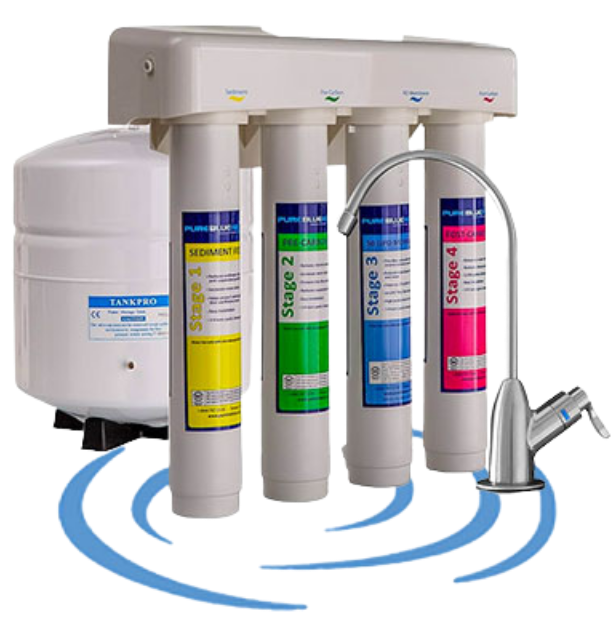
Get a free reverse osmosis drinking water system with the purchase of any whole-home water purification system.
*Cannot be combined with other offers. Mention this special when you call.