Reach Out Today
Please provide your email address so that we can stay in touch and answer any questions you have! We will be reaching back out shortly.

Hear from Our Customers
If you’ve been living with orange staining on your sinks, a sulfur smell when the hot water runs, or white crust building up around every faucet, that’s not just cosmetic. That’s your water chemistry working against your home every single day.
Hard water from the Floridan Aquifer shortens the life of your water heater, clogs your fixtures, and makes your laundry look dingy no matter what detergent you use. The sulfur smell hydrogen sulfide gas, which is extremely common in Marion County wells makes hot water unpleasant to use. The iron staining is permanent unless you address it at the source.
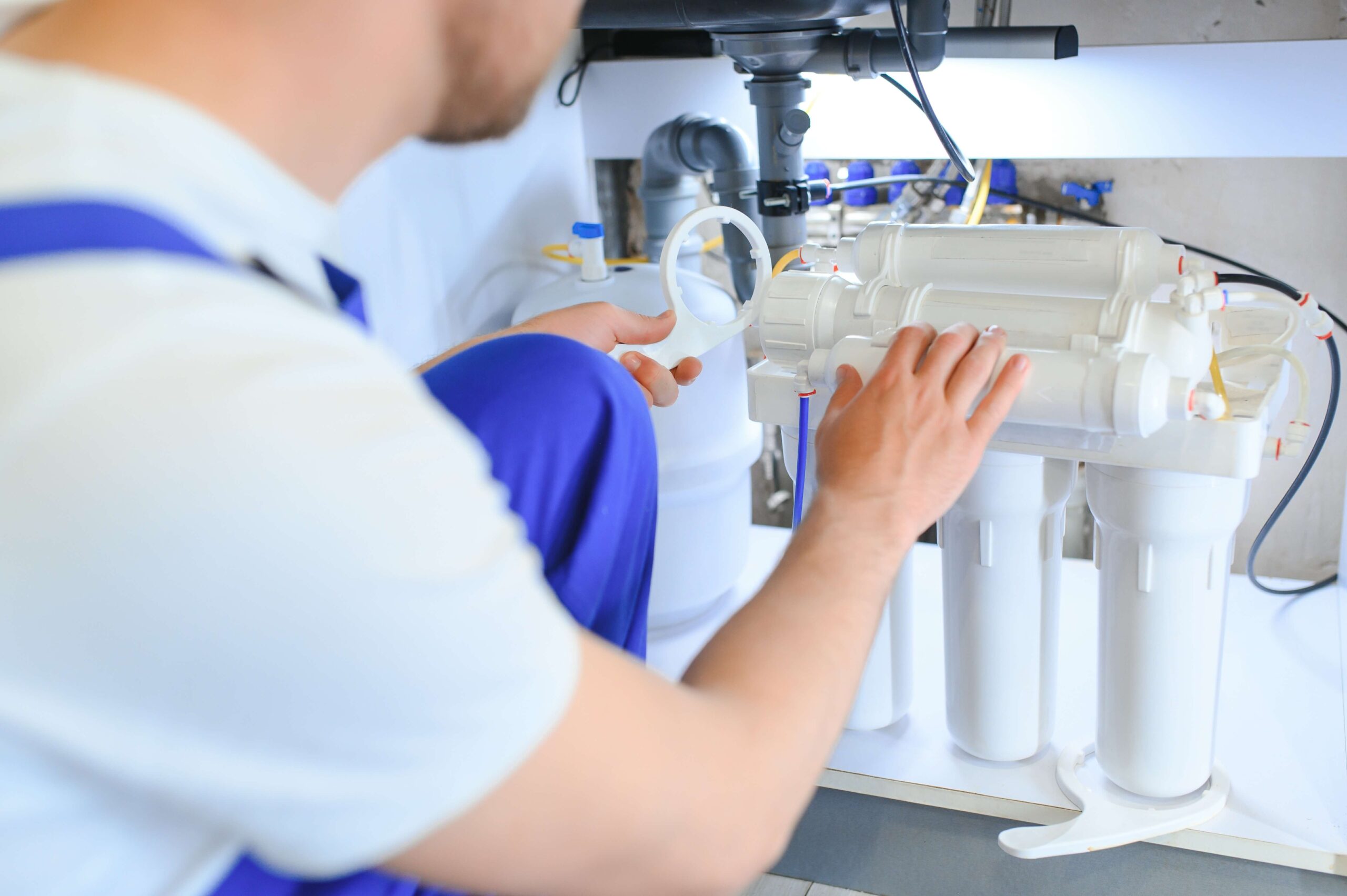
A properly installed reverse osmosis system changes that at the point of use. The water coming out of your kitchen tap becomes clean, clear, and genuinely good to drink without the mineral load, without the odor, and without the dissolved contaminants that have no taste or smell but still accumulate over time.
McIntosh sits in agricultural country. The cattle and horse operations surrounding the town, combined with the age of many private wells in the area, create real exposure to nitrates and other groundwater contaminants that a standard filter won’t touch. An RO system removes 95 to 99 percent of dissolved solids including what you can’t see, smell, or taste. That’s the difference between water that looks fine and water that actually is.
Quality Safe Water of Florida LLC is a water treatment company not a plumbing company that added filters to its service menu. Water treatment is everything we do, which means when we come to your McIntosh home, we’re not guessing at what your well produces. We start with a real water analysis, and the system recommendation follows the results.
We hold an A-rating with the Better Business Bureau, a 5-star rating, and zero complaints on file. That’s a public record you can verify at bbb.org before you ever pick up the phone. We’re also members of the National Water Quality Association, which means our technicians are trained specifically for the kind of well water challenges that Marion County and the Floridan Aquifer create not trained for city water and then sent to rural properties.
If you’re on a rural parcel in McIntosh, in one of the older homes inside the historic district, or anywhere else in Marion County drawing from a private well, your water situation is specific to your property. We treat it that way.
It starts with a free water analysis. Before anything else, we test what’s actually coming out of your well hardness, iron, pH, sulfur, dissolved solids, and anything else relevant to your property. In McIntosh, where no two wells produce exactly the same water and agricultural land use surrounds most of the town, that test isn’t a formality. It’s the only honest way to know what you’re dealing with.
Once we have your results, we walk you through what they mean in plain language and recommend a system that addresses your specific water chemistry. For most McIntosh homeowners, an under-sink reverse osmosis system handles the drinking and cooking water at the point of use clean water right at the kitchen tap, no bottles, no guessing. If your well water has multiple issues running through the whole house, we’ll talk through a broader treatment approach that makes sense for your home and your budget.
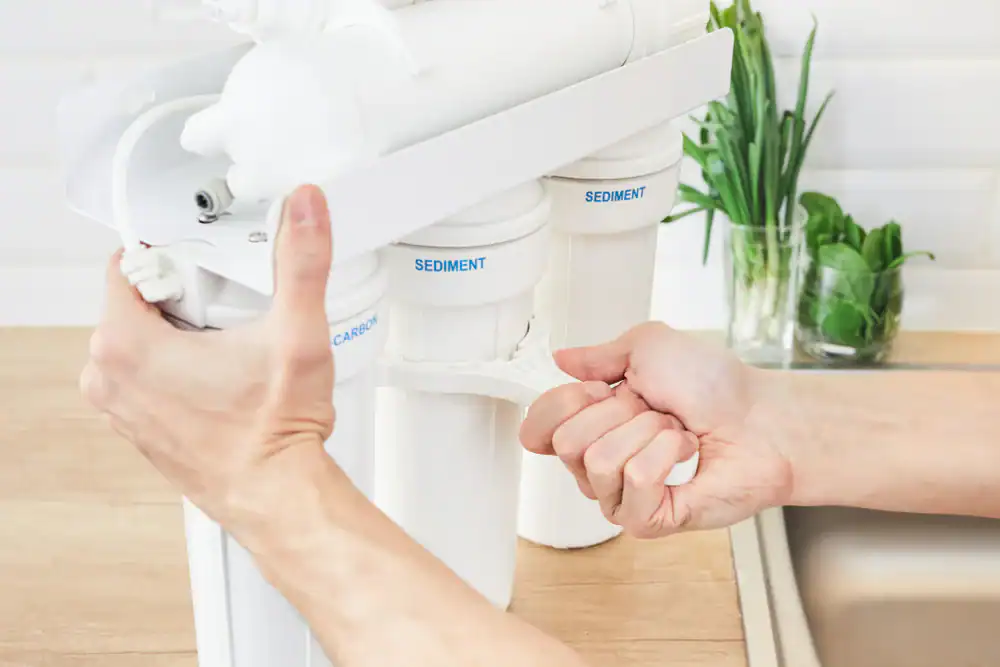
Installation is clean and straightforward. We handle everything, and when the job is done, we show you how the system works, what maintenance looks like, and how to reach us when filters need replacing. Private well owners in Marion County are responsible for their own water quality monitoring there’s no utility sending you an annual report. We stay in the picture after the install so you’re not managing it alone.

Ready to get started?
A reverse osmosis system works by pushing water through a semi-permeable membrane with openings so small 0.0001 microns that dissolved minerals, heavy metals, nitrates, PFAS compounds, and other contaminants can’t pass through. What comes out the other side is water that has been stripped of the things the Floridan Aquifer adds on its way to your tap.
For McIntosh homeowners, that matters in ways that go beyond taste. Marion County has seen PFAS contamination investigated in its regional water supply, and awareness of what “forever chemicals” can do over time has grown significantly among local residents. Agricultural runoff from the cattle and horse operations surrounding McIntosh is a real nitrate risk for private wells. The limestone geology that makes this part of North Central Florida so distinctive is also what makes untreated well water so hard on your appliances, your fixtures, and your plumbing.
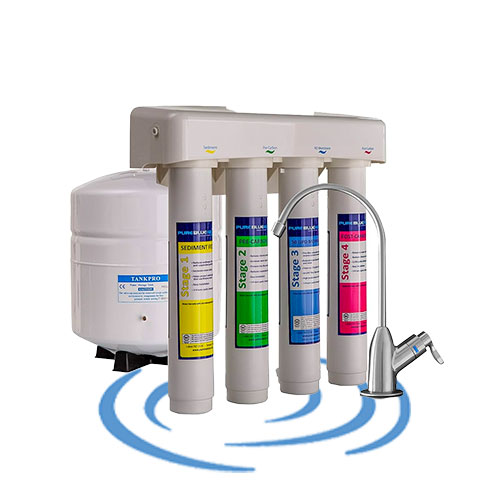
Under-sink reverse osmosis is the most common starting point a compact system installed beneath your kitchen sink that delivers clean drinking water without changing anything else in the house. For homes with more complex well water, we configure broader treatment that pairs an RO drinking water system with upstream filtration for iron, sulfur, or hardness. Everything is sized based on your actual water test results and your home’s flow rate.
If you’re active military, a veteran, or a first responder, there’s a $500 discount on installation no hoops, no fine print.
That depends entirely on what’s in your specific well and the honest answer is that most McIntosh homeowners have never had a professional water analysis done. Private well owners in Marion County are not covered by the same monitoring and reporting requirements that apply to public water systems. There’s no utility testing your water and mailing you the results. You’re responsible for knowing what’s in it.
The Floridan Aquifer, which supplies virtually every private well in McIntosh, naturally carries high levels of calcium, magnesium, and iron as it moves through the limestone rock beneath Marion County. Many wells also show elevated sulfur, which is harmless in small amounts but makes water unpleasant to use. The bigger concern is what you can’t detect by taste or smell nitrates from agricultural runoff, PFAS compounds, or bacterial contamination from nearby septic systems or animal operations. A free water analysis is the only way to know what you’re actually dealing with before deciding whether or how to treat it.
A reverse osmosis system removes dissolved contaminants by forcing water through a membrane with pores of 0.0001 microns small enough to reject the vast majority of what the Floridan Aquifer contributes to your water. That includes calcium and magnesium (the minerals behind hard water scale), iron, nitrates, arsenic, lead, chlorine byproducts, and PFAS compounds. Most systems remove 95 to 99 percent of total dissolved solids.
What it doesn’t remove is water. The molecules are small enough to pass through; the contaminants aren’t. The result is water that is genuinely clean at the molecular level not just filtered through carbon or treated with a softener, but purified in a way that a pitcher filter or a basic under-sink cartridge system cannot replicate. For Marion County well water, which often carries a combination of hardness, iron, and dissolved solids, RO is the most comprehensive point-of-use solution available for residential use.
The rotten egg smell comes from hydrogen sulfide gas, which occurs naturally in the Floridan Aquifer and is extremely common in Marion County well water. It’s not a sign that something has gone wrong with your well it’s a byproduct of the aquifer’s geology and the way groundwater interacts with organic matter in the rock. It’s also one of the most frequent complaints we hear from homeowners throughout this area.
An RO system will remove hydrogen sulfide at the point of use, so your drinking and cooking water won’t carry the odor. However, if the sulfur concentration in your well is high, you may also want upstream treatment typically an oxidizing filter to address the smell throughout the whole house, not just at the kitchen tap. That’s why we test your water before recommending anything. Some McIntosh wells have sulfur levels that an RO system handles easily on its own. Others need a two-stage approach. The test tells us which situation you’re in.
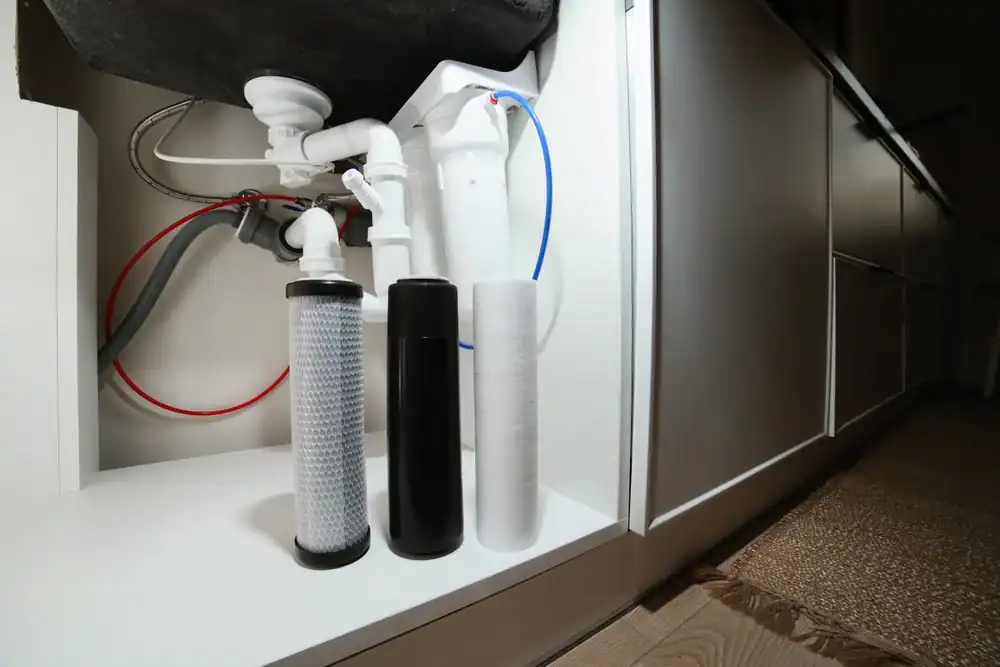
Most under-sink reverse osmosis systems have two or three pre-filters typically sediment and carbon that need to be replaced every six to twelve months, depending on how much water you use and what your well water contains. The RO membrane itself lasts two to five years under normal conditions. A post-filter, if your system has one, typically gets changed annually.
In McIntosh, where well water often carries higher-than-average iron and mineral content, pre-filters may need attention on the shorter end of that range. Iron in particular can foul a membrane faster if it isn’t addressed upstream. When we install a system, we size and configure it based on your actual water chemistry which means the maintenance schedule we give you is based on your water, not a generic estimate. We also stay available for service calls and filter replacements after the install, so you’re not tracking down a different company every time something needs attention.
A water softener and a reverse osmosis system do different things. A softener addresses hardness it swaps calcium and magnesium ions for sodium ions through an ion exchange process, which prevents scale buildup in your pipes and appliances. It does not remove dissolved contaminants, nitrates, PFAS, or most other chemical concerns. An RO system works at the point of use to remove a much broader range of dissolved solids, including the things a softener leaves behind.
For many McIntosh homeowners, the answer is both but configured correctly and in the right order. A softener upstream protects your plumbing and appliances from hard water damage throughout the whole house. An RO system downstream delivers clean, purified drinking water at the kitchen tap. Whether you need one or both depends on what your water test shows. Some wells in this area have moderate hardness and high dissolved solids, where an RO system alone handles the drinking water concern effectively. Others have severe hardness that warrants a whole-house approach. The test determines the recommendation.
Please provide your email address so that we can stay in touch and answer any questions you have! We will be reaching back out shortly.
"*" indicates required fields
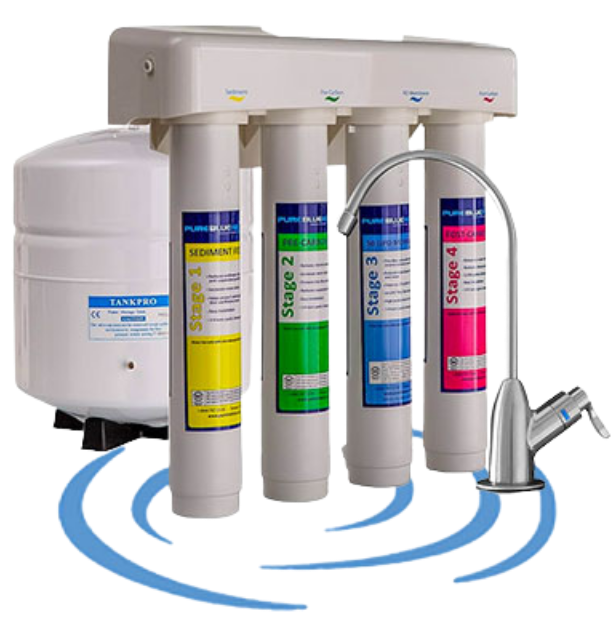
Get a free reverse osmosis drinking water system with the purchase of any whole-home water purification system.
*Cannot be combined with other offers. Mention this special when you call.