Reach Out Today
Please provide your email address so that we can stay in touch and answer any questions you have! We will be reaching back out shortly.

Hear from Our Customers
You fill a glass from the tap and you drink it without thinking twice. That’s what a properly installed reverse osmosis system actually delivers. Not a marginal improvement in taste. A real, measurable difference in what’s going into your body every single day.
For Greater Fullerwood residents, that matters more than most people realize. The City of St. Augustine draws its water from the Upper Floridan Aquifer naturally high in dissolved minerals then treats it with free chlorine before it ever reaches your street. That chlorine reacts with organic matter in the source water and forms disinfection byproducts called haloacetic acids, which the Environmental Working Group has specifically identified in St. Augustine’s water supply. A pitcher filter won’t remove them. A refrigerator filter won’t either. A reverse osmosis system filters at 0.0001 microns and removes 95–99% of what’s dissolved in your water including those byproducts.
Then there’s the house itself. Much of Greater Fullerwood’s housing stock was built before 1939. Older galvanized pipes and aging service lines can change what’s in your water between the treatment plant and your glass. The City of St. Augustine is actively inventorying its service lines to comply with new EPA lead regulations which tells you something. An under-sink RO system at your drinking tap is the most direct way to protect your household from whatever happens between the plant and your faucet, regardless of how old your plumbing is.
Quality Safe Water of Florida is a water treatment specialist not a plumbing company that offers filtration on the side. Water treatment is the only thing we do, which means the person who shows up at your door in Greater Fullerwood actually understands the Floridan Aquifer, knows how St. Augustine’s municipal system treats its water, and can read a water test for your specific home rather than handing you a generic system off a truck.
We hold an A-rating with the Better Business Bureau, a 5-star customer rating, and zero complaints on file. That last part is public record you can look it up at bbb.org right now. We’re also members of the National Water Quality Association, which sets the professional standards our technicians are trained to. And we support the Tunnels to Towers Foundation, because the communities we work in including Greater Fullerwood and the surrounding St. Johns County area deserve more than a company that installs a system and disappears.
We service what we sell. That’s not a tagline. It’s just how we operate.
It starts with a real water analysis. Not a quick hardness strip to justify a sale an actual test that tells us what’s in your water at your tap, in your home. For Greater Fullerwood residents, that distinction matters. A home built in the 1920s on one side of the neighborhood can have meaningfully different water quality at the faucet than a house built in the 1950s a few blocks away, depending on the interior plumbing. We need to know what we’re dealing with before we recommend anything.
Once we have your results, we walk you through exactly what was found and what it means. If a reverse osmosis system is the right fit and for most homes in Greater Fullerwood, it is we’ll explain which system is appropriate for your household size, your water chemistry, and your home’s plumbing configuration. Under-sink RO systems are the most common installation for Greater Fullerwood homes: they connect to your existing cold water supply line and drain beneath the kitchen sink, typically require no permit for standard residential installation, and are fully contained.
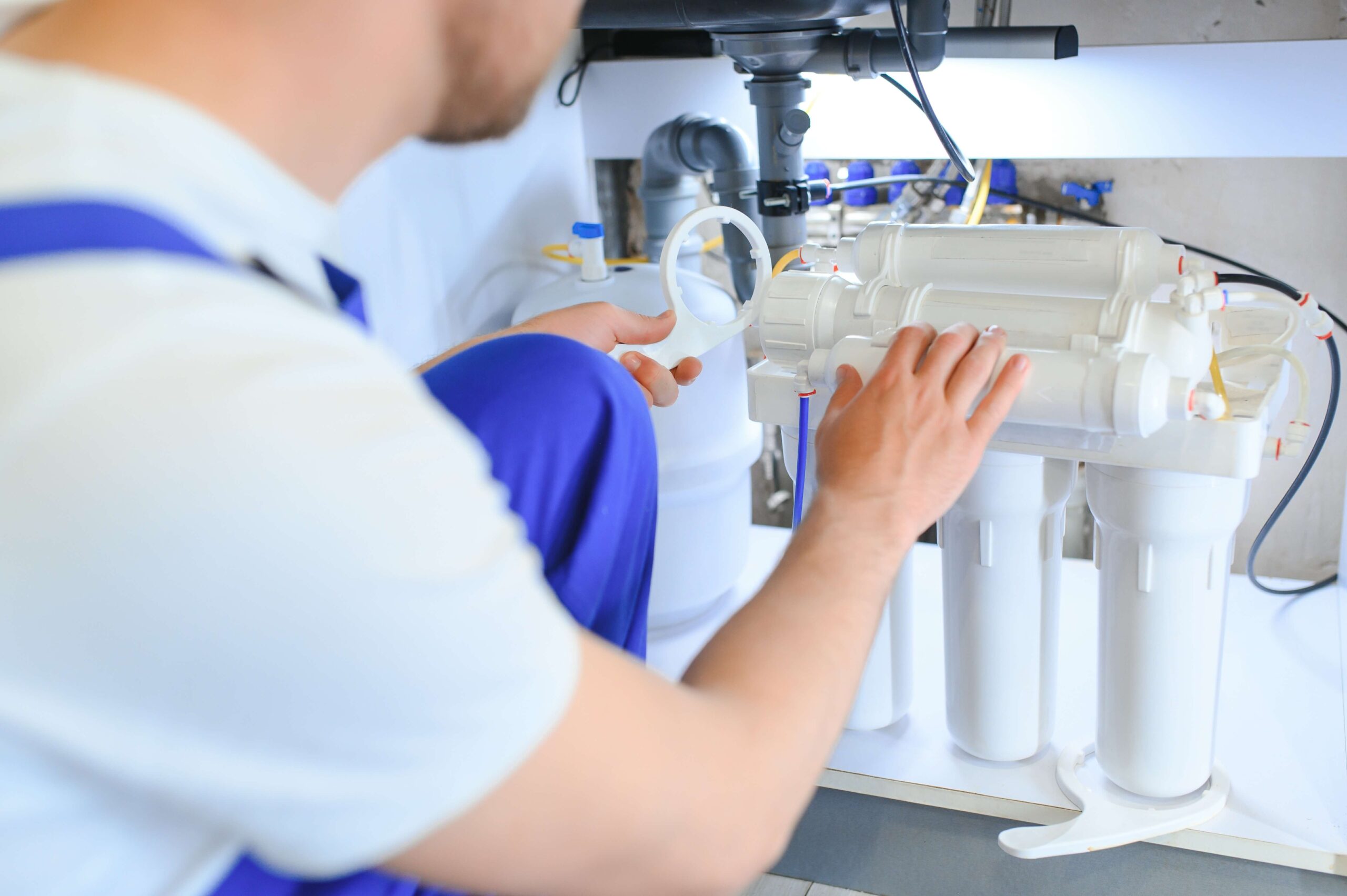
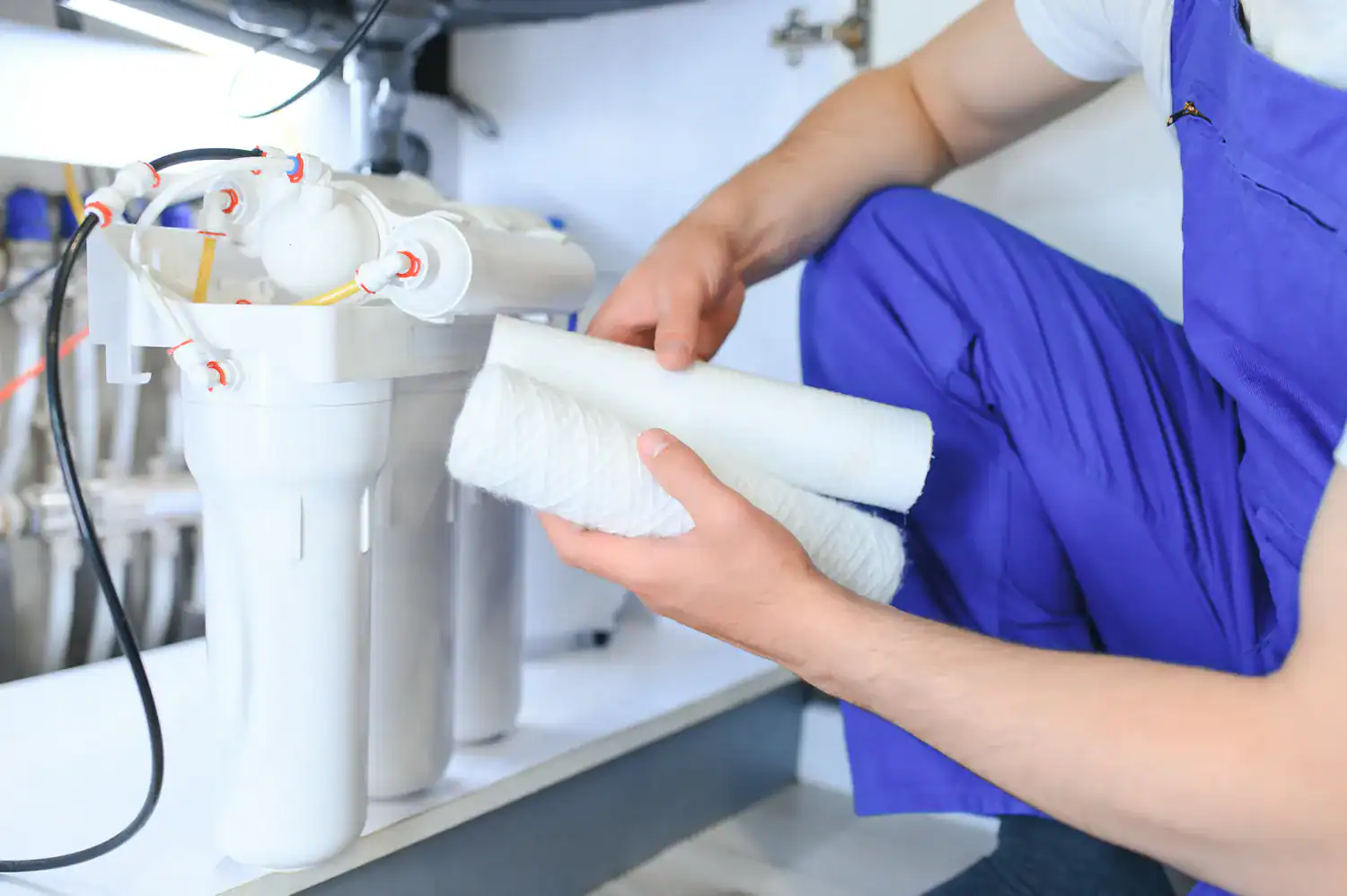
Installation is clean, professional, and done in a single visit. After that, we walk you through filter maintenance pre-filters typically need replacing once a year, and the membrane every two to five years. We handle that too. You’re not left figuring it out on your own.
Ready to get started?
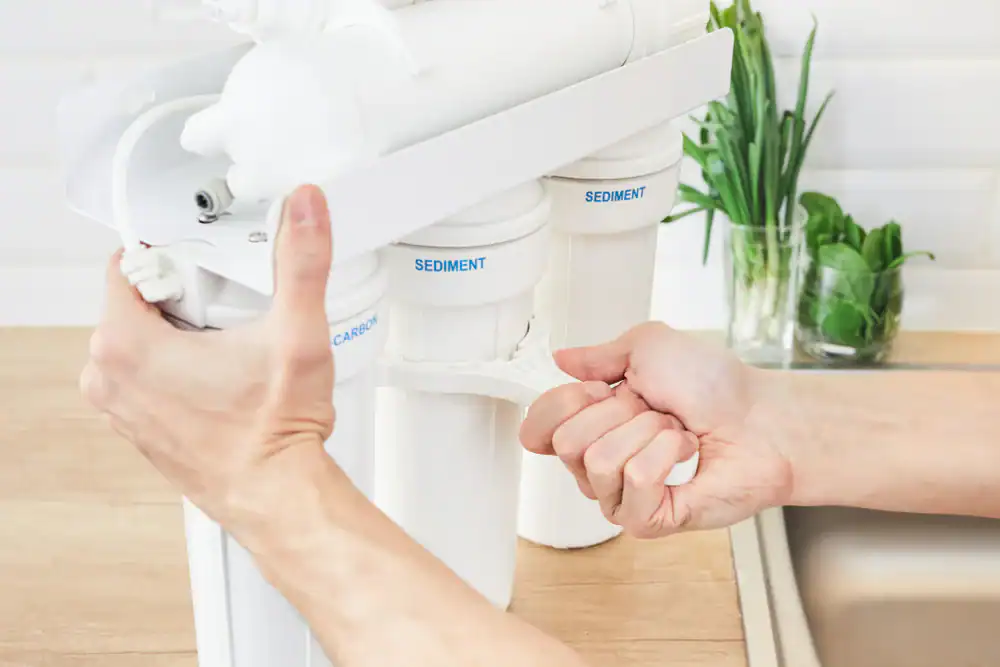
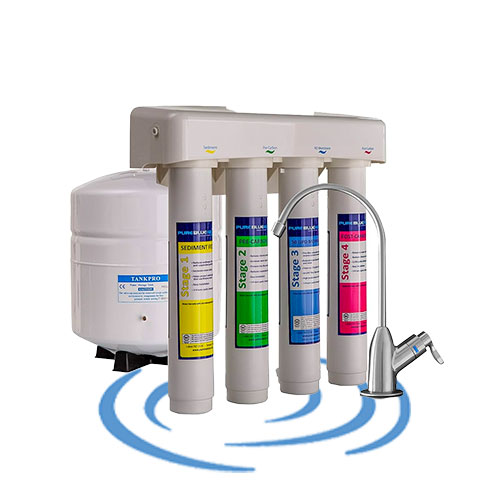
A reverse osmosis system from Quality Safe Water of Florida is a professionally installed, whole-drinking-water solution not a countertop gadget or a DIY kit. The systems we install use multi-stage filtration: sediment pre-filters remove particulates, carbon filters address chlorine and disinfection byproducts like the haloacetic acids identified in St. Augustine’s water supply, the RO membrane filters at 0.0001 microns to remove dissolved solids, heavy metals, nitrates, and fluoride, and a post-filter polishes the water before it reaches your glass. The result is water that’s measurably cleaner than what comes out of most bottled water brands at a fraction of the cost per gallon.
For homeowners in Greater Fullerwood’s historic district, where the coastal proximity means high humidity and salt air accelerate corrosion on fixtures and appliances, reducing the mineral load in your drinking water also extends the life of anything that touches it. Hard water from the Floridan Aquifer over 180 parts per million across much of Northeast Florida leaves scale on fixtures and inside appliances. An RO system at the tap handles your drinking and cooking water directly.
If you’re active military, a veteran, or a first responder, you receive $500 off your system. St. Johns County has a significant military and first responder community, and that discount is our way of making this a straightforward decision for the people who serve it.
The City of St. Augustine’s water meets all federal regulatory standards so legally, yes, it’s safe. But “meets legal limits” and “as clean as possible” are two different things. The Environmental Working Group’s Tap Water Database has identified haloacetic acids as a detected contaminant in the St. Augustine Water Treatment Plant’s output. These are disinfection byproducts formed when the chlorine used to treat the water reacts with naturally occurring organic matter in the Floridan Aquifer source water. The EPA regulates them, but EWG’s health-based guidelines are significantly stricter than federal legal limits.
For Greater Fullerwood specifically, there’s an additional variable: a large portion of the neighborhood’s housing stock predates 1939. Older interior pipes and aging service lines can affect what’s in your water by the time it reaches your tap even after the municipal system has treated it. The city is currently inventorying its water service lines to comply with new EPA lead regulations, which is worth knowing if you own a historic home. A water test at your specific tap is the only way to know exactly what you’re dealing with.
The gap is significant. A standard carbon pitcher filter or a refrigerator filter is designed to improve taste and reduce chlorine. It works at the surface level it catches some sediment, softens the chlorine taste, and that’s about it. It does not remove dissolved solids, heavy metals, nitrates, fluoride, or the haloacetic acids that have been detected in St. Augustine’s water supply. Those compounds are dissolved at the molecular level, and a carbon filter simply isn’t built to address them.
A reverse osmosis system works differently. Water is pushed through a semi-permeable membrane that filters at 0.0001 microns smaller than any dissolved chemical, metal, or biological contaminant. The membrane physically blocks what can’t pass through, and the rejected water flushes it away. What comes out the other side has been stripped of 95–99% of dissolved contaminants. For homeowners in Greater Fullerwood who are already buying bottled water because they don’t trust the tap, it’s worth knowing that most bottled water is produced using reverse osmosis the same process, just done at a facility instead of under your sink.
Water hardness in the St. Augustine area is driven by the Upper Floridan Aquifer a massive limestone formation that the city’s deep wells tap into. As water moves through that limestone, it dissolves calcium and magnesium, producing naturally hard water. Across much of Northeast Florida, hardness levels exceed 180 parts per million, which puts it in the “very hard” classification. If you’ve noticed white mineral deposits on your faucets, showerheads, or glass shower doors in Greater Fullerwood, that’s the Floridan Aquifer at work.
For Greater Fullerwood homeowners, the issue is compounded by the neighborhood’s coastal environment and the age of the housing stock. Hard water scale on top of aging plumbing makes the problem worse. Water heaters, dishwashers, and washing machines in older historic homes are working in a more demanding environment than those in newer inland construction. A reverse osmosis system addresses the hardness in your drinking and cooking water directly, and a whole-house filtration system can extend that protection to your appliances.
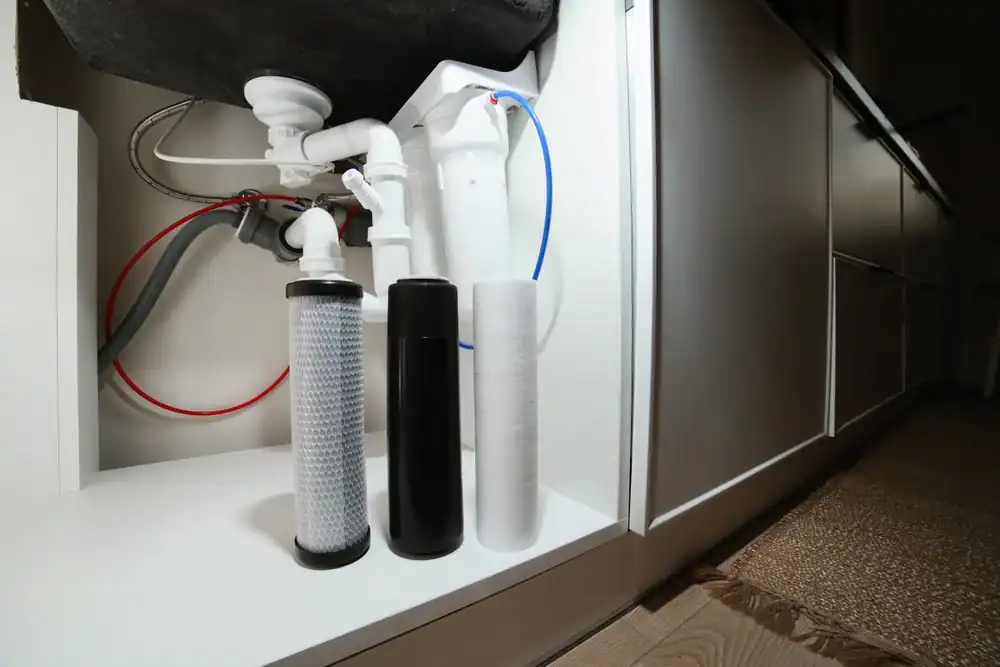
For most Greater Fullerwood homes, an under-sink reverse osmosis system is the right fit and the installation is straightforward. The system connects to your existing cold water supply line and drain under the kitchen sink, and a dedicated faucet is mounted through the sink or countertop for filtered water. Standard residential installations typically don’t require a permit in St. Augustine but we assess that as part of every job, because older homes with non-standard plumbing configurations sometimes present variables that newer construction doesn’t.
What we do before recommending anything is test your water. In Greater Fullerwood, where homes built in the 1920s sit alongside houses built in the 1950s, water quality can vary significantly depending on the interior plumbing. A generic recommendation doesn’t make sense. The test tells us what’s actually in your water at your tap not just what the city reports at the treatment plant. From there, we size the system to your household’s usage, confirm the installation approach for your specific kitchen setup, and complete the work in a single visit. The whole process is clean and contained, and we walk you through filter maintenance before we leave.
A professionally installed under-sink reverse osmosis system typically represents an investment that pays for itself over time. The cost-versus-bottled-water comparison is worth running. If your household spends $50–$100 a month on bottled water which is common for Greater Fullerwood residents who already know their tap water isn’t great that’s $600–$1,200 a year. An RO system pays for itself within two to four years and continues producing cleaner water than most bottled brands for 15–20 years with proper maintenance. Annual filter replacements run approximately $100–$200.
If you’re active military, a veteran, or a first responder, the $500 discount we offer brings the upfront cost down significantly. We provide a custom quote after your water test, because the right system for your home depends on your specific water chemistry and household needs not a one-size-fits-all price tag.
Please provide your email address so that we can stay in touch and answer any questions you have! We will be reaching back out shortly.
"*" indicates required fields
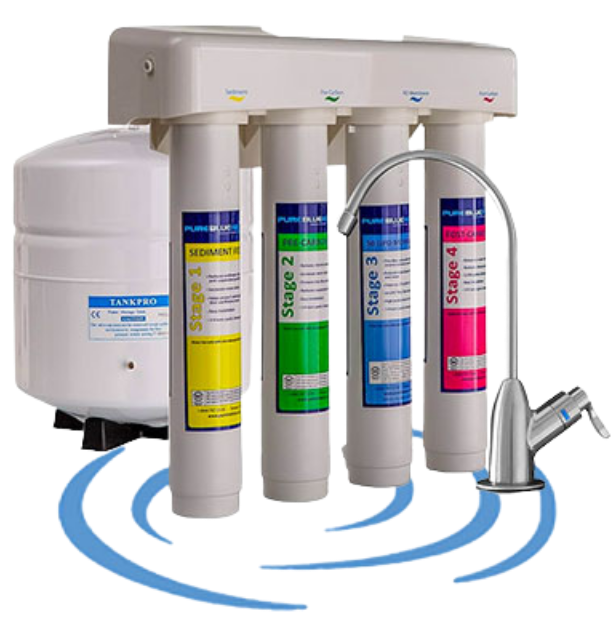
Get a free reverse osmosis drinking water system with the purchase of any whole-home water purification system.
*Cannot be combined with other offers. Mention this special when you call.