Reach Out Today
Please provide your email address so that we can stay in touch and answer any questions you have! We will be reaching back out shortly.

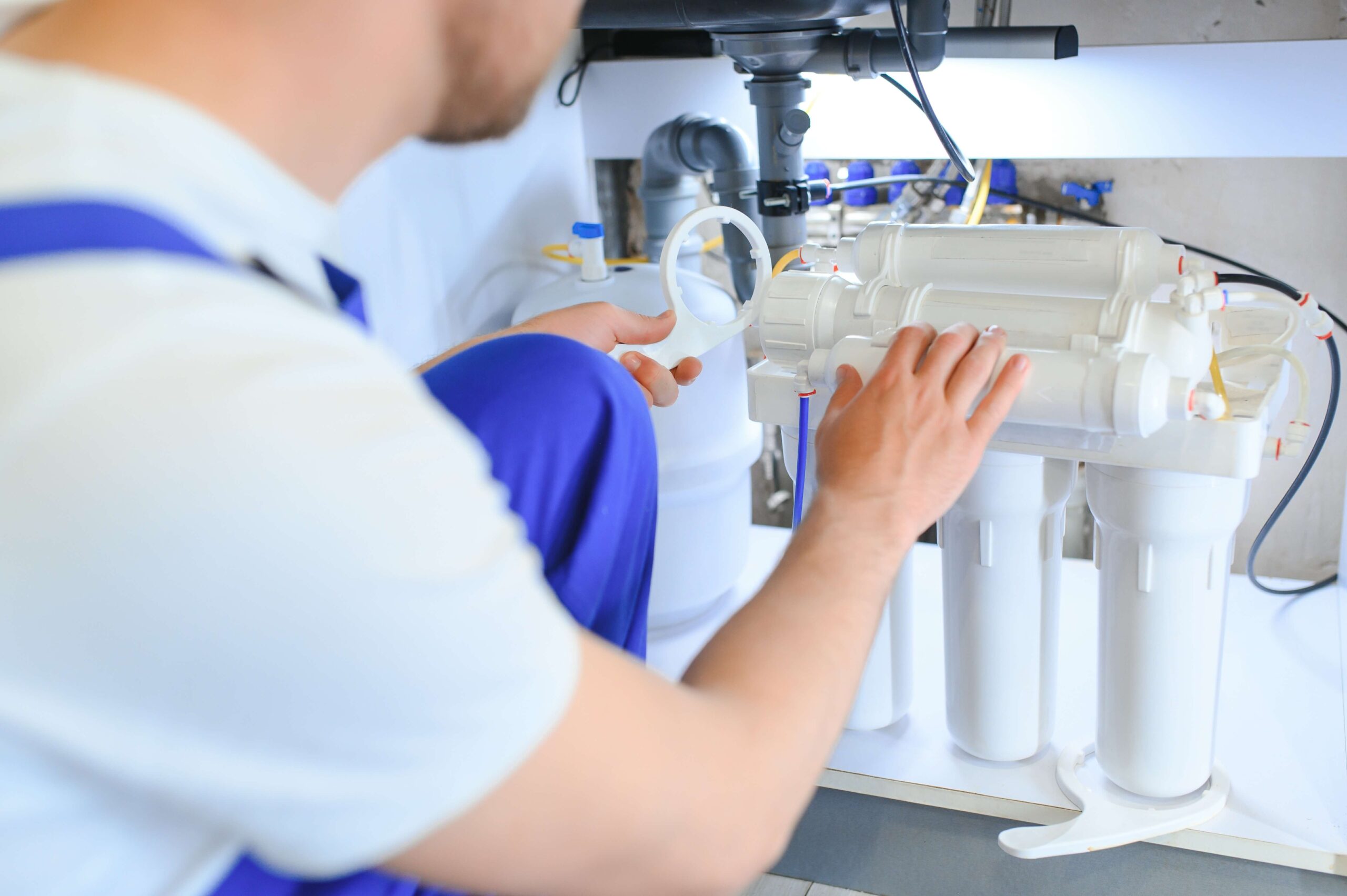
Hear from Our Customers
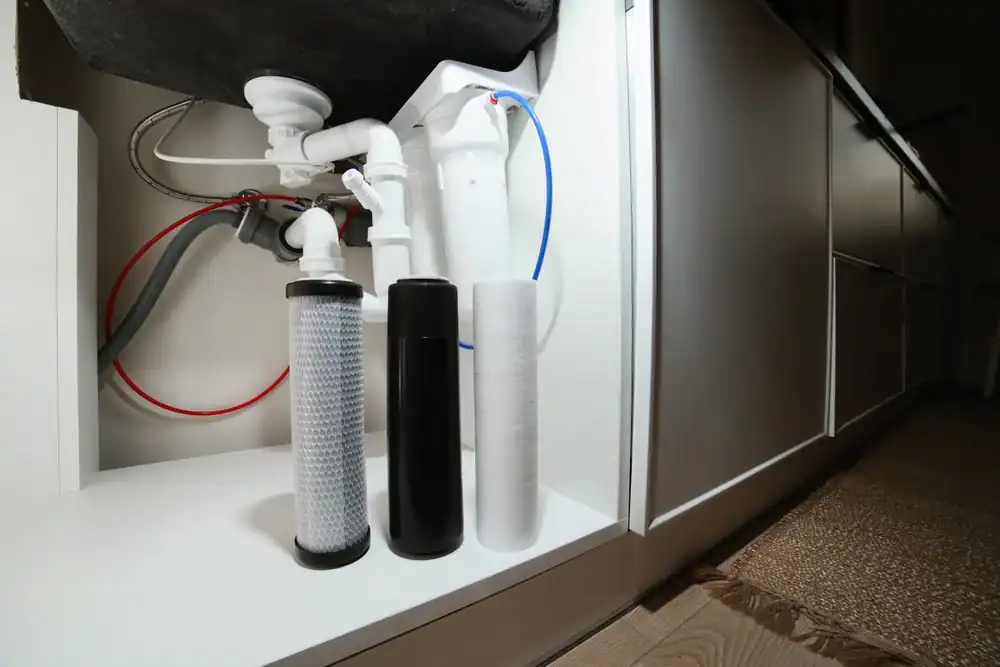
You stop tasting the difference between your tap and a bottle. No more earthy aftertaste, no more yellowish tint from the tidal marsh runoff that surrounds Amelia Island, no more wondering what’s actually in the glass. A properly installed reverse osmosis system removes what municipal treatment leaves behind and in Fernandina Beach, that list is longer than most people realize.
The city’s water treatment plant has documented Total Trihalomethanes above EWG health guidelines, and the USGS has published specific research on saltwater intrusion in the Floridan Aquifer beneath Nassau County. Chloride levels in some local wells have reached 800 milligrams per liter. Standard filters don’t touch dissolved salts. A water softener won’t remove TTHMs. An RO system handles both along with selenium, tannins, and the disinfection byproducts that form when chlorine reacts with the organic matter common in coastal Florida water sources.
Beyond what you drink, clean water protects what you own. Fernandina Beach homes have a median sale price around $635,000. The mineral-heavy, saline-influenced water running through your pipes right now is quietly working against your water heater, your fixtures, and every appliance that uses water. Treating it isn’t just a health decision it’s how you protect a serious investment.
We do one thing: water treatment. No plumbing, no HVAC, no water heaters. Just filtration, purification, and softening which means every technician, every recommendation, and every system we install is coming from a company that has spent its entire focus on understanding Florida water chemistry. That includes the specific challenges that come with living on a barrier island like Amelia Island, where aquifer saline intrusion, tidal marsh tannins, and municipal TTHM levels create a water quality picture that’s genuinely different from inland Florida.
Our BBB A-rating and five-star customer rating with zero complaints on file aren’t marketing language they’re a public record you can verify at bbb.org in about two minutes. In a market where the most common water treatment complaint is “they installed it and never came back,” that record matters. We also hold membership in the National Water Quality Association, which means the people recommending your system have access to specialized training built around Florida’s unique water chemistry not a generic national playbook.
It starts with a real water analysis not a theatrical chemical-drop demonstration designed to make any water look dangerous. We run a lab-grade test on your specific water, whether you’re on Fernandina Beach city water or a private well in Nassau County. Given what’s documented in this area TTHMs, elevated chlorides from aquifer intrusion, tannins from surrounding marshlands, trace selenium the test results actually mean something here. They determine which system is right for your home, not which system generates the highest margin.
From there, installation is straightforward. Under-sink reverse osmosis systems typically don’t require a building permit and are treated as an appliance connection to existing plumbing. Whole-house systems that involve modifying your main supply line may require a permit through the City of Fernandina Beach Building Department we handle that process and know what Nassau County requires. The system goes in, gets tested against your baseline water analysis, and you’re shown exactly how it performs before anyone leaves your property.
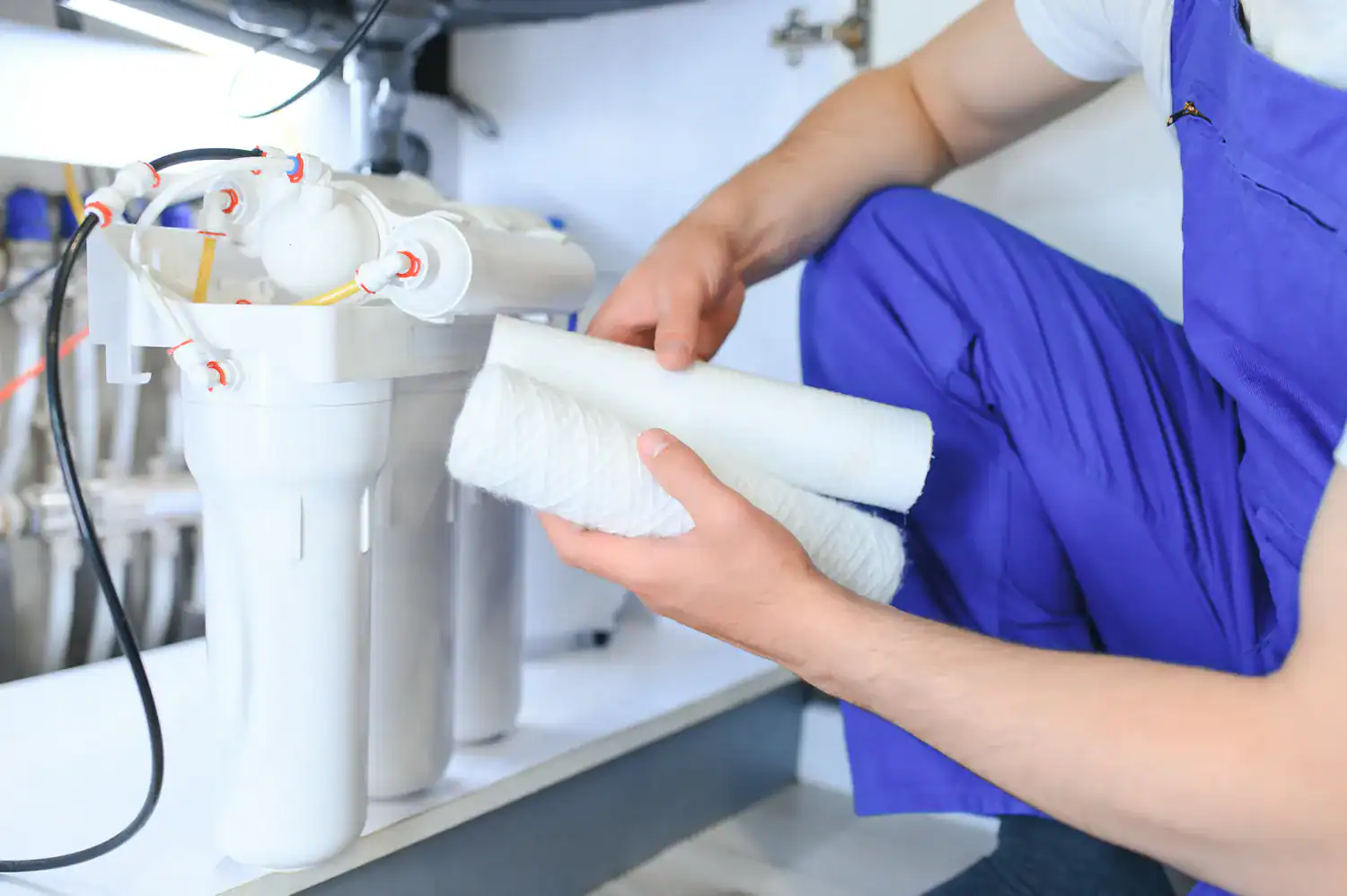
After installation, the relationship doesn’t end. Membranes and pre-filters need periodic replacement to keep the system performing and we service what we install. For homeowners in Fernandina Beach, where getting a mainland service company to reliably cross the bridge is its own challenge, that commitment is worth more than it might sound.
Ready to get started?
Not every reverse osmosis system is configured the same way, and Fernandina Beach water has specific characteristics that demand a specific response. The tannins leaching in from Amelia Island’s surrounding tidal marshlands require pre-filtration media that a standard RO setup may not include. The elevated chloride levels from documented aquifer saline intrusion mean the membrane spec matters a system sized for typical hard water may underperform against the salinity levels the USGS has recorded in Nassau County wells. We configure each system based on your actual test results, not a catalog default.
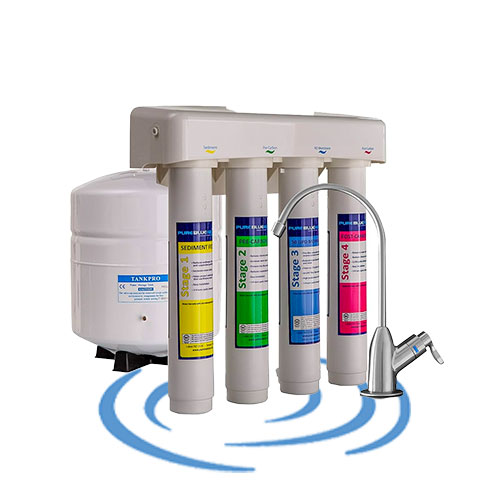
For most Fernandina Beach homeowners, the conversation starts with an under-sink reverse osmosis drinking water system a multi-stage unit installed at the kitchen tap that removes TTHMs, dissolved salts, selenium, and other contaminants at the point of use. That’s the entry point. But for homes in the Omni Amelia Island Plantation area or Summer Beach with newer plumbing and high-end fixtures, a whole-house approach addresses the problem at every faucet, every shower, and every appliance not just the kitchen sink.
Active military, veterans, and first responders receive a $500 discount on water treatment systems. Nassau County has a meaningful population of all three, given the area’s proximity to Naval Station Mayport and Jacksonville’s large military community. We’re also a proud supporter of the Tunnels to Towers Foundation, which builds mortgage-free homes for Gold Star and fallen first responder families.
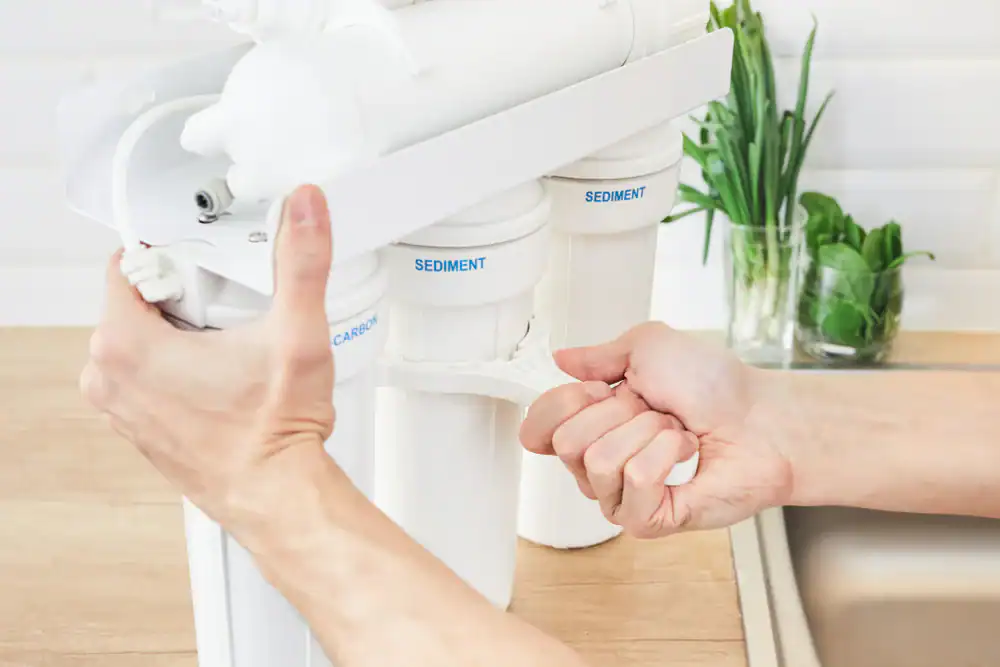
The City of Fernandina Beach Water Treatment Plant has documented Total Trihalomethanes (TTHMs) at levels exceeding EWG health guidelines and in October 2025, the city issued a public compliance notice acknowledging a gap in required TTHM monitoring during the April through June 2025 period. TTHMs are disinfection byproducts that form when chlorine reacts with organic matter in the water. Long-term exposure is associated with increased cancer risk and potential harm to the liver and kidneys.
Beyond TTHMs, the EWG Tap Water Database lists selenium as an additional contaminant of concern for the Fernandina Beach WTP. The USGS has separately documented saline water intrusion in the Floridan Aquifer beneath Nassau County, with chloride concentrations in some local wells reaching levels far above normal freshwater ranges. If you’re in an older home in the Historic Downtown District, aging pipes can introduce additional lead or copper between the city’s treatment facility and your tap. A water analysis tells you exactly what you’re dealing with in your specific home that’s always the right place to start.
No and this is one of the most common misunderstandings in the Fernandina Beach market. A water softener works through ion exchange: it swaps hardness minerals like calcium and magnesium for sodium ions. That process does not remove dissolved chlorides, which are the primary concern with saline intrusion in the Floridan Aquifer beneath Nassau County. If your well water has elevated chloride levels which the USGS has documented at up to 800 milligrams per liter in some deep wells in this area a softener will not address it.
A reverse osmosis system works differently. It forces water through a semi-permeable membrane at 0.0001 microns, which physically rejects dissolved salts, chlorides, and virtually everything that isn’t a water molecule. For well water users in Nassau County dealing with aquifer intrusion, RO is the treatment method that actually matches the problem. In many cases, the right approach is a combination a whole-house softener or iron filter to protect the plumbing and appliances, with an RO system at the drinking water tap to deliver clean, low-sodium, low-chloride water for consumption.
That’s almost certainly tannins. Amelia Island is surrounded by tidal marshlands and estuarine ecosystems, and the organic matter from those marshlands tannins and humic acids leaches into local water sources. The result is water that looks tea-colored or yellowish and has a distinct earthy or musty taste. It’s not a health emergency, but it’s unpleasant, and it’s a water quality characteristic specific to barrier island and coastal marsh communities like Fernandina Beach.
The important thing to know is that tannins are not removed by standard water softeners. In fact, tannins can interfere with softener resin performance over time, reducing the effectiveness of the system. A reverse osmosis system particularly one configured with the right pre-filtration media for tannin-heavy source water addresses the problem directly. After treatment, the water runs clear and the earthy taste is gone. This is one of the reasons a real water test matters before any system recommendation: tannin levels in Fernandina Beach can vary significantly depending on your water source and proximity to marshland drainage areas.
The RO membrane itself typically lasts two to five years depending on your water quality and usage volume. In Fernandina Beach, where source water carries higher-than-average dissolved solids, tannins, and chloride levels, pre-filters work harder than they would in a lower-demand environment which means pre-filter replacement intervals matter and shouldn’t be ignored. Pre-filters generally need to be changed every six to twelve months. Skipping that maintenance puts more strain on the membrane and shortens its useful life.
The system itself the housing, the fittings, the storage tank can last fifteen to twenty years with proper upkeep. The key is working with a company that actually shows up for service after the installation. Fernandina Beach’s island geography makes this more than a minor consideration: when a company routes all service calls through an out-of-state call center and doesn’t have a reliable technician willing to cross the bridge, maintenance gets deferred and systems underperform. We service what we install. That means when your pre-filter is due or your membrane needs replacement, you’re calling a company that answers and schedules not one that disappeared after the sale.
For the right home, absolutely. An under-sink RO system solves the drinking water problem at one tap. A whole-house system solves it everywhere every faucet, every shower, every appliance. In Fernandina Beach, where the median home sale price is around $635,000 and the water coming out of the Floridan Aquifer is saline-influenced and mineral-heavy, the case for whole-house treatment is straightforward: the water running through your pipes right now is working against your water heater, your dishwasher, your fixtures, and your plumbing over time.
That said, whole-house reverse osmosis isn’t the right answer for every home. It depends on your water test results, your household size, your current plumbing condition, and whether you’re on city water or a private well. Homes in the Omni Amelia Island Plantation area or Summer Beach with newer plumbing and high-end fixtures often benefit most from a whole-house approach. Older properties in the Historic Downtown District may need a phased solution starting with point-of-use RO for drinking water and adding whole-house treatment as the plumbing is updated. Our water analysis gives you the data to make that decision based on your actual situation, not a sales pitch.
Please provide your email address so that we can stay in touch and answer any questions you have! We will be reaching back out shortly.
"*" indicates required fields