Reach Out Today
Please provide your email address so that we can stay in touch and answer any questions you have! We will be reaching back out shortly.

Hear from Our Customers
Most people in Elwood aren’t thinking about water quality until something forces the issue a sulfur smell after a heavy rain, a rust ring in the toilet, or a white crust building up on every faucet. That’s the Floridan Aquifer doing what it does. Water moving through limestone picks up calcium, magnesium, and dissolved minerals before it ever reaches your tap.
A reverse osmosis system removes what your well pump brings in. For families in Elwood, where private wells are common and the surficial aquifer sits closer to the surface than most people realize, this matters more than it does in a city with a full municipal treatment plant.
You don’t have a utility company sending you an annual water quality report. What’s in your water is your responsibility and a properly installed RO system is the most effective way to handle it.
Beyond drinking water, the difference shows up in your appliances. Hard water scale quietly destroys water heaters, dishwashers, and coffee makers over time. Removing dissolved solids at the point of use protects what you’ve already paid for. In a home worth $400,000 or more, that’s not a small consideration.
We’re a water treatment company not a plumbing company that installs filters on the side. Every job starts with a real lab-grade water analysis, because recommending a system without knowing what’s in your water isn’t expertise, it’s guesswork.
St. Johns County water varies significantly depending on whether you’re on a private well, a surficial aquifer draw, or a county utility grid. The Elwood and Picolata corridor has its own specific profile that a generalist wouldn’t know to look for.
We hold a BBB A-rating with zero complaints on file and a 5-star rating something you can verify yourself at bbb.org right now. We’re also members of the National Water Quality Association, which means ongoing training and access to current standards on contaminant removal.
For active military, veterans, and first responders serving or living near the Jacksonville and NAS Jacksonville area, we offer a $500 discount applied directly to your job no hoops, no fine print.
It starts with a free water analysis. Before anything is recommended or quoted, we test your water to identify what’s actually present bacteria, nitrates, PFAS compounds, dissolved minerals, sulfur, or whatever your specific source is carrying.
In the Elwood area, where homes along the Picolata corridor often draw from private wells with no regulatory monitoring, this step isn’t optional. It’s the only honest way to know what you’re dealing with.
Once the analysis is complete, you get a clear recommendation based on your results not a pre-packaged sales pitch. If an under-sink reverse osmosis drinking water system is the right fit, that’s what we recommend. If your whole home would benefit from a more comprehensive approach, that conversation happens with your actual water data on the table.
Under-sink RO systems are typically installed without a permit in Florida since they connect to existing plumbing. Whole-house systems that require main line modification may involve a plumbing permit under Florida Building Code we handle that as part of the process.
After installation, you’ll know exactly what was installed, how to maintain it, and when filters or membranes need attention. There’s no disappearing act after the job is done. St. Johns County has documented groundwater contamination concerns on record with the St. Johns River Water Management District which means ongoing service and accountability aren’t extras, they’re part of what you’re paying for.
Ready to get started?
The reverse osmosis systems we install are designed around what’s actually in the water here not a one-size-fits-all Florida spec. In St. Johns County near Elwood, that means accounting for hard water from limestone geology, potential PFAS compounds that have been detected in county water systems, nitrates that can enter shallow wells from surrounding septic systems, and sulfur compounds that are a known characteristic of Floridan Aquifer water.
A standard carbon filter doesn’t touch most of that. An RO membrane operating at 0.0001 microns does.
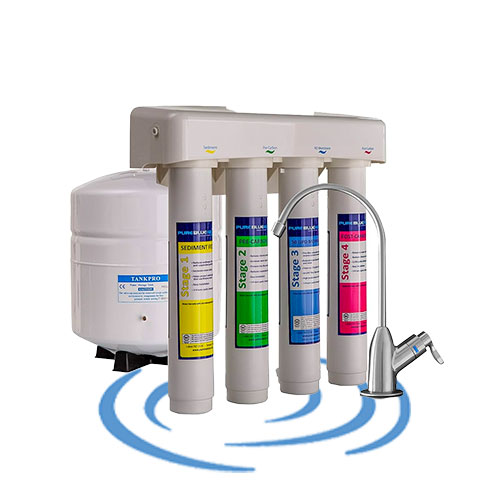
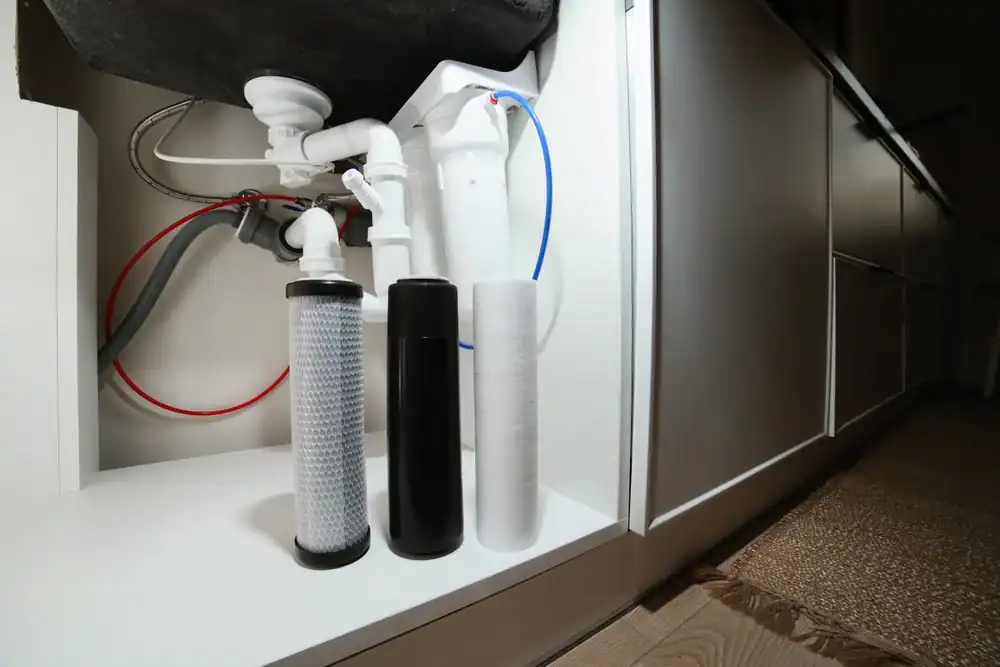
For Elwood homeowners, the most common installation is an under-sink reverse osmosis system at the kitchen tap a multi-stage system that handles drinking and cooking water at the point of use. For homes where whole-house coverage makes more sense, we install whole-house reverse osmosis systems that treat every water source in the home simultaneously, protecting appliances, showers, and plumbing throughout.
All systems use USA-manufactured components and are installed by technicians who know this county’s water, not technicians who read about it in a training manual.
We service what we sell meaning when it’s time for a filter replacement or a system check after a hurricane season event near the St. Johns River, you call the same company that installed it. That’s not standard practice anymore, but it’s how we work.
That depends entirely on what’s in your specific well and the only way to know is to test it. Private wells in the Elwood and Picolata corridor draw from the surficial aquifer, which sits closer to the surface and is more vulnerable to contamination than the deep Floridan Aquifer that large municipal systems use.
There’s no utility company monitoring your well water, no annual report arriving in your mailbox, and no regulatory requirement under the Safe Drinking Water Act that applies to private well owners.
The Florida Department of Health recommends testing private wells for bacteria and nitrate at least once per year. In a semi-rural area like the Picolata corridor where on-site septic systems are common and lots are larger the risk of nitrate or bacterial contamination from nearby septic activity is real and documented.
St. Johns County is listed by the St. Johns River Water Management District as a county with delineated areas of known groundwater contamination. That means this isn’t a hypothetical concern. A reverse osmosis system combined with a free water analysis gives you a factual answer about what’s in your water and a reliable way to address it.
A reverse osmosis membrane operates at 0.0001 microns, which is small enough to physically block the vast majority of dissolved contaminants including things that standard carbon filters and water softeners cannot touch.
That includes PFAS compounds (the class of synthetic “forever chemicals” that have been detected in St. Johns County water systems), nitrates, arsenic, lead, dissolved minerals like calcium and magnesium, bacteria, and disinfection byproducts from chlorine treatment.
Hard water from the Floridan Aquifer’s limestone geology is a baseline condition throughout St. Johns County, and the dissolved minerals that cause it calcium and magnesium are removed effectively by an RO membrane at the point of use.
Sulfur compounds, which produce the rotten egg odor that many well water users in the Elwood area notice, can also be addressed as part of a properly designed multi-stage system. The specific combination of filtration stages recommended for your home depends on what your water analysis shows, which is why we test before recommending anything.
For a standard under-sink reverse osmosis drinking water system professionally installed, you’re typically looking at a range that depends on the number of stages, the quality of components, and any site-specific requirements at your home.
Whole-house reverse osmosis systems which treat every water source in the home rather than just the kitchen tap run higher depending on the size of the home and the complexity of the installation.
For Elwood homeowners, it’s worth thinking about this in the context of what you’re currently spending. A family that doesn’t trust their tap water and relies on bottled water can easily spend $600 to $1,200 per year on cases and delivery. An RO system pays for itself within a few years and keeps producing clean water for 15 to 20 years with proper maintenance.
Add in the appliance protection from removing hard water minerals at the point of use water heater replacements alone run $800 to $1,500 and the financial case gets clearer fast. We provide a transparent quote after your free water analysis, so there are no surprises.
For a standard under-sink reverse osmosis system, no permit is required in Florida. These systems connect to your existing plumbing under the kitchen sink and are treated as self-contained appliances no structural changes, no main line modifications, no permit process.
The installation is typically completed in a few hours.
Whole-house reverse osmosis systems are a different situation. If the installation requires modifications to your main water supply line which whole-house systems often do a plumbing permit may be required under the Florida Building Code. We handle the permit process as part of the installation when it applies, so you don’t have to navigate that on your own.
For Elwood homeowners on private wells who are also considering new well construction or modifications, those projects require separate permits from the St. Johns River Water Management District, which has specific enhanced construction standards for St. Johns County given its documented groundwater vulnerability designation.
Yes, though the right approach depends on how much sulfur is present and what else is in your water. Hydrogen sulfide the compound responsible for the rotten egg odor that’s common among well water users in the Picolata and Elwood area is a naturally occurring byproduct of water moving through the sulfur-bearing sediments and organic material in the surficial aquifer.
It’s unpleasant, and at higher concentrations it can affect the taste of everything you cook with.
A reverse osmosis system with the right pre-treatment stages can reduce hydrogen sulfide effectively at the point of use. For whole-house sulfur issues where the smell is present in showers, laundry, and every tap a more comprehensive treatment approach upstream of the RO system is usually the better solution.
That might involve aeration, oxidizing filtration, or a combination depending on your specific sulfur levels. This is exactly why we start with a water analysis rather than a pre-packaged recommendation. The sulfur odor is a symptom. The analysis tells you what’s actually causing it and how severe it is, so the system installed actually solves the problem instead of partially masking it.
Please provide your email address so that we can stay in touch and answer any questions you have! We will be reaching back out shortly.
"*" indicates required fields