Reach Out Today
Please provide your email address so that we can stay in touch and answer any questions you have! We will be reaching back out shortly.

Hear from Our Customers
That orange ring around your drain isn’t just cosmetic. Iron from the Floridan Aquifer works its way into everything your fixtures, your laundry, your water heater and the damage adds up quietly over time. When your water is treated correctly, the staining stops, your appliances last longer, and you stop replacing things before they should need replacing.
The sulfur smell is the other one. If you’ve ever noticed that rotten-egg odor when the hot water runs, that’s hydrogen sulfide coming up from the same limestone geology that feeds wells throughout Levy County and Conner specifically. It’s not a sign something’s wrong with your well it’s just what this aquifer produces in this region. The right system eliminates it at the source, not just at the tap.
And then there’s the drinking water itself. No municipal plant, no treatment, no monitoring just whatever the aquifer delivers that day. A properly installed reverse osmosis system gives you clean, filtered drinking water on demand, without the cost of bottled water stacking up every week. For a household in Conner running on a private well, that’s not a luxury. It’s the right call.
We don’t do plumbing. We don’t do water heaters. We don’t offer filtration as a side service between other jobs. Water treatment is our entire business which means when a technician shows up to your property in Conner or anywhere in Levy County, that’s all they know and all they focus on.
That matters more than it sounds. The well-and-pump companies serving the area are good at what they do but water treatment is a specialty, and a generalist recommendation on a filtration system is not the same as a diagnosis built on real water testing and regional experience with the Floridan Aquifer.
We hold an A-rating with the Better Business Bureau, a 5-star record, and zero complaints on file you can look that up at bbb.org right now. We’re also members of the National Water Quality Association and install NSF/ANSI-certified equipment. These aren’t credentials for the wall. They’re the reason the work holds up.
It starts with a real water analysis not a quick hardness strip dipped in your sink. Because Conner homes run on private wells with no municipal oversight, the water chemistry varies from property to property depending on well depth, local geology, and what the aquifer is doing in your specific area. The analysis tells you what’s actually in your water before we recommend a single piece of equipment.
From there, we specify a system based on your results not a one-size package pulled off a shelf. If your well is showing elevated iron, that gets addressed. If there’s sulfur, that gets addressed. If you want clean drinking water at the kitchen tap through an under-sink reverse osmosis system, or whole-house treatment that protects every fixture and appliance on the property, the recommendation matches what your water actually needs.
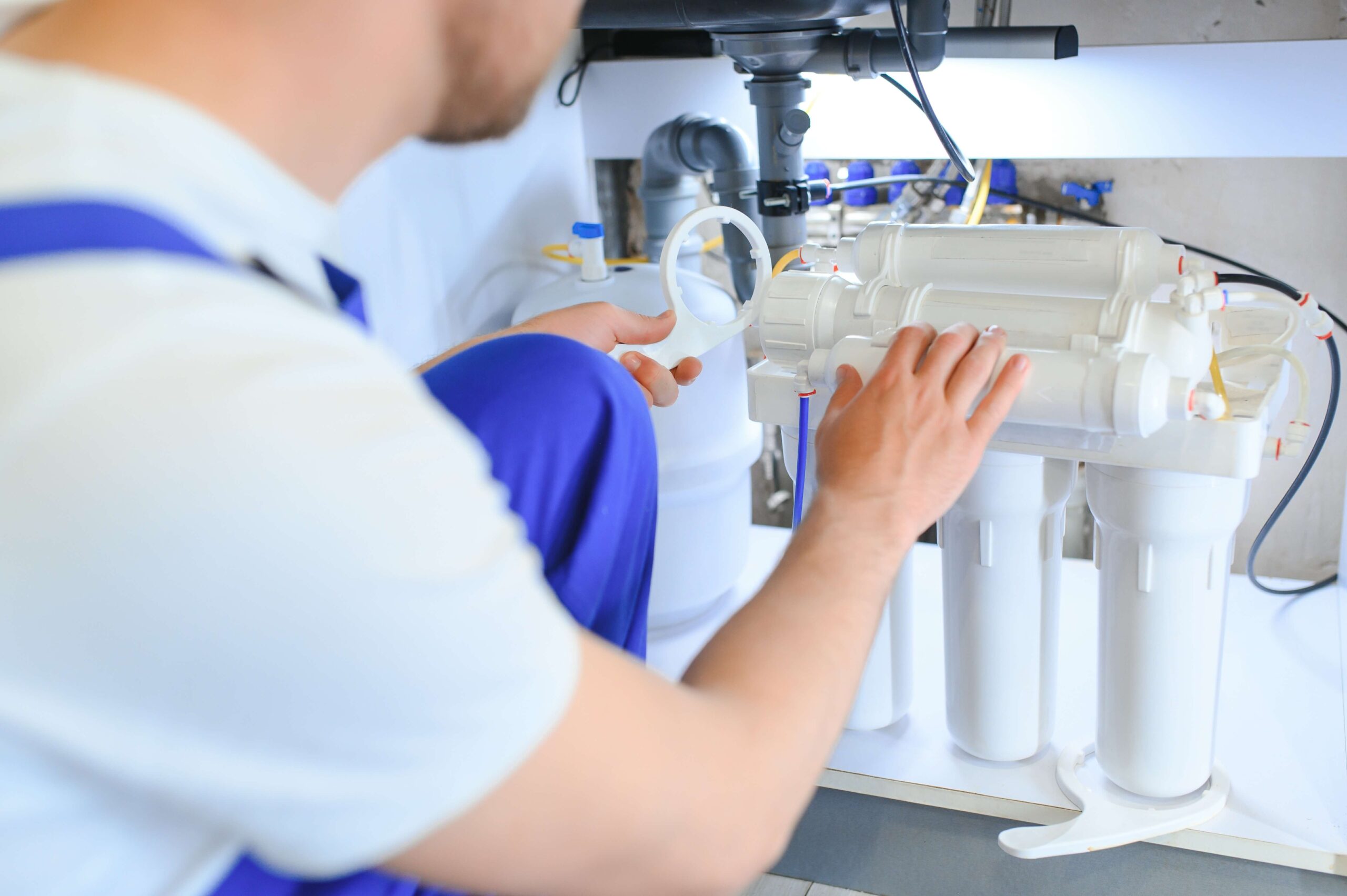
Installation is handled by the same company that tested your water and sold you the system. No subcontractors, no handoff to a crew you’ve never met. Because Conner is in unincorporated Levy County with no municipal permitting layer for residential water treatment, the process moves efficiently and once it’s in, we service what we install. That last part is not standard in this industry, and it’s worth paying attention to.

Ready to get started?
Most reverse osmosis systems are engineered and marketed with municipal water in mind pre-chlorinated, pre-filtered, and arriving at your home already treated to a baseline standard. That’s not what you’re working with in Conner. Your water comes straight from a limestone aquifer with its own mineral load, its own iron content, and its own sulfur profile. A system that isn’t configured for that will underperform, clog faster, or miss the contaminants that actually matter here.
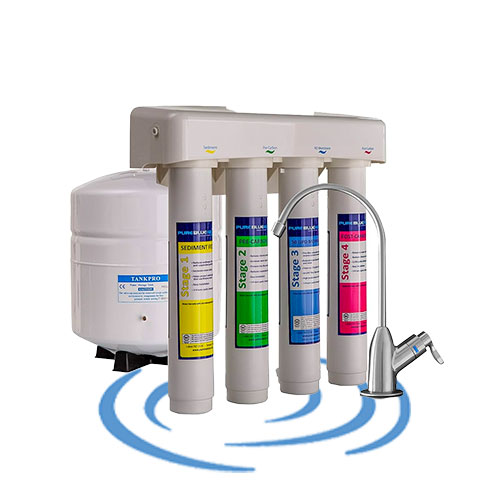
We install multi-stage reverse osmosis systems using NSF/ANSI-certified components equipment that’s been independently tested, not just marketed as effective. For drinking water, an under-sink reverse osmosis system handles what a pitcher filter or refrigerator filter simply can’t: dissolved minerals, iron, nitrates from the agricultural land surrounding Levy County, and emerging contaminants like PFAS that are invisible in water but increasingly present in Florida groundwater. For homeowners who want whole-property protection, whole-house systems treat the water before it ever reaches a pipe, a fixture, or an appliance.
If you’re active military, a veteran, or a first responder, there’s a $500 discount available no complicated process, just a straightforward acknowledgment of your service. Rural North Florida communities like Conner tend to have higher concentrations of veterans and retired service members than urban areas. Every system also comes with ongoing service from the company that installed it, because a system that nobody maintains isn’t really a solution.
The honest answer is: you don’t know until you test it. Conner sits in unincorporated Levy County with no municipal water system, which means your well has never been treated, filtered, or monitored by any utility. The Florida Department of Health recommends that private well owners test annually for bacteria and nitrates at minimum but in rural communities like Conner, many homeowners go years without testing, especially if they moved into an existing home and inherited an existing well.
What the Floridan Aquifer reliably produces in this region is hard water with elevated iron and, in many areas, hydrogen sulfide. Those aren’t dangerous in the way bacteria are, but they’re not nothing either. Nitrates from the agricultural land throughout Levy County can be a real concern, particularly for infants and pregnant women and they’re completely invisible without a test. PFAS have been detected in Florida groundwater across rural areas with no obvious industrial source. The only way to know what’s in your specific well is to test it. That’s where the process starts.
That rotten-egg smell is hydrogen sulfide gas, and it’s one of the most common complaints from well owners throughout Levy County and Conner. It comes from the same limestone and dolomite geology that feeds the Floridan Aquifer as water moves through those rock formations, it picks up hydrogen sulfide naturally. It’s not a sign your well is broken or contaminated in a dangerous way. It’s just what this aquifer produces in this part of Florida, and it gets more noticeable in hot water and during warmer months.
A standard under-sink reverse osmosis system will reduce hydrogen sulfide at the drinking water tap, but if the odor is strong throughout the house in showers, laundry, and everywhere else a whole-house treatment approach is the more complete answer. That typically involves oxidation or aeration at the point where water enters the home, which neutralizes the sulfur before it ever reaches your fixtures. The right solution depends on how much hydrogen sulfide your water test shows, which is why the analysis comes first.
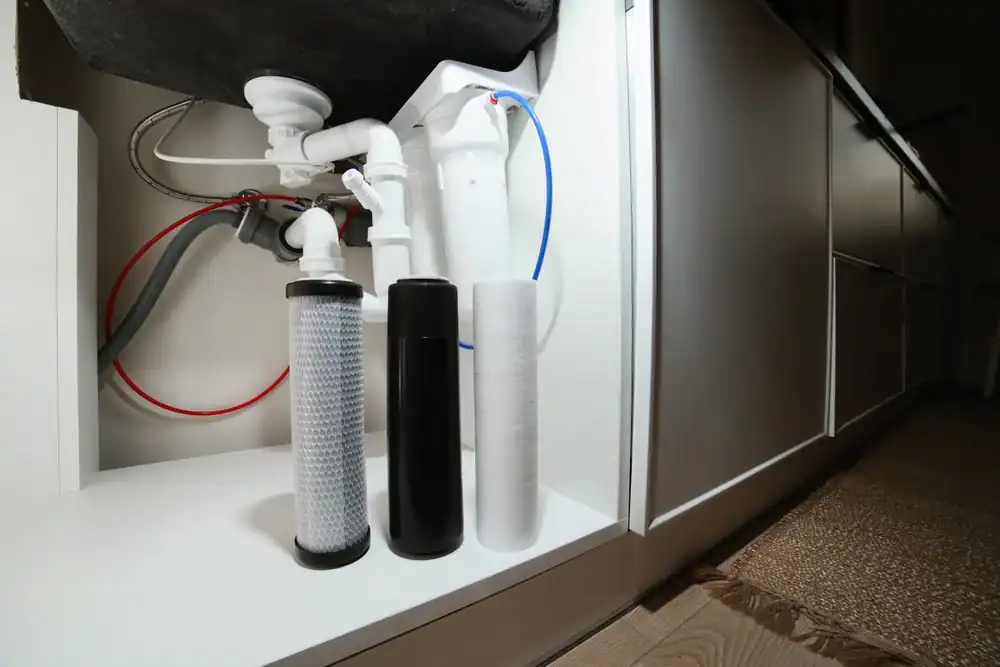
A reverse osmosis system pushes water through a semi-permeable membrane with pores of roughly 0.0001 microns small enough to block dissolved salts, minerals, heavy metals, nitrates, and chemical compounds that pass right through standard filters. Most residential reverse osmosis systems are multi-stage: sediment pre-filters catch larger particles first, carbon filters handle chlorine and organic compounds, the reverse osmosis membrane does the heavy lifting, and a post-filter polishes the water before it reaches your glass.
For well water in Conner, the relevant removals are iron, dissolved minerals that cause hardness, nitrates from agricultural runoff, and contaminants like PFAS and arsenic that have no taste or smell but show up in Florida groundwater testing. What a reverse osmosis system does not do is replace a water softener for whole-house hardness treatment the membrane handles drinking water at the tap, but scale buildup in your pipes and appliances requires treatment at the point where water enters the home. Many Levy County homeowners run both: a softener or iron filter for the whole house and a reverse osmosis system for drinking and cooking water.
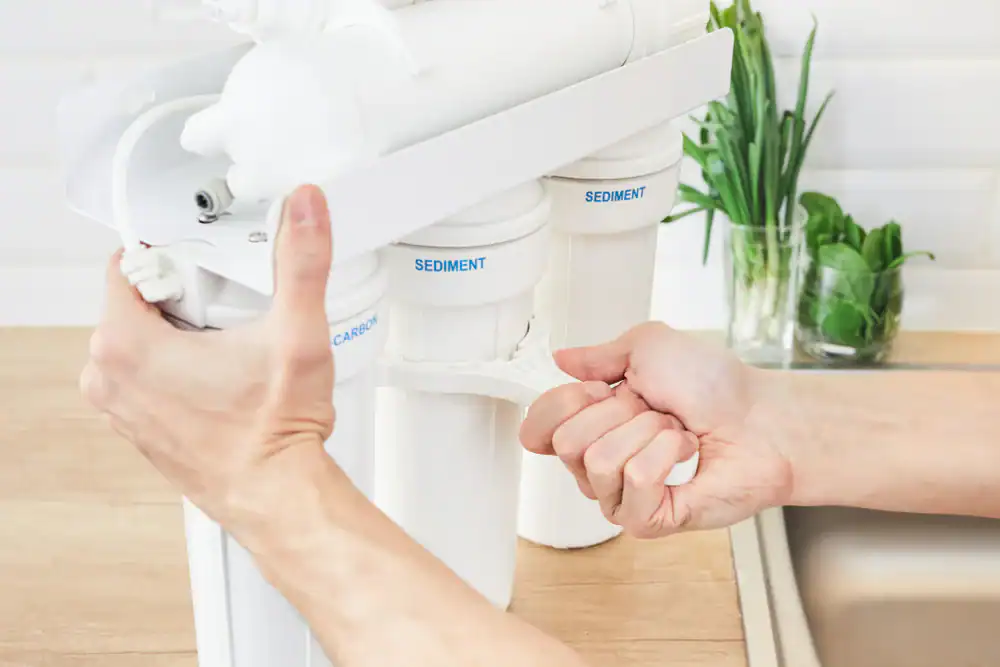
Pre-filters typically need replacement every six to twelve months depending on how much sediment and iron your well water carries and in Levy County, where iron content is common, you may be on the shorter end of that range. The reverse osmosis membrane itself usually lasts two to five years under normal residential use. A post-filter gets changed annually. None of this is complicated, but it does need to happen on schedule. A membrane that’s overdue for replacement stops performing at its rated efficiency, which means you’re running water through a system that isn’t doing its job anymore.
This is one of the real differences between buying from a company that services what we sell versus one that installs and disappears. We handle ongoing maintenance for the systems we install so when a filter is due, you’re not tracking down a manual or calling a manufacturer’s hotline. We know the system, we know your water, and we show up. For a homeowner on a private well in an unincorporated area like Conner, that continuity matters more than it would in a city with a utility on call.
Yes and this is not a formality. Well water chemistry in Levy County varies from property to property based on well depth, casing condition, proximity to agricultural land, and local aquifer conditions. Two neighbors on the same road can have meaningfully different water profiles. A system specified without a real water analysis is essentially a guess, and a wrong guess means you either overpay for treatment you don’t need or undertreat the contaminants you actually have.
The water analysis we conduct looks at what’s specifically in your water iron levels, hardness, pH, nitrates, and other relevant parameters before any system recommendation is made. This is how you avoid buying a generic package that was designed for city water and hoping it works on a Levy County well. It also gives you a baseline record of your water quality, which is useful for your own awareness and for any future testing that compares against it. The Florida Department of Health recommends annual private well testing, and a professional analysis at the start of the process puts you ahead of that curve.
Please provide your email address so that we can stay in touch and answer any questions you have! We will be reaching back out shortly.
"*" indicates required fields
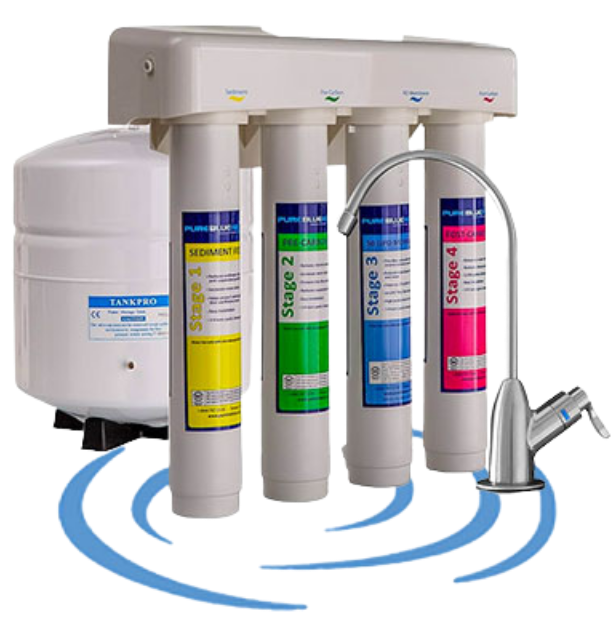
Get a free reverse osmosis drinking water system with the purchase of any whole-home water purification system.
*Cannot be combined with other offers. Mention this special when you call.