Reach Out Today
Please provide your email address so that we can stay in touch and answer any questions you have! We will be reaching back out shortly.

Hear from Our Customers
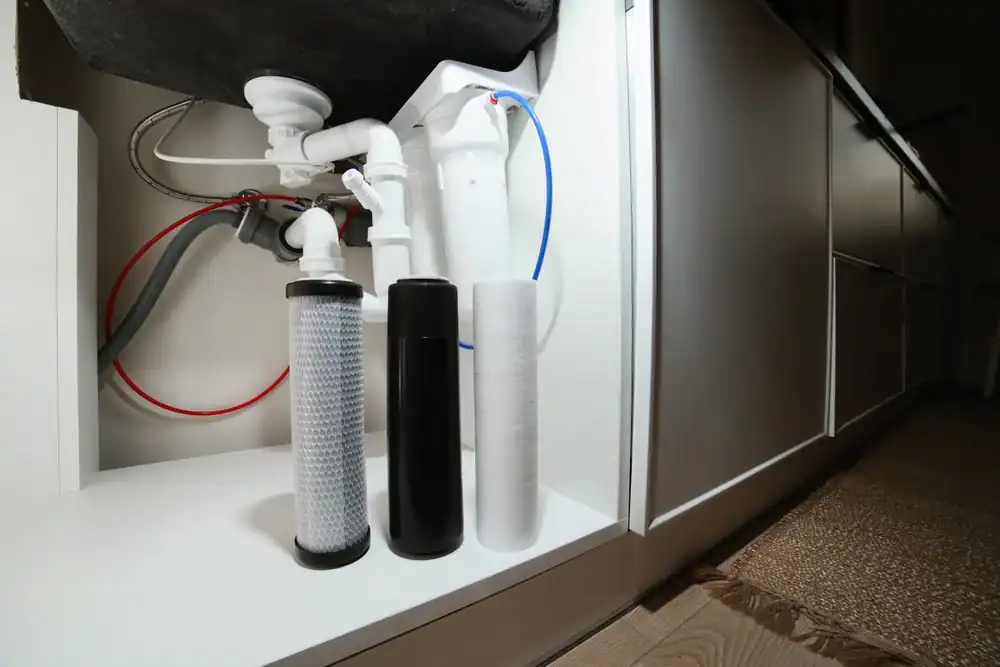
When your water is right, you stop thinking about it. No more filling up at the store. No more second-guessing what’s in your glass. No more white crust building up on fixtures you just installed.
That last part matters a lot in Blacks Ford. Northwest St. Johns County is one of the fastest-growing areas in northeast Florida. A significant number of residents here are in newer construction some moved from out of state, some from Duval County, some just relocated down SR-13 for the schools.
Either way, many are encountering Florida aquifer water for the first time. The hard water scale on a brand-new dishwasher or the chemical aftertaste in a fresh glass of water isn’t what they expected. It’s not a broken system. It’s just Florida water doing what Florida water does.
A reverse osmosis system addresses this at the source. We remove the dissolved mineral load, the disinfection byproducts, and the taste and odor that municipal treatment leaves behind. For residents on private wells in the more rural pockets around Blacks Ford, we go even further: no iron staining, no sulfur smell, no uncertainty about what’s coming out of the ground.
Quality Safe Water of Florida LLC is a North Florida water treatment company not a plumbing company that installs filters on the side. Every technician, every recommendation, and every system we install is focused on one thing: your water quality.
That specialization matters when you’re dealing with something as specific as the Floridan Aquifer’s mineral profile in northwest St. Johns County and Blacks Ford.
We hold an A-rating with the Better Business Bureau, a 5-star rating, and zero complaints on record. You can verify that yourself at bbb.org before you ever pick up the phone. We’re also a member of the National Water Quality Association, which means ongoing training in water treatment standards not just general plumbing certification.
For families near the JEA Blacks Ford service corridor, along the Fruit Cove and Orangedale stretch of St. Johns County, that combination of local knowledge and verifiable reputation is exactly what you want when someone’s coming into your home to work on your water.
We service what we sell. When your filter needs replacing or your system needs service, we answer the phone and show up. That’s not standard in this industry. It should be.
It starts with a real water analysis not a quick hardness check designed to justify a pre-selected system. We test your water first and use those results to recommend the right configuration for your home.
In Blacks Ford, that matters more than most places because the water situation isn’t one-size-fits-all. JEA customers in the area are on chloraminated municipal water, which requires different filtration than standard chlorinated systems. Residents on private wells in the more rural sections near Orangedale may be dealing with iron, sulfur, or bacteria on top of the usual mineral hardness.
The test drives the recommendation not the other way around.
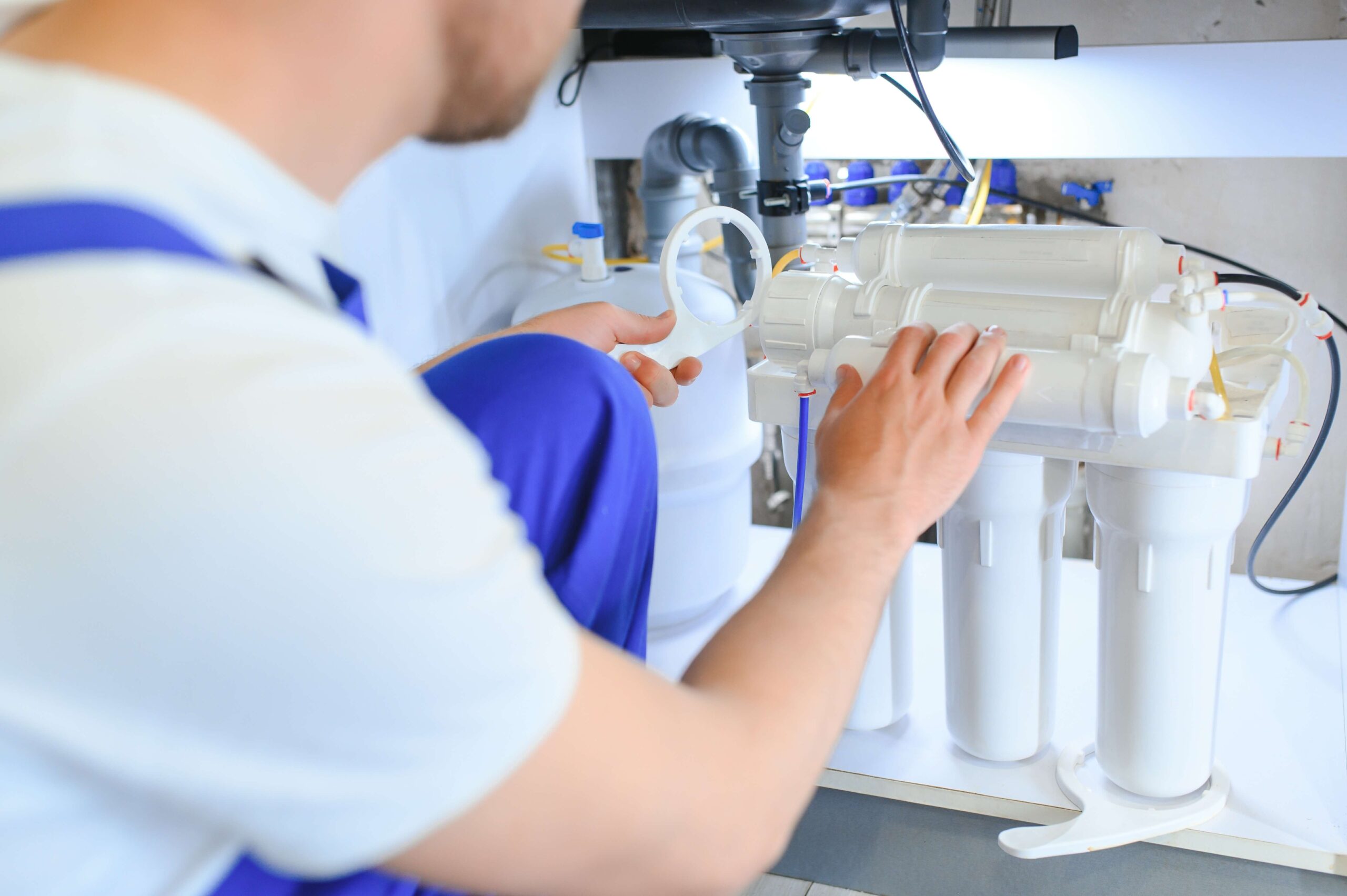
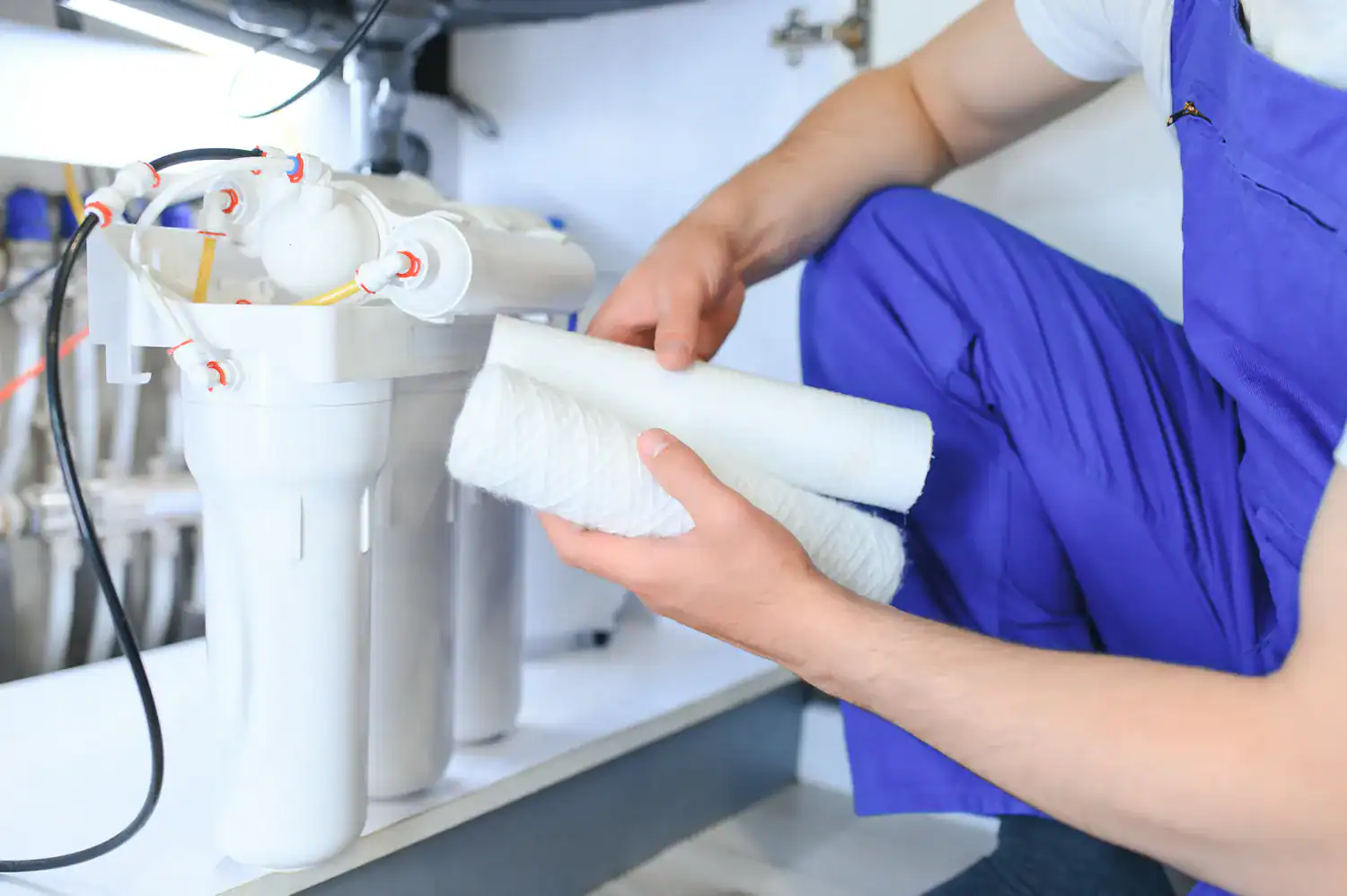
Once the right system is identified, installation is handled by a trained water treatment technician, not a generalist. Under-sink reverse osmosis systems typically go in without requiring a permit, since no structural changes are involved. Whole-house configurations may require a plumbing permit depending on scope that process is handled as part of the job.
St. Johns County doesn’t have unique local restrictions on residential water treatment additions, so the process is generally straightforward.
After installation, you’re not left to figure it out on your own. We service what we sell. When filters need replacing or a membrane is due for a change, we show up.
Ready to get started?
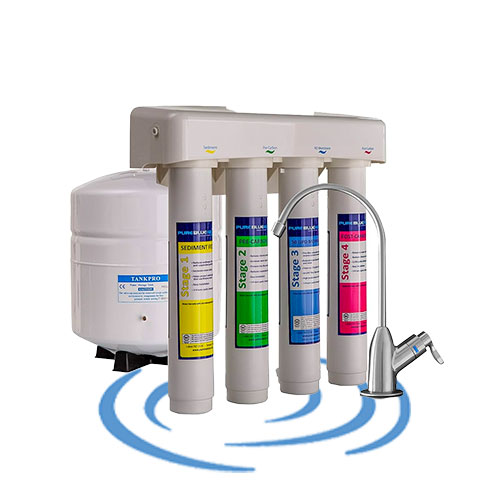
The reverse osmosis systems we install are configured based on what’s actually in your water not a generic package pulled off a shelf.
For Blacks Ford homeowners on JEA municipal service, that typically means a system designed to handle chloramines, dissolved mineral hardness from the Floridan Aquifer, and disinfection byproducts like haloacetic acids that show up in St. Johns County utility reports. Standard pitcher filters and refrigerator filters aren’t built for chloramine removal they’re built for chlorine. If your water still tastes off after using one, that’s likely why.
For residents on well water in the rural stretches of northwest St. Johns County the larger-lot properties closer to the St. Johns River corridor the system may include pre-filtration for iron or sediment before the RO membrane, depending on what the water test shows. We match the system to the water, not sell you more than you need or less than you actually require.
Every installation includes a walkthrough of how the system works, what the maintenance schedule looks like, and how to reach us when service is due.
Active military, veterans, and first responders receive $500 off. Northeast Florida has one of the largest military-connected populations in the state, with Naval Air Station Jacksonville serving as a major regional employer and a significant portion of St. Johns County households having ties to active duty, veteran status, or public safety careers. This discount reflects that reality directly.
It applies to the installation of a new water treatment system and doesn’t come with complicated qualification requirements. If you or someone in your household serves or has served, mention it when you call. The $500 comes off your total. There’s no separate form, no waiting period, and no fine print about which systems qualify.
Yes and the data backs it up. USGS testing of the Floridan Aquifer in northwest St. Johns County shows total hardness in the upper aquifer at approximately 110 mg/L in this part of the county, which works out to around 6.4 grains per gallon. That’s classified as hard water.
It’s not the worst in St. Johns County hardness climbs significantly toward the southeast but it’s enough to leave mineral deposits on fixtures, reduce soap lather, and accelerate wear on water heaters and appliances over time.
For newer construction in the Blacks Ford area, this tends to show up fast. Brand-new fixtures and appliances don’t have years of buildup to mask it the scale appears within weeks of move-in, which is usually when homeowners start asking questions. A reverse osmosis system handles the mineral load at the drinking water tap. If you want whole-house mineral management, a softener may also be worth discussing but that starts with a water test to know exactly what you’re dealing with.
A standard filter the kind in a pitcher or a refrigerator door uses activated carbon to reduce chlorine, sediment, and some odors. It works reasonably well for basic chlorine removal.
The problem is that JEA and the St. Johns County Northwest Utilities Water Treatment Plant use chloramination, not just chlorine, for disinfection. Chloramines don’t break down the way chlorine does, and standard carbon filters aren’t designed to remove them effectively. If you’ve noticed that your water still tastes off even after using a pitcher filter, that’s likely the reason.
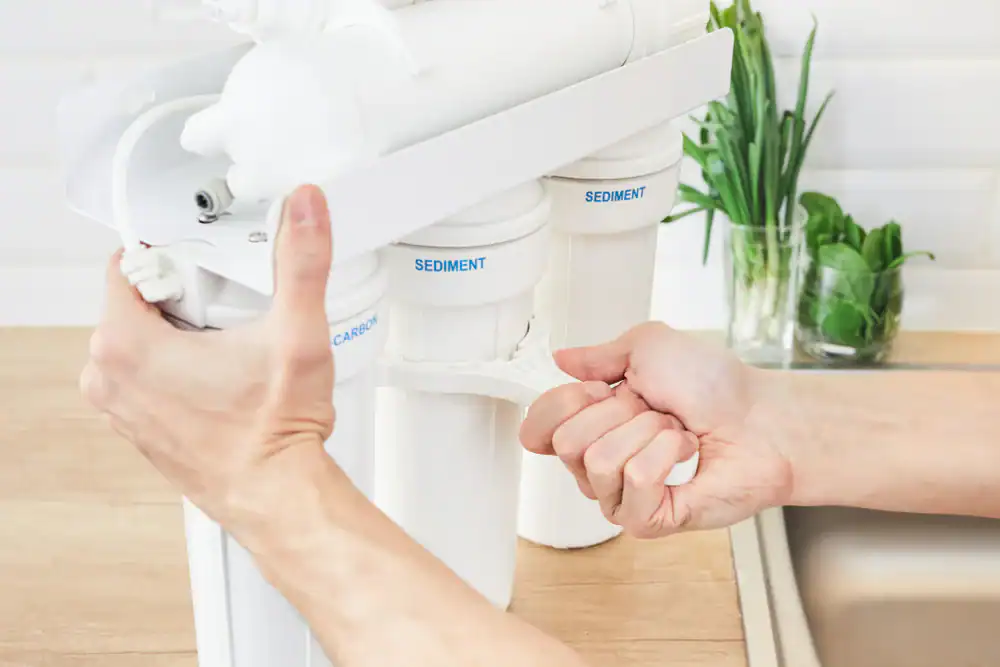
A reverse osmosis system works differently. We force water through a semipermeable membrane with pores small enough to block dissolved minerals, heavy metals, nitrates, PFAS compounds, and disinfection byproducts not just chlorine. The result is water that’s been filtered at a molecular level, not just passed through carbon media. For Blacks Ford residents dealing with the specific combination of Floridan Aquifer mineral hardness and chloraminated municipal water, RO is a significantly more complete solution.
Installation cost depends on your specific water chemistry and the configuration that makes sense for your home. We start with a water test to understand what you’re dealing with, then we provide a transparent quote based on what’s actually needed.
The more useful number to think about is the long-term cost comparison. Florida families who rely on bottled water typically spend $50 to $100 per month that’s $600 to $1,200 per year, every year. A well-maintained reverse osmosis system produces the same quality water at a fraction of that cost per gallon, and systems last 15 to 20 years with proper maintenance.
The math on payback period is usually 2 to 4 years. After that, you’re saving money every month. Quality Safe Water of Florida’s $500 military and first responder discount also applies to the installation cost, which is worth asking about when you call.
It does but well water in northwest St. Johns County typically requires a more customized approach than municipal water. Private wells in the Blacks Ford area draw directly from the Floridan Aquifer without any municipal treatment in between. That means no aeration, no disinfection, and no monitoring.
What comes out of the ground can include iron, sulfur compounds, mineral hardness, sediment, and in some cases bacteria depending on the well depth, casing condition, and local geology.
A reverse osmosis membrane is highly effective at removing dissolved minerals, heavy metals, and many chemical contaminants. However, if your well water has elevated iron or sediment levels, those need to be addressed with pre-filtration before the water reaches the RO membrane otherwise the membrane clogs prematurely and loses efficiency.
This is exactly why we start with a lab-grade water analysis for every well water customer in Blacks Ford. The test identifies what’s actually present, and the system is configured accordingly. Skipping the test and guessing at the solution is how you end up with a system that underperforms or fails early.
Most under-sink RO systems have two or three pre-filter stages that need to be replaced every 6 to 12 months, depending on your water quality and usage volume. The RO membrane itself typically lasts 2 to 3 years under normal residential use.
If your source water is harder or has higher sediment content which is common for both JEA municipal customers and well water users in northwest St. Johns County pre-filters may need attention closer to the 6-month mark rather than the 12-month mark.
The reason this matters is that a neglected filter system doesn’t just stop working it can actually start degrading water quality if filters are left in place too long. Spent carbon filters can become a breeding ground for bacteria. A clogged pre-filter puts strain on the membrane.
Staying on schedule keeps the system performing the way it was designed to. We handle ongoing maintenance as part of our service relationship we track your system’s schedule and reach out when it’s time. You shouldn’t have to remember to chase down a filter replacement on your own.
Please provide your email address so that we can stay in touch and answer any questions you have! We will be reaching back out shortly.
"*" indicates required fields
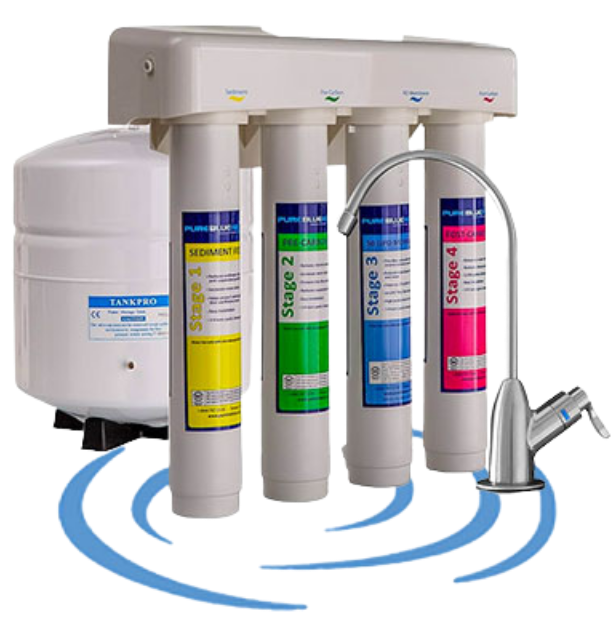
Get a free reverse osmosis drinking water system with the purchase of any whole-home water purification system.
*Cannot be combined with other offers. Mention this special when you call.