Summary:
If you’ve ever looked up reverse osmosis and walked away more confused than when you started, you’re not alone. The terminology gets technical fast — semipermeable membranes, TDS, permeate — and most explanations are written for engineers, not homeowners trying to figure out if their water is actually safe to drink.
Here’s what we’ve found after more than 50 years in water treatment: most people don’t need a chemistry lesson. They need to understand what’s happening to their water, stage by stage, in plain language. That’s what this guide does. And if you’re in Lake County, FL, there are a few things about your specific water supply that make this worth reading carefully.
What Is Reverse Osmosis Water and How Does the Process Work?
Reverse osmosis is a filtration process that pushes water through a semipermeable membrane under pressure. The membrane’s pores are 0.0001 microns — small enough to block dissolved minerals, heavy metals, PFAS compounds, pesticide residues, and disinfection byproducts that a standard carbon or pitcher filter simply cannot touch.
What comes out the other side is water that’s been stripped of the vast majority of what was dissolved in it. Up to 99 percent of 65 different contaminants, including lead, fluoride, arsenic, nitrates, and PFAS, can be removed in a properly functioning system. That’s not a marketing claim — it’s the performance standard that NSF/ANSI-certified systems are tested against.
The membrane does the heavy lifting. But it can’t do it alone, and this is where most explanations stop short.
Why the Stages Before the Membrane Matter More Than Most People Realize
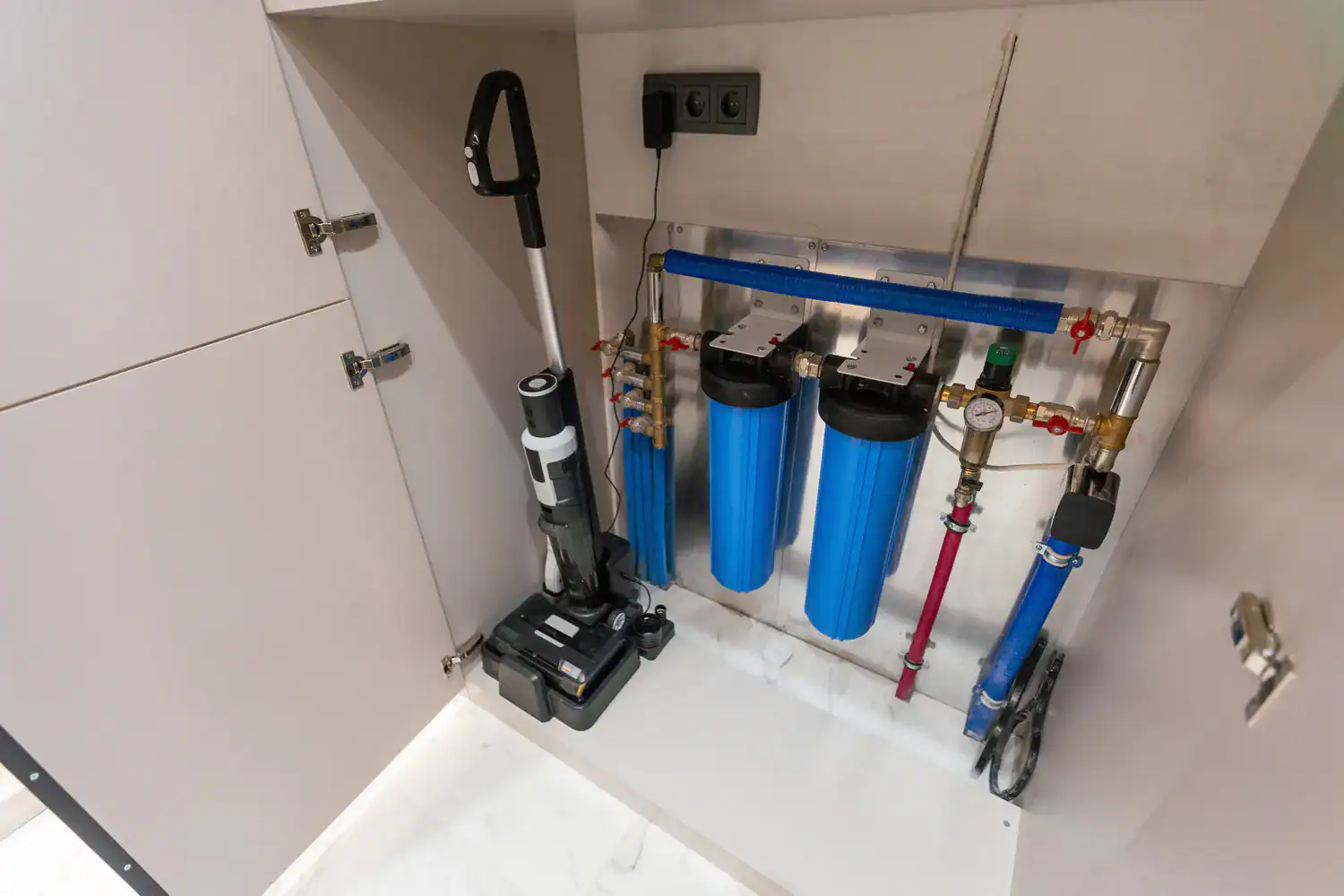
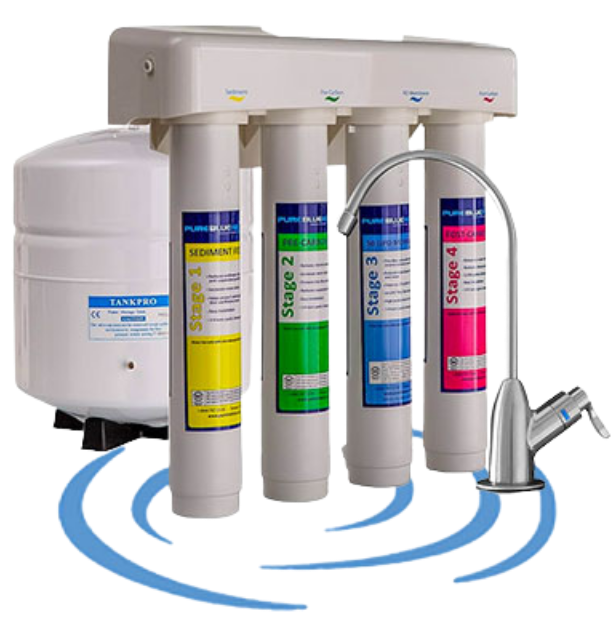
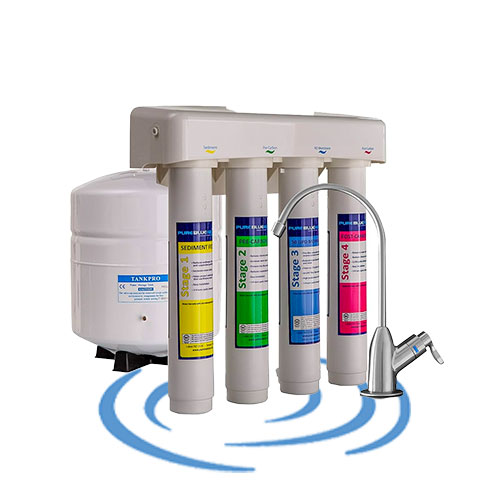
The RO membrane gets all the attention, but the stages that come before it are what determine whether that membrane lasts two years or ten. A typical residential system runs water through a sediment pre-filter first, which catches particles like sand, rust, and silt. Without it, those particles would foul the membrane surface and reduce its effectiveness over time.
After sediment filtration comes the activated carbon stage, and this one is critical — especially in Lake County, FL. Most municipal systems here, including Leesburg Utilities, use chloramine rather than chlorine as a disinfectant. Chloramine is harder to remove than chlorine, and it is particularly damaging to RO membranes. A carbon block pre-filter intercepts chloramine before it reaches the membrane, breaking it down and protecting the membrane from chemical degradation.
If you skip or undersize that carbon stage, you’re not just getting worse water — you’re actively shortening the life of the most expensive component in the system. This is one of the most common reasons DIY-installed systems underperform or fail early.
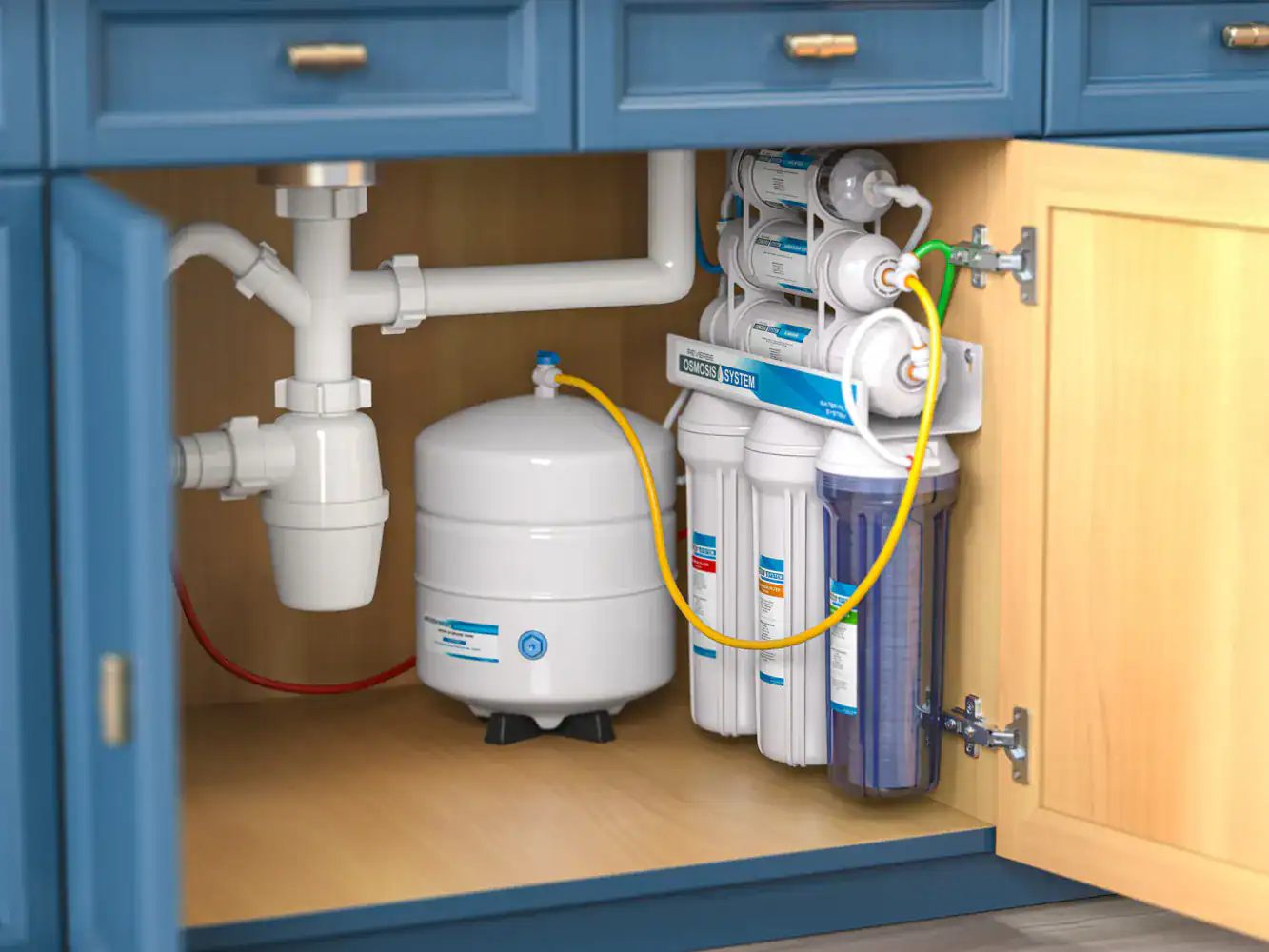
After the sediment and carbon pre-filters, water passes through the RO membrane itself, where dissolved contaminants are separated out and flushed away as concentrate. What passes through is called permeate — the filtered water that collects in a storage tank. Many systems then run this water through a final post-carbon polishing filter before it reaches your tap, which removes any residual taste or odor that may have developed in the storage tank.
Some systems include a sixth stage for remineralization, which adds beneficial minerals back into the water. RO water is slightly acidic and mineral-free by nature, and while the minerals your body needs come primarily from food rather than water, the remineralization stage improves taste and brings the pH back toward neutral. Whether you need it depends on your preferences and your water chemistry — which is exactly why a water analysis matters before any system is recommended.
RO Water vs. Bottled Water: What You're Actually Comparing
One of the most common questions we hear is whether RO water is the same as bottled water. The short answer is: often yes, and sometimes better. Many bottled water brands use reverse osmosis as their primary treatment process. You’re paying for the packaging, the transportation, and the convenience — not a fundamentally different product.
An under-sink RO system typically runs $80 to $150 per year in filter and membrane replacements. For a household of two that currently buys bottled water regularly, the math tends to favor a home system within the first 12 to 18 months. Beyond the cost, there’s the consistency factor. Bottled water quality varies by brand and source. A properly maintained home RO system produces the same quality water every time, on demand, at your kitchen sink.
There’s also a common concern worth addressing directly: does RO remove minerals your body needs? It does remove calcium and magnesium, the same minerals that cause scale buildup on your faucets and inside your appliances. But the minerals your body actually relies on come from food, not water. The trace amounts in tap water are not a meaningful nutritional source. And the contaminants RO removes — lead, arsenic, PFAS, nitrates — are not things you want to be getting a daily dose of, regardless of how small that dose might seem.
If you’re on a well in an unincorporated area of Lake County, FL, the calculus shifts further. Private wells draw directly from the Floridan Aquifer and are not subject to the same EPA monitoring requirements as municipal systems. The homeowner carries full responsibility for water quality. In former agricultural zones — areas with a history of citrus groves — the Florida Department of Health in Lake County actively monitors groundwater for ethylene dibromide, a pesticide banned in 1984 that is still detected in some areas today. Standard carbon filters do not adequately address EDB. Reverse osmosis does.
What an Activated Carbon Water Filter Actually Does in an RO System
Activated carbon is one of the most misunderstood components in residential water treatment. Most people associate it with pitcher filters or refrigerator filters — and it does work in those applications, removing chlorine and improving taste. But inside an RO system, activated carbon plays a different and more critical role.
Its primary job in a multi-stage RO system is membrane protection. Carbon adsorbs chlorine and chloramine before the water reaches the membrane, preventing chemical oxidation that would otherwise degrade the membrane over months rather than years. In Florida’s climate, where chloramine is the disinfectant of choice for warm-weather water systems, this stage is not optional — it’s the reason the membrane survives long enough to do its job.
How Activated Carbon Removes Contaminants Before They Reach the Membrane
Activated carbon works through a process called adsorption — contaminant molecules bind to the surface of the carbon material as water passes through. The “activated” part refers to how the carbon is processed: it’s treated at high temperatures to create an enormous surface area within a small volume. A single gram of activated carbon can have a surface area of more than 500 square meters. That’s a lot of binding sites for contaminants.
In the context of an RO system, the carbon block pre-filter handles chlorine, chloramine, volatile organic compounds (VOCs), and many synthetic chemicals that contribute to the taste and odor problems Lake County homeowners commonly describe — the “pool water” taste from municipal supplies, or the chemical edge that lingers even after the water sits in a glass.
What activated carbon doesn’t do is remove dissolved minerals, heavy metals, nitrates, or PFAS. That’s the membrane’s job. The two stages work together: carbon handles the chemical oxidants and organics that would damage the membrane or affect taste, and the membrane handles the dissolved solids and trace contaminants that carbon can’t bind. Remove either stage and the system is incomplete.
This is also why the filter replacement schedule matters. Carbon pre-filters in an RO system should be replaced every six to twelve months depending on your water quality and usage. An exhausted carbon filter stops protecting the membrane. You won’t necessarily notice the difference in taste right away — but the membrane is absorbing the damage. By the time the water quality degrades noticeably, the membrane may already need replacing. Following the maintenance schedule isn’t just about water quality in the moment — it’s about protecting the investment over the long term.
Does a Reverse Osmosis Filter Replace a Water Softener?
This is one of the most common points of confusion we encounter, and it’s worth being direct about: a reverse osmosis filter and a water softener are not the same thing, and for most Lake County homeowners, they are not interchangeable.
An under-sink RO system treats drinking water at a single point of use. It removes dissolved minerals, contaminants, and hardness from the water you drink and cook with. It does not treat the water flowing through your shower, your dishwasher, your water heater, or your laundry. If hard water is damaging your appliances and plumbing — and in Lake County, FL, it very likely is — an under-sink RO system alone won’t stop that.
The Floridan Aquifer delivers water with hardness levels that run 10 to 20 grains per gallon in many parts of Lake County, FL. The Water Quality Association classifies anything above 10.5 grains per gallon as “very hard.” That level of mineral load, running through your water heater and dishwasher every day, is documented to cost Lake County homeowners between $13,800 and $22,300 in appliance and plumbing damage over a ten-year period. An under-sink RO system at the kitchen sink doesn’t prevent that.
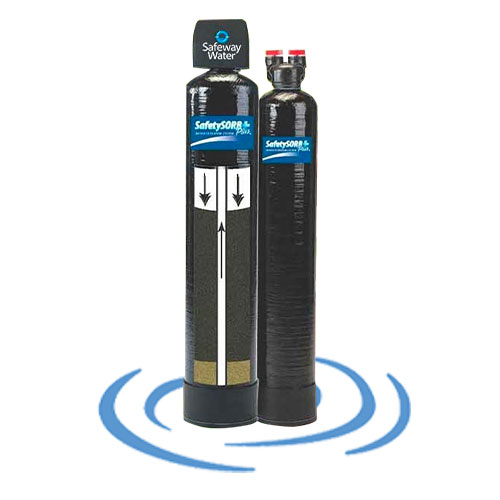
A whole-house filtration or softening system addresses the hardness problem at the point of entry, before water reaches any fixture or appliance. An RO system at the sink then handles drinking water quality at a level of refinement that whole-house systems aren’t designed to achieve. The two systems serve different purposes and, for many households, work best together.
More stages don’t automatically mean better water, either. What matters is whether the stages in your system address the specific contaminants present in your water. A five-stage system properly matched to your water chemistry will outperform a six-stage system with stages that don’t correspond to anything actually in your water. That’s why a genuine water analysis — not a sales demonstration, but a real test of what’s in your specific water — is the right starting point before any system is recommended or installed.
Choosing the Right Reverse Osmosis System for Lake County Water
Reverse osmosis is not complicated once you understand what each stage is actually doing. The membrane removes dissolved contaminants at a level no other residential technology matches. The carbon pre-filter protects that membrane and handles the chemical issues that affect taste and odor. The sediment filter protects everything downstream. Together, they produce water that’s consistently cleaner than what comes out of most taps in Lake County, FL.
What makes the difference between a system that performs for a decade and one that disappoints within two years is not the number of stages — it’s whether the system was sized and configured for your actual water, installed correctly, and maintained on schedule.
If you’re in Lake County, FL and you’re ready to find out what’s actually in your water before making any decisions, we at Quality Safe Water of Florida LLC offer a free water analysis with no pressure and no obligation. We’ve been doing this work for more than 50 years, we’re A-rated with the Better Business Bureau with zero complaints, and we service every system we install. That’s where a good conversation starts.