Summary:
If you’re researching UV water filters, you’ve probably seen claims about 99.99% bacteria removal and chemical-free disinfection. Those claims are accurate. UV technology is remarkably effective at what it does.
The question is: what doesn’t it do?
UV light neutralizes living organisms in water. It doesn’t remove dissolved chemicals, minerals, or synthetic compounds. And if you’re dealing with Florida’s hard water, agricultural runoff, or emerging contaminants like PFAS, UV alone won’t solve those problems.
This isn’t about whether UV works—it does. It’s about understanding when UV is the right tool, and when you need something more comprehensive. Let’s break down what UV water filtration actually accomplishes and where it fits into a complete whole house PureLight system.
How UV Water Filters Work
UV water filtration uses ultraviolet light at a specific wavelength—254 nanometers—to disrupt the DNA of microorganisms. When bacteria, viruses, or parasites pass through the UV chamber, the light penetrates their cells and scrambles their genetic material. They can’t reproduce. They can’t cause infection. They’re effectively neutralized.
The process happens in seconds. Water flows through a chamber containing a UV lamp protected by a quartz sleeve. As the water passes the lamp, every drop gets exposed to germicidal UV light. There’s no contact time required, no chemical reaction, no waiting period. The disinfection is instantaneous.
UV systems are typically installed as the final stage in a water treatment setup—right before water enters your home’s plumbing. This positioning matters. By the time water reaches the UV chamber, it should already be filtered and clear. UV light can only disinfect what it can reach, and anything blocking the light creates a shadow where organisms can survive.
What Microorganisms Does UV Actually Remove
UV disinfection targets living organisms. It’s highly effective against bacteria like E. coli, Salmonella, and Legionella—the kinds of pathogens that cause waterborne illness. It also neutralizes viruses, including norovirus, hepatitis A, and enteroviruses that can survive in water for extended periods.
Parasites are another target. Cryptosporidium and Giardia are notoriously resistant to chlorine treatment, which is why municipal water systems sometimes issue boil-water advisories when these parasites are detected. UV light handles both effectively without the need for boiling or chemical disinfection.
The effectiveness rate is impressive. Properly maintained UV systems achieve 99.99% inactivation of these microorganisms. But that number comes with conditions. The water must be clear. The lamp must be replaced annually. The quartz sleeve needs regular cleaning. And the system must be sized correctly for your home’s flow rate.
UV doesn’t kill organisms in the traditional sense—it renders them unable to reproduce. From a health standpoint, the result is the same. They can’t make you sick. But this distinction matters when you’re comparing UV to other treatment methods like reverse osmosis, which physically removes organisms from the water rather than just neutralizing them.
For well water users in Marion County, UV disinfection addresses a real concern. Private wells aren’t regulated or treated by municipal systems. Bacteria can enter through cracks in the well casing, surface water infiltration, or nearby septic systems. UV provides a reliable barrier against these biological threats without introducing chlorine or other chemicals into your water supply.
What UV Water Filters Don't Remove
This is where expectations and reality need to align. UV light disinfects. It doesn’t filter. It doesn’t remove dissolved substances, and it doesn’t affect water chemistry.
Heavy metals like lead, arsenic, and mercury pass right through UV treatment unchanged. If your water contains elevated levels of these contaminants—which can occur in older homes with lead pipes or in areas with naturally occurring arsenic—UV won’t address them. You need filtration media designed specifically for heavy metal removal.
Chemical contaminants are similarly unaffected. Volatile organic compounds, pesticides, herbicides, and industrial solvents aren’t impacted by UV light. These substances require activated carbon filtration or reverse osmosis to remove effectively.
PFAS—the “forever chemicals” that have become a growing concern across Florida—aren’t removed by UV systems. These synthetic compounds require specialized treatment using activated carbon, ion exchange resins, or reverse osmosis membranes. Recent research shows that advanced filtration can remove up to 98% of PFAS, but UV technology isn’t part of that solution.
Fluoride is another contaminant UV doesn’t touch. Many municipal water systems add fluoride for dental health, and some homeowners prefer to remove it. If that’s your goal, you’ll need reverse osmosis or specialized fluoride removal media. UV has no effect on fluoride concentrations.
Hardness minerals—calcium and magnesium—also pass through UV treatment unchanged. Florida’s groundwater is notorious for high mineral content. Hard water causes scale buildup in pipes and appliances, reduces soap efficiency, and leaves spots on dishes. UV disinfection doesn’t soften water. That requires a water softener or salt-free conditioner.
Sediment and particulates aren’t removed by UV either. Sand, silt, rust, and other suspended particles need to be filtered out before water reaches the UV chamber. If they’re not, they create shadows that protect microorganisms from UV exposure, reducing the system’s effectiveness. This is why pre-filtration is essential for any UV installation.
PFAS Water Filter Technology and UV Systems
PFAS contamination has become a significant concern for homeowners, particularly those near industrial sites, military bases, or areas with firefighting foam use. These synthetic chemicals don’t break down naturally, which is why they’re called “forever chemicals.” They’re invisible, tasteless, and odorless—you can’t detect them without laboratory testing.
UV water filters don’t remove PFAS. The molecular structure of these compounds isn’t affected by ultraviolet light. They pass through UV chambers completely unchanged, which means if PFAS are present in your water supply, UV disinfection alone won’t protect you.
PFAS removal requires different technology. Activated carbon filtration can remove some PFAS, particularly longer-chain compounds, but effectiveness varies based on the specific carbon media used and the types of PFAS present. Ion exchange resins offer another approach, attracting and binding negatively charged PFAS molecules. Reverse osmosis provides the most comprehensive PFAS removal, with properly designed systems removing more than 90% of a wide range of PFAS compounds, including difficult-to-treat short-chain varieties.
Combining UV with PFAS Filtration
The most effective approach to PFAS contamination combines multiple treatment technologies in a coordinated system. This is where understanding how different methods work together becomes crucial for homeowners investing in water treatment.
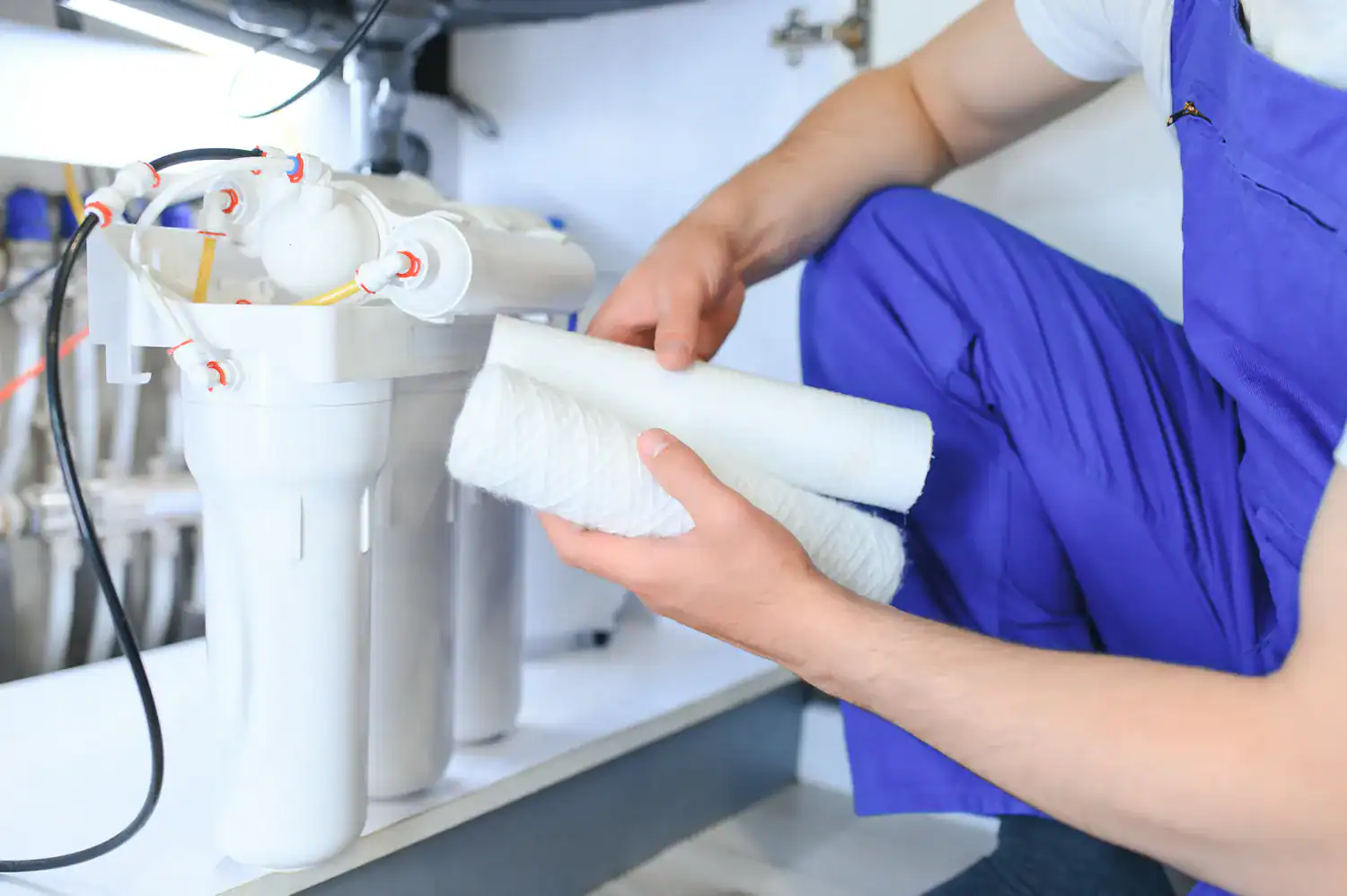
A comprehensive system typically starts with sediment filtration to remove particles and protect downstream components. Next comes activated carbon filtration, which removes chlorine, volatile organic compounds, and some PFAS. An ion exchange stage can target additional PFAS compounds along with other dissolved contaminants. Finally, UV disinfection provides the last line of defense against any microorganisms that might be present.
This layered approach addresses both chemical and biological threats. The carbon and ion exchange stages handle PFAS and other dissolved contaminants. The UV stage ensures no bacteria or viruses make it into your home’s plumbing. Each technology does what it does best, and the combination provides protection that no single method can achieve alone.
For Marion County homeowners concerned about both water safety and PFAS contamination, this integrated approach makes sense. It’s not about choosing between UV and PFAS filtration—it’s about using both technologies where they’re most effective. The investment in a multi-stage system pays off in comprehensive protection and peace of mind.
Testing is the starting point. Without knowing what’s actually in your water, you’re guessing about which treatment methods you need. Professional water testing identifies specific contaminants and their concentrations, which allows for system design that targets your actual water quality issues rather than addressing hypothetical problems.
Does Reverse Osmosis Remove PFAS Better Than UV
This comparison comes up frequently, but it’s based on a misunderstanding of what each technology does. UV and reverse osmosis serve completely different purposes in water treatment. UV disinfects. Reverse osmosis filters and purifies. They’re not competing technologies—they’re complementary ones.
Reverse osmosis forces water through a semi-permeable membrane with pores small enough to block PFAS molecules, heavy metals, dissolved salts, and a wide range of other contaminants. The membrane physically separates these substances from the water, sending them to drain while purified water continues through the system. For PFAS removal specifically, reverse osmosis is highly effective, typically removing more than 90% of these compounds.
UV systems, by contrast, don’t remove anything. They neutralize living organisms by damaging their DNA. PFAS molecules don’t have DNA. They’re synthetic chemicals, not living organisms. UV light passes through them without effect.
The question isn’t which technology is better—it’s which one addresses your specific water quality concerns. If you’re dealing with bacterial contamination from a private well, UV disinfection solves that problem. If you’re concerned about PFAS, heavy metals, or dissolved contaminants, reverse osmosis provides the removal you need.
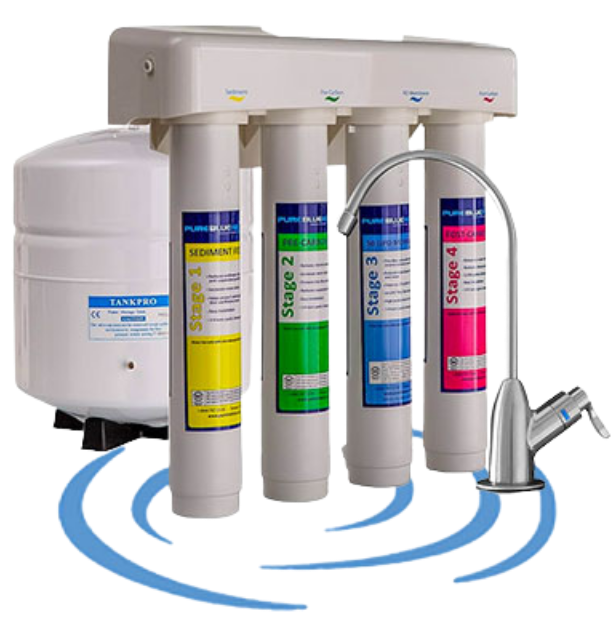
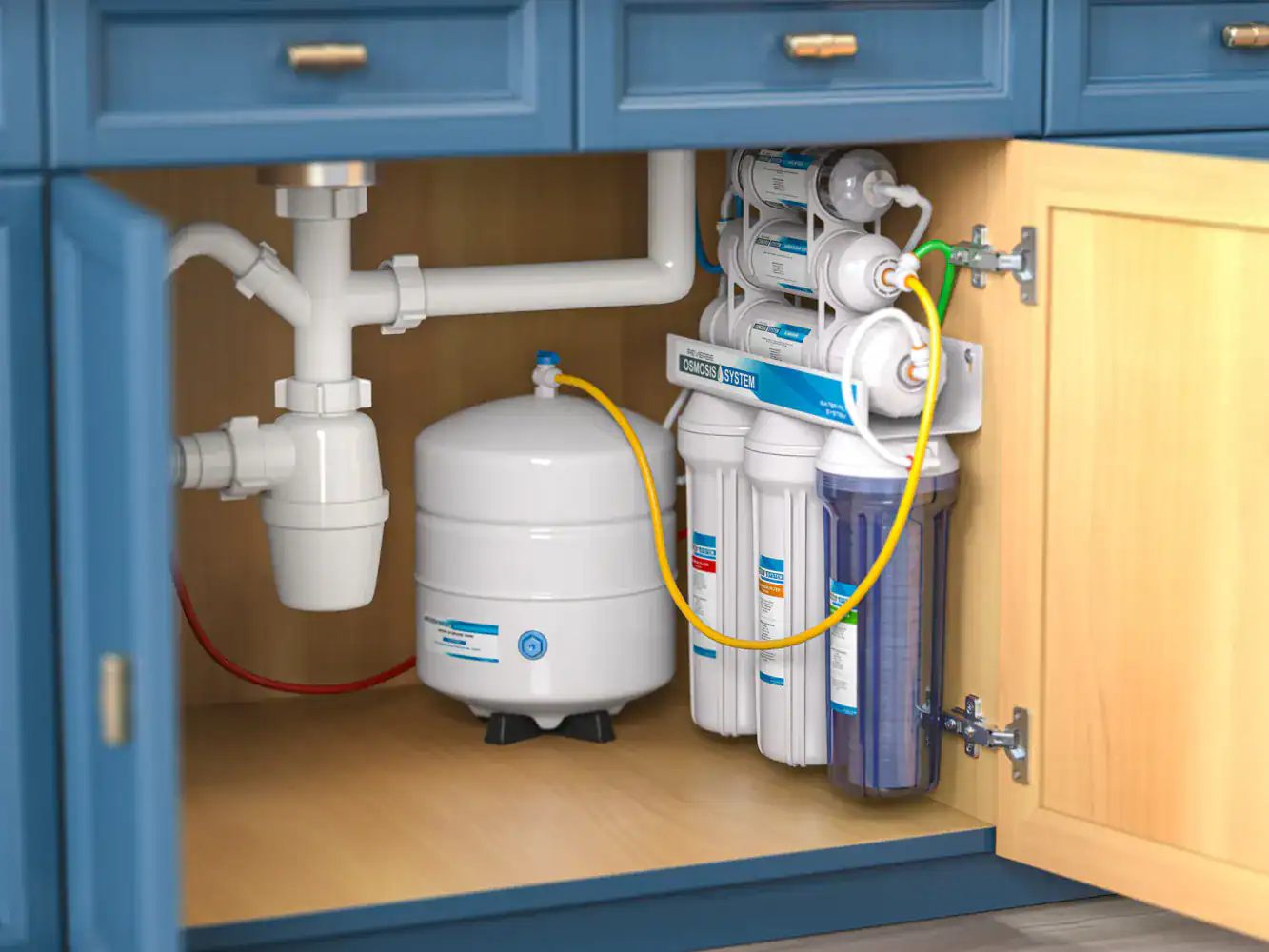
Many homeowners end up using both. A whole-house filtration system might include sediment filters, carbon filtration, and UV disinfection for comprehensive treatment throughout the home. Then a point-of-use reverse osmosis system under the kitchen sink provides additional purification for drinking and cooking water. This combination addresses both biological and chemical threats at different points in the water supply.
The key is matching the technology to the problem. Professional water testing identifies what’s actually in your water. Then you can design a treatment system that addresses those specific issues rather than installing equipment you don’t need or missing contaminants that require attention.

Building a Complete Water Treatment System
UV water filtration is powerful technology for what it does—neutralizing bacteria, viruses, and parasites without chemicals. It’s fast, efficient, and environmentally friendly. But it’s not a complete water solution on its own.
The most effective water treatment systems combine multiple technologies that work together to address different types of contaminants. UV handles biological threats. Activated carbon removes chlorine and organic compounds. Ion exchange or reverse osmosis tackles PFAS, fluoride, and heavy metals. Water softeners address hardness minerals. Each technology has a specific role, and the combination provides comprehensive protection.
For Marion County homeowners dealing with well water, hard water, or concerns about emerging contaminants, this integrated approach makes the difference between partial treatment and complete water quality. The investment in a properly designed system protects your family’s health, extends the life of your appliances and plumbing, and provides peace of mind that your water is truly clean.
At Quality Safe Water of Florida LLC, we specialize in designing these comprehensive systems based on actual water testing and your home’s specific needs. With 50+ years of combined experience, WQA certified professionals, and an A-rated BBB standing with zero complaints, we bring the expertise needed to match the right technologies to your water quality challenges.