Reach Out Today
Please provide your email address so that we can stay in touch and answer any questions you have! We will be reaching back out shortly.


Hear from Our Customers
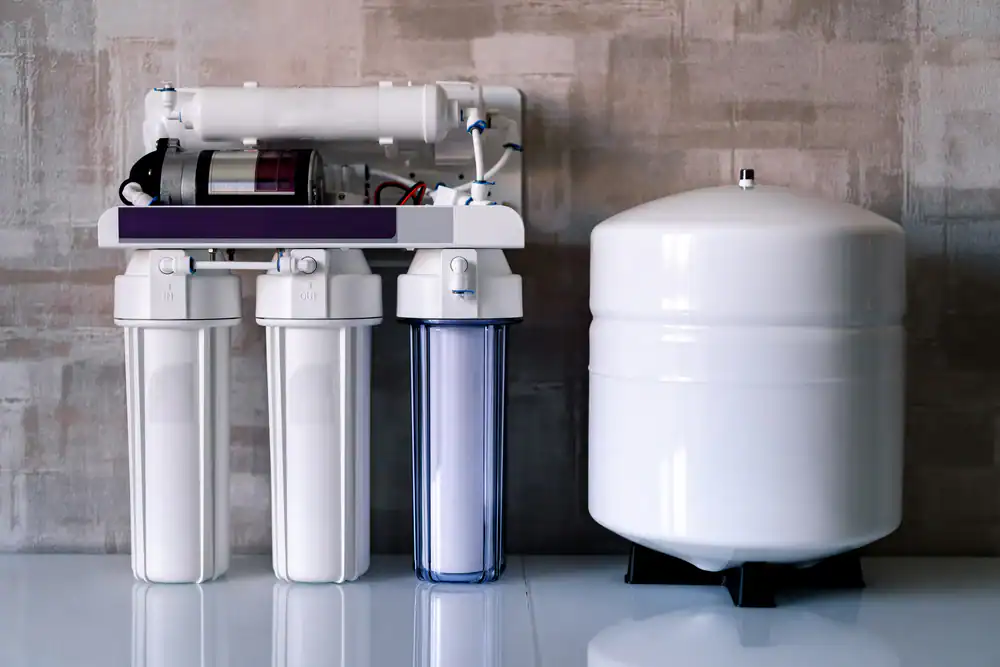
If your Sabal Chase home was built in the 1970s — and most of them were — your pipes have been carrying Miami-Dade’s chloramine-treated water through aging infrastructure for decades. That combination does real damage. Scale builds up inside water heaters, dishwashers, and washing machines. Fixtures corrode faster. And the water you drink, cook with, and shower in carries a chemical signature that no pitcher filter is actually designed to handle.
That last part matters more than most people realize. Miami-Dade uses chloramine as its primary disinfectant, not just chlorine. Standard carbon pitcher filters are largely ineffective against chloramines — so if you’ve been relying on one, you’ve been filtering around the problem, not through it. A whole house point of entry system with catalytic carbon filtration addresses the actual chemistry of Miami-Dade’s water supply, not a generic national average.
The difference you notice first is usually the smell — or the absence of it. No more chemical odor from the shower. No more white scale collecting on your showerhead or glass enclosure. Softer water on your skin and hair. Appliances that run more efficiently and last longer. And the confidence that the water your kids drink from any tap in the house has been treated the same way — not just the one under the kitchen sink.
We’ve been in the water treatment business for more than 50 years. For context, that means we were already an established company when Sabal Chase’s homes were being built in the 1970s. That kind of track record is not something you manufacture — it is something you earn one installation at a time, across decades, in the same community.
We hold a BBB A-rating with zero complaints on file. In Miami-Dade’s water treatment market — where high-pressure sales tactics and post-installation disappearing acts are well-documented — that record is genuinely rare. We are also members of the Water Quality Association, which holds us to a professional code of ethics that many local competitors simply are not bound by. Our 5-star review average reflects the same consistency our BBB record does: customers name the technicians who came to their home, describe the experience in specific terms, and come back.
We are not a national franchise that swaps in your city name and calls it local service. We know the Biscayne Aquifer. We know what Miami-Dade’s chloramine chemistry means for your Sabal Chase home. And we know what Sabal Chase homeowners are actually dealing with — because this is the market we have served for half a century.
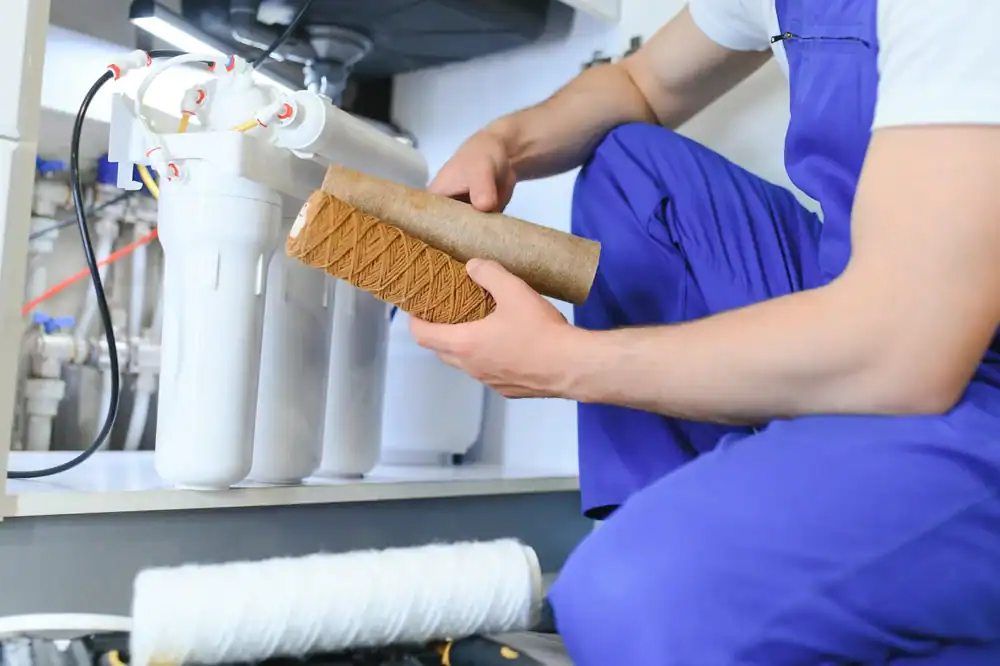
It starts with a water test, not a sales pitch. Before we recommend a system, we test your specific water to understand what is actually in it. For Sabal Chase homes — built before 1986, served by Miami-Dade WASD, and drawing from the Biscayne Aquifer — that test often reveals a combination of chloramine, hard water minerals, and contaminants like PFAS, arsenic, or trihalomethanes at levels that exceed independent health guidelines. The test tells you what you are actually dealing with. The recommendation follows the data.
From there, we match the right system to your home’s specific water chemistry and your household’s size and usage. A whole house point of entry system is installed at the main water line — which means every tap, shower, appliance, and fixture in your home draws from treated water from that point forward. Installation in Miami-Dade County requires a permit, and we handle that process as part of the job. If you are in an HOA-governed community like Sabal Chase, it is worth confirming any approval requirements with the association before work begins — something our licensed, experienced installers will walk you through.
After installation, you are not left to figure it out alone. Filter maintenance schedules, replacement timelines, and any follow-up testing are part of the ongoing relationship. That is what 50 years in one market looks like in practice.
Ready to get started?
Our whole house water filter is not a single-stage unit pulled off a shelf. It is a multi-stage filtration system engineered around the specific contaminants documented in Miami-Dade’s water supply. That means catalytic carbon filtration for chloramine removal, sediment pre-filtration to protect downstream components, and additional treatment stages — including options for PFAS reduction, UV purification for bacterial control, and water conditioning to address the moderately hard water that causes scale buildup throughout Sabal Chase’s 1970s-era plumbing.
Every system is sized to your home. A 2-bedroom townhome on SW 112th Avenue has different flow demands than a 5-bedroom property near Killian Pines. Getting that sizing right matters — an undersized system drops water pressure, and an oversized one wastes money. The assessment that precedes every installation accounts for your home’s square footage, the number of bathrooms, and your household’s daily usage patterns before anything is recommended.
For active military, veterans, and first responders — a significant part of the Sabal Chase and South Miami-Dade community, particularly those connected to Homestead Air Reserve Base — we offer a $500 discount on whole house systems. It is a real, dollar-denominated benefit for qualifying households, not a footnote. If you serve or have served, ask about it when you call.
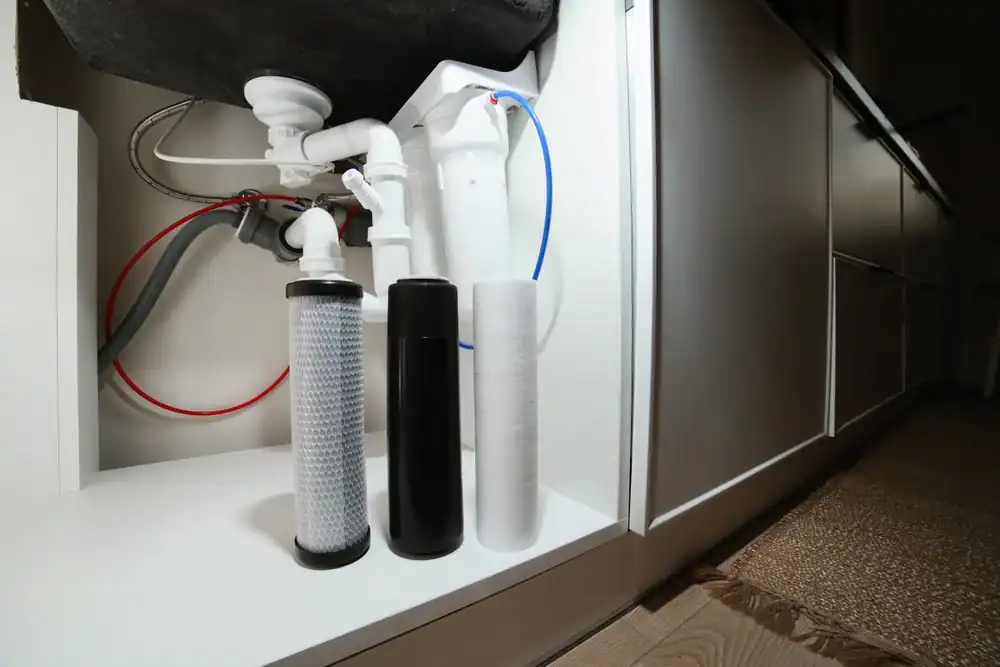
The most likely reason is chloramine. Miami-Dade Water and Sewer Authority uses chloramine — not just chlorine — as its primary disinfectant. Chloramine is more chemically stable than chlorine, which means it stays in the water longer and travels further through the distribution system before it reaches your tap. The problem is that most standard pitcher filters and basic faucet-mounted filters are designed to reduce chlorine, not chloramine. They are largely ineffective against the specific disinfectant that is actually in your water.
That is why Sabal Chase residents who have been using pitcher filters for years still notice the chemical smell — especially in the shower, where chloramine vaporizes in hot water and is inhaled directly. A whole house catalytic carbon filtration system is specifically effective against chloramine. It treats the water at the main line, before it reaches any fixture, so the problem is addressed at the source rather than partially masked at the point of use.
Yes, and this is documented. The Environmental Working Group’s Tap Water Database (system FL4130871 — Miami Dade Water and Sewer Authority) has identified 21 contaminants in Miami-Dade’s water supply. Several of them exceed the EWG’s independent health guidelines even while technically meeting federal legal limits. Arsenic has been detected at levels up to 243 times the EWG’s recommended threshold. Chromium-6 at 4.3 times. Radium at 3.3 times. PFAS — the class of compounds linked to cancer, thyroid disease, and reproductive harm — have made Miami one of the highest-ranked cities in the country for drinking water contamination.
Federal legal limits and health-protective limits are not the same number. The legal limits were set based on what is technically feasible to treat at scale, not what is safe for long-term daily consumption. Understanding that distinction is important when you are deciding whether your household needs additional filtration beyond what the utility provides.
It can, and it is worth knowing about. The federal ban on lead solder and lead-containing plumbing materials did not take effect until 1986. Sabal Chase’s homes were built between 1974 and 1978 — which means any original plumbing components that remain, including solder at pipe joints, could be a source of lead entering your water after it leaves the municipal distribution system. The utility is responsible for treating water up to the meter. What happens inside your home’s plumbing is your responsibility.
Lead has no safe level of exposure, particularly for children. The only way to know whether your home’s plumbing is contributing lead to your water is to test it — and that is exactly where we start. A water test specific to your home gives you real data, not assumptions. If lead is present, a point of entry whole house system installed at the main line addresses it before water reaches any fixture, including the taps your family uses every day.
A properly sized system should not cause any noticeable pressure drop during normal household use. The key word is properly sized. A system that is undersized for your home’s flow rate — or one that uses a filter housing too small for the demand — will restrict flow and create pressure issues. This is one of the reasons that getting the sizing right before installation matters as much as the system itself.
In Sabal Chase specifically, homes range from around 1,080 to over 2,800 square feet, with one and a half to four bathrooms. A 4-bathroom home running multiple fixtures simultaneously has different flow demands than a 2-bathroom townhome. We account for your home’s specific size and usage before recommending a system. It is also worth noting that in older homes with decades of hard water scale buildup inside pipes, a filtration system that stops further mineral accumulation can actually improve flow over time as the system prevents additional narrowing of the pipe interior.
An under-sink filter treats the water at one point of use — typically your kitchen tap. Everything else in your home is untreated. Your shower. Your bathroom sink. Your washing machine. Your dishwasher. Your refrigerator water line if it is not on the same filtered tap. In Miami-Dade, where chloramine is present in all of the water coming into your home, limiting filtration to the kitchen means every shower you take is exposing you to unfiltered water — and chloramine in hot shower steam is inhaled, not just consumed.
Hard water minerals are also damaging appliances throughout your home regardless of whether your kitchen tap is filtered. Your water heater, washing machine, and dishwasher are all running on untreated water if you only have an under-sink unit. Hard water scale reduces water heater efficiency by up to 48% and shortens appliance lifespan significantly. A whole house point of entry system treats every gallon at the main line, so every tap, every appliance, and every fixture in your Sabal Chase home draws from the same filtered, conditioned water.
Please provide your email address so that we can stay in touch and answer any questions you have! We will be reaching back out shortly.
"*" indicates required fields