Reach Out Today
Please provide your email address so that we can stay in touch and answer any questions you have! We will be reaching back out shortly.


Hear from Our Customers
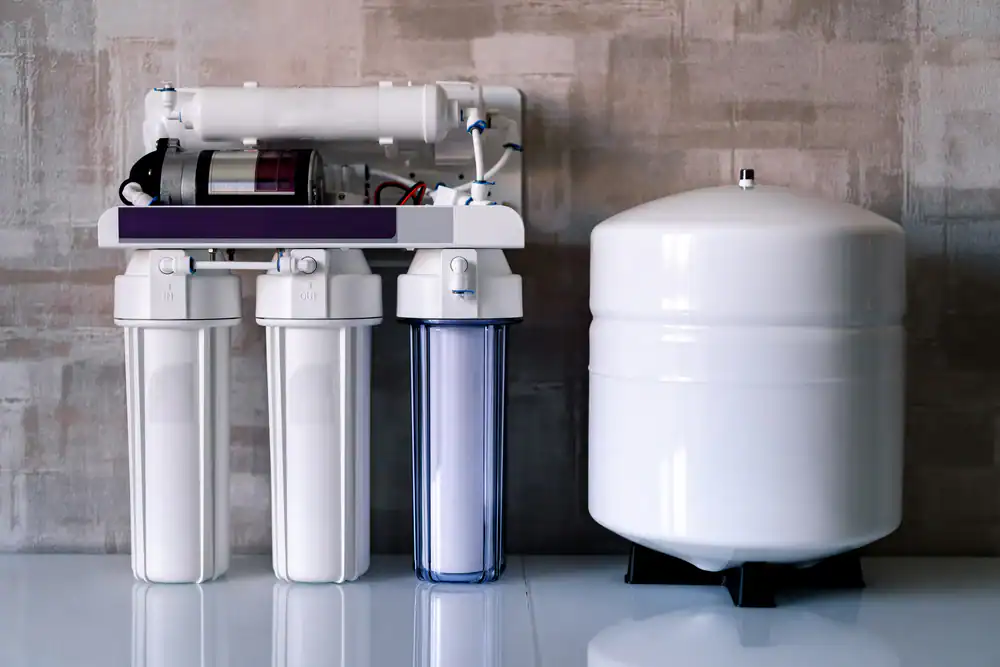
When water is treated at the point it enters your home — before it reaches any faucet, shower, or appliance — the difference isn’t subtle. The chloramine smell that hits you in the shower every morning disappears. The white scale that builds up on your fixtures and inside your water heater slows down. The water you’re drinking, cooking with, and bathing in is clean from the start, not just at one sink with a pitcher filter.
For homeowners in Rio Grande, this matters more than it does in most of Florida. The Florida Keys Aqueduct Authority has publicly acknowledged that Monroe County has the highest average PFAS contamination of any county in the state — 79 nanograms per liter. The EPA’s compliance deadline for public water systems isn’t until 2029. That’s the gap you’re living in right now, and a whole house point-of-entry system addresses it at the household level while the utility works toward its infrastructure fix.
The hard water piece is just as real. The FKAA draws from a limestone aquifer, which means naturally elevated calcium and magnesium in every gallon. In Rio Grande and the Lower Keys, where getting a water heater replaced or a plumber out to your home involves navigating the end of a 113-mile highway, protecting your appliances from scale buildup isn’t a luxury — it’s just smart math.
We’ve been doing this for more than 50 years. Not dabbling in it between plumbing calls or HVAC installs — whole-house purification, water softening, and drinking water systems are the only thing we do. That focus matters when you’re trying to solve a real problem, not just buy something off a shelf.
We hold a BBB A-rating with zero complaints on record — something you can verify before you ever pick up the phone. We’re also members of the Water Quality Association, which holds member companies to a professional code of ethics that a lot of local and regional operators simply don’t meet. In an industry that has a well-documented history of high-pressure sales tactics and systems that never get serviced, that record is the most honest thing a company can show you.
For Rio Grande homeowners and everyone else in Monroe County — whether you’re on Big Pine Key, Summerland Key, or right here — we bring the same standard every time. Active military and first responders near NAS Key West qualify for a $500 discount on whole-house systems, and we support the Tunnels to Towers Foundation, which provides mortgage-free homes to the families of fallen first responders and veterans.

It starts with a water quality assessment. Before anything is recommended, we look at what’s actually in your water — hardness levels, chloramine presence, PFAS exposure risk, and anything else relevant to your home and the FKAA’s supply. For Rio Grande homeowners, that assessment is grounded in real, documented local data, not a generic sales pitch about Florida water.
From there, a multi-stage filtration system is sized and configured for your home’s specific flow rate and water quality profile. The system installs at the main line where water enters your house — that’s the point-of-entry approach, meaning every faucet, every shower, every appliance gets treated water from that point forward. Because Rio Grande falls under Monroe County jurisdiction as an unincorporated community, any installation that involves modifications to your home’s plumbing may require a Monroe County building permit. We handle that process with you — we know Florida’s licensing requirements and what Monroe County expects.
Once the system is in place, you’re not left to figure it out alone. Filter maintenance schedules, replacement timelines, and performance checks are all part of the ongoing relationship. We’re still there after the job is done.

Ready to get started?
A whole house filtration system for a Rio Grande home isn’t the same conversation as one for a home in Orlando or Sarasota. The water coming through your pipes has traveled 135 miles from the J. Robert Dean Water Treatment Facility on the mainland, through a 45-year-old transmission line, treated with chloramines that form disinfection byproducts along the way, and carrying PFAS levels that are the highest documented average in Florida. That’s a specific water quality picture, and it calls for a system built around it.
Our multi-stage approach addresses each layer of the problem separately. Sediment filtration handles particulates. Activated carbon targets chlorine, chloramines, and the trihalomethane byproducts they form during that long transmission journey. Specialty filtration stages address PFAS compounds. And if your water hardness is causing scale buildup in your water heater or on your fixtures, a softening component handles that too — protecting every water-using appliance in your home from the kind of mineral damage that shortens equipment life and drives up replacement costs.
In Rio Grande and the Lower Keys, the cost of appliance failure is higher than almost anywhere else in Florida. A system designed for what’s actually in your water is the most direct way to reduce that exposure.
Yes, and it’s publicly documented. A 2023 study of Florida drinking water found that Monroe County — where Rio Grande is located — had the highest average PFAS contamination of any county in the state, at 79 nanograms per liter. PFAS are synthetic compounds linked to elevated risks of certain cancers, thyroid disease, high cholesterol, and reproductive harm. They don’t break down in the environment or in your body, which is why they’re called “forever chemicals.”
The Florida Keys Aqueduct Authority has acknowledged the problem and committed $100 million toward a nanofiltration facility to address it. But the EPA’s compliance deadline for public water systems isn’t until 2029. That means right now, today, the water coming out of your tap in Rio Grande is from a system that has publicly acknowledged it needs remediation — and is still years away from completing it. We address that gap at your home with a whole house filtration system that has the right treatment stages, independent of what the utility’s timeline looks like.
The FKAA uses chlorine and chloramines to disinfect the water supply — that’s standard practice for municipal water treatment, and it’s necessary for safe delivery. The problem is that your water travels 135 miles from the treatment facility on the mainland to reach Rio Grande. Over that distance, chlorine and chloramines react with naturally occurring organic matter in the water and form compounds called trihalomethanes, or TTHMs. Those are classified as probable human carcinogens with documented links to bladder and colon cancer with long-term exposure.
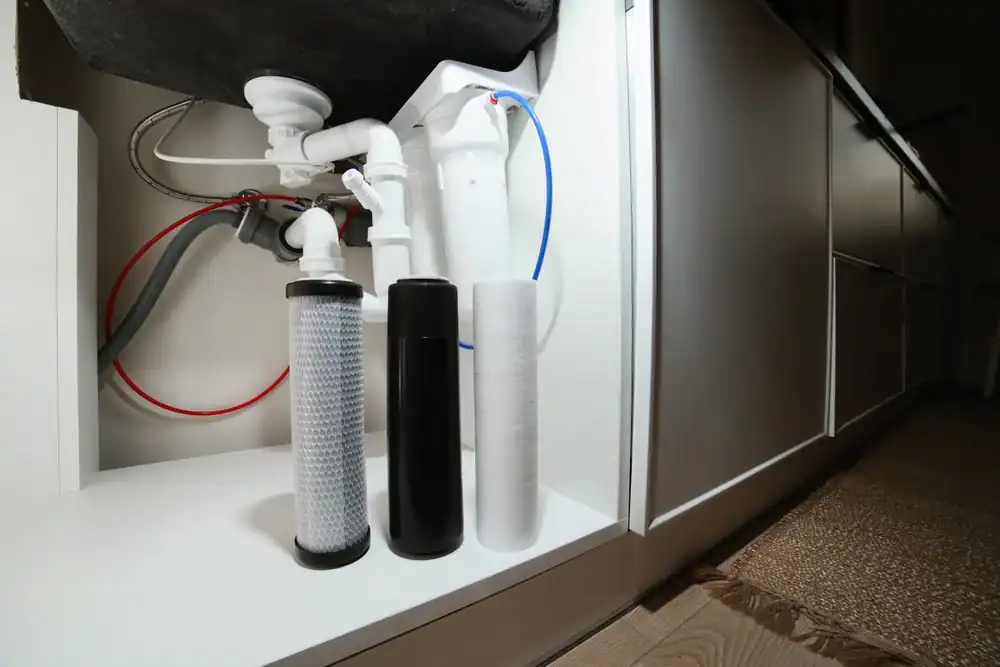
The chemical smell you notice — especially in the shower where you’re breathing in steam — is a symptom of that reaction. An under-sink filter or a pitcher addresses it at one faucet. Our whole house point-of-entry system with activated carbon filtration removes chlorine, chloramines, and their byproducts from every tap in your home. That includes the shower, the bathtub, the water going into your washing machine, and everything else — not just the kitchen sink.
Yes. The FKAA draws from the Biscayne Aquifer, which is a limestone geological formation. Limestone geology produces naturally hard water — water with elevated calcium and magnesium content. When that water heats up or sits in pipes and appliances, those minerals drop out of solution and form scale deposits. You’ve probably seen it as white buildup around faucets, on showerheads, or on the heating element of your water heater.
The practical impact goes beyond aesthetics. Scale buildup inside a water heater reduces its efficiency and shortens its lifespan. It clogs washing machine components, etches glass shower doors, and reduces flow through fixtures over time. In Rio Grande and the Lower Keys, the cost of that damage is amplified by geography — getting a water heater replaced or a plumber out to your home means coordinating a service call to a community at the end of a 113-mile highway. Our whole house filtration system with a softening component reduces the mineral load in your water before it reaches your appliances, extending their life and reducing the frequency of expensive repairs.
A point-of-entry system installs on the main water line where water enters your home — before it branches off to any faucet, shower, toilet, or appliance. That means every drop of water in your house is filtered, not just the water at one specific tap. It’s the difference between treating your whole home’s water supply and treating one faucet.
Pitcher filters, refrigerator filters, and under-sink systems are point-of-use devices. They work at one location and do nothing for the rest of the house. That matters because exposure to contaminants like chloramines and PFAS doesn’t only happen when you drink a glass of water — it happens in the shower through steam inhalation, through skin contact during bathing, and through every appliance that uses water. For a Rio Grande homeowner dealing with PFAS-contaminated, chloramine-treated water from a 135-mile aging transmission line, a partial solution at one sink isn’t enough. A point-of-entry system treats the problem at the source — the moment water enters your home.
It’s a fair question, and it’s one that doesn’t come up much outside of communities like Rio Grande. Hurricane Irma in 2017 caused significant damage throughout the Florida Keys, including to water infrastructure. When a major storm event compromises the FKAA’s transmission line, treatment facility, or distribution system, the water quality arriving at your home can be affected — even after service is restored.
A whole house point-of-entry filtration system provides an additional layer of protection at the household level that operates independently of what’s happening upstream in the utility’s system. It won’t replace boil-water notices during an active emergency, but it does mean that your home’s water is being filtered and treated at the point it enters your plumbing — regardless of what that water picked up during 135 miles of transmission through infrastructure that may have been stressed by storm conditions. For homeowners in Rio Grande and the Lower Keys who take hurricane preparedness seriously, a whole house system is a reasonable part of that overall approach.
Please provide your email address so that we can stay in touch and answer any questions you have! We will be reaching back out shortly.
"*" indicates required fields