Reach Out Today
Please provide your email address so that we can stay in touch and answer any questions you have! We will be reaching back out shortly.


Hear from Our Customers
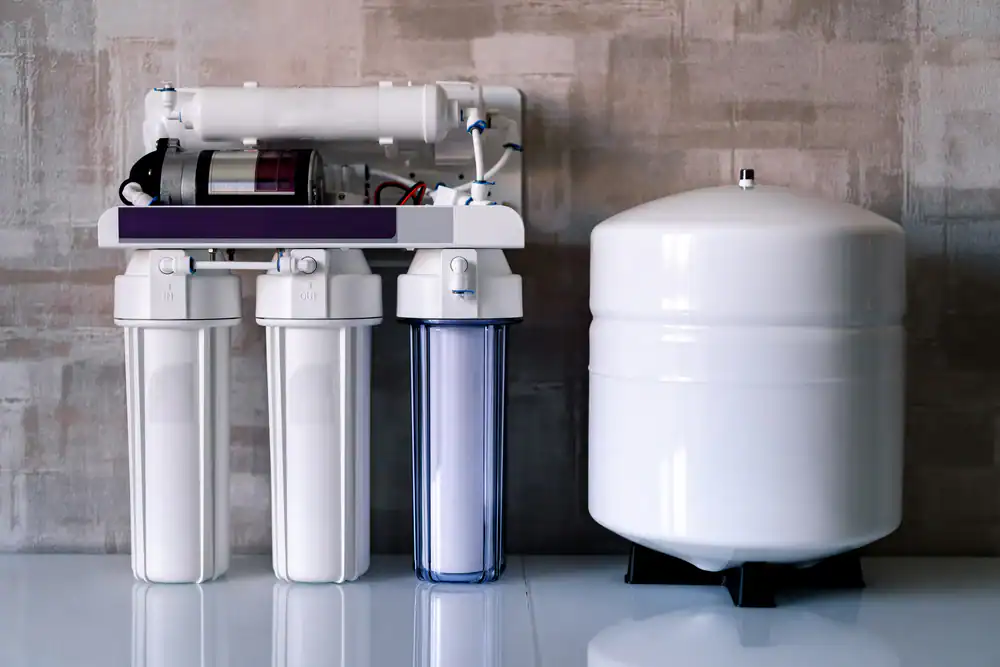
Most people start with a pitcher filter or a faucet attachment. It helps a little, but you’re still showering in chloramine, still running hard mineral water through your dishwasher, and still wondering why your water heater needs replacing ahead of schedule. A whole house point of entry system handles all of it — before the water ever reaches a fixture.
Pinellas County’s water supply is a blend of groundwater from the Floridan Aquifer, surface water from local rivers, and desalinated seawater from Tampa Bay. That blended source is unusual, and it shows up in your water as variability — taste and odor that shifts, hardness that builds scale on everything it touches, and disinfection byproducts that form when chlorine reacts with organic matter in the supply. Haloacetic acid levels in Pinellas County have been measured as high as 47.2 parts per billion, which is close to the EPA’s maximum contaminant level and well above what independent health researchers consider acceptable.
If your Pinellas home was built in the 1950s, 60s, or 70s — and a lot of homes in this county were — your pipes are adding to that picture. Galvanized steel and aging copper contribute iron, sediment, and other contaminants that weren’t in the water when it left the treatment plant. A whole house filtration system installed at your main supply line intercepts all of it, so every tap in your home — kitchen, bathrooms, laundry, showers — runs clean.
We’ve been in the water treatment business for over 50 years. That’s not a headline — it’s a track record. We’ve been serving Pinellas County and the surrounding area longer than most of our competitors have been in business. In that time, not one complaint has been filed with the Better Business Bureau. You can verify that yourself at bbb.org — it’s a public record, not a marketing claim.
We’re WQA members, which means we operate under a professional code of ethics that a lot of companies in this market — including some that have been here for decades — never bothered to adopt. Our reviews are specific. Customers name technicians. They describe the experience in detail. That’s what accountability looks like in practice.
We also offer a $500 discount for active military, veterans, and first responders. With MacDill Air Force Base just across the bay and thousands of first responders serving communities from Clearwater to St. Petersburg throughout Pinellas County, that discount is for the people who live and work here — not a footnote.

It starts with a water test. Pinellas County Utilities uses chloramine as its standard disinfectant — not free chlorine — and that distinction matters when specifying filtration media. Standard carbon filters are less effective at removing chloramine. Catalytic carbon handles it properly. We test your water first so the system we recommend is built around what’s actually in your supply, not a generic solution designed for a different county’s chemistry.
Once the system is specified, installation happens at your main supply line — the point of entry. That means every gallon that enters your home passes through multi-stage filtration before it reaches any tap, appliance, or showerhead. In Pinellas County, where municipal maintenance sometimes involves switching between chloramine and free chlorine disinfection, a properly specified system handles both without any adjustment on your end.
If your home is in an older Pinellas neighborhood — Old Northeast, Kenwood, parts of Tarpon Springs or Largo — we account for what aging pipes may be contributing on top of what the county’s system delivers. Florida contractor licensing requirements apply to installation work, and we handle all of it properly. After installation, we stay accessible. The companies with the worst reputations in this market are the ones that disappear after the sale. We don’t.

Ready to get started?
What you get is a point of entry system that we’ve specified for the unique contaminant profile of Pinellas County water — not a shelf unit pulled from a catalog. That means multi-stage filtration that handles chloramine and chlorine removal, disinfection byproduct reduction, sediment, iron, and the hard mineral content that comes with drawing from the Floridan Aquifer. Every stage has a job, and together they cover what a single-stage or undersink filter can’t.
The system protects your plumbing and appliances, not just your drinking water. Hard water scale is one of the most expensive and least visible problems in a Pinellas home — it quietly reduces water heater efficiency, clogs fixture aerators, and shortens the lifespan of appliances that you paid good money for. Treating the water at the point of entry stops that damage before it starts.
If you’re on a barrier island — Clearwater Beach, Indian Rocks Beach, Treasure Island — or in a waterfront community like Snell Isle or Venetian Isles, coastal humidity and the salt air environment add wear on fixtures and appliances that makes whole house protection even more relevant. We also support the Tunnels to Towers Foundation, which provides mortgage-free homes to catastrophically injured veterans and fallen first responder families. That button is on our website because it matters to us — not because it’s good marketing.
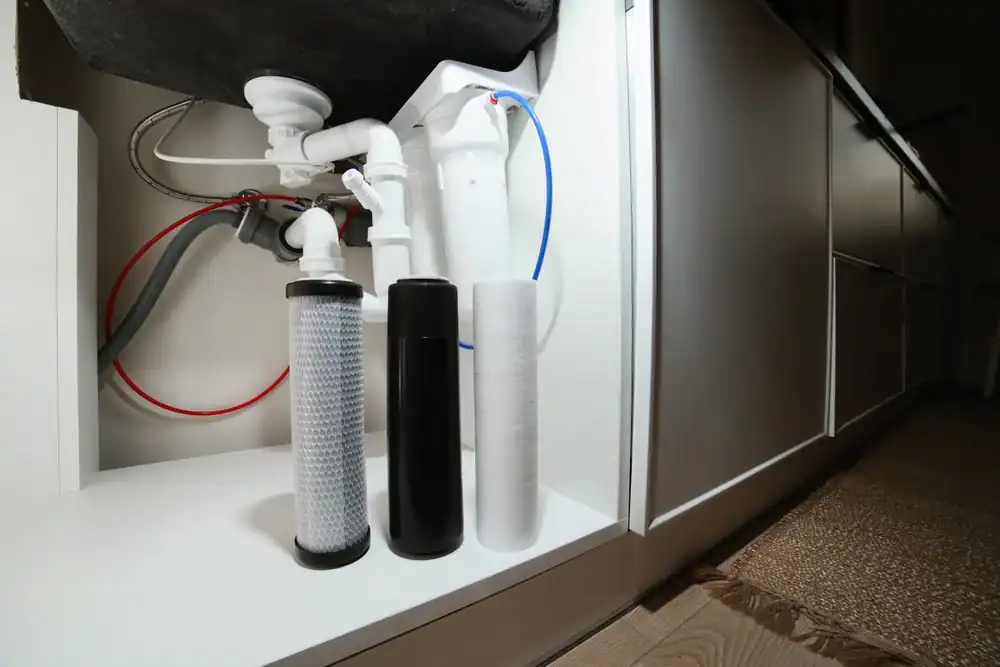
Yes — and the data backs it up. Pinellas County’s water supply comes from a blend of Floridan Aquifer groundwater, surface water from the Alafia and Hillsborough Rivers, the Tampa Bypass Canal, and desalinated seawater from Tampa Bay. That blended source gets treated at the S.K. Keller Water Treatment Facility, which processes 50 to 60 million gallons per day. The treatment works — but the chlorine-based disinfection used in that process creates secondary byproducts called trihalomethanes and haloacetic acids, which are documented health concerns at elevated levels. HAA levels in Pinellas County water have been measured near the EPA’s maximum contaminant level.
On top of that, Pinellas County has a large inventory of older homes with aging galvanized and copper pipes. The water can meet all standards at the treatment plant and still pick up iron, sediment, and other contaminants by the time it reaches your tap. A whole house filter addresses both problems — what the county’s treatment process introduces, and what your own plumbing may be adding.
A properly specified multi-stage whole house system removes or significantly reduces chlorine and chloramine, trihalomethanes, haloacetic acids, sediment, iron, manganese, and the dissolved calcium and magnesium that cause hard water scale. The specific media matters — catalytic carbon, for example, is far more effective at removing chloramine than standard activated carbon, and Pinellas County uses chloramine as its primary disinfectant. A system that isn’t specified for chloramine removal will underperform in this county.
That’s why we test your water before recommending anything. The contaminant profile in a home in Palm Harbor with newer plumbing is different from a home in the Old Northeast neighborhood of St. Petersburg with 1960s-era pipes. The system should reflect that. What we install is built around your actual water, not a one-size-fits-all configuration.
It will — but the more accurate thing to say is that it addresses chloramine, which is what Pinellas County Utilities actually uses as its standard disinfectant. Chloramine produces a different smell than free chlorine — some people describe it as more of a medicinal or chemical odor rather than the sharp pool smell most people associate with chlorine. Either way, it’s noticeable, especially in showers where the water heats up and the compound becomes airborne.
Standard carbon block filters handle free chlorine reasonably well, but chloramine requires catalytic carbon to be effectively reduced. If you’ve tried a basic shower filter or pitcher filter and still notice the smell, that’s likely why. A whole house point of entry system with the right media removes it at the source, so the water coming out of every tap and showerhead in your home is already treated before it gets there.
The Floridan Aquifer — the limestone formation that supplies a significant portion of Pinellas County’s water — naturally dissolves calcium and magnesium into the water as it moves through the rock. Even after treatment and blending, that hardness remains. And it accumulates. Inside your water heater, hard water scale acts as insulation on the heating element, forcing it to work harder and use more energy to heat the same amount of water. Studies have shown scale buildup can reduce water heater efficiency by nearly 50% and shorten its lifespan significantly.
The same buildup happens in your dishwasher, washing machine, coffee maker, and any other appliance that uses water regularly. You’ll also see it on shower doors, faucet aerators, and the inside of pipes over time. A whole house filtration and conditioning system treats the water before it enters any of those systems, which means less scale, longer appliance life, and lower energy bills — without you having to think about it.
Pinellas County Utilities has actively tested for PFAS compounds at the entry point of their distribution system across multiple quarters in 2023 and 2024, and no PFAS were detected in those samples. That’s a meaningful result — the county has been transparent about testing and the entry-point data is clean. That said, entry-point testing doesn’t account for everything. PFAS can be introduced through aging distribution infrastructure, private wells in certain areas, or stormwater infiltration in specific parts of the county.
If you’re on a private well, or if you’re in an area with older infrastructure, it’s worth testing your specific water rather than relying solely on county-wide data. And regardless of PFAS, the other documented concerns in Pinellas County water — chloramine, disinfection byproducts, hard minerals, and potential pipe leaching in older homes — are reason enough to consider a whole house system. PFAS is one piece of the picture, not the whole story.
Please provide your email address so that we can stay in touch and answer any questions you have! We will be reaching back out shortly.
"*" indicates required fields