Reach Out Today
Please provide your email address so that we can stay in touch and answer any questions you have! We will be reaching back out shortly.


Hear from Our Customers
If you moved to Fenney from up north, the water here probably caught your attention fast. It tastes different. Your shower door gets a film on it. Your coffee isn’t quite right. That’s not your imagination — it’s dissolved calcium and magnesium from the Ocala Limestone formation running straight through your pipes, and it affects everything in your Fenney home from the first day you turn on a faucet.
A whole house point-of-entry system is installed at your main water line, so every gallon gets treated before it goes anywhere. That means your drinking water, your shower, your laundry, your ice maker, and your dishwasher are all working with filtered water — not just the one tap under your kitchen sink. For a new construction home in Fenney, where you’ve likely just invested in a full set of appliances, that kind of protection matters from day one. Hard water scale quietly shortens the life of water heaters and dishwashers, and by the time you notice the damage, it’s already done.
Beyond the appliances, there’s the daily quality-of-life piece. Water that doesn’t smell like a pool. Skin that doesn’t feel dry after a shower. Glasses that come out of the dishwasher without spots. These aren’t small things when you’re living in Fenney — they’re the difference between water you tolerate and water that actually works for you.
We’ve been working with Florida homeowners for more than 50 years. That’s not a number we throw around lightly — it means we’ve seen every variation of what Florida’s groundwater does to a home, and we know exactly how to address it. We hold an A-rating with the Better Business Bureau with zero complaints on file, a 5-star rating across review platforms, and active membership in the Water Quality Association. In an industry that doesn’t always have the best reputation, that record is something we’ve earned one installation at a time.
Fenney sits directly above the Floridan Aquifer in Sumter County — one of the most mineral-dense water sources in the state. We understand what that means for your plumbing, your appliances, and your daily life, and we don’t recommend a system until we’ve tested your water and know exactly what’s in it. No pressure, no guessing, no generic sales pitch. Just a straight answer based on what your specific Fenney home actually needs.

It starts with a water test. Before anything else, we test the water in your Fenney home so we know exactly what we’re dealing with — hardness levels, chlorine and chloramine concentrations, disinfection byproducts, and anything else showing up in your supply. The Villages of Lake-Sumter utility water has documented levels of haloacetic acids, trihalomethanes, and elevated mineral content, but every home can read a little differently depending on its plumbing and location within the system. The test gives us real data to work from.
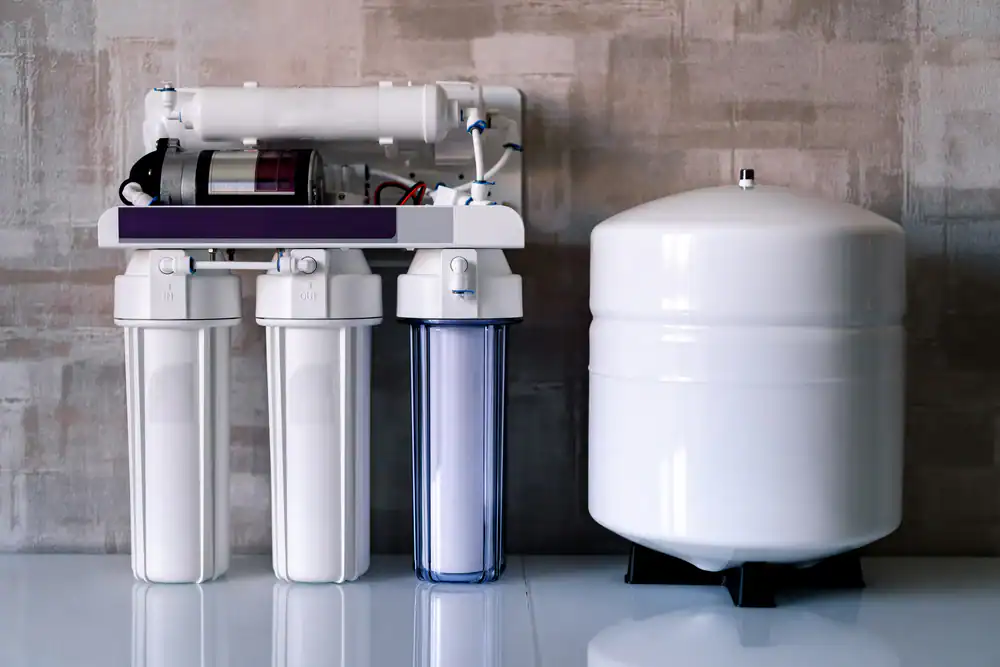
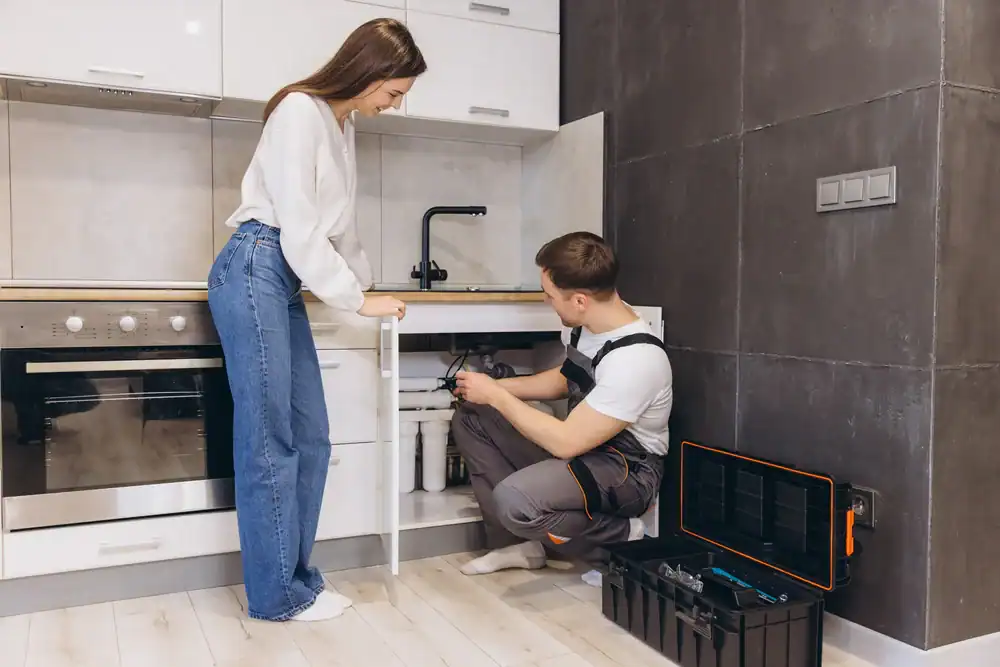
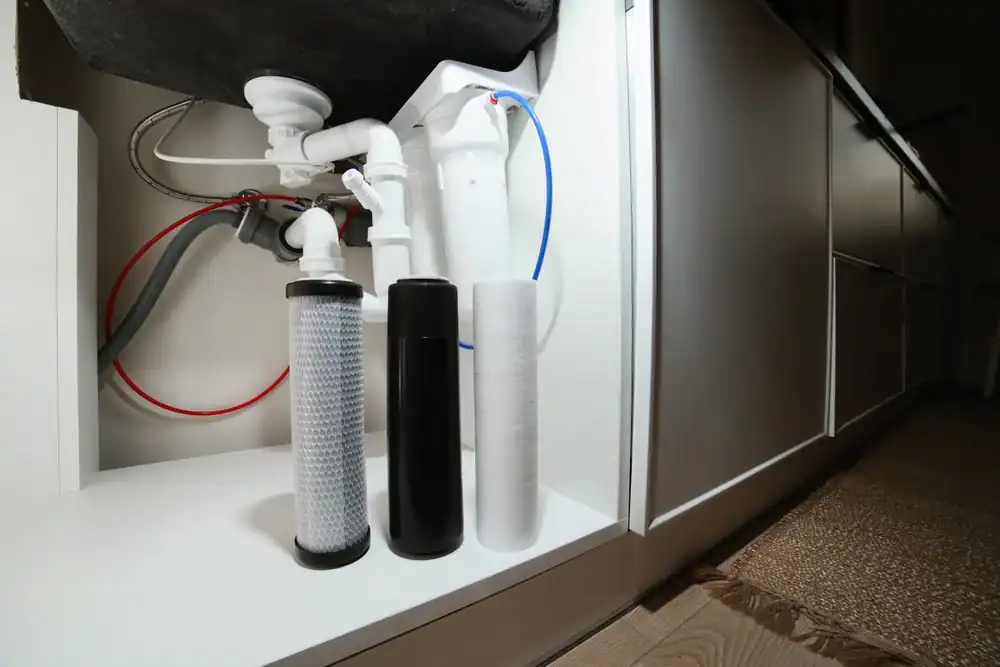
Once we know what’s in your water, we walk you through what a whole house multi-stage filtration system would address and why. You’ll understand what each stage does — sediment filtration, carbon filtration for chlorine and chemical removal, and conditioning for the hardness — before we ever talk about moving forward. If the system makes sense for your home, we handle the installation at your main water line, typically in a single visit, with no disruption to your daily routine.
After installation, the difference is immediate. Fenney’s newer homes have plumbing that hasn’t had years of scale buildup yet — which means installing a system now protects everything while it’s still in good shape. We’ll also walk you through what ongoing filter maintenance looks like so there are no surprises down the road. We’re not the kind of company that installs a system and disappears. Our customers in The Villages know where to find us.
Ready to get started?
A whole house point-of-entry system from Quality Safe Water isn’t a single filter — it’s a multi-stage process designed to address the specific water profile coming into your home. For Fenney residents, that means tackling hard water minerals from the Floridan Aquifer, chlorine and chloramine added during municipal treatment, and disinfection byproducts like trihalomethanes and haloacetic acids that form when those disinfectants react with organic matter in the groundwater. The system handles all of it at the source, before the water reaches any fixture or appliance.
Every installation is sized for your home’s specific flow rate and water usage. A three-bedroom home in Hammock at Fenney has different demands than a larger property, and the system should reflect that. We don’t sell one-size-fits-all equipment. What you get is a system matched to your actual household needs, installed by technicians who are familiar with The Villages’ CDD infrastructure and the permit and connection requirements that come with it.
For veterans, active military, and first responders in Fenney — and there are a lot of you in this community — we offer a $500 discount on whole house water filtration systems. That’s a real reduction on a real investment, not a promotional footnote. Quality Safe Water is also a proud supporter of the Tunnels to Towers Foundation, which provides mortgage-free homes to catastrophically injured veterans and fallen first responder families. It’s a cause that means something in a community like this one.
Yes — Fenney has genuinely hard water, and it’s worth taking seriously. The water supply here comes from the Floridan Aquifer, which runs through the Ocala Limestone formation underlying Sumter County. As groundwater moves through that limestone, it picks up dissolved calcium and magnesium, which is what makes water “hard.” The Villages of Lake-Sumter utility is one of the harder water supplies in central Florida, and the effects show up quickly in a Fenney home — scale buildup inside water heaters, residue on shower doors and faucets, spotting on dishes, and reduced lathering from soap and shampoo.
Whether it’s worth treating depends on your tolerance for those effects and how much you care about protecting your appliances. Hard water doesn’t make you sick, but it does shorten the lifespan of water heaters, dishwashers, and washing machines over time. For a new home in Fenney where those appliances are brand new, a whole house filtration and conditioning system is one of the more practical investments you can make early on. A water test will show you exactly how hard your water is so you can make an informed decision rather than guessing.
The Villages of Lake-Sumter utility — which serves the Sumter County portion of The Villages including Fenney — has documented levels of disinfection byproducts in its water supply. These include haloacetic acids (HAA5 and HAA9 groups), trihalomethanes (TTHMs), and bromochloroacetic acid. These compounds form when chlorine, used to disinfect the water, reacts with naturally occurring organic matter in the groundwater. They’re present at levels that meet federal legal standards, but the EPA and independent health researchers have associated long-term exposure to trihalomethanes and haloacetic acids with elevated cancer risk — particularly bladder cancer.
The water also carries elevated mineral content from the limestone aquifer, and thallium has been identified in the utility’s supply as well. None of this means the water is dangerous to drink in the short term — the utility is in compliance with all regulatory requirements. But if you want water that goes beyond legal compliance to something genuinely health-protective, a multi-stage whole house filtration system is the practical next step. We use the EWG Tap Water Database and a direct water test at your Fenney home to give you a complete picture of what’s actually in your supply.
It will, and this is one of the most common things residents notice after moving to Fenney — especially those coming from northern states where the water chemistry is different. Central Florida’s municipal water is treated with chlorine and in some cases chloramines, which are effective disinfectants but leave a noticeable chemical smell that comes through in drinking water, cooking water, and especially in a warm shower where the steam carries the odor into the air you’re breathing.
A whole house point-of-entry system includes a carbon filtration stage specifically designed to remove chlorine and chloramines before the water reaches any fixture in your home. That means no chemical smell from your tap, your shower, or your ice maker. For Fenney residents who spend time at the community pools and fitness facilities and are health-conscious about what they’re putting in their bodies, removing chlorine from their home water supply is usually one of the first things they want after they understand what a whole house system actually does. The difference is noticeable from the first day the system is running.
Most Fenney homeowners pay somewhere between $1,200 and $6,500 for a whole house filtration system, depending on the size of the home, the specific water issues being addressed, and the number of filtration stages included. The wide range reflects real differences in what homes need — a basic system for a smaller home focused primarily on hardness and chlorine removal sits at the lower end, while a comprehensive multi-stage system that also addresses disinfection byproducts, sediment, and other contaminants for a larger home lands higher.
It’s worth framing this against what untreated water costs over time. A water heater that fails early because of scale buildup can run $1,000 to $1,500 to replace. A family spending $60 to $80 a month on bottled water spends close to $900 a year — nearly $10,000 over a decade — for a product that isn’t necessarily cleaner than what a good filtration system produces at your tap. For veterans and first responders in Fenney, our $500 discount reduces the upfront cost meaningfully. The best way to get an accurate number for your specific home is to start with a water test, which tells us what the system actually needs to address.
They’re related but different, and a lot of homeowners in The Villages get this confused. A water softener specifically targets hardness — it removes calcium and magnesium through an ion exchange process, which prevents scale buildup and makes water feel softer on your skin and hair. It does that job well, but it doesn’t remove chlorine, disinfection byproducts, sediment, or other chemical contaminants. You can have softened water that still smells like chlorine and still contains trihalomethanes.
A whole house filtration system takes a broader approach. Depending on the configuration, it can address hardness, chlorine and chloramine removal, sediment, disinfection byproducts, and other contaminants — all in a single point-of-entry installation. Some systems combine softening and filtration in one unit; others use separate stages. What makes sense for your Fenney home depends on your specific water test results. Given what the Villages of Lake-Sumter utility supply shows for disinfection byproducts and mineral content, most Fenney residents benefit from a system that addresses both hardness and chemical filtration rather than one or the other alone.
Please provide your email address so that we can stay in touch and answer any questions you have! We will be reaching back out shortly.
"*" indicates required fields