Reach Out Today
Please provide your email address so that we can stay in touch and answer any questions you have! We will be reaching back out shortly.

Hear from Our Customers
You stop replacing things before you should. Water heaters, washing machines, dishwashers — hard water from the Floridan Aquifer’s limestone geology quietly shortens the life of every appliance in your home. When that hardness is treated at the point of entry, everything downstream runs longer, cleaner, and without the scale buildup that drives up repair bills. In a Winifred home that may have listed anywhere from the mid-$300s to north of $800,000, that’s not a small thing.
The orange staining stops, too. If you have a private irrigation well on your property — used for the lawn, the subtropical garden, or washing down the golf cart — you already know what iron does to concrete, tile, and painted surfaces. It doesn’t rinse off. It doesn’t bleach out. It comes back every time you run the hose, because the iron is still in the water. Treating it at the source is the only answer that actually holds.
And the smell goes away. Hydrogen sulfide — that rotten egg odor that hits you when you turn on the tap — is a natural byproduct of the same aquifer chemistry that affects this entire region. It’s not a sign your well is failing. It’s a sign the water needs treatment. Once it’s treated, it’s gone.
We’ve been solving Florida water problems for more than 50 years. Not water heaters, not plumbing, not general home services — just water. That focus means when we show up at a home in Village of Winifred, we already know what the Floridan Aquifer produces in Sumter County and exactly what it takes to treat it correctly the first time.
The credentials are verifiable and public: A+ BBB rating, 5-star reviews across platforms, zero complaints on record, and membership in the National Water Quality Association — a voluntary professional credential that requires passing a comprehensive exam and committing to a formal code of ethics. In a community like Winifred where neighbors compare notes on Talk of the Villages and Nextdoor before hiring anyone, that record matters more than any advertisement.
We’re already the top-rated water purification service in the Leesburg area, which covers Sumter and Lake counties — the counties that make up your corner of The Villages. When you call the 352 number, you’re reaching a local team, not a call center.
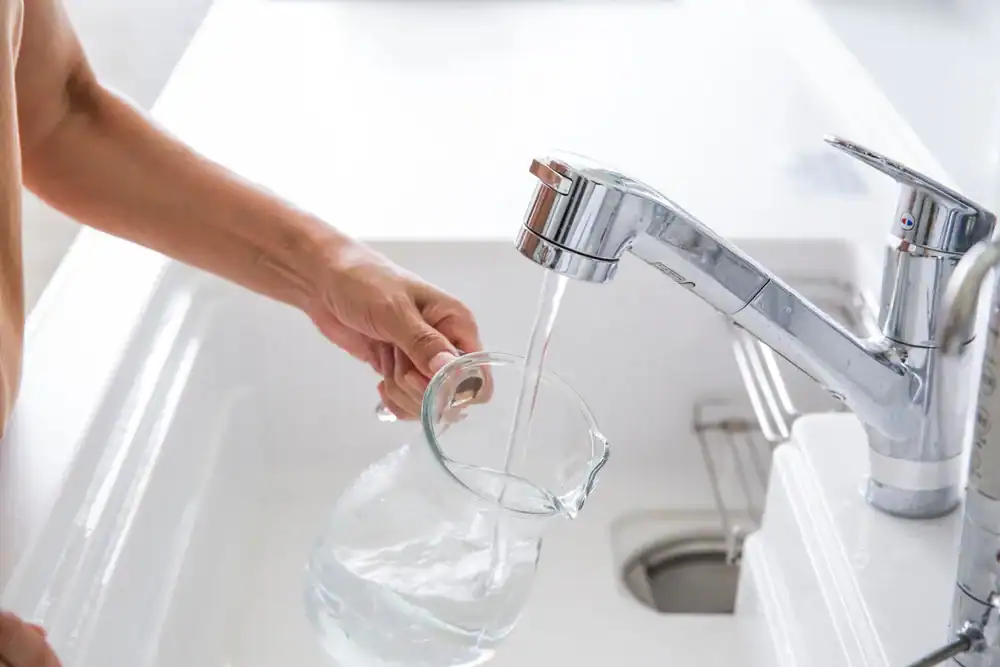
It starts with a free water analysis. Not a sales demo with dye drops designed to alarm you — an actual professional assessment of your water chemistry. Iron levels, hardness, pH, bacterial presence, sulfur, manganese — all measured, all documented. That data is the foundation for everything that follows.
From there, we design a system around your specific results and your home’s water usage. Winifred homes on the municipal supply from Little Sumter Utilities deal primarily with hardness, disinfection byproducts, and potential irrigation well issues. Homes with private wells face the full range — iron, sulfur, bacteria, manganese, and sediment — often in combination. The system recommendation reflects what your water actually contains, not a package pulled off a shelf.
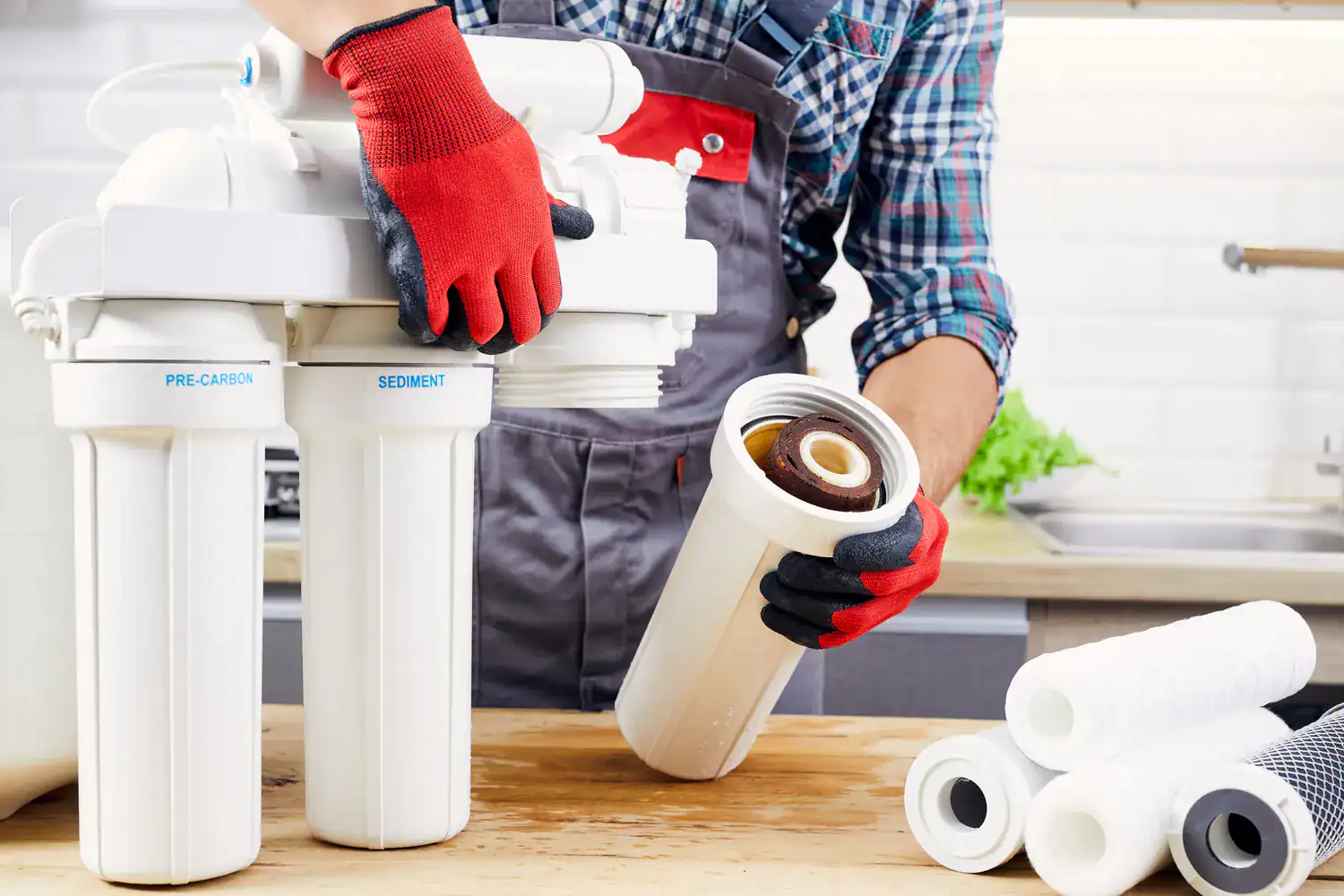
Installation happens in a single day. The system goes in at the point of entry, where the water supply enters your home, so every tap, shower, and appliance has treated water from that point forward. No walls opened, no extended disruption, no multi-day project interfering with your Palmer Legends tee time. The Southwest Florida Water Management District’s current water shortage declaration — in effect through mid-2026 — is also worth noting: dropping aquifer levels can concentrate minerals and shift water chemistry. Getting a baseline test done now gives you a clear picture of where your water stands.
Ready to get started?
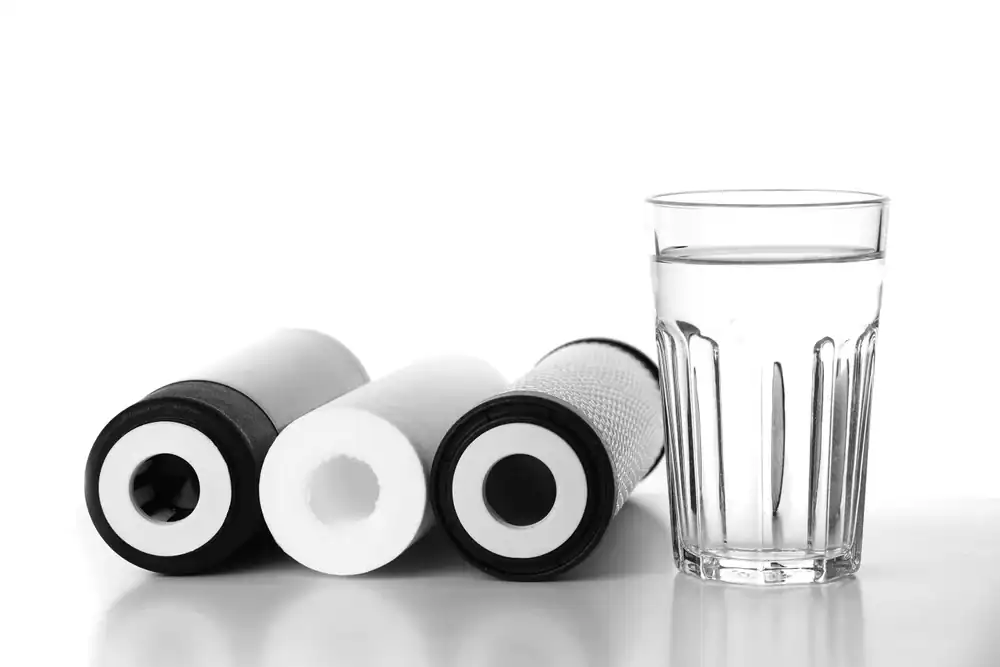
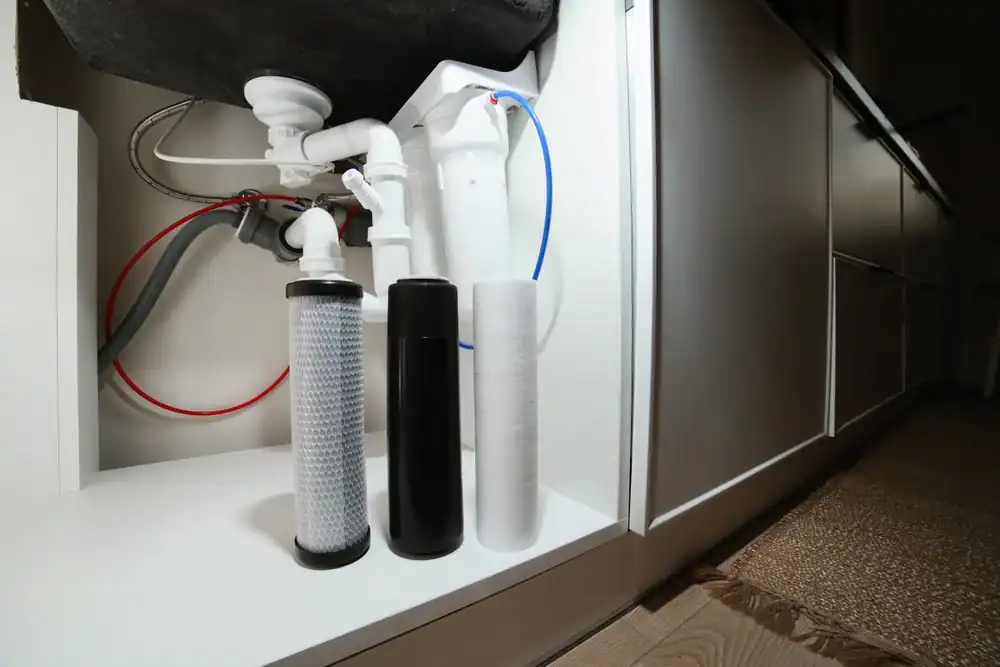
The core of what we do is whole-house purification — multi-stage systems that address iron removal, sulfur smell treatment, bacterial filtration, manganese reduction, hardness, and sediment in a single integrated solution. Not a softener from one company and a filter from another and a UV unit nobody installed correctly. One system, one design, one point of contact when anything needs attention.
For Winifred residents on the municipal supply, the most common needs are water softening for the hard Floridan Aquifer water and carbon filtration to address the chlorine and disinfection byproducts documented in the area’s treated water supply. For those with private irrigation wells — common throughout The Villages properties used for lawn care and outdoor maintenance — iron removal and bacterial treatment are typically the priority. Either way, the system is sized and configured specifically for your home, not approximated from a standard package.
Every installation is performed by a fully licensed and insured water treatment contractor, which matters in a community governed by the Sumter County utility districts and the Southwest Florida Water Management District. We carry A+ BBB status and NWQA membership, and we back every system with ongoing service — not a handshake at the door and a disconnected phone number six months later. If you’re a veteran or active-duty military member, or a first responder, there’s a $500 discount on any whole-house system installation.

Most homes in Village of Winifred receive municipal water through the utility districts that serve The Villages community — primarily Little Sumter Utilities, which operates 20 wells drawing from the Floridan Aquifer to supply tens of thousands of residents in the Sumter County portion of The Villages. So technically, you’re on treated city water, not a private drinking well. But that doesn’t mean your water is problem-free.
The Floridan Aquifer is a limestone karst system, and the water it produces is naturally high in calcium, magnesium, and dissolved minerals — meaning hard water is the baseline throughout Winifred regardless of how it’s delivered. The municipal treatment process also introduces chlorine and produces disinfection byproducts like trihalomethanes and haloacetic acids, which have been documented in the treated water supply for this area. Many Winifred homeowners also have private irrigation wells on their property for lawn and outdoor use — those wells are completely untreated and subject to the full range of iron, sulfur, and bacterial issues common to Floridan Aquifer groundwater. A free water analysis will tell you exactly what you’re dealing with, whether your concern is the municipal supply or a private irrigation well.
That smell is hydrogen sulfide — a gas produced naturally when sulfur-reducing bacteria interact with organic matter in groundwater. It’s extremely common throughout central Florida because of the Floridan Aquifer’s chemistry, and it’s especially noticeable in private irrigation wells that aren’t being used regularly. Stagnant water in a well system, combined with Florida’s warm groundwater temperatures, creates exactly the conditions where sulfur bacteria thrive.
The odor tends to be strongest first thing in the morning or after the water has sat in the pipes for a while. It can also spike during summer, when groundwater temperatures rise and bacterial activity increases. The fix is not a filter cartridge from a hardware store — hydrogen sulfide at levels common in this area requires an air injection oxidation system or a specific catalytic media designed to oxidize and remove the sulfur before it reaches your plumbing. We’ll measure the exact concentration in your water during the free analysis and size the treatment accordingly, so you’re not overpaying for capacity you don’t need or underbidding a problem that requires a real solution.
That’s dissolved iron in your irrigation well water. When iron-laden water hits air — on your driveway, your golf cart, your patio, your outdoor fixtures — it oxidizes and leaves behind that rust-colored stain. It’s one of the most visible and frustrating water quality problems in The Villages area, and it’s particularly relevant in Winifred, where residents maintain subtropical gardens, irrigate lawns, and regularly wash outdoor equipment including golf carts.
The staining itself is just the symptom. The iron is already in the groundwater before it reaches your hose bib, and no amount of cleaning, bleaching, or pressure washing will stop it from coming back as long as the source water remains untreated. The long-term solution is an iron removal system installed on the irrigation well — typically an air injection oxidation unit that converts dissolved iron into a filterable particle before it ever reaches your outdoor plumbing. The right system for your property depends on your iron concentration, your well’s flow rate, and your irrigation usage, all of which get measured during the free water analysis.
It depends on what your water actually contains and how large your home is — which is exactly why the process starts with a free water analysis rather than a price list. That said, you can expect a professionally designed and installed whole-house system to range from roughly $2,500 on the lower end for a straightforward softening or single-contaminant solution, up to $6,000 to $8,000 or more for a comprehensive multi-stage system addressing iron, sulfur, bacteria, manganese, and hardness simultaneously.
There are cheaper options in the Sumter County market — some local competitors advertise basic systems installed for under $1,000. Those systems may be appropriate for a very simple problem, but they are not designed to handle the combination of contaminants common to Floridan Aquifer groundwater. If you’ve already tried a basic filter and it didn’t hold up, that experience is common and it’s not a coincidence. A system that’s undersized or poorly matched to your water chemistry will fail to perform within a year or two. The cost of replacing an inadequate system — plus the appliance wear and staining remediation in the meantime — typically far exceeds the difference between a basic unit and a properly engineered solution. Veterans, active-duty military, and first responders also receive $500 off any whole-house installation.
The Southwest Florida Water Management District declared a Modified Phase II Severe Water Shortage effective February 2026 through July 2026, covering all residents in the affected counties — including those on private wells throughout the Sumter, Lake, and Marion County areas that make up The Villages region. This kind of declaration reflects significant stress on the Floridan Aquifer, and that stress has a direct effect on water quality that most homeowners don’t think about.
When aquifer levels drop, the water that remains becomes more concentrated. Dissolved minerals, iron, and other naturally occurring compounds don’t disappear — they become more concentrated in the available groundwater. If your irrigation well’s water quality has noticeably shifted in recent months, or if problems you thought were under control have gotten worse, declining aquifer levels are a plausible contributing factor. This is also a good reason to get a baseline water test done now, before the dry season progresses further. Knowing your current water chemistry gives you a clear reference point and helps ensure that any treatment system installed today is sized appropriately for conditions that may continue to evolve.
Please provide your email address so that we can stay in touch and answer any questions you have! We will be reaching back out shortly.
"*" indicates required fields