Reach Out Today
Please provide your email address so that we can stay in touch and answer any questions you have! We will be reaching back out shortly.


Hear from Our Customers
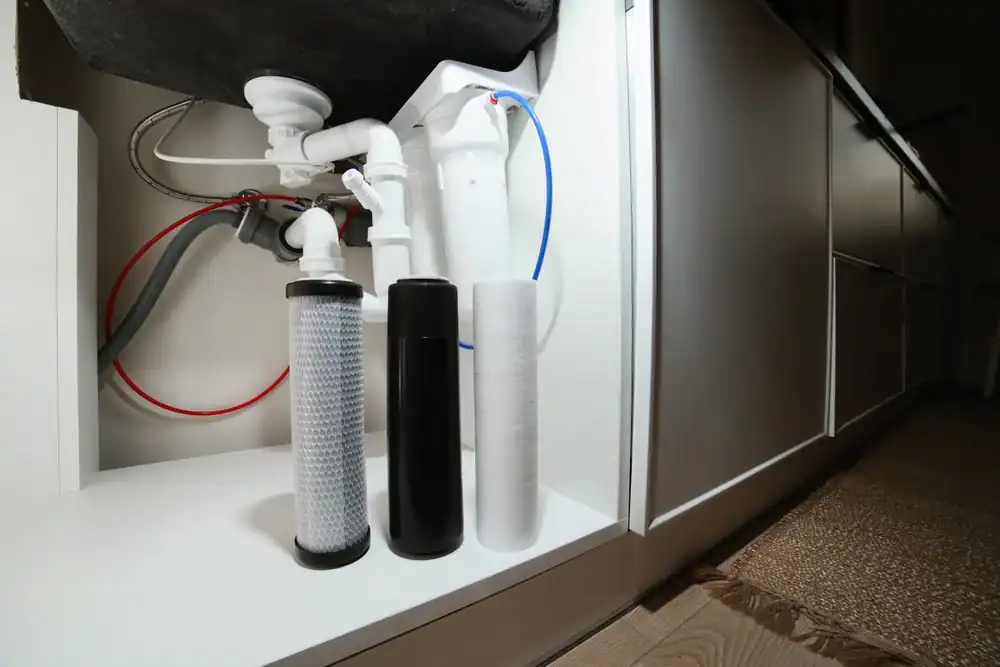
The orange staining on your toilet bowl, the rotten egg smell that hits you the moment you turn on the tap, the white crust building up around your faucets — none of that is normal, and none of it has to stay. When your water is treated correctly, those problems stop. Not temporarily. For good.
For residents in the unincorporated St. Catherine area along US Route 301, there’s no water treatment plant standing between the Floridan Aquifer and your kitchen sink. What comes out of the ground goes straight into your home. That limestone aquifer delivers consistent hardness, iron, and hydrogen sulfide to wells throughout western Sumter County — and without a system designed for those specific contaminants, your plumbing, your appliances, and your laundry take the hit every single day.
If you’re in the Village of St. Catherine — one of The Villages’ newest neighborhoods near Sawgrass Grove — you may be getting utility water, but Florida’s aquifer chemistry doesn’t care when your home was built. Hard water scale builds up in brand-new pipes just as fast as old ones. Many residents who relocated here from northern states are experiencing this kind of water for the first time and don’t yet realize what it’s quietly doing to their water heater, dishwasher, and fixtures. A properly designed filtration system stops that damage before it adds up.
We’ve been treating well water across central Florida for over 50 years. That means we’ve seen every variation of Floridan Aquifer chemistry this region produces, and there’s nothing in a Sumter County water test that surprises us anymore. We know what western Sumter County wells carry. We know what Villages utility water still leaves behind. And we know how to fix both.
What actually sets us apart isn’t just the experience — it’s the record. A+ rating with the Better Business Bureau. Five stars across review platforms. Zero complaints filed. In an industry that has attracted some genuinely predatory operators in Florida, that track record is something you can verify yourself at bbb.org before you ever call us. We’re also members of the National Water Quality Association, which means we hold ourselves to a professional and ethical standard that most competitors in this market don’t bother with.
We serve the St. Catherine area through our Central Florida line at 352-460-0345. When you call, you reach a local team — not a national call center.
It starts with a free water analysis. We come to your home — whether you’re on a private well along the US 301 corridor or receiving utility water in the Village of St. Catherine — and we test what’s actually in your water. Not a dye-drop demo designed to alarm you. A real test that tells you what contaminants are present and at what levels. That test drives everything that comes after.
Once we know what we’re dealing with, we design a system around your specific results. If you have high iron and hydrogen sulfide, you need a different configuration than someone dealing primarily with hardness or bacterial risk. In Sumter County, it’s common to find multiple issues in the same well — iron, manganese, sulfur bacteria, and hardness all showing up together. A single-stage filter won’t solve that. We build multi-stage systems that address the full picture, not just the most obvious symptom.
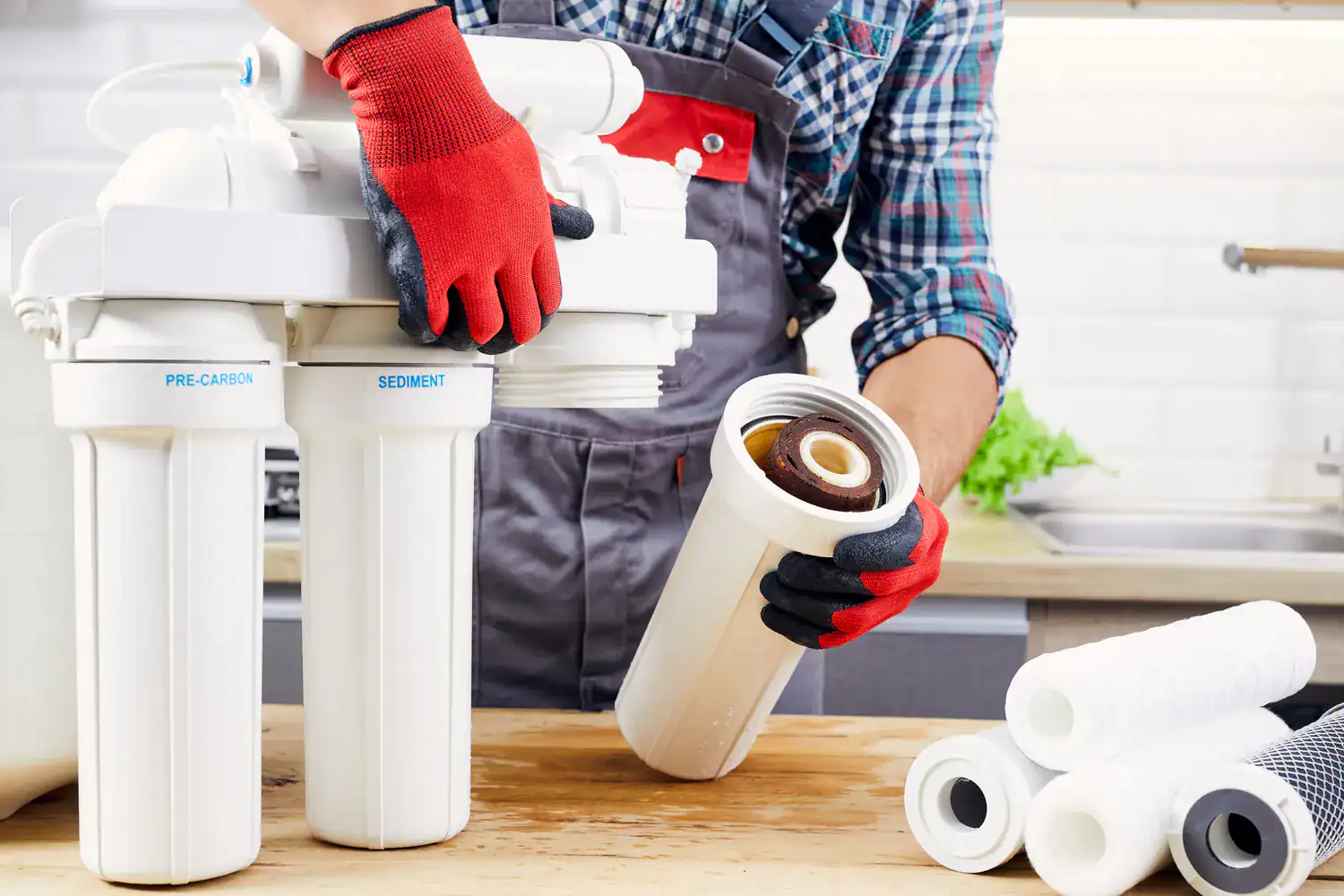
Installation is completed in a single day. The system goes in at the point of entry to your home, which means every tap — kitchen, bathrooms, laundry — has treated water from the moment we leave. There’s no multi-day disruption, no walls opened up, and no reason to be without water. After installation, we don’t disappear. That’s the part a lot of companies skip, and it’s the part our customers talk about most.
Ready to get started?
The water coming out of Floridan Aquifer wells in western Sumter County tends to carry a predictable set of problems: iron that stains everything orange, hydrogen sulfide that makes your water smell like rotten eggs, manganese that leaves dark staining on fixtures, hardness that destroys appliances over time, and in some cases, bacterial contamination that you can’t see, smell, or taste at all. Our whole-house systems are built to address all of it — not in isolation, but as a complete solution designed around your water test results.
For iron and manganese removal, we use air injection oxidation and hydrogen peroxide injection systems that convert dissolved metals into filterable particles before they ever reach your pipes. For sulfur treatment, we target the hydrogen sulfide directly at the source. For bacterial risk — which is real for private well owners in Sumter County, especially after heavy rain seasons or extended periods without use — UV disinfection provides a chemical-free barrier that eliminates bacteria without altering your water’s taste or chemistry. For hardness, we offer both traditional water softeners and salt-free catalytic descalers depending on your household’s needs and preferences.
If you want clean drinking water at the tap specifically, we also install whole-house reverse osmosis systems. Every engagement starts with the free water test, and every system recommendation comes from that test — not from a sales script. Active military, veterans, and first responders receive $500 off. County Road 673, the Veterans Memorial Highway connecting I-75 to US 301 right through St. Catherine, runs through a community that takes that kind of service seriously. So do we.

That depends entirely on what’s in your specific well — and the only way to know is to test it. Private wells in the unincorporated St. Catherine area along US Route 301 draw directly from the Floridan Aquifer, which is a limestone carbonate system. That geology naturally produces water with elevated hardness, iron, and manganese throughout western Sumter County. Hydrogen sulfide is also common, particularly in warmer months when sulfur bacteria thrive in Florida’s warm groundwater temperatures.
Beyond those mineral and odor issues, bacterial contamination is a real risk for private well owners. The Florida Department of Health recommends that private well owners test annually at minimum for coliform bacteria, nitrate, lead, and pH. There is no municipal treatment system protecting you if you’re on a private well in this area — what the aquifer delivers is what you get. A free water test is the straightforward starting point to find out exactly what you’re dealing with before deciding on any kind of treatment.
That smell is hydrogen sulfide gas, and it’s one of the most common complaints from well owners throughout St. Catherine and Sumter County. It’s produced by sulfur-reducing bacteria that occur naturally in Florida’s groundwater, particularly in the warm, limestone-rich aquifer environment that characterizes this region. The smell tends to be more intense during summer months when groundwater temperatures rise, but it can be present year-round depending on your well depth and local geology.
The good news is that hydrogen sulfide is very treatable. The approach depends on the concentration level in your water, which is another reason the free water test matters before any recommendation is made. At lower levels, an oxidizing filter may be sufficient. At higher concentrations, a hydrogen peroxide injection system followed by filtration is typically the more effective solution. Either way, the rotten egg smell is not something you have to live with — it’s a solvable problem once you know exactly what you’re working with.
Iron. Specifically, dissolved ferrous iron in your well water that oxidizes when it hits air or surfaces — turning everything it contacts a rust-orange color. It’s endemic to Floridan Aquifer wells throughout Sumter County and one of the most visible signs that your water needs treatment. The staining on toilets, driveways, and laundry isn’t just cosmetic; it’s a signal that your plumbing and appliances are being exposed to the same iron load every day.
One important thing to understand: a standard water softener will not fix this. Softeners are designed to remove calcium and magnesium — the minerals that cause hardness. Running high iron levels through a conventional softener will actually foul the resin bed and damage the unit over time. Iron removal requires a dedicated system, typically air injection oxidation or a catalytic filtration media, designed specifically for that purpose. If your water test also shows manganese — which often accompanies iron in this area — that needs to be addressed in the same system design, because manganese causes its own dark staining and has different treatment requirements than iron.
Yes — but only if it’s designed to. This is where a lot of homeowners get burned. They buy a single-stage filter or a basic softener, it addresses one problem, and the other issues remain. In St. Catherine and throughout Sumter County, it’s genuinely common for a single well to test positive for elevated iron, hydrogen sulfide, hardness, and bacterial indicators all at the same time. The Floridan Aquifer’s chemistry and Florida’s warm groundwater environment create conditions where multiple contaminants coexist.
A properly engineered whole-house system handles this through staged treatment: oxidation or injection to neutralize iron and sulfur compounds, filtration media to capture the resulting particles, a softening or descaling stage for hardness, and UV disinfection to eliminate bacteria without chemicals. The key is that the stages have to be sequenced correctly for your specific water chemistry — what works for one well may not be the right order for another. That’s why the water test comes first. It tells us exactly what we’re dealing with and in what concentrations, so the system we design actually solves all of it instead of just the most visible problem.
A whole-house well water filtration system is typically installed in a single day. The system installs at the point of entry to your home — meaning it treats all the water coming in before it reaches any tap, appliance, or fixture. There’s no need to open walls, run new plumbing throughout the house, or go without water for an extended period. Most homeowners are using clean, treated water by the time the installation crew leaves.
For Village of St. Catherine residents in newer construction near Sawgrass Grove, the installation is clean and non-invasive — it’s designed to work with your existing plumbing without modification to the home’s structure. For rural St. Catherine homeowners on private wells along the US 301 corridor, the process is the same: one visit, one day, and the system is operational. After installation, we walk you through how everything works, what maintenance looks like, and how to reach us if anything ever needs attention. That follow-through is something we take seriously, because we know it’s where a lot of other companies fall short.
Please provide your email address so that we can stay in touch and answer any questions you have! We will be reaching back out shortly.
"*" indicates required fields