Reach Out Today
Please provide your email address so that we can stay in touch and answer any questions you have! We will be reaching back out shortly.


Hear from Our Customers
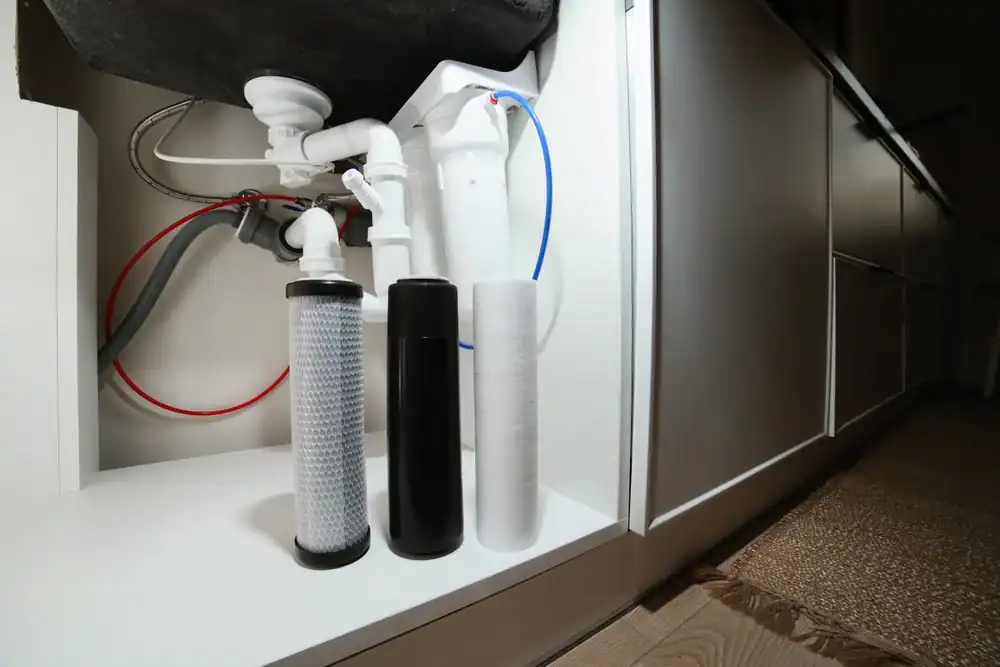
The orange ring around your toilet bowl disappears. The rotten egg smell that hits you in the shower every morning — gone. Your fixtures stop corroding, your laundry stops yellowing, and your water heater stops working overtime against mineral buildup it was never designed to handle.
For Santiago residents, the problem runs deeper than aesthetics. The Floridan Aquifer — the limestone formation your well draws from — naturally loads groundwater with dissolved iron, manganese, hydrogen sulfide, and hardness minerals. It’s not a pollution issue. It’s geology. And no amount of store-bought filters will solve a chemistry problem that starts hundreds of feet underground.
What a properly designed whole-house system actually does is intercept those contaminants at the point of entry — before they reach a single faucet, appliance, or pipe in your home. Your water heater lasts longer. Your dishwasher stops leaving film on glasses. And if you’ve been buying bottled water because you don’t trust what’s coming out of the tap, you can stop. Clean water at every fixture, from the first use of the morning to the last.
We’ve been treating Florida well water for over 50 years — not as a sideline to plumbing or HVAC, but as our entire business. That focus matters when your water comes from a karst limestone aquifer that behaves differently than anything you’d encounter in Ohio, Michigan, or wherever you lived before making The Villages your home.
We hold an A+ rating with the Better Business Bureau, five stars across review platforms, and zero complaints on record. In an industry where the Florida Attorney General has taken enforcement action against predatory water treatment operators, that record is not a small thing. We’re also a member of the National Water Quality Association — a credential that requires passing a technical exam and committing to an ethical standard most competitors haven’t bothered to meet.
We serve homeowners across Sumter, Lake, and Marion counties, including Santiago and the surrounding Spanish-themed villages near Spanish Springs. If you’ve heard about us from a neighbor in Santiago, that’s probably not a coincidence.
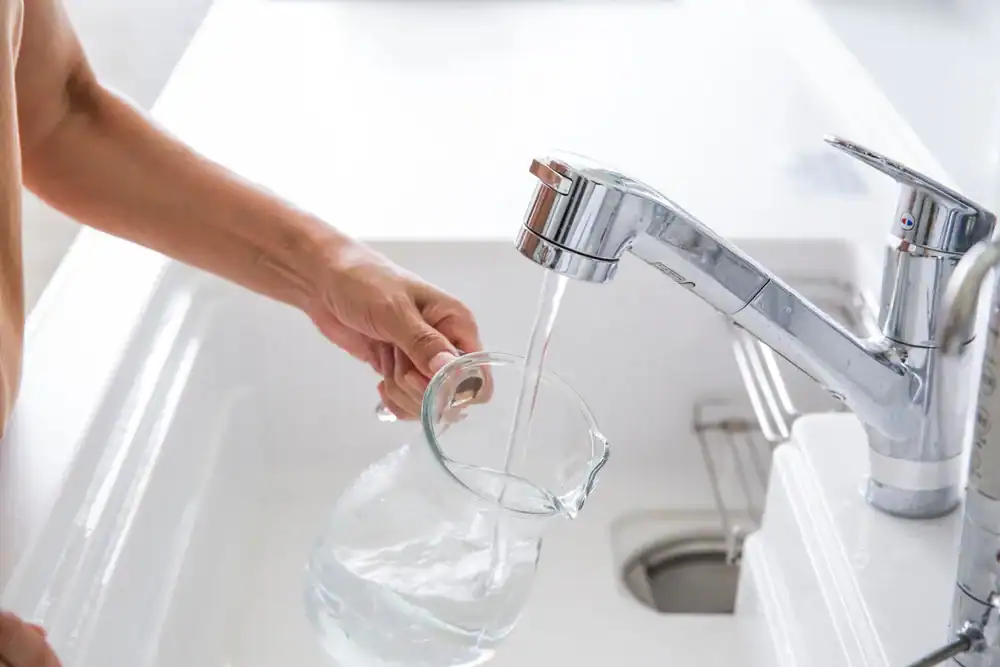
It starts with a free water analysis — a real one, not a theatrical dye-drop demo designed to frighten you into signing something. A trained technician comes to your home in Santiago, collects a water sample, and tests it for the contaminants that are actually common in this part of Sumter County: iron, manganese, hydrogen sulfide, hardness, and bacterial presence. The results tell the story. Our recommendation follows the results — not a sales script.
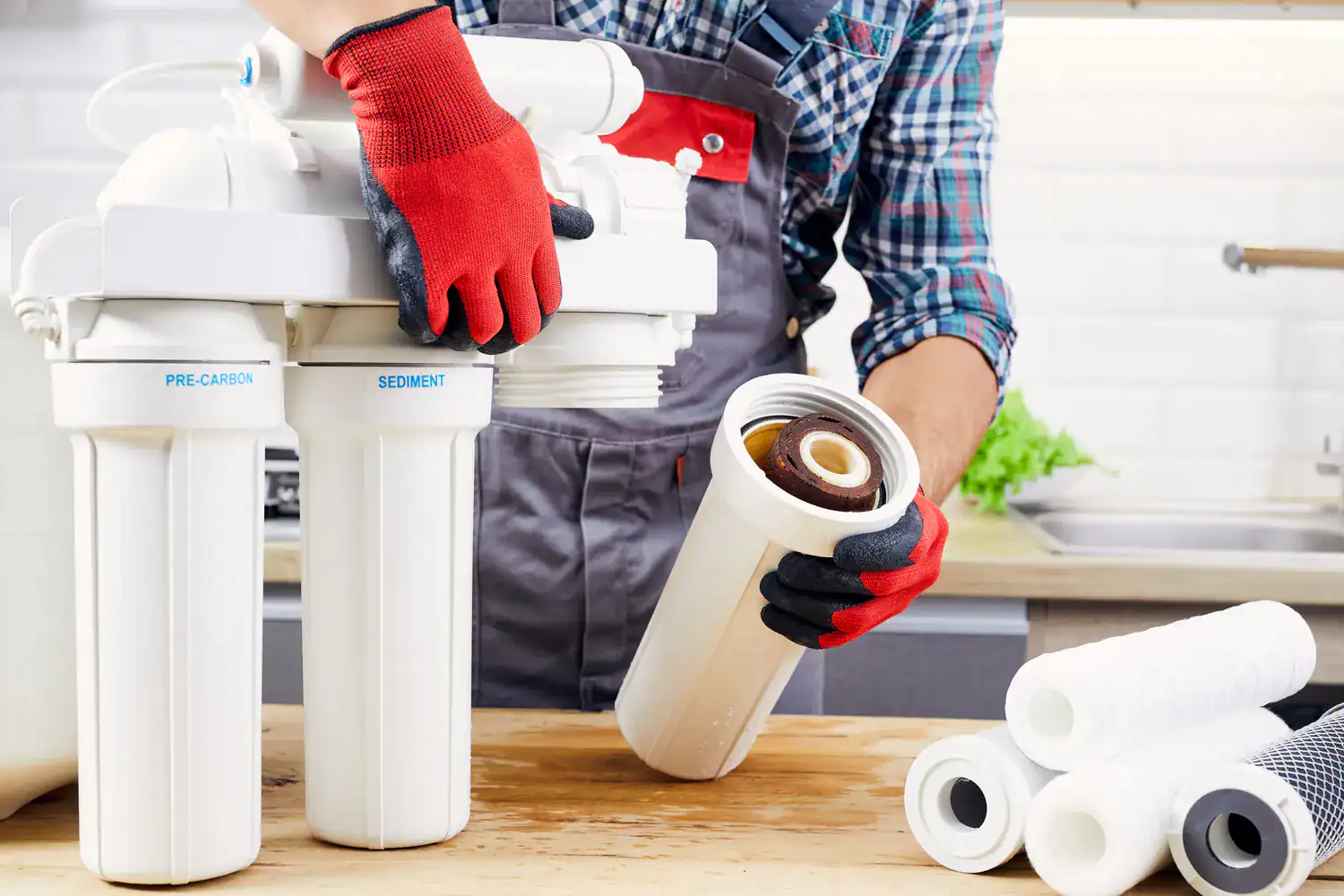
From there, we design a whole-house system specifically around what your water contains and how your home is set up. Most installations happen in the garage at the point of entry, which keeps everything contained, out of sight, and compliant with The Villages’ community appearance standards. There’s no running new plumbing through the house, no multi-day project, and no disruption to your daily routine.
Installation is completed in a single day. By the time our technician leaves, every tap in your home is delivering treated water. If you’re a first-time well owner — which describes a lot of Santiago residents who moved here from areas with municipal water — we’ll walk you through what the system does, what it doesn’t do, and what to expect going forward. No jargon. No upsell pressure. Just clean water and a clear explanation of how it got there.
Ready to get started?
The well water chemistry in Santiago and across The Villages isn’t a random mix of contaminants — it’s predictable, geology-driven, and well-understood by anyone who has spent real time treating water in Sumter and Marion counties. Iron and hydrogen sulfide are the most common complaints. Hardness and manganese run close behind. Bacterial risk spikes during Florida’s rainy season, when heavy summer storms can drive surface water into wellheads. A system that addresses all of these isn’t overkill — it’s what the local water actually demands.
Depending on what your water test shows, treatment may involve air injection oxidation to eliminate iron and sulfur without chemicals, hydrogen peroxide injection for higher-concentration sulfur problems, catalytic carbon filtration, a water softener for hardness, or UV disinfection for bacterial protection. These aren’t upsells stacked on top of each other — they’re components we select based on your specific test results. Some homes in Santiago need two of these. Some need four. The free water analysis determines which.
We do not offer plumbing or water heater services — our entire focus is water treatment, and that specialization shows in the results. Military veterans and first responders receive a $500 discount, which carries real weight in a community like The Villages where a significant portion of residents have served. If that applies to you, mention it when you call.

That smell is hydrogen sulfide gas — produced when naturally occurring sulfur compounds in the Floridan Aquifer interact with sulfur-reducing bacteria in your well system. It’s extremely common in north-central Florida, particularly in the Sumter and Marion County area where Santiago is located, because the Ocala Limestone formation releases sulfur into groundwater as it moves through the aquifer.
The smell tends to be most noticeable in hot water — your shower, your dishwasher, your washing machine — because heat releases the gas more readily. It also intensifies during Florida’s summer months when warmer groundwater temperatures accelerate bacterial activity. The good news is it’s fully treatable. Air injection oxidation systems and hydrogen peroxide injection with catalytic carbon filtration eliminate hydrogen sulfide at the source, not just at one faucet. After treatment, the smell is gone throughout the entire home — not masked, not reduced. Gone.
It depends entirely on what your specific well contains, and you genuinely can’t know that without testing it. The Floridan Aquifer water that feeds private wells in Santiago and across The Villages is not inherently dangerous — but elevated iron, manganese above certain concentrations, and bacterial contamination are all documented in this region, and none of them have a smell or color that warns you they’re present at problematic levels.
Florida’s Well Surveillance Program has tested nearly 48,000 wells statewide since 2005, and roughly one in eleven exceeded state or federal drinking water standards. Bacterial contamination is the most serious risk, particularly after heavy rainfall events common during Florida’s June-through-September rainy season, when surface water can infiltrate wellheads. A free water analysis gives you actual data on what’s in your water, which is the only honest answer to whether it’s safe.
The honest answer is that it depends on what your water test shows. A basic iron filtration system for a home with moderate iron levels might run in the $2,500–$4,500 range. A more comprehensive whole-house system that addresses iron, sulfur, hardness, and bacterial contamination — which is common for private wells in the Sumter County area given the Floridan Aquifer’s mineral profile — typically falls in the $5,000–$9,000 range depending on system complexity and home size.
What you want to avoid is paying for components you don’t need, or being sold a one-size-fits-all system before anyone has tested your water. The free water analysis we provide exists specifically to prevent that. You find out what’s actually in your water, and our system recommendation follows from that — not from a price tier. If you’re a military veteran or first responder, the $500 discount applies regardless of which system your water requires.
Yes, in most cases — and this is a question worth asking any water treatment company you consider, because The Villages’ Community Development District structure does have appearance standards for exterior modifications. We install whole-house systems at the point of entry, which is typically inside the garage or in a utility area. The equipment — pressure tanks, filter housings, control valves — stays out of sight and doesn’t create any exterior visibility issue that would conflict with community guidelines.
In Florida, point-of-entry water treatment systems don’t require a separate installation permit, but the work must comply with Florida plumbing code. We handle all of that within our standard installation process. If your home has a specific setup that requires any deviation from a standard garage installation, that gets identified during the water analysis visit — before any work is scheduled — so there are no surprises on installation day.
Dissolved iron in well water is corrosive over time. It deposits inside water heaters, reducing efficiency and shortening the unit’s lifespan. It clogs dishwasher spray arms and leaves a film on glassware. It stains washing machine drums and turns light-colored laundry orange or yellow. It also builds up inside pipes and irrigation heads — a real problem for Santiago homeowners who use well water for lawn irrigation, where iron staining on driveways, pavers, and landscaping becomes visible quickly.
In the north-central Florida region — Sumter, Lake, and Marion counties — iron levels in private well water are among the higher concentrations in the state, driven by the Ocala Limestone formation that the Floridan Aquifer passes through. It’s not unusual to see iron levels in this area that would visibly stain a white surface within days of contact. An air injection oxidation system removes dissolved iron before it ever reaches your plumbing, which stops the damage at the source rather than managing the symptoms fixture by fixture.
Please provide your email address so that we can stay in touch and answer any questions you have! We will be reaching back out shortly.
"*" indicates required fields