Reach Out Today
Please provide your email address so that we can stay in touch and answer any questions you have! We will be reaching back out shortly.

Hear from Our Customers
If your Sanibel well water smells like rotten eggs when you turn on the tap, leaves orange stains in your sinks and showers, or just doesn’t taste right — that’s not a minor inconvenience. That’s your water supply telling you something is wrong. And on a barrier island where the shallow aquifer sits just a few feet above saltwater, where storm surge from Hurricane Ian overwashed the entire island in 2022, and where wells can sit idle for months while seasonal residents are away — “something is wrong” can mean a lot of things.
A whole-house well water filtration system changes the daily experience of your home. Every tap, every shower, every appliance runs on water that’s been treated at the source — not just filtered at one faucet. The iron that was slowly destroying your fixtures is gone. The sulfur smell that greeted you every time you turned on the hot water is gone. If bacteria were present, UV disinfection handles that before the water ever reaches your family.
For Sanibel homeowners specifically, there’s another layer to this. If you’re a seasonal resident who returns in the fall, a properly installed system keeps working whether you’re on the island or not. You come back to clean water — not a well that’s been sitting stagnant in Gulf Coast heat and humidity for five months, producing exactly the kind of conditions that sulfur bacteria thrive in.
We’ve been solving Florida water problems for over 50 years. Not generically — specifically. Sanibel Island’s geology, Lee County’s aquifer systems, and the unique water conditions of a barrier island community are not things we learned from a manual. They’re things we’ve worked through on actual properties, with actual water test results, for decades.
Our A+ BBB accreditation comes with something most companies in this industry can’t say: zero complaints on file. Not a few resolved ones. Zero. In a state where the Attorney General has shut down water treatment companies for predatory sales tactics and false health claims, that record means something real. We’re also members of the National Water Quality Association — a voluntary professional credential that requires passing a comprehensive exam and agreeing to a formal code of ethics.
We don’t offer plumbing or water heater services. Water treatment is all we do. That focus is why homeowners from Periwinkle Way to the Sanctuary at Wulfert trust us to get it right the first time.
It starts with a free water analysis. Not a sales demo, not a dye-drop trick — a real test of what’s actually coming out of your well. On Sanibel, that test matters more than most places. Deep artesian wells on the island draw from the lower Hawthorn aquifer, where dissolved solids can run well above safe drinking levels. Shallow wells carry saltwater intrusion risk that intensified after Ian’s storm surge in 2022. We test first because the system we design depends entirely on what your water actually contains.
Once we know what we’re dealing with, we design a whole-house system around your specific results — your flow rate, your household size, your contaminant profile. If your water has iron, we address iron. If it has sulfur, hydrogen sulfide, bacteria, manganese, or some combination of all of them, the system is built to handle exactly that. There’s no upselling you into equipment you don’t need.
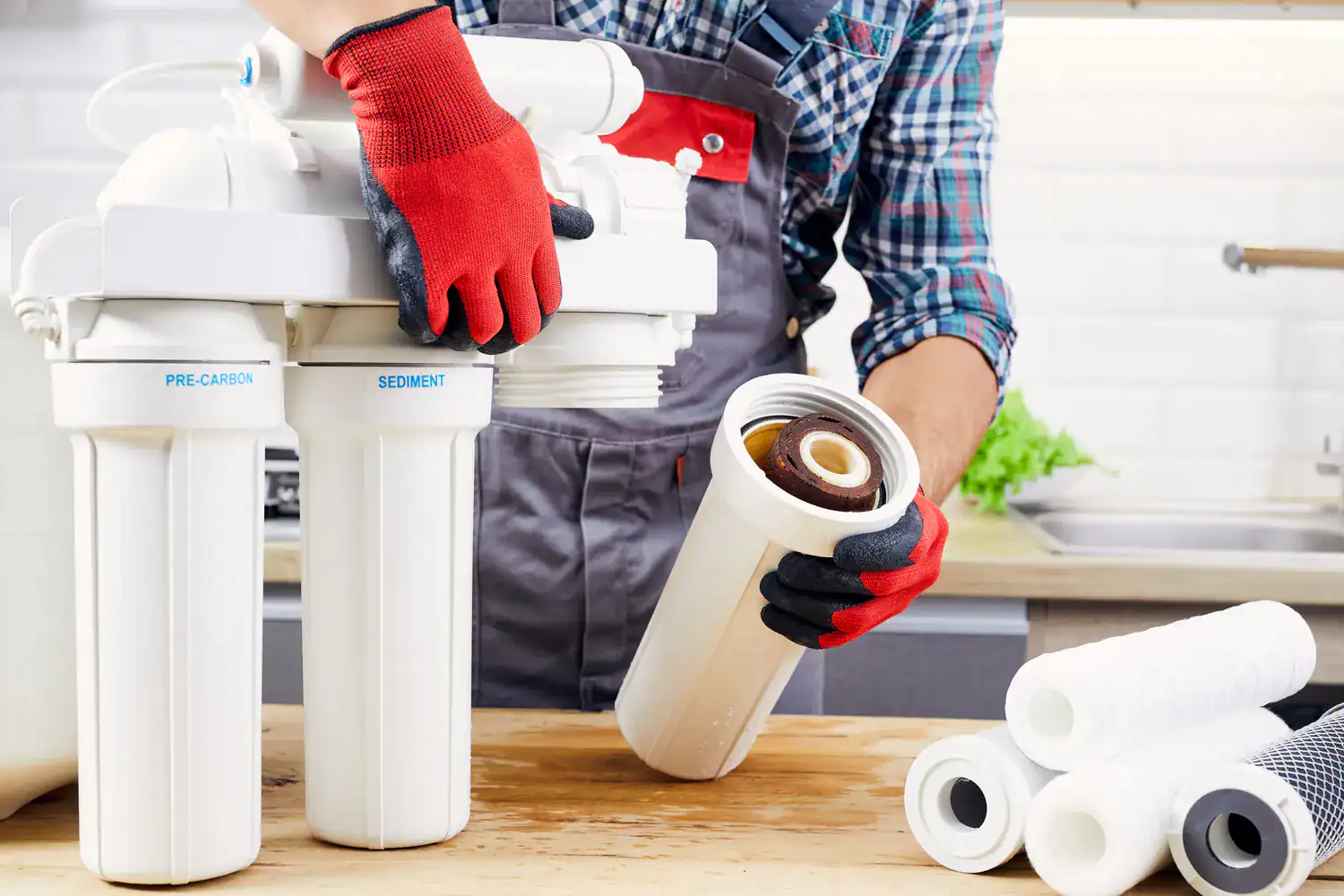
Installation happens in a single day. The system goes in at the point of entry — where water enters your home — so every tap in the house is covered from that point forward. We handle the work, we walk you through how everything operates, and we don’t disappear after the job is done. For Sanibel homeowners who’ve dealt with contractors who couldn’t or wouldn’t return to the island after Ian, that last part isn’t a small thing.
Ready to get started?
The contaminants most commonly found in Sanibel Island well water aren’t random — they’re a direct result of the island’s geology and its history. Iron and manganese come from the deep aquifer formations the island sits on. Hydrogen sulfide — the gas responsible for that rotten egg smell — is produced by sulfur bacteria that thrive in warm, oxygen-depleted groundwater, which is exactly what you get in a Southwest Florida well during the summer months. Bacterial contamination risk increases after storm events, and Sanibel had one of the most significant storm events in Florida history in September 2022.
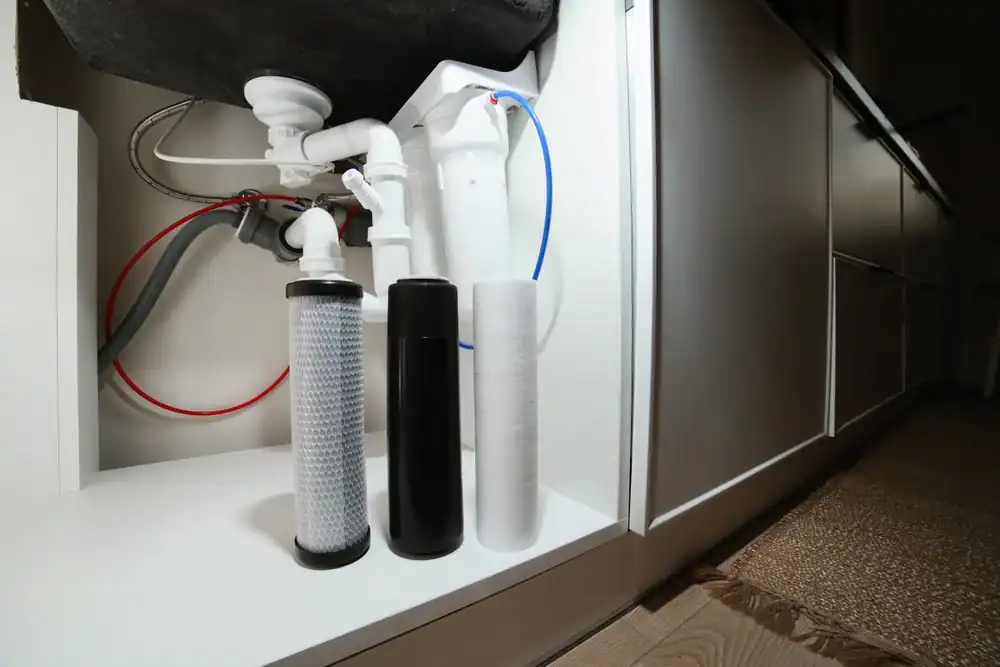
A whole-house purification system from us addresses all of it in one integrated setup. Air injection oxidation handles iron and hydrogen sulfide. Catalytic carbon filtration removes what oxidation doesn’t catch. UV disinfection eliminates bacteria without adding chemicals to your water supply. If hardness is part of your water profile, softening is incorporated into the same system. Everything is sized for your home’s actual water demand — not a generic residential estimate.
If you’re in a Sanibel property that’s been rebuilt or substantially renovated since Ian, this is the right time to install. Whole-house filtration goes in cleanly during renovation and is significantly harder to retrofit after the fact. Any installation involving modifications to your water supply line may require a permit from the City of Sanibel’s Building Department — we’re familiar with what that process looks like for island properties and can help you navigate it.

It’s a legitimate concern, and if you haven’t had your well tested since Ian, you genuinely don’t know the answer. When Hurricane Ian made landfall just north of Sanibel on September 28, 2022, the storm surge overwashed the entire island. That level of flooding introduces saltwater, surface runoff, and biological contaminants directly into the shallow aquifer that many private wells draw from. The contamination doesn’t always show up as an obvious smell or color change — bacterial contamination in particular can be present without any visible or taste indicator.
The only way to know what’s in your well post-Ian is to test it. A professional water analysis will identify whether bacterial contamination, elevated dissolved solids from saltwater intrusion, or other storm-related contaminants are present. If they are, a properly designed whole-house system — including UV disinfection for bacteria — can address all of it. If you’ve been using your well water since the storm without testing it, this is worth doing sooner rather than later.
The most common issues we see in Sanibel Island wells come directly from the island’s geology. Iron is widespread — it comes from the aquifer formations beneath the island and shows up as orange or rust-colored staining in sinks, showers, and toilets. Hydrogen sulfide is another frequent complaint; it’s produced by sulfur bacteria in warm, low-oxygen groundwater and is responsible for the rotten egg smell that many well owners notice, particularly when running hot water.
Manganese is less visible than iron but causes its own problems — black or dark brown staining on fixtures and in laundry. Bacterial contamination, including coliform bacteria, is a risk on any private well, and that risk is elevated in a coastal environment that experienced the kind of storm surge Sanibel saw in 2022. Deep artesian wells on the island also draw from the Hawthorn aquifer system, where dissolved solids concentrations can be significantly above normal freshwater levels. That’s why we test before we recommend anything — the specific combination of issues in your well determines exactly what your system needs to address.
Yes — and that’s actually the point of a whole-house purification system versus buying individual filters for individual problems. A lot of Sanibel homeowners have been sold a water softener when what they actually needed was a multi-stage filtration system. A softener addresses hardness. It does not remove iron, sulfur, or bacteria. If your water still smells or still stains after a softener was installed, you were given the wrong solution for your water.
A properly designed whole-house system handles all of it in one integrated setup. Air injection oxidation addresses iron and hydrogen sulfide. Catalytic carbon filtration catches what the oxidation stage doesn’t. UV disinfection eliminates bacteria at the point of entry — before the water reaches any tap, appliance, or shower in your home. If hardness is also part of your water profile, softening is built into the same system. Everything is designed around your actual water test results, not a generic formula, and sized for your home’s specific flow rate and daily water demand.
This is one of the most common situations we work with on Sanibel Island, and it’s worth understanding what actually happens to a well while a home sits idle. When a property is unoccupied for several months — particularly during Florida’s summer rainy season, when temperatures and humidity are at their highest — stagnant water in the well and in-home plumbing becomes a breeding ground for sulfur bacteria and other biological contaminants. Many seasonal residents return in the fall and immediately notice a sulfur smell or off taste that wasn’t there when they left. That’s not a coincidence.
A whole-house filtration system with UV disinfection runs continuously, which means it’s working whether you’re on the island or not. By the time you return for the season, the system has been maintaining water quality the entire time you were away. If you’re opening a Sanibel property for the first time after an extended absence — especially post-Ian — we recommend starting with a fresh water analysis before assuming the system is performing as expected. Water conditions can shift, and a quick test confirms everything is still in range.
Most Sanibel properties are served by the Island Water Association, which draws from a deep brackish aquifer roughly 700 to 900 feet below the surface and processes it through a reverse osmosis desalination plant before it reaches your home. The IWA’s system is well-regarded — they’ve won over 30 awards for their treatment process — but RO-treated water comes with its own considerations. The desalination process strips minerals from the water, producing demineralized water that can be aggressive toward plumbing and fixtures over time. The finished water is also chlorinated for disinfection, which affects taste and odor.
Homeowners on IWA municipal water often benefit from point-of-use or whole-house post-treatment filtration to address chlorine taste, corrosivity, and the flat flavor that comes with heavily demineralized water. It’s worth noting that the IWA has filed for an 18% rate increase in each of 2026, 2027, and 2028 — meaning the cost of municipal water on Sanibel is going up significantly. Protecting the quality of the water you’re paying for at the point of use is a reasonable investment in that context.
Please provide your email address so that we can stay in touch and answer any questions you have! We will be reaching back out shortly.
"*" indicates required fields