Reach Out Today
Please provide your email address so that we can stay in touch and answer any questions you have! We will be reaching back out shortly.


Hear from Our Customers
The orange ring around your toilet bowl isn’t just an eyesore. It’s iron — and it’s in your drinking water, your shower, and running through every appliance in your home. When that gets resolved, you stop scrubbing, stop replacing fixtures ahead of schedule, and stop wondering what you’re actually drinking.
Rio Ponderosa sits surrounded by five nature and wildlife preserves, which is part of what makes this neighborhood feel so different from the rest of The Villages. But those same preserves contribute organic matter to the local water table — tannins, biological material, and runoff that can show up as tea-colored water or a faint smell that gets worse in summer. That’s not something a standard softener handles. It takes a system designed around your specific well chemistry.
Most of the homes here were built in the 1990s, which means the wells and pressure tanks are 25 to 35 years old. If your water quality has quietly gotten worse over the years, aging infrastructure is often part of the reason. A whole-house system doesn’t just clean your water — it protects your water heater, your washing machine, your dishwasher, and everything else that runs on it. That’s real money staying in your pocket.
Quality Safe Water of Florida has been solving well water problems across Central Florida for over 50 years. That’s not a number we throw around — it means we’ve been treating Floridan Aquifer water in Rio Ponderosa and throughout Lake County and Sumter County since before most of The Villages existed. We know what comes out of the ground in this area, and we know how to fix it.
Our A+ BBB rating, five-star customer rating, and zero complaints on record aren’t credentials we earned by accident. In an industry that has a documented history of targeting older Florida homeowners with high-pressure sales and overpriced systems, that track record means something. The Florida Attorney General shut down one such company in 2021 for selling systems between $6,700 and $9,700 using false health claims. We’re the opposite of that.
We’re also members of the National Water Quality Association — a voluntary professional standard that most local competitors simply haven’t pursued. When your neighbors in Rio Ponderosa are comparing notes on Nextdoor or Talk of The Villages, that’s the kind of record that travels fast.
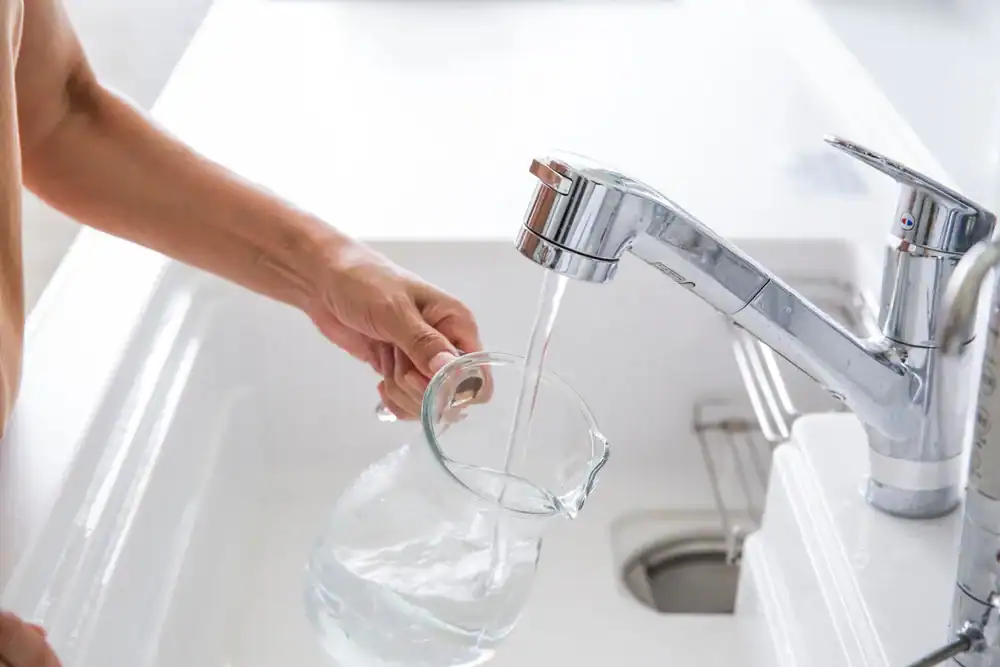
It starts with a free professional water analysis. We come to your Rio Ponderosa home, test your well water on-site, and give you a clear picture of exactly what’s in it — iron levels, hardness, sulfur, bacteria, manganese, and anything else worth knowing. No charge, no pressure, no guessing. You get real data before we recommend a single piece of equipment.
From there, we design a whole-house system around what your water actually needs. In Rio Ponderosa, that often means addressing multiple issues at once — elevated iron from the Floridan Aquifer, hydrogen sulfide that intensifies during Florida’s warmer months, hardness levels that can reach 10 to 15 grains per gallon, and biological concerns that are more pronounced near the surrounding nature preserves. One properly designed system handles all of it at the point of entry, so every tap in your home gets treated water.
Installation is typically completed in a single day. We handle the work, clean up after ourselves, and walk you through how the system operates before we leave. And unlike some national companies that sell and disappear, we stay available for service and maintenance after the install. You get a local number, a real team, and someone who actually picks up the phone.

Ready to get started?
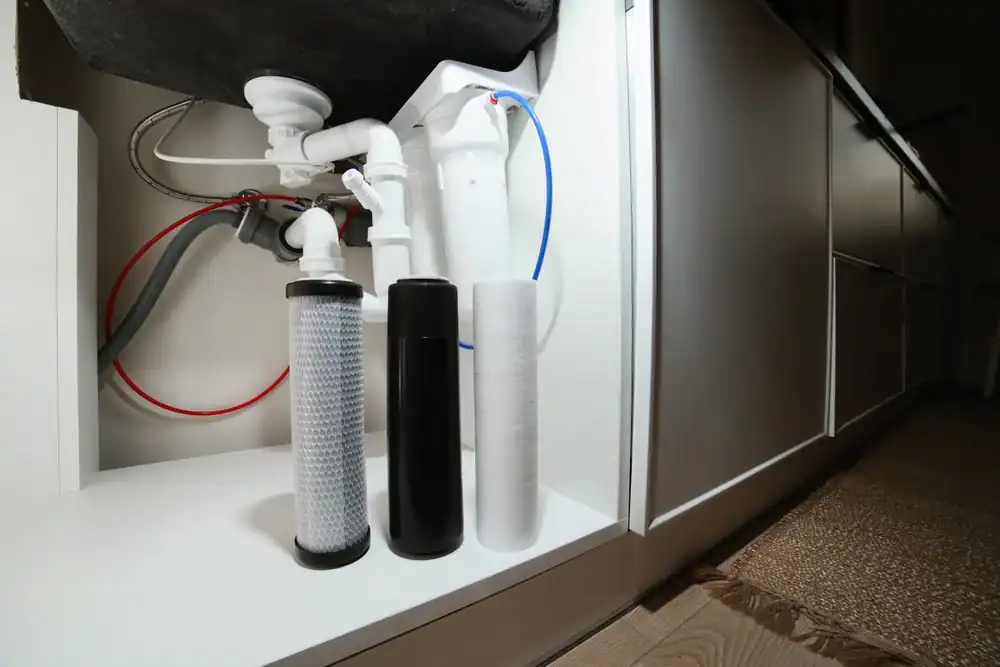
Well water in Rio Ponderosa doesn’t usually have just one problem. Iron staining, sulfur odor, hard water scale, and bacterial contamination tend to show up together — because they all come from the same source: untreated groundwater pulled directly from the Floridan Aquifer with nothing intercepting it before it reaches your tap. Our whole-house well water purification systems are built to handle that full picture.
For iron and manganese, we use air injection oxidation — a process that converts dissolved metals into filterable particles before they ever reach your fixtures. For hydrogen sulfide, the same oxidation process neutralizes the sulfur compounds responsible for that rotten egg smell, which tends to get noticeably worse during Florida’s summer months when groundwater temperatures rise. UV disinfection handles bacterial contamination, which is a real concern in any private well — and more so here in Rio Ponderosa, where proximity to the wildlife preserves and Florida’s heavy rainy season can introduce biological material into the shallow water table.
Water softening addresses the hardness that destroys appliances and leaves scale on every surface it touches. If you’ve lived in Rio Ponderosa for more than a few years, you’ve already seen what 10 to 15 GPG water does to a water heater or a dishwasher. Every system we install starts with your free water analysis, so what gets put in your home is built for your well — not a neighbor’s, not a template. If you’re active military, a veteran, or a first responder, you also qualify for a $500 discount on your system.

That smell is hydrogen sulfide — a gas produced by sulfur-reducing bacteria that thrive in Florida’s warm, oxygen-poor groundwater. It’s one of the most common complaints from private well owners in Rio Ponderosa and throughout The Villages area, and it tends to get significantly worse during the summer months when groundwater temperatures rise and bacterial activity increases.
The good news is it’s completely fixable. An air injection oxidation system introduces oxygen into the water before it enters your home, which neutralizes the hydrogen sulfide and eliminates the odor at the source. The fix isn’t a filter you replace every few months — it’s a permanent whole-house solution that handles the problem continuously. If the smell has been getting worse over the years, that’s also worth noting: it can indicate changes in your well’s bacterial environment or chemistry that a free water analysis will catch and quantify before we recommend anything.
Yes — and for most well owners in Rio Ponderosa, that’s exactly what’s needed. The Floridan Aquifer delivers water that’s hard, high in iron and manganese, and often carrying dissolved sulfur compounds. Layering those issues on top of each other is the norm here, not the exception. A single properly designed whole-house system addresses all of them at the point of entry, which means every tap, every appliance, and every shower in your home gets treated water.
The way it works: air injection oxidation handles iron, manganese, and hydrogen sulfide simultaneously by converting dissolved metals and sulfur into filterable particles. A water softener or salt-free conditioner addresses hardness. UV disinfection handles bacterial contamination. These stages are integrated into one system — not four separate units bolted together. It’s installed in your garage or utility area, takes about a day, and from that point forward your well water is treated before it reaches anything in your home.
The Florida Department of Health recommends that private well owners test their water at minimum once a year for bacteria and nitrates. That’s the baseline — but it’s not the full picture for homeowners in Rio Ponderosa specifically. The five surrounding nature and wildlife preserves, combined with Florida’s heavy summer rainy season, create conditions where biological contamination and organic matter can enter the shallow water table more readily than in more developed neighborhoods.
After any significant storm or flooding event, it’s worth testing again before assuming your water is safe. If you’re a seasonal resident who leaves for the summer and returns in the fall, testing before resuming normal use is a smart precaution — wells that sit idle for months can develop bacterial growth and chemistry changes that aren’t obvious without a test. Our free water analysis covers the full picture, not just the minimum, so you know exactly what you’re working with before making any decisions.
That orange staining is iron. It’s dissolved in your well water and oxidizes when it hits air and surfaces — leaving behind rust-colored deposits on toilets, sinks, tubs, and anything else water touches regularly. In Central Florida’s Floridan Aquifer, iron levels are elevated naturally because the water travels through layers of limestone and iron-bearing rock before it reaches your well. There’s no municipal treatment plant removing it before it gets to you.
The fix is an iron removal system — specifically, an air injection oxidation filter that converts dissolved iron into solid particles before the water enters your home. Once those particles are filtered out, the staining stops. Existing stains on fixtures can often be removed with the right cleaning approach, but the real win is that you stop creating new ones. If you’re also seeing black staining on fixtures, that’s manganese — a related issue that the same system addresses. A water analysis will tell you exactly how much of each you’re dealing with so the system is sized correctly for your well’s output.
Private well water in Florida is not regulated the way municipal water is. There’s no treatment plant, no chlorination, and no ongoing monitoring by a public utility. What comes out of your tap is exactly what’s in the ground beneath your property — and in Rio Ponderosa, that means Floridan Aquifer water that can carry elevated iron, manganese, hardness minerals, hydrogen sulfide, and potentially bacteria, especially near the surrounding nature preserves.
Whether it’s “safe” depends entirely on what’s in your specific well — and the only way to know that is to test it. Some wells in Rio Ponderosa have water that’s aesthetically unpleasant but not an acute health risk. Others have bacterial contamination or nitrate levels that are genuinely concerning, particularly for older adults or anyone with a compromised immune system. At an average resident age of 73 in this community, that’s not a theoretical concern. A free water analysis gives you the actual numbers so you can make an informed decision — not a guess based on how the water looks or smells.
Please provide your email address so that we can stay in touch and answer any questions you have! We will be reaching back out shortly.
"*" indicates required fields