Reach Out Today
Please provide your email address so that we can stay in touch and answer any questions you have! We will be reaching back out shortly.

Hear from Our Customers
The Floridan Aquifer runs deep through karst geology here, and it naturally picks up iron, sulfur, manganese, and hardness along the way. By the time that water reaches your tap in Chatham, it’s carrying years of mineral exposure with it.
For homeowners in Chatham, this hits a little differently. Your home was built between 2001 and 2004, which means your plumbing and appliances have been absorbing that mineral load for over two decades. Water heaters scale up faster. Washing machines wear out sooner. That iron staining on your driveway or walkway — the kind that’s embarrassing when neighbors roll by on their golf carts — doesn’t come from bad luck. It comes from untreated well water hitting concrete and landscaping day after day.
When you have a properly designed whole-house filtration system in place, the difference is immediate and visible. Your water is clear. The smell is gone. Your appliances last longer. The fixtures stop staining. And you stop buying products to mask problems that a filtration system would have prevented in the first place.
We’ve been solving Florida well water problems for over 50 years. Not as a franchise. Not as a national brand with a local phone number. As a Florida-based water treatment company that has installed over 1,000 systems throughout Marion County and the surrounding region — which means we already know exactly what your well in Chatham is pulling from the ground.
We hold an A+ BBB rating with zero complaints on record. In an industry where high-pressure sales tactics and disappearing-after-installation are common complaints, that zero is meaningful. We’re also members of the National Water Quality Association — a voluntary credential that requires passing a professional exam and committing to an ethics code most competitors never bother with.
We don’t do plumbing. We don’t do water heaters. Water treatment is all we do, and we’ve been doing it long enough to know that every home in the Spanish Springs area of The Villages has its own water chemistry — and deserves a system designed around it, not a one-size-fits-all product pulled off a shelf.
It starts with a free water analysis. One of our technicians comes to your home in Chatham, tests your well water on-site, and shows you exactly what’s in it — iron levels, sulfur content, hardness, bacteria, manganese. No guessing, no generic sales pitch. The results tell the story, and the system recommendation follows from the data.
From there, a whole-house filtration system is designed specifically for your water chemistry and your home’s size and usage. For most homes in the Spanish Springs area, that means a multi-stage system installed at the point of entry — so every tap, every appliance, every shower in the house gets treated water from the moment it enters. Marion County’s well water typically requires iron and sulfur treatment at minimum, and many homes also benefit from bacterial disinfection, especially older well casings that have been in the ground since the early 2000s.
Installation happens in a single day. The system goes in, we walk you through how it works, and by the time we leave, your water is already running clean. There’s no multi-day project, no torn-up utility room, no waiting. We also handle any applicable permitting requirements and work within Marion County’s regulatory framework — so you don’t have to navigate that on your own.
Ready to get started?
Well water in the Spanish Springs area of The Villages rarely has just one problem. Iron comes with sulfur. Sulfur comes with hardness. Hardness comes with manganese. Treating one without addressing the others means you’ll still have problems — just different ones. We design whole-house systems that tackle all of it in a single integrated solution, sized and configured for what your specific water test reveals.
Iron removal handles the staining — on fixtures, in laundry, on your driveway and walkway where irrigation water hits every morning. Sulfur treatment eliminates the hydrogen sulfide that creates that rotten egg odor, which is particularly persistent in Central Florida’s warm groundwater year-round. Bacterial filtration, typically through UV disinfection, addresses the contamination risk that comes with older well casings and the heavy rainfalls Marion County sees every summer. Manganese reduction prevents the dark staining that often gets mistaken for mold or mildew on fixtures and appliances.
Every system is a whole-house installation — not an under-sink filter, not a pitcher, not a partial solution. And because Chatham homes are over 20 years old, the system is also protecting your existing plumbing investment from further mineral damage. If you’re a veteran or active first responder, we offer a $500 discount — a straightforward acknowledgment of service that applies directly at the time of installation.

This is one of the most common questions from homeowners in The Villages, and the answer depends on which part of the community you’re in and how your home is set up. Many homes in the Spanish Springs area — where Chatham is located — receive household water through the Villages Community Development District’s managed water system. However, a large number of homes also have separate private irrigation wells that draw directly from the Floridan Aquifer without any pre-treatment. That irrigation water is what causes the iron staining on driveways, walkways, and landscaping that’s so common throughout Chatham and this area.
If you’re not sure whether your home has a private well, a CDD connection, or both, a free water analysis will make that clear immediately. Even if your household drinking water comes through the CDD system, an untreated irrigation well is still exposing your home’s exterior and landscaping to raw Marion County groundwater — and the staining and buildup that comes with it. It’s worth knowing exactly what you’re working with before assuming everything is covered.
That smell is hydrogen sulfide gas — a naturally occurring compound that forms when water moves through sulfur-bearing rock and sediment in the Floridan Aquifer. Marion County’s limestone geology is particularly productive when it comes to dissolved sulfur, and because Florida’s groundwater stays warm year-round, the sulfur-reducing bacteria that produce hydrogen sulfide are active in most seasons — not just summer. The result is a rotten egg odor that can range from faint to overwhelming depending on your well depth, flow rate, and how long water sits in your pipes.
The good news is that hydrogen sulfide is one of the more straightforward problems to treat with the right system. Aeration and oxidizing filtration can eliminate the odor at the source before water ever reaches your fixtures. A water test will confirm your sulfur levels and whether any other contaminants are present alongside it — which is common in Chatham and throughout this area. Treating the smell alone without testing for everything else is a shortcut that usually leads to a second service call.
Yes — and for most homes in Chatham, that’s exactly what’s needed. Marion County well water rarely presents a single isolated problem. Iron, hydrogen sulfide, manganese, hardness, and bacterial contamination frequently appear together because they all originate from the same source: the Floridan Aquifer moving through layers of limestone, sedite, and organic material deep underground. A system designed to treat only one of those contaminants will leave the others untouched.
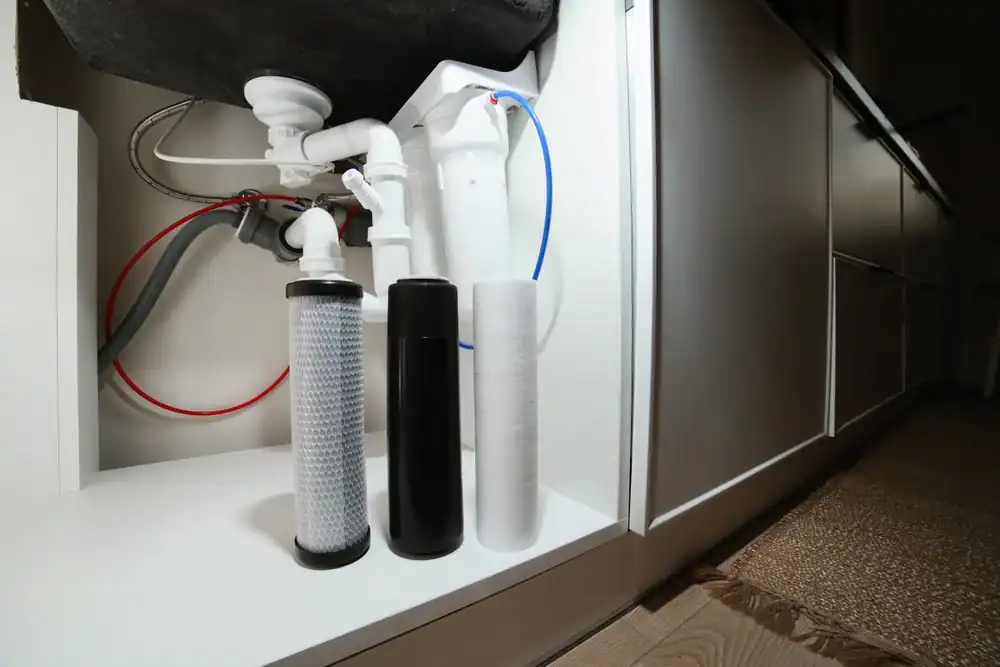
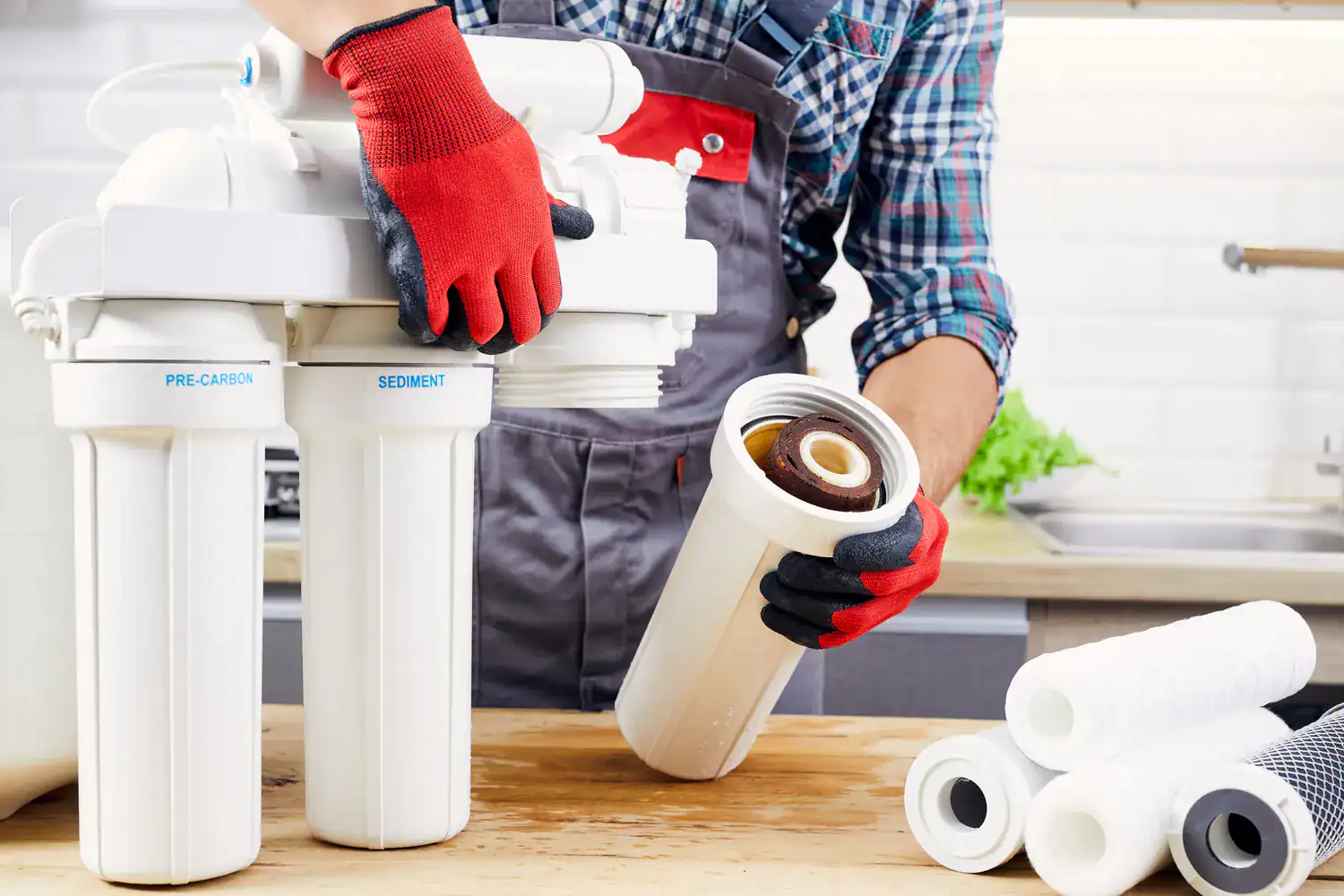
A properly designed whole-house system uses multiple treatment stages — typically oxidation filtration for iron and sulfur, a sediment pre-filter, and UV disinfection for bacteria — configured in the right sequence for your specific water chemistry. The order of stages matters. Putting UV before iron filtration, for example, reduces the UV’s effectiveness because iron particles in the water block the light. We design the system around your actual water test results, not a generic product package. That’s the difference between a system that works and one that partially works.
Most whole-house systems require relatively light maintenance once they’re properly installed and sized for your water volume. Filter media in iron and sulfur systems typically regenerates automatically — similar to how a water softener cycles — so day-to-day operation doesn’t require much from you. UV bulbs used for bacterial disinfection generally need to be replaced once a year to maintain full effectiveness. Sediment pre-filters may need attention every few months depending on your well’s sediment load, which can increase after heavy rainfall events in Marion County’s wet season.
For homes in Chatham specifically, it’s worth scheduling a system check after any significant tropical weather or flooding. Marion County sees substantial summer rainfall, and older well casings — which most Chatham homes have, given the 2001–2004 construction vintage — can allow surface water intrusion after major storms. That’s when bacterial contamination risk is highest. A quick post-storm test gives you confidence that your system is handling what the weather threw at it. We remain available for service calls and maintenance after installation — that’s not a given with every company in this market, but it’s the expectation here.
It will — and for a home that’s been on untreated Marion County well water for 20-plus years, the protection argument is one of the strongest reasons to act sooner rather than later. Iron and mineral scale accumulate inside water heaters, washing machines, dishwashers, and pipes over time. The buildup reduces efficiency, accelerates wear, and eventually leads to premature failure. Homeowners in The Villages who have replaced a water heater or washing machine more than once since moving in often discover afterward that hard water and iron were the underlying cause.
A whole-house filtration system stops that process at the point of entry. Clean, treated water reaches every appliance and fixture in the home — not just the kitchen sink. Water heaters run more efficiently without scale buildup. Washing machines last longer. Plumbing fixtures stop corroding. The system also eliminates the ongoing cost of iron stain removers, descaling products, and cleaning supplies you’ve been buying to manage symptoms instead of the source. Over a 5–10 year horizon, the math on appliance protection alone tends to justify the investment significantly.
Please provide your email address so that we can stay in touch and answer any questions you have! We will be reaching back out shortly.
"*" indicates required fields