Reach Out Today
Please provide your email address so that we can stay in touch and answer any questions you have! We will be reaching back out shortly.


Hear from Our Customers
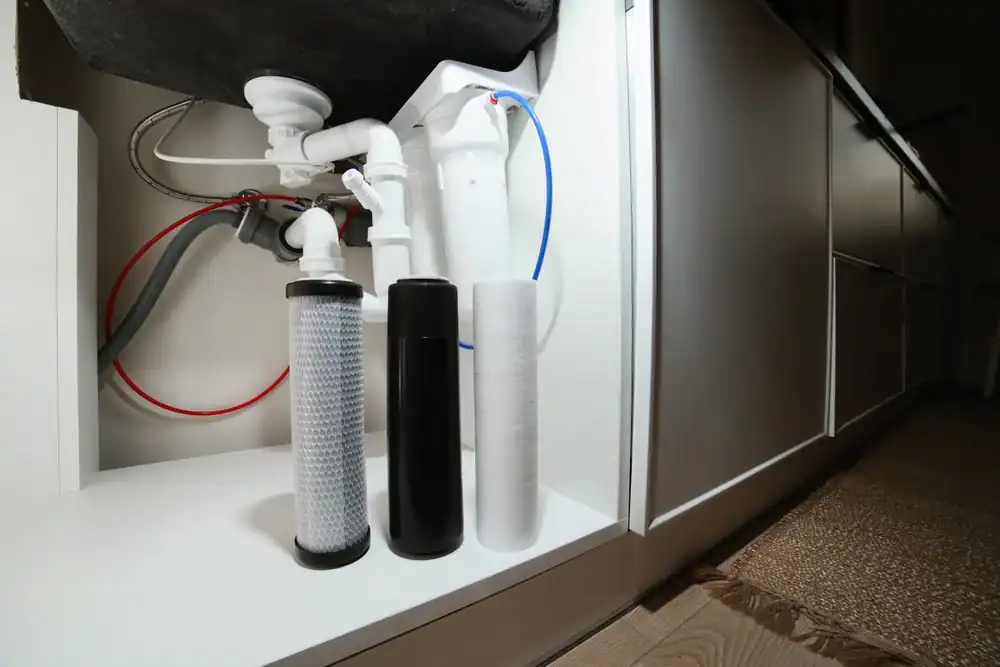
Most Belvedere homeowners dealing with orange stains on their toilets or a rotten egg smell coming from the shower have been living with it long enough that it starts to feel normal. It isn’t. Those are signs of dissolved iron and hydrogen sulfide in your well water, and they don’t go away on their own — they get worse as the water table shifts through South Florida’s wet season and dry season cycles.
The homes in Belvedere Homes and Lake Belvedere Estates were largely built between 1940 and 1969. That means the plumbing in many of these houses has been fighting hard, iron-heavy Biscayne Aquifer water for sixty or seventy years. Scale builds up inside pipes. Water heaters work harder than they should. Washing machines wear out faster. A properly designed whole-house filtration system stops all of that — not just at the drinking tap, but at every fixture, appliance, and outdoor connection on your property.
When the water is right, you stop buying bottled water, stop scrubbing orange rings off your fixtures, and stop replacing appliances ahead of schedule. That’s the outcome. It’s practical, it’s measurable, and it starts with knowing what’s actually in your water.
We’ve been in the water treatment business for over fifty years, and in that time the industry has earned a reputation for high-pressure sales and oversized systems sold to people who didn’t need them. The Florida Attorney General took action against one such company in 2021. That history is real, and it’s why our BBB record matters: A+ rating, zero complaints on file. Not one.
We’re a member of the National Water Quality Association — a voluntary credential that requires passing a professional exam and committing to an ethics standard most competitors don’t bother with. For homeowners in unincorporated Palm Beach County like those in Belvedere, where you’re dealing with county oversight rather than city utilities and a water table that sits just below the surface, that level of accountability isn’t a bonus. It’s the baseline you should expect.
We also offer a $500 discount for military members and first responders — a reflection of our involvement with the Tunnels to Towers Foundation and a genuine commitment to the people who serve this community.
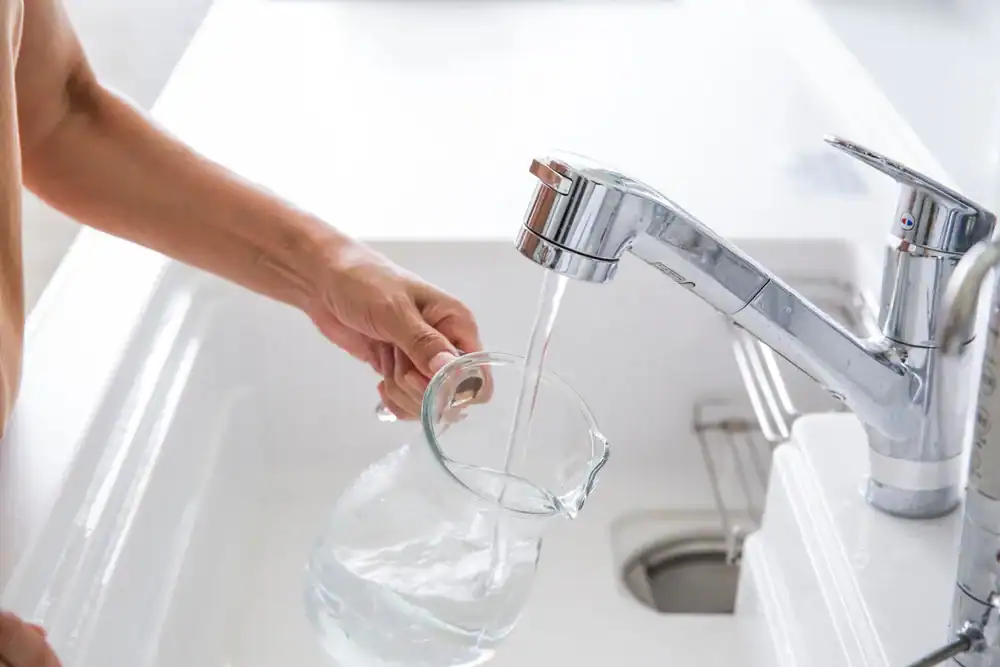
It starts with a free water analysis at your home. One of our technicians comes to you, tests your well water on-site, and gives you a clear picture of what’s in it — iron levels, hardness, hydrogen sulfide, bacteria, manganese, and anything else the Biscayne Aquifer is contributing to your supply. In the Belvedere area, that test often turns up more than homeowners expect, especially in homes that have never had a professional assessment done on the well.
From there, we design a system around what your water actually shows — not a package pulled off a shelf. The Biscayne Aquifer runs 15 to 22 grains per gallon of hardness, which is significantly higher than what most people expect, and it frequently carries dissolved iron that’s invisible in the well but turns orange the moment it hits air. If bacteria or hydrogen sulfide are present, those get addressed in the same system. One installation. One day. No multi-day disruption to your home.
Because the Belvedere area is in unincorporated Palm Beach County, any applicable county permit requirements are handled as part of the process. Once the system is installed, you’ll have clean water at every tap — and a company that picks up the phone when you call, not a national brand routing you through a call center.
Ready to get started?
The Biscayne Aquifer doesn’t produce a single-problem water supply. In the Belvedere area, it’s common to test a well and find iron, manganese, hydrogen sulfide, hardness, and bacterial contamination all at once. A system that addresses only one of those — like a standalone softener sold by a plumber — leaves the rest untouched. What you actually need is a system designed around the full picture.
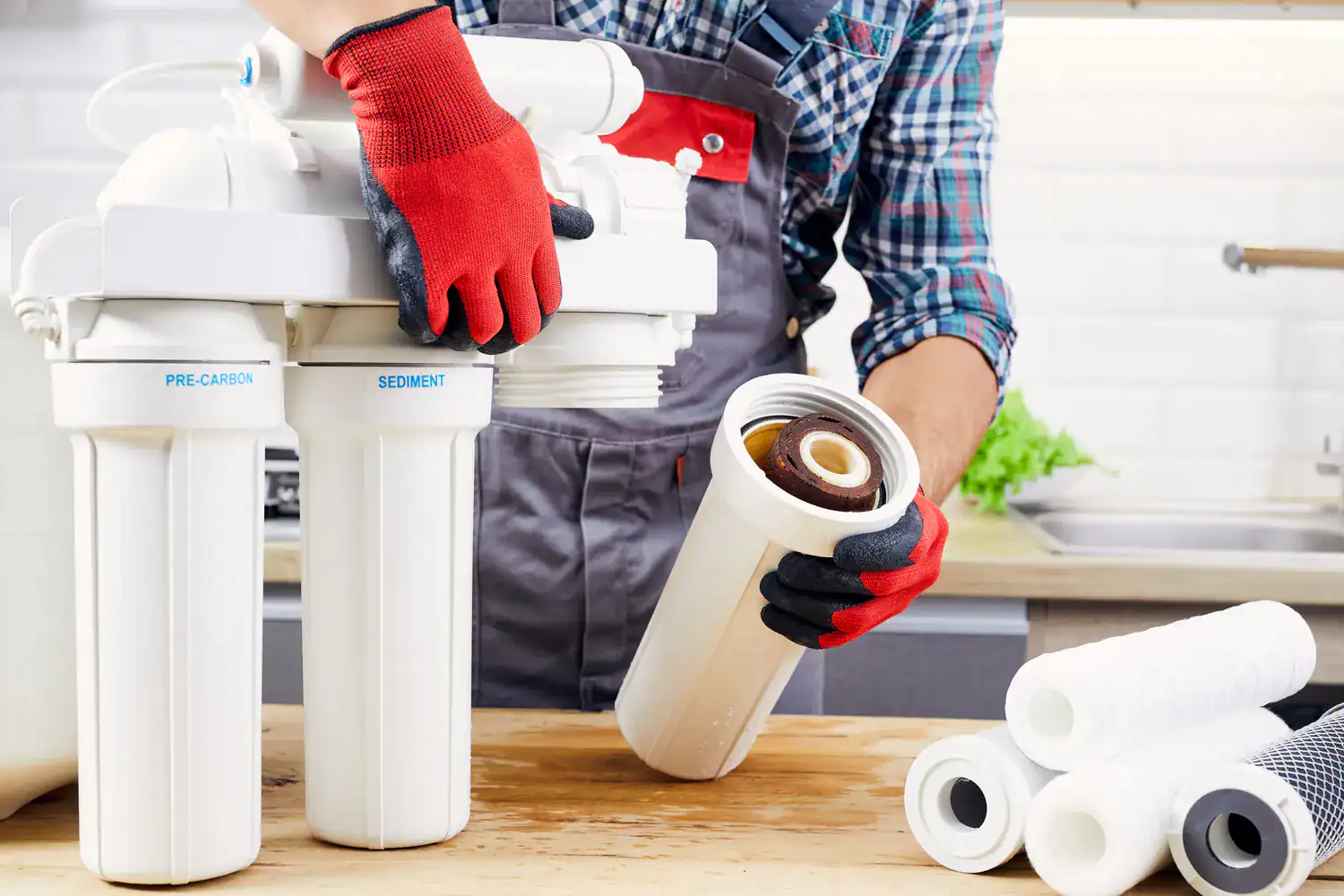
A whole-house setup from us typically combines air injection oxidation to convert dissolved iron and sulfur into filterable particles, catalytic carbon filtration to capture residual sulfur compounds, UV disinfection to eliminate bacteria and coliform, and a water softener to handle the extreme hardness that’s standard in South Florida groundwater. Every component is sized to your household’s water usage and chemistry — not to a price point.
There’s one more thing worth knowing if you’re on a private well near Belvedere Road. Palm Beach International Airport sits directly on that corridor, and PFAS contamination from airport firefighting foam has been documented in the Biscayne Aquifer at PBI. PFAS isn’t part of a standard annual well check, which means many homeowners in this area have no idea whether it’s present. If that’s a concern, a reverse osmosis component can be added to the system to address it at the point of use. The free water test is the right starting point — everything else follows from what it shows.

That smell is hydrogen sulfide — a gas produced by sulfur-reducing bacteria living in the anaerobic groundwater environment of the Biscayne Aquifer. It’s extremely common in private wells throughout Palm Beach County, and it tends to be more noticeable in the morning after water has been sitting in the pipes overnight, or during South Florida’s wet season when the water table rises and shifts the groundwater chemistry.
The good news is that hydrogen sulfide is one of the more straightforward problems to treat. An air injection oxidation system introduces oxygen into the water stream, which converts the dissolved sulfur gas into a solid particle that gets filtered out before the water reaches your taps. Catalytic carbon filtration handles any residual sulfur compounds. The smell goes away completely — not reduced, gone. If you’ve been tolerating it because you assumed it was just how well water smells in Belvedere, it isn’t. It’s a solvable problem.
That’s iron. In the Biscayne Aquifer, iron typically exists in a dissolved form called ferrous iron — it’s invisible when the water comes out of the well, but the moment it contacts air or a surface, it oxidizes and turns that familiar rust-orange color. You’ll see it on toilet bowls, in the grout lines of your shower, on driveways where a sprinkler hits, and as permanent-looking stains on white laundry.
The concentration of iron in your well depends on your specific location and depth, but it’s a documented issue throughout the Belvedere area and unincorporated Palm Beach County broadly. An air injection oxidation filter is the standard solution — it oxidizes the iron inside the system before it ever reaches your fixtures, so it comes out as a particle that gets trapped in the filter media rather than depositing on every surface in your home. Once the system is running, the staining stops. Existing stains on fixtures often respond to treatment with an iron-specific cleaner, but new staining won’t occur.
For a whole-house water treatment system installed on an existing well in unincorporated Palm Beach County, permit requirements depend on the scope of the work. A point-of-entry filtration system that connects to existing plumbing without modifying the well itself typically falls under standard plumbing permit guidelines administered by Palm Beach County’s Building Division. Any work that involves modifying the well casing, pump, or pressure tank may require a separate well permit through the Florida Department of Health Palm Beach County office.
You shouldn’t have to figure this out yourself. When we design a system for a Belvedere home, the applicable permit requirements are identified and handled as part of the installation process. Because the Belvedere area sits in unincorporated county jurisdiction rather than City of West Palm Beach jurisdiction, the relevant authority is the county — not the city — and that distinction matters for who issues the permit and what the inspection process looks like. It’s a detail that local knowledge handles easily, and one that can cause delays if you’re working with a company that doesn’t know the area.
South Florida’s wet season runs from roughly May through October and brings over sixty inches of rainfall annually — much of it in intense, concentrated bursts. In the Belvedere area, the flat, low-lying terrain means the water table can rise significantly during heavy rain events, and the Biscayne Aquifer’s shallow, unconfined structure means there’s no protective clay layer between the surface and your drinking water supply. When the water table rises quickly, surface contaminants — bacteria, organic material, fertilizer runoff, and septic system effluent — can migrate downward into the aquifer faster than during drier periods.
For homeowners on private wells in Belvedere, this means bacterial contamination risk is highest during and immediately after heavy rain events or flooding. It’s also the time of year when sediment and organic color in well water tend to increase. A properly designed system with UV disinfection handles bacterial risk year-round, but if you’ve ever noticed your water looking cloudier or smelling different after a big storm, that’s the aquifer responding to surface conditions above it. Post-storm well testing is a reasonable precaution, especially for wells that haven’t been assessed recently.
Yes — and for most wells in the Belvedere area, a single whole-house system is designed to address all of them simultaneously. The confusion usually comes from homeowners who’ve been told they need a separate softener, a separate iron filter, and a separate UV system. That’s sometimes true depending on the water chemistry, but more often a well-designed system integrates those functions into one installation with a logical treatment sequence.
The typical sequence works like this: water enters the system and goes through air injection oxidation, which converts dissolved iron and hydrogen sulfide into filterable particles. A filter bed captures those particles. Catalytic carbon handles residual sulfur compounds. UV disinfection eliminates bacteria and coliform before the water enters your home’s distribution system. A water softener addresses the hardness that’s standard in Biscayne Aquifer water throughout Palm Beach County. Each stage handles a specific contaminant class, and the system is sized to your household’s actual flow rate and water chemistry — not a generic configuration. The free water test is what determines exactly which stages your water needs.
Please provide your email address so that we can stay in touch and answer any questions you have! We will be reaching back out shortly.
"*" indicates required fields