Reach Out Today
Please provide your email address so that we can stay in touch and answer any questions you have! We will be reaching back out shortly.

Hear from Our Customers
Your dishes come out of the dishwasher looking clean. Your shower glass stops collecting that white film no amount of scrubbing seems to touch. Your skin doesn’t feel tight after a shower. These aren’t small things — they’re the daily friction that hard water creates, and most people in Polo Ridge have been living with it so long they’ve stopped noticing it’s not normal.
The homes in Polo Ridge were built between 1999 and 2002. That means the pipes, the water heater, the fixtures — all of it has been absorbing Sumter County’s extremely hard water for over two decades. The Villages of Lake-Sumter water system draws from the Floridan Aquifer, which flows through thick limestone bedrock before it ever reaches your tap. Florida’s average water hardness sits around 216 PPM — a level classified as extremely hard — and Sumter County’s water supply has been specifically flagged for soaring hardness scores. That mineral load doesn’t disappear. It accumulates, calcifies, and quietly shortens the life of everything it touches.
A properly sized water softener stops that process. Your water heater runs more efficiently. Your appliances last longer. You use less soap, less shampoo, less detergent — because soft water actually lathers and rinses the way water is supposed to. For a retirement-era home where appliance replacement isn’t something you want to budget for early, that matters more than people expect.
We’re based in Leesburg — right next door to Sumter County — which means the technicians who come to your Polo Ridge home know this water. We know the Floridan Aquifer. We know what Polo Ridge homes deal with. This isn’t a national company routing calls through a distant call center. It’s our local team that services what we sell, which apparently still needs to be said out loud in this industry.
We hold an A+ rating with the Better Business Bureau, a 5-star review average, and zero complaints on record. We’re also a member of the National Water Quality Association — a credential that requires actual adherence to professional and ethical standards, not just a fee. In an industry where the Florida Attorney General has fielded consumer protection complaints about high-pressure sales tactics and post-sale abandonment, our record is not common. It’s earned.
If you or your spouse served in the military or worked as a first responder, there’s a $500 discount waiting for you. We also support the Tunnels to Towers Foundation — because the values that matter in this community matter to us too.
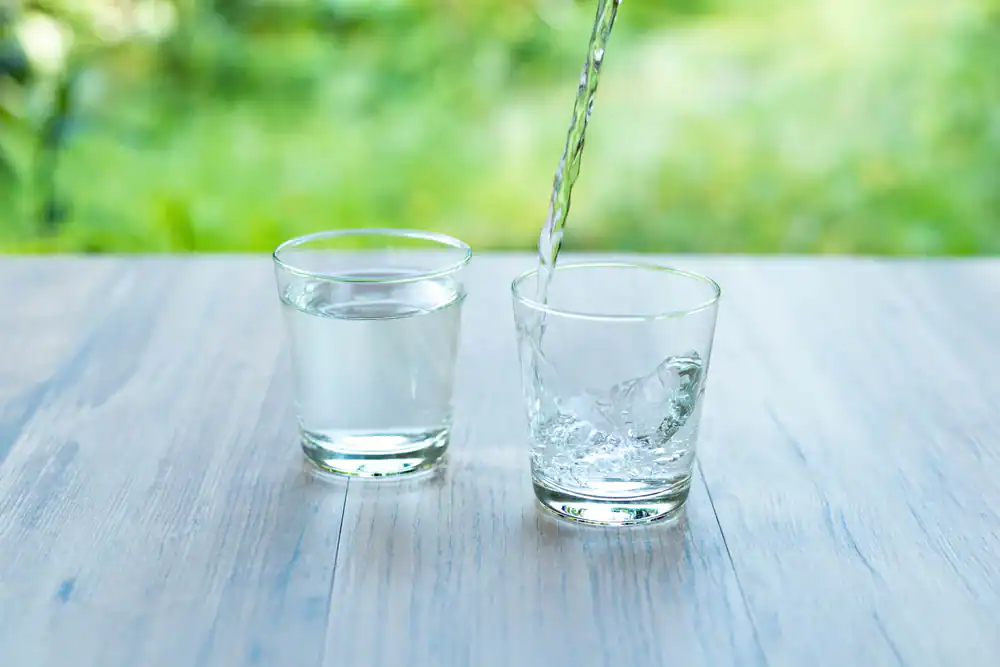
It starts with a professional water analysis — not a sales pitch dressed up as a test, but an actual lab-quality assessment of what’s in your water. For Polo Ridge homes on the Villages of Lake-Sumter municipal supply, this gives a clear picture of your exact hardness level, total dissolved solids, and anything else worth knowing before a recommendation is made. No system gets proposed until the water is understood.
From there, the system is sized precisely for your home. The square footage of a cottage home on Southern Trace is different from a designer home closer to Hawkes Bay. Water usage, flow rate, and your actual hardness reading all factor into the calculation. An undersized system won’t fully soften your water. An oversized one wastes salt and water on every regeneration cycle. Getting the size right from the start is one of the reasons our BBB record looks the way it does.
Installation connects to your home’s main water supply at the point of entry, so every tap, every appliance, and every fixture in your house gets treated water from day one. The ion exchange resin tank captures calcium and magnesium ions and replaces them with sodium — automatically, on a set regeneration schedule. The brine tank handles the salt. Your only job after installation is adding salt when it gets low. Everything else runs on its own.

Ready to get started?
The core of a salt-based water softener is ion exchange — a process where hard water passes through a resin bed that pulls calcium and magnesium out of the water and replaces them with a small amount of sodium. The resin regenerates on a schedule using a salt brine solution, restoring its capacity to keep working. It’s a proven process, it’s fully automatic, and it’s the only approach that actually removes the minerals responsible for hard water damage — not just alters them.
You may have seen salt-free “conditioning” systems marketed as an alternative. Those systems change the structure of the minerals so they’re less likely to form scale, but the calcium and magnesium stay in the water. For Sumter County’s hardness levels, that’s not the same outcome. If protecting your appliances, getting real lather in the shower, and eliminating mineral deposits on your fixtures is the goal, ion exchange is what delivers it.
Before any system is recommended for your Polo Ridge home, we run a professional water test. The system you receive is sized specifically for your household — not pulled off a shelf and handed over. After installation, we remain available for service, maintenance, and any adjustments. That’s not a standard practice in this industry. Here, it’s the only way we operate.

The water serving Polo Ridge comes from the Villages of Lake-Sumter municipal water treatment plants, which draw from the Floridan Aquifer — a massive underground system that moves through porous limestone and dolomite before reaching any tap in Sumter County. That geology loads the water with dissolved calcium and magnesium at levels that consistently register in the extremely hard range. Florida’s average water hardness is approximately 216 PPM, and the Villages of Lake-Sumter system has been specifically identified in water quality monitoring data for soaring hardness scores.
To put that in perspective, water above 180 PPM is classified as very hard by industry standards. Anything approaching or exceeding 200 PPM is in the extremely hard range. At those levels, the mineral accumulation in your pipes, fixtures, water heater, and appliances is not gradual — it’s continuous and compounding. For a Polo Ridge home that was built in 1999 or 2002 and has never had a softening system, that’s over two decades of buildup already present in the plumbing.
Yes — and the numbers behind it are more significant than most people expect. Hard water scale buildup reduces water heater efficiency by up to 24% and can shorten appliance lifespan by 30 to 40%. A tank water heater running on Florida’s hard water without treatment commonly fails at six to eight years instead of its expected ten to twelve. That’s a $1,200 to $2,800 replacement cost that arrives years ahead of schedule.
For Polo Ridge homeowners, this is particularly relevant. The homes in this neighborhood are over 20 years old, which means water heaters, dishwashers, and washing machines are either already in replacement territory or approaching it. Soft water won’t reverse damage that’s already done, but it stops further scale accumulation immediately and, over time, helps soften existing deposits as treated water flows through the system. Protecting the appliances you already have — rather than budgeting to replace them early — is one of the clearest financial arguments for a water softener in this community.
It’s a fair question, and it comes up often. The short answer is no — properly softened water does not taste salty to most people. The ion exchange process adds a small amount of sodium in exchange for the calcium and magnesium it removes, but the sodium level in softened water is generally well within the range that’s imperceptible to taste. For context, a typical eight-ounce glass of softened water contains far less sodium than a single slice of bread.
That said, if sodium intake is a health concern — which is a consideration worth taking seriously, especially for residents managing blood pressure — a reverse osmosis drinking water system installed at the kitchen tap will remove that residual sodium entirely. Many Polo Ridge homeowners pair a whole-house water softener with an under-sink RO system for drinking and cooking water. You get the full appliance-protection and cleaning benefits of soft water throughout the house, and sodium-free water at the tap where it matters most for consumption.
Florida’s year-round heat actually makes consistent maintenance more important than in cooler climates — not because the softener itself is affected by temperature, but because hot water accelerates mineral precipitation. That means scale forms faster in water heaters and appliances here than it would in, say, a home in Ohio with the same hardness level. A properly functioning softener running on the right regeneration schedule handles this automatically, but keeping the brine tank stocked with salt and scheduling periodic system checks keeps it performing at full capacity.
For most households in Polo Ridge, adding salt to the brine tank every four to eight weeks is the primary maintenance task. Beyond that, a professional check every year or two — to inspect the resin bed, verify the regeneration cycle, and confirm the system is still sized correctly for your usage — is standard practice. We service what we install, so that ongoing relationship is built into the process from day one. You’re not left to figure out maintenance on your own after the installation is done.
This distinction matters more than most marketing will tell you. A salt-based water softener using ion exchange actually removes calcium and magnesium from your water. Those minerals are captured by the resin bed and flushed out during regeneration. What comes out of your tap after treatment has genuinely lower hardness — measurable with a test, visible in how your water behaves.
A salt-free water conditioner — sometimes marketed as a “no-salt softener” — does not remove calcium and magnesium. It changes the crystalline structure of those minerals so they’re less likely to adhere to surfaces and form scale. The minerals are still in the water. For mild hardness, this can be a reasonable approach. For Sumter County’s hardness levels, which consistently register in the extremely hard range, conditioning alone typically won’t deliver the full results most homeowners are looking for — protected appliances, genuine lather, spot-free dishes, and softer skin and hair. If those outcomes matter to you, ion exchange is the process that delivers them. A professional water test before any recommendation ensures you’re not buying more or less system than your water actually requires.
Please provide your email address so that we can stay in touch and answer any questions you have! We will be reaching back out shortly.
"*" indicates required fields