Reach Out Today
Please provide your email address so that we can stay in touch and answer any questions you have! We will be reaching back out shortly.

Hear from Our Customers

The white crust on your showerhead is not a cleaning problem. The film on your glasses coming out of the dishwasher is not a soap problem. Both are calcium and magnesium — minerals pulled straight from the limestone and dolomite that Florida’s water supply runs through. Once you remove them at the source, the buildup stops. The fixtures stay clean. The glasses come out clear.
Osceola Hills homes were built starting in 2015, which means your appliances have been fighting hard water for nearly a decade. Water heaters scale up faster in Florida’s heat, and a scaled-up heater works harder, costs more to run, and fails sooner than it should. Soft water slows that process down — and in a home you plan to stay in for years, that matters more than it would somewhere you were just passing through.
The daily stuff matters too. Softer water means softer skin after a shower, less dry scalp, and hair that actually feels clean. If you moved here from the Midwest or the Northeast, you probably noticed the difference in your first week. That is not in your head — Florida’s water is measurably harder, and your body feels it.
We are based in Leesburg — the same Lake County as Osceola Hills. That is not a technicality. It means the team that installs your system knows this water, knows this geology, and has been treating it in homes across Osceola Hills and the surrounding area for years. When something needs attention down the road, you are calling the same company that did the work — not a national 1-800 number routing to whoever is available.
We hold an A+ rating with the Better Business Bureau and a 5-star review average with zero complaints on record. In an industry where Florida’s consumer protection authorities have received complaints about water softener companies using deceptive tactics, that record matters. We are also a member of the National Water Quality Association, which sets the technical and ethical standards that a lot of competitors simply do not follow.
In Osceola Hills, where neighbors talk at Burnsed Recreation Center, on the Soaring Eagle walking paths, and at Brownwood Paddock Square, a company’s reputation travels fast. Ours has held up.

It starts with a free professional water analysis. Not a basic test strip — a laboratory-grade test that measures hardness, iron, sulfur, chlorine, and other contaminants specific to your home’s water supply. In Osceola Hills, water hardness in this part of Lake County typically runs in the hard range — around 7 to 8 grains per gallon based on local utility data. You will see exactly what your water contains before any conversation about equipment.
From there, the right system is sized to your home. This part matters more than most people realize. An undersized softener will not fully treat your water. An oversized one wastes salt and runs unnecessary regeneration cycles. The calculation is based on your actual water usage and the measured hardness level — not a guess or a one-size-fits-all recommendation.
The softener itself works through ion exchange. Inside the unit, resin beads carry a negative charge that attracts and holds the positively charged calcium and magnesium ions as water passes through. What comes out the other side has those minerals removed — genuinely soft water, not conditioned water that still contains hardness minerals. The system regenerates on a set schedule using a brine tank, flushing the captured minerals out and recharging the resin so it is ready to go again. We handle professional installation in Osceola Hills with proper connection to your home’s drain system in compliance with local codes — no shortcuts, no guesswork.

Ready to get started?
Every installation starts with real data — your water test results, your household size, your usage patterns. Osceola Hills homes are typically two- to three-bedroom residences with one or two full-time residents, which affects both the system capacity and the regeneration frequency. Getting that sizing right from the start is what separates a system that performs for fifteen years from one that underdelivers in six months.
We install whole-house solutions, meaning every tap, every appliance, every shower in your home receives treated water. That includes the water heater that has been scaling up since your home was built, the dishwasher running on Florida’s hard water every day, and the washing machine that has been working harder than it should to get your clothes clean. Soft water extends the life of all of it — and in a retirement home you plan to stay in, that kind of long-term protection is exactly what you are paying for.
If your water test shows elevated iron or sulfur alongside hardness — which is not uncommon in this part of Lake County — that gets addressed in the system recommendation as well. Water softening handles calcium and magnesium removal through ion exchange, but a complete solution may include additional filtration depending on what your test shows. You will know exactly what you need before any decision is made. Military families and first responders in Osceola Hills receive $500 off — no fine print, no expiration.

Yes — and the data backs it up. Water in Osceola Hills draws from the Floridan Aquifer, which sits within thick limestone and dolomite geology. As water moves through that rock, it picks up calcium and magnesium, which are the minerals that cause hard water. The City of Leesburg’s 2024 water quality report documents hardness in the range of 7 to 8 grains per gallon — firmly in the hard classification by any standard scale. Osceola Hills sits in the same geology and draws from the same system.
That level of hardness is enough to cause visible scale buildup on fixtures, film on glassware, reduced appliance efficiency, and skin and hair irritation. It is not a safety issue — the water meets all regulatory standards — but it is a daily quality-of-life and home protection issue. A water softener does not make your water safer. It makes it better for your home, your appliances, and your comfort.
A properly sized and professionally installed salt-based water softener typically lasts 15 to 20 years with regular maintenance. Florida’s heat does not shorten that lifespan significantly, but it does mean the system is working harder — because hot water accelerates mineral precipitation, your softener is processing more hardness demand than the same unit would in a cooler climate. That makes correct sizing at installation especially important.
The main maintenance items are straightforward: keeping the brine tank stocked with salt, scheduling a resin cleaning every year or two depending on your water’s iron content, and having the system inspected periodically to make sure settings are dialed in correctly. In Osceola Hills, where homes were built in 2015 and many residents plan to stay long-term, a well-maintained system installed today should serve you well into the 2040s. We service what we install — so if something needs attention five years from now, you are not starting over with a new company.
A water softener removes calcium and magnesium from your water through ion exchange — the resin beads inside the unit physically capture those minerals and replace them with sodium ions. What comes out is genuinely soft water with the hardness minerals gone. A water conditioner, sometimes called a salt-free system, does not remove those minerals. Instead, it changes their structure so they are less likely to stick to surfaces and form scale.
For Florida water in the hard range — like what you have in Osceola Hills — the difference matters. Conditioners can reduce scale formation, but they do not deliver the full skin, hair, appliance, and fixture benefits that come from actually removing the minerals. If your primary goals are protecting your appliances, eliminating buildup on fixtures, and improving how your water feels, a salt-based ion exchange softener is the more complete solution. Your free water test will show exactly what your water contains, and our recommendation will be based on that — not on which product has the higher margin.
Salt usage depends on your water’s hardness level and your household’s daily water consumption. For a typical Osceola Hills home — two residents, water hardness around 7 to 8 grains per gallon — most systems use roughly 6 to 10 pounds of salt per regeneration cycle, and a properly sized system regenerates every few days rather than daily. That translates to roughly one 40-pound bag of salt per month for an average household.
The brine tank on most modern softeners holds enough salt for several weeks, so you are not constantly monitoring it. Many homeowners check it once a month when they are already doing routine household tasks. The salt itself is inexpensive and widely available. The bigger variable is iron content — if your water test shows elevated iron alongside hardness, the system will need to regenerate more frequently to clear the resin, which increases salt consumption. That is one more reason the water test comes first, before any system recommendation is made.
Soft water does have a slightly different taste than hard water, and some people notice it right away while others do not notice at all. The ion exchange process replaces calcium and magnesium with a small amount of sodium — not enough to be a health concern for most people, but enough that it can affect taste for those who are sensitive to it. If you are on a sodium-restricted diet, that is worth discussing before installation.
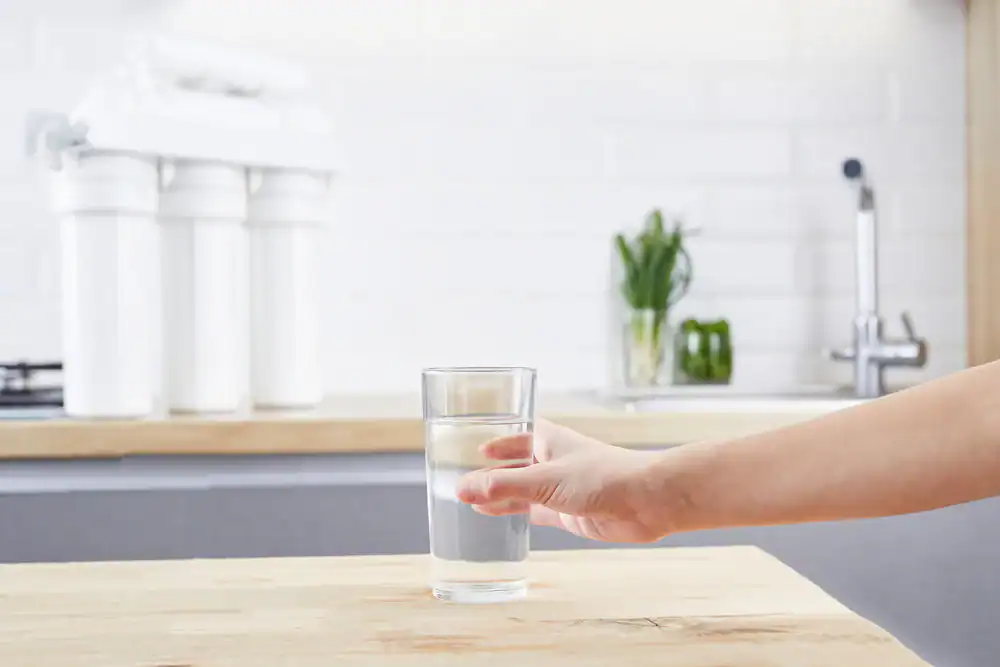
The most common solution is a dedicated reverse osmosis system at the kitchen sink or refrigerator line, which removes virtually everything — including the sodium added by the softener — and delivers clean, neutral-tasting drinking water. Many Osceola Hills homeowners pair a whole-house softener with an under-sink RO system for exactly this reason: soft water throughout the home for appliances, fixtures, showers, and laundry, and purified drinking water at the tap. We install both, and the free water analysis covers everything you need to know before deciding what combination makes sense for your home.
Please provide your email address so that we can stay in touch and answer any questions you have! We will be reaching back out shortly.
"*" indicates required fields