Reach Out Today
Please provide your email address so that we can stay in touch and answer any questions you have! We will be reaching back out shortly.

Hear from Our Customers
The white buildup on your shower door isn’t a cleaning problem. The spotted glasses coming out of your dishwasher aren’t a detergent problem. The dry, tight feeling on your skin after a shower isn’t your soap. It’s all the same thing — water pulling calcium and magnesium out of the Floridan Aquifer and delivering it straight to every faucet, fixture, and appliance in your home. Once that stops, things look and feel noticeably different, fast.
Homes in the Village of Amelia were built between 2007 and 2009, which means your water heater, dishwasher, and washing machine have been absorbing hard water mineral buildup for fifteen-plus years. Hard water scale reduces water heater efficiency by up to 24% and shortens appliance lifespan by 30 to 40%. If you’ve already replaced an appliance ahead of schedule, hard water was almost certainly involved. A properly sized water softener stops that damage from compounding any further.
There’s also the daily stuff that’s harder to put a number on. Laundry that actually feels soft when it comes out of the dryer. Glasses that come out of the dishwasher looking clean. A shower that lathers the way it’s supposed to and rinses clean instead of leaving a film behind. You moved to Amelia to enjoy your time here — not to scrub mineral deposits off your lanai windows or wonder why your fixtures look ten years older than they should.
We’re based in Leesburg — Lake County, the same county your Village of Amelia address falls under. When you call, you’re reaching a local company whose technicians drive CR 466 and CR 466A, know the Floridan Aquifer, and have been solving Central Florida’s hard water problems for years. This isn’t a national franchise routing your call to a regional center.
We hold an A+ rating with the Better Business Bureau, a 5-star review average, and zero complaints on file. In an industry with a well-documented history of high-pressure sales and post-sale disappearing acts, that record matters. We’re also a member of the National Water Quality Association, which means we operate under a professional code of ethics and technical standards that a lot of companies in this market simply don’t follow.
What customers consistently say — and name specifically in reviews — is that the same team that installs the system is the same team that picks up the phone when something needs attention later. That’s not a given in this industry. Here, it’s our standard.
It starts with a free professional water analysis — not a test strip dipped in a glass, but real laboratory-grade testing that measures your actual hardness level, iron content, and other key factors specific to your home’s water supply. In the Village of Amelia, municipal water sourced from the Floridan Aquifer consistently tests in the hard to very hard range, often between 7 and 25-plus grains per gallon depending on the specific supply blend reaching your neighborhood. That number drives everything that comes next.
From that data, we calculate the right system for your household — your water usage, your hardness level, your home’s specific needs. This is where professional sizing separates a system that actually works from one that underperforms or wastes salt. An undersized unit won’t fully soften your water. An oversized one regenerates more than it needs to. Getting it right from the start is the whole point of the analysis.
Installation is handled by our team from start to finish, including all Florida Plumbing Code compliance for any modifications to your home’s water supply line. You don’t need to navigate permit requirements or coordinate with anyone else. Once the system is in, it runs automatically — the ion exchange process works continuously, swapping out calcium and magnesium ions for sodium ions every time water passes through the resin tank. The only thing you do on an ongoing basis is add salt to the brine tank when it gets low. That’s it.
Ready to get started?
The Platinum Plus Water Softener is our whole-house system, and it’s built specifically for the kind of water Central Florida produces — high in calcium and magnesium, often with iron present, and treated with chlorine or chloramines by the municipal utility before it reaches your tap. The ion exchange process at the core of this system works by passing your water through a resin bed where hardness minerals are captured and exchanged for sodium ions. When the resin reaches capacity, a brine tank solution flushes and recharges it automatically. You get consistently soft water throughout the house without any manual involvement.
For homes in the Village of Amelia specifically, the system is sized based on your actual water test results — not a standard package applied to everyone. The 2007-to-2009 build era of Amelia’s homes means the plumbing and fixtures have had over a decade of hard water exposure, and the right system size accounts for current household demand while protecting what’s left of your appliances’ useful life.
If your goal is complete water quality — not just soft water but clean, great-tasting drinking water at the kitchen tap — the Platinum Plus pairs naturally with a reverse osmosis drinking water system or our Purelight whole-house UV purification system. These aren’t add-ons pushed at the end of a sales call. They’re the logical next step for homeowners who want the full picture, and our specialty is exactly that: whole-house water quality, done right, from one company that stays accountable after the job is done. Active military, veterans, and first responders receive $500 off — a discount that means something real in a community like The Villages.
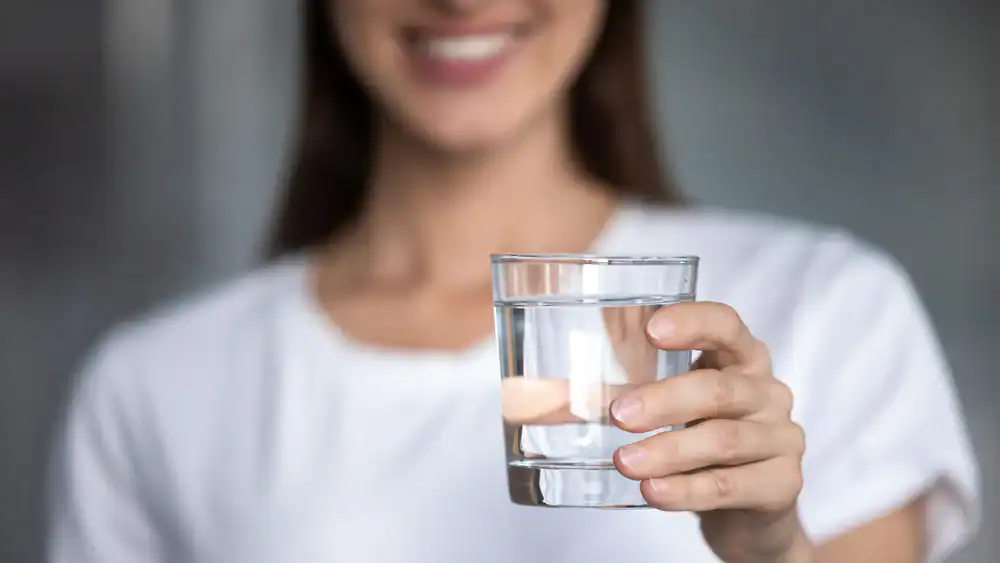
The Village of Amelia draws its water from the Floridan Aquifer, a deep limestone formation that runs beneath most of Central Florida. As groundwater moves through that limestone, it picks up calcium and magnesium — the minerals that make water hard. Municipal water supplies across The Villages region have been documented at anywhere from 7 to 25-plus grains per gallon, which ranges from moderately hard to very hard depending on the specific supply blend reaching your neighborhood. Central Florida’s average water hardness sits around 216 parts per million, firmly in the “extremely hard” category by any standard classification.
Home inspectors working throughout The Villages routinely document calcification on fixture nozzles and showerheads as a standard finding in virtually every home they inspect — not an occasional observation, but a consistent one. If you’ve noticed white buildup on your faucets, cloudy film on your shower glass, or spotted dishes coming out of the dishwasher, that’s exactly what hard water looks like in action. A professional water analysis gives you the actual number for your specific home in Amelia so you’re not guessing.
Hard water scale accumulates inside appliances every time water is heated — and that includes your water heater, dishwasher, washing machine, and ice maker. As scale builds up on heating elements and inside tanks, the appliance has to work harder to do the same job. Water heaters running on hard water lose up to 24% of their efficiency as scale thickens, and the average lifespan drops from the expected 10 to 12 years down to 6 to 8 years. That’s a $1,200 to $2,800 replacement cost that shows up ahead of schedule.
For homes in the Village of Amelia — built between 2007 and 2009 — that timeline is not hypothetical. Appliances installed at move-in have now been absorbing hard water for fifteen-plus years. If you’ve already replaced a water heater or dishwasher and didn’t know why it failed early, hard water was almost certainly the reason. A water softener installed today won’t reverse the damage that’s already happened, but it stops the accumulation from continuing and extends the useful life of whatever equipment you have now.
A salt-based water softener uses ion exchange to physically remove calcium and magnesium from your water. The hardness minerals are captured in a resin bed and flushed out during regeneration. What comes out of your tap after that process is genuinely soft water — the minerals are gone. A salt-free conditioner, sometimes marketed as a “water conditioner” or “descaler,” doesn’t remove hardness minerals. It changes their structure so they’re less likely to stick to surfaces, but they’re still present in the water.
For the hardness levels common in the Village of Amelia and throughout The Villages — often testing at 7 to 25-plus grains per gallon — a salt-free system typically doesn’t deliver the same results. You may see some reduction in scale buildup on surfaces, but you won’t get the skin and hair benefits, the appliance protection, or the spotless dishes that come from water that’s been fully softened. If someone is quoting you a salt-free system as equivalent to a softener for Central Florida water, it’s worth asking them to show you the data on how it performs at your specific hardness level.
Day-to-day, the main thing you do is add salt to the brine tank when the level gets low — typically every four to eight weeks depending on your household’s water usage and the size of your system. The brine tank is what stores the salt solution used to recharge the resin bed during regeneration cycles. Beyond that, the system runs automatically. Regeneration happens on a programmed schedule based on your water usage, and you don’t need to manually trigger it or monitor it.
Every few years, it’s worth having the resin bed inspected and the system checked by a professional to make sure it’s regenerating efficiently and the resin hasn’t degraded. In Central Florida’s water conditions — with the iron content and hardness levels common in The Villages area — resin can wear faster than it would in softer water regions, so periodic professional checks are a reasonable part of long-term ownership. We handle ongoing service for the systems we install, which means you’re calling the same company that put it in, not a third-party service provider who has never seen your setup.
A water softener will remove the hardness minerals from your water, which can slightly change the taste — most people find softened water tastes cleaner and less flat than hard water. However, a softener is not designed to address chlorine or chloramines, which municipal utilities in The Villages area add to the water supply as disinfectants. If your water has a noticeable chlorine taste or odor coming out of the tap, softening alone won’t fully resolve that.
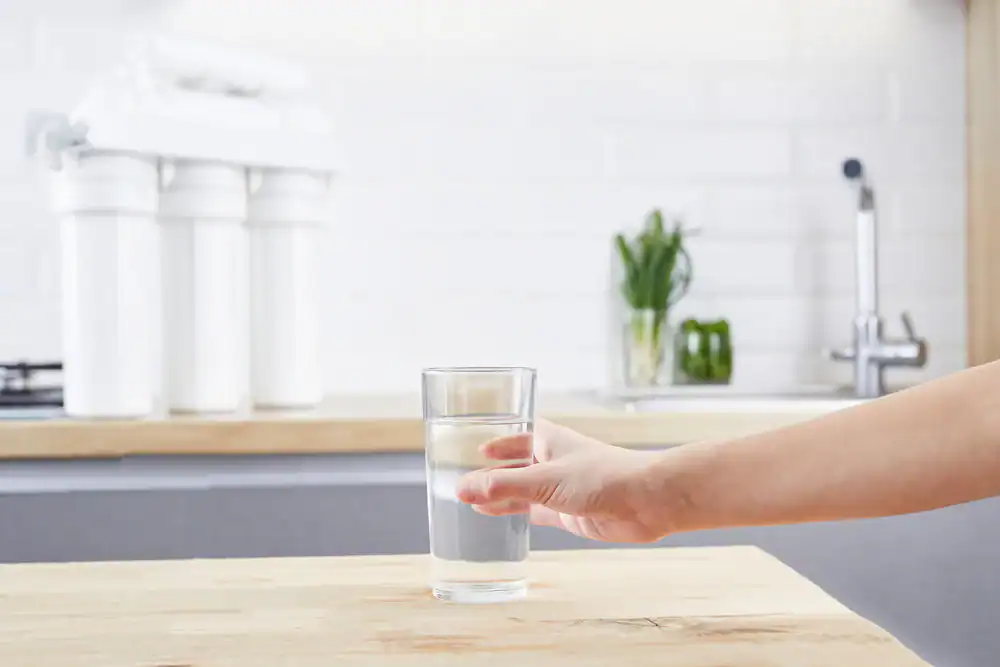
For drinking water specifically, the most complete solution is pairing a whole-house water softener with a reverse osmosis system at the kitchen tap. Reverse osmosis removes chlorine, chloramines, dissolved solids, and other contaminants that a softener doesn’t target, producing clean, great-tasting water for drinking and cooking. It’s a separate, compact unit that installs under the sink and feeds a dedicated faucet. A lot of homeowners in the Village of Amelia start with the softener and add the reverse osmosis system once they see the difference — and most say the drinking water improvement is just as noticeable as the softened water throughout the rest of the house.
Please provide your email address so that we can stay in touch and answer any questions you have! We will be reaching back out shortly.
"*" indicates required fields