Reach Out Today
Please provide your email address so that we can stay in touch and answer any questions you have! We will be reaching back out shortly.

Hear from Our Customers

When the water coming into your Del Mar home is treated at the source, everything downstream improves. Your shower heads stop crusting over. Your dishwasher stops leaving spots on the glassware. Your water heater runs more efficiently because it’s not fighting through years of scale buildup inside the tank. These aren’t small things — in a home that’s been on the same plumbing since the late ’80s, they’re the difference between replacing appliances early and getting full use out of them.
Del Mar sits in the Lake County portion of The Villages, and the water here comes from the Floridan Aquifer — a groundwater source that’s naturally high in calcium, magnesium, and dissolved minerals. That’s just the geology of Central Florida. But it does mean the water hardness here is real, it’s consistent, and it’s been affecting your home longer than most people realize.
The other side of this is your drinking water. The utility serving Del Mar — the Villages of Lake-Sumter Water Treatment Plants — has been flagged by the Environmental Working Group for disinfection byproducts like total trihalomethanes and haloacetic acids. These form when chlorine interacts with organic matter during treatment. They’re within legal limits, but they exceed the health thresholds that independent researchers consider safe over a lifetime. If you’ve been buying bottled water because your tap tastes off, that instinct isn’t wrong — and there’s a permanent fix that costs far less over time.
Quality Safe Water is based in Leesburg — Lake County — the same county Del Mar calls home. That matters more than it might sound. When you call us, you’re not reaching a call center routing a technician from three counties away. You’re reaching a company that operates in your water utility area, knows the Villages of Lake-Sumter system by name, and has been working with Central Florida groundwater for over 50 years.
We hold an A rating with the Better Business Bureau, a 5-star score, and zero complaints — in an industry where the Florida Attorney General has had to actively pursue fraud cases against bad actors. That record is verifiable. Look it up before you call. We’re also a member of the National Water Quality Association, which requires passing a professional exam and agreeing to a code of ethics — not just a membership fee.
Every system we install uses NSF-certified components. And when the job is done, the relationship doesn’t end. We service what we install, and we service other brands too — which matters in a community like Del Mar, where word travels fast and a company’s reputation is tested long after the install truck leaves.
It starts with a free in-home water analysis. Not a theatrical demonstration with chemical drops designed to make your water look dangerous — an actual test that measures the specific contaminants and mineral levels in your Del Mar tap water. Hardness, iron, pH, chlorine, total dissolved solids, and bacteria are all on the table. You get real numbers, not a sales pitch dressed up as science.
From there, we build a recommendation around what your water actually shows — not a one-size-fits-all package. Del Mar homes built in the late 1980s often have older plumbing that’s been accumulating mineral scale for decades. That history matters when sizing a whole-house system, and it affects which combination of filtration, softening, or reverse osmosis makes the most sense for your specific situation. A newer home in a southern expansion village might need a different approach than a cottage home off Rio Grande Avenue that’s been on the same pipes since 1989.
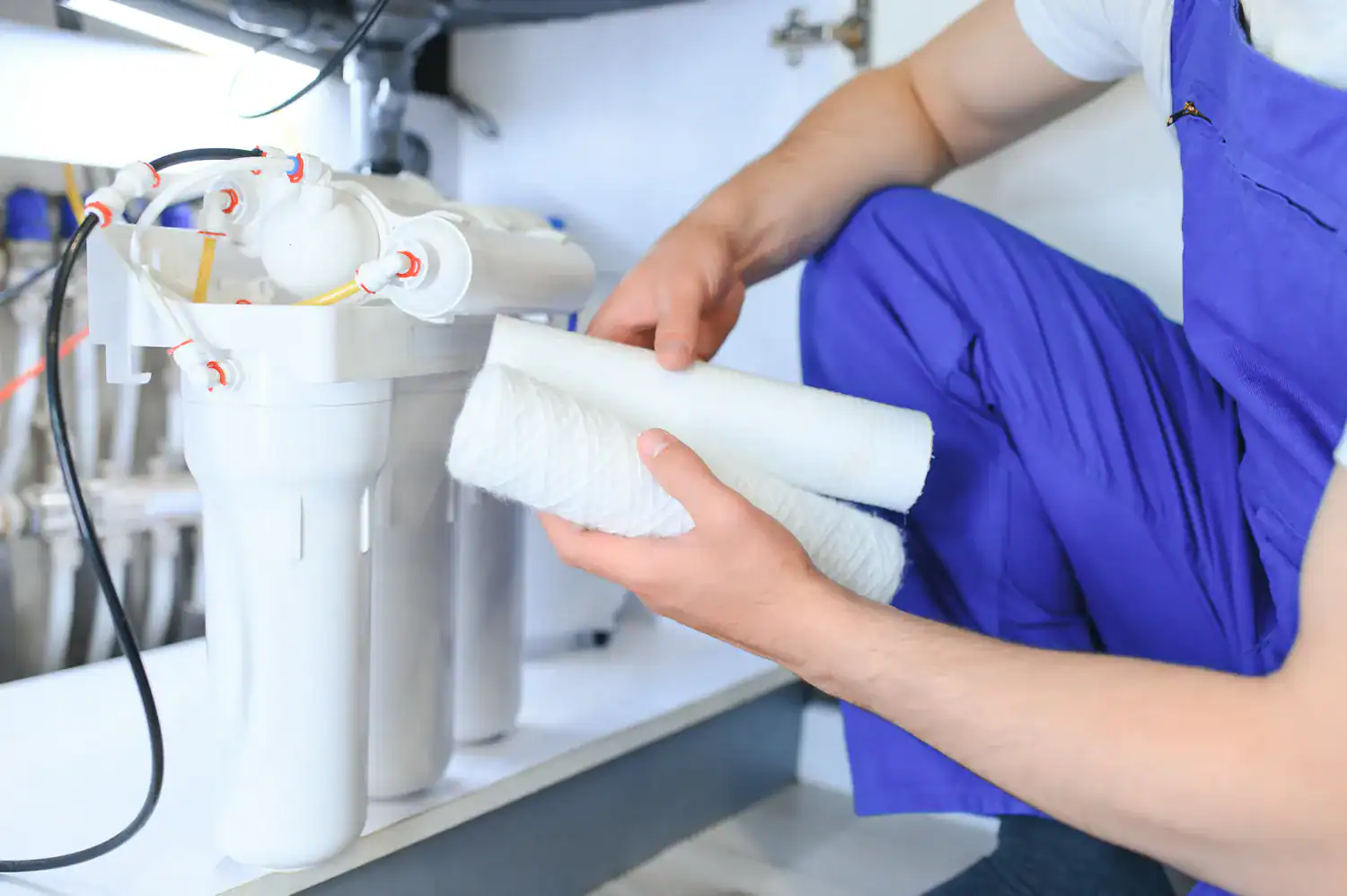
Installation is handled by our trained technicians who understand Florida’s groundwater chemistry and the Villages of Lake-Sumter water system specifically. After the system is in, you’ll get a full walkthrough — how it works, what maintenance looks like, and when to expect filter changes. Annual upkeep on a typical system runs $80 to $150. Compare that to what most Del Mar residents spend on bottled water every year, and the math isn’t close.
Ready to get started?
Whole-house water filtration is our specialty — and for most Del Mar homeowners, it’s the most complete answer to what the Floridan Aquifer delivers to your tap. A whole-house system treats every gallon that enters your home, which means every faucet, every shower, every appliance, and every ice cube benefits. Sediment removal, activated carbon filtration for chlorine and disinfection byproducts, and water softening or salt-free conditioning can all be combined based on your water test results.
For drinking water specifically, a reverse osmosis system installed at the kitchen sink removes 95 to 99 percent of dissolved solids — including the arsenic, heavy metals, and disinfection byproducts flagged in the Villages of Lake-Sumter water data. It’s also what eliminates the chlorine taste and odor that drives so many Del Mar residents to bottled water in the first place. UV purification is available for homes with well water or any situation where bacterial contamination is a concern.
If you’re a veteran or active military member, there’s a $500 discount on your system — a real, specific offer, not a token gesture. The Villages has one of the highest concentrations of military retirees in Florida, and that discount reflects a genuine acknowledgment of who lives here and what they’ve contributed. We also support the Tunnels to Towers Foundation, something that means something in a community like Del Mar where service and sacrifice aren’t abstract concepts.
Technically, yes — the water from the Villages of Lake-Sumter Water Treatment Plants meets all federal legal standards. But meeting legal standards and being free of concern aren’t the same thing. The Environmental Working Group has identified several contaminants in this specific utility system that exceed their health guidelines, including total trihalomethanes, haloacetic acids, arsenic, and chromium (hexavalent). These are disinfection byproducts and naturally occurring compounds that form or concentrate in groundwater systems like the Floridan Aquifer.
Legal limits are set with a wide margin of acceptable risk built in. EWG’s thresholds are set at a one-in-one-million lifetime cancer risk level — considerably more protective. If you’re drinking your Del Mar tap water daily, that long-term exposure is worth understanding. A free water analysis will show you exactly what’s in your water, and from there you can decide what level of filtration makes sense for your household.
Hard water in The Villages is not occasional — it’s the baseline. The Floridan Aquifer, which supplies the groundwater throughout this region, naturally carries high concentrations of calcium and magnesium. Water hardness in Central Florida typically runs between 100 and 300 parts per million depending on location, and the Del Mar area is well within that range.
Over time, that hardness deposits scale inside your pipes, your water heater, your dishwasher, and your washing machine. It reduces appliance efficiency, shortens equipment lifespan, and shows up visibly as white crust on faucets and shower heads. In a Del Mar home built in the late 1980s, that’s 30-plus years of mineral accumulation already working against your plumbing. A whole-house water softener or salt-free conditioning system stops new buildup from forming and, over time, allows existing scale to gradually clear from your pipes.
A whole-house system treats water at the point it enters your home — before it reaches any tap, appliance, or shower. Depending on what your water test shows, a system can include a sediment pre-filter to capture particulates, an activated carbon filter to remove chlorine, disinfection byproducts, and odor, and a water softener or salt-free conditioner to address hardness. These components work together, and the right combination depends entirely on your specific water results.
For drinking water, a reverse osmosis unit is typically added at the kitchen sink as a dedicated drinking water filter. It handles what the whole-house system doesn’t need to — dissolved solids, heavy metals, and remaining trace contaminants — delivering filtered water directly to your tap and, if connected, to your refrigerator line. The goal is a system that’s sized and configured for your home’s actual usage and water profile, not a pre-packaged deal that may include equipment you don’t need.
A professionally installed whole-house water filtration system typically runs between $1,800 and $3,200 depending on the size of your home, your water test results, and which combination of components your water actually requires. A reverse osmosis drinking water system at the kitchen sink generally adds $1,000 to $4,000 depending on the system tier and features.
For Del Mar specifically, homes in the original village section tend to be cottage-style or smaller footprint homes, which often means a more straightforward installation than a larger site-built home in a newer expansion area. Annual maintenance — filter replacements, system checks — typically runs $80 to $150 per year. If you’re currently spending $30 or more a month on bottled water, a filtration system pays for itself faster than most people expect. And if you qualify for the $500 military or first responder discount, that math shifts even further in your favor.
Reverse osmosis is a filtration process that pushes water through a semi-permeable membrane, removing 95 to 99 percent of dissolved solids — including heavy metals, arsenic, nitrates, PFAS compounds, and disinfection byproducts. It’s the most thorough drinking water filtration technology available for residential use, and it’s what gives filtered water that clean, flat taste that’s noticeably different from straight tap water.
Whether you need it in Del Mar depends on your priorities and your water test results. If your main concern is hardness and chlorine taste, a whole-house carbon and softening system may be enough for daily use. But if you want the cleanest possible drinking water — especially given the disinfection byproducts flagged in the Villages of Lake-Sumter water data — a reverse osmosis unit at the kitchen sink is worth it. Many Del Mar residents add it specifically to eliminate the bottled water habit, which is a recurring cost that adds up significantly over time.
Please provide your email address so that we can stay in touch and answer any questions you have! We will be reaching back out shortly.
"*" indicates required fields