Reach Out Today
Please provide your email address so that we can stay in touch and answer any questions you have! We will be reaching back out shortly.


Hear from Our Customers
When you’re on the Floridan Aquifer — which is exactly where The Villages’ water comes from — you’re dealing with elevated calcium and magnesium levels that don’t announce themselves. They just quietly coat the inside of your water heater, your dishwasher, your pipes, and every fixture in the house. By the time you notice the scale on your shower glass or the drop in water pressure, it’s already been working against you for years.
Belle Aire homes were built between 2000 and 2002. That’s more than two decades of hard water flowing through the same plumbing. A whole-house water filtration and softening system stops that accumulation going forward and takes real pressure off the appliances you depend on every day. Longer appliance life, less buildup on tile and glass, softer laundry, and water that actually tastes like water — not like what came out of a garden hose.
There’s also the drinking water side of this. The Villages of Lake-Sumter water system has been independently tested and shown to contain disinfection byproducts — specifically trihalomethanes and haloacetic acids — at levels that meet federal legal standards but fall short of current health guidelines set by the Environmental Working Group. Federal limits on these contaminants haven’t been updated in nearly 20 years. A properly designed filtration system addresses what the law doesn’t require utilities to remove, which is exactly the gap that matters to health-conscious homeowners in a 55-plus community.
We’ve been installing and servicing water treatment systems across Central Florida for more than 50 years. That’s not a marketing number — it means we were working with Floridan Aquifer groundwater long before The Villages existed in its current form. We know this region’s water chemistry, and we know what it does to homes like the ones in Belle Aire over time.
We hold an A-rating with the Better Business Bureau, a 5-star customer record, and zero complaints filed. In an industry where the Florida Attorney General has had to prosecute deceptive water treatment companies — and where residents of The Villages have documented aggressive sales tactics from providers who disappear after the sale — that record is worth checking. The BBB listing is public. Look it up.
We’re also members of the National Water Quality Association, install NSF-certified components, and use WQA-certified TAC media. Based out of Leesburg in Lake County, we’re close enough to Belle Aire to be genuinely local — and accountable in a way that a national chain simply isn’t.
It starts with a free in-home water analysis — not a staged demonstration, but a real assessment of what’s in your water. In Belle Aire, that means testing for hardness levels from the Floridan Aquifer, disinfection byproducts like trihalomethanes and haloacetic acids, and any other contaminants relevant to the Villages of Lake-Sumter municipal supply. You get actual data on your actual water, not a generic pitch about Florida water quality.
From there, the system recommendation is built around what the testing shows and how your household actually uses water. A patio villa with two residents has different filtration needs than a Premier Home in Harmeswood of Belle Aire with higher daily usage. There’s no one-size package. The system is designed for your home, your water, and your priorities — whether that’s whole-house purification, a reverse osmosis drinking water filter at the kitchen tap, or a combination of both.
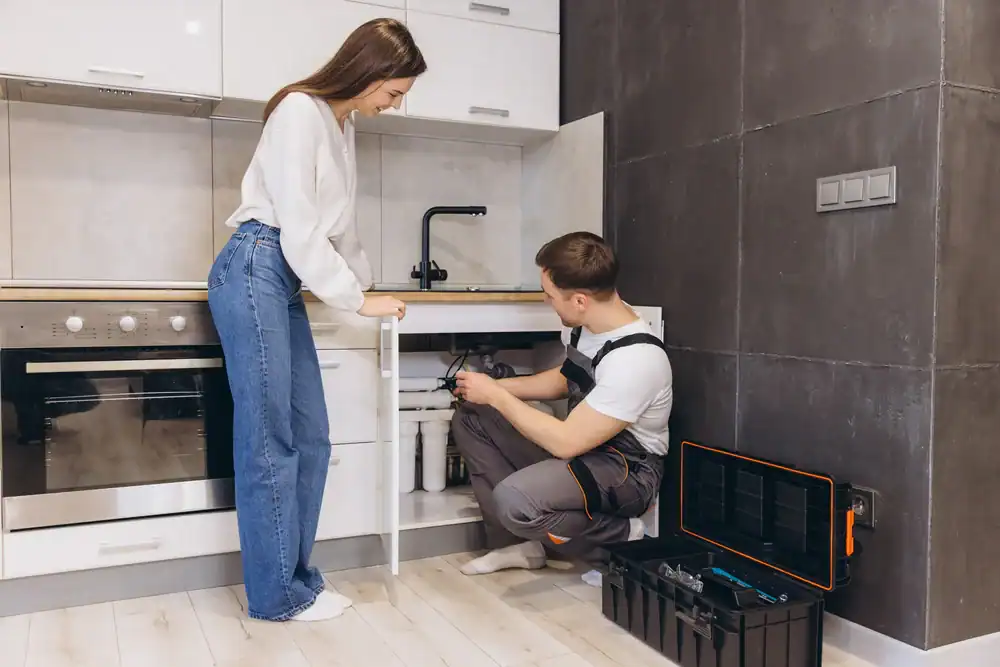
Installation is handled by our licensed, credentialed technicians familiar with Sumter County requirements and the CDD-managed utility infrastructure that serves The Villages. Once the system is in, we service what we install. If something needs attention six months or two years down the road, you’re not starting over with a call center. You’re calling the same company that put the system in.
Ready to get started?
Our core service is whole-house water purification — a system that treats every tap in your Belle Aire home before the water reaches your pipes, your appliances, or your glass. Depending on what the water analysis shows, that typically means a combination of sediment removal, activated carbon filtration for disinfection byproducts and chlorine taste, and either a water softener or a salt-free TAC conditioning system for the hard water minerals that are a known reality in The Villages.
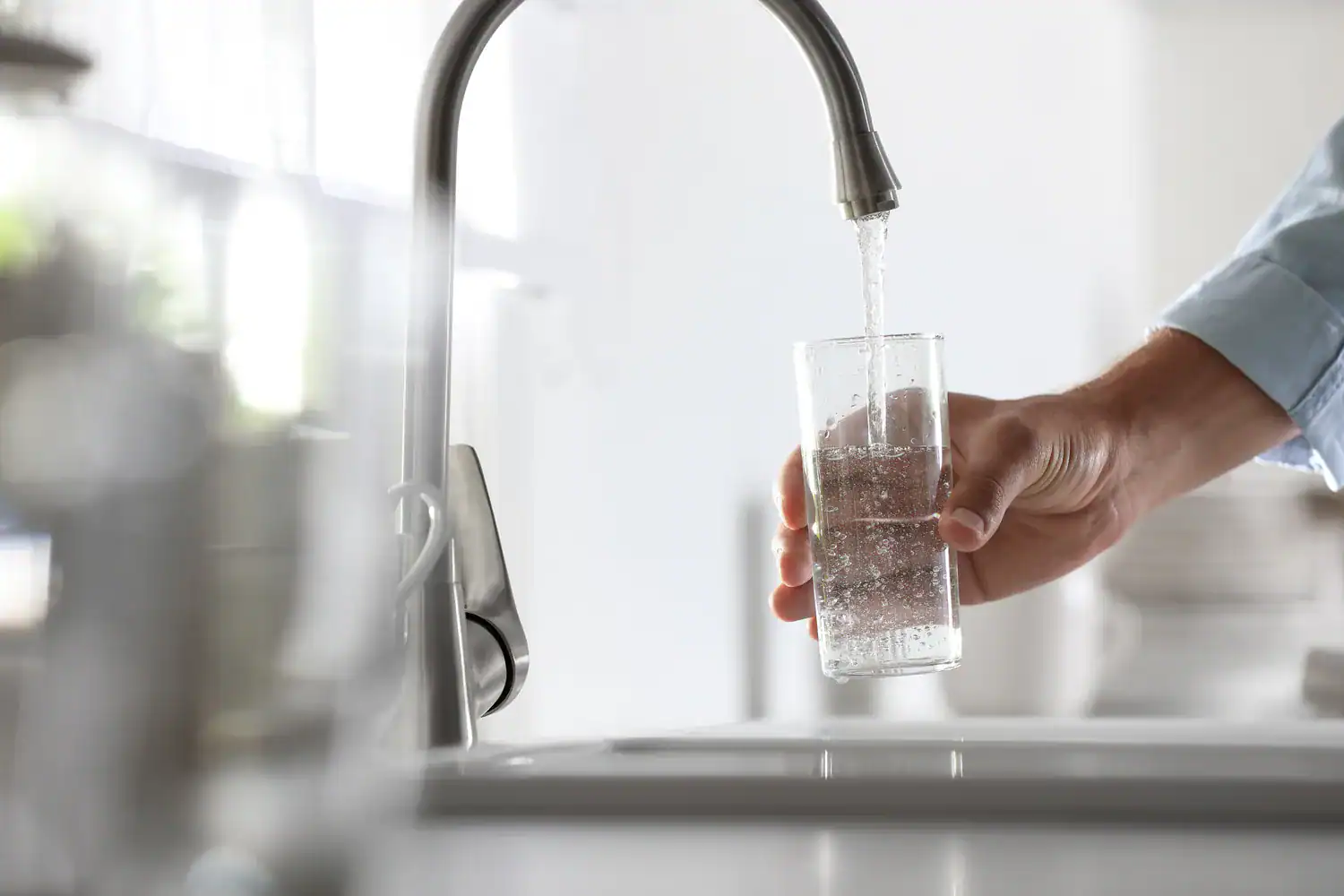
For drinking water specifically, a reverse osmosis system at the kitchen sink takes purification a step further — removing contaminants that whole-house systems aren’t designed to target, including the arsenic, nitrates, and chromium that have been detected in the Villages of Lake-Sumter water supply. It’s the difference between water that’s been treated for the house and water you’d actually want to drink straight from the tap without thinking twice about it.
We also handle UV purification for households that want an added layer of protection, and we service well water systems for any properties in the broader Sumter County area operating outside the CDD-managed municipal supply. If you already have a system from another company that’s gone quiet on you, we service other brands too. That last part matters more than it might sound — because in The Villages, it’s a common situation.
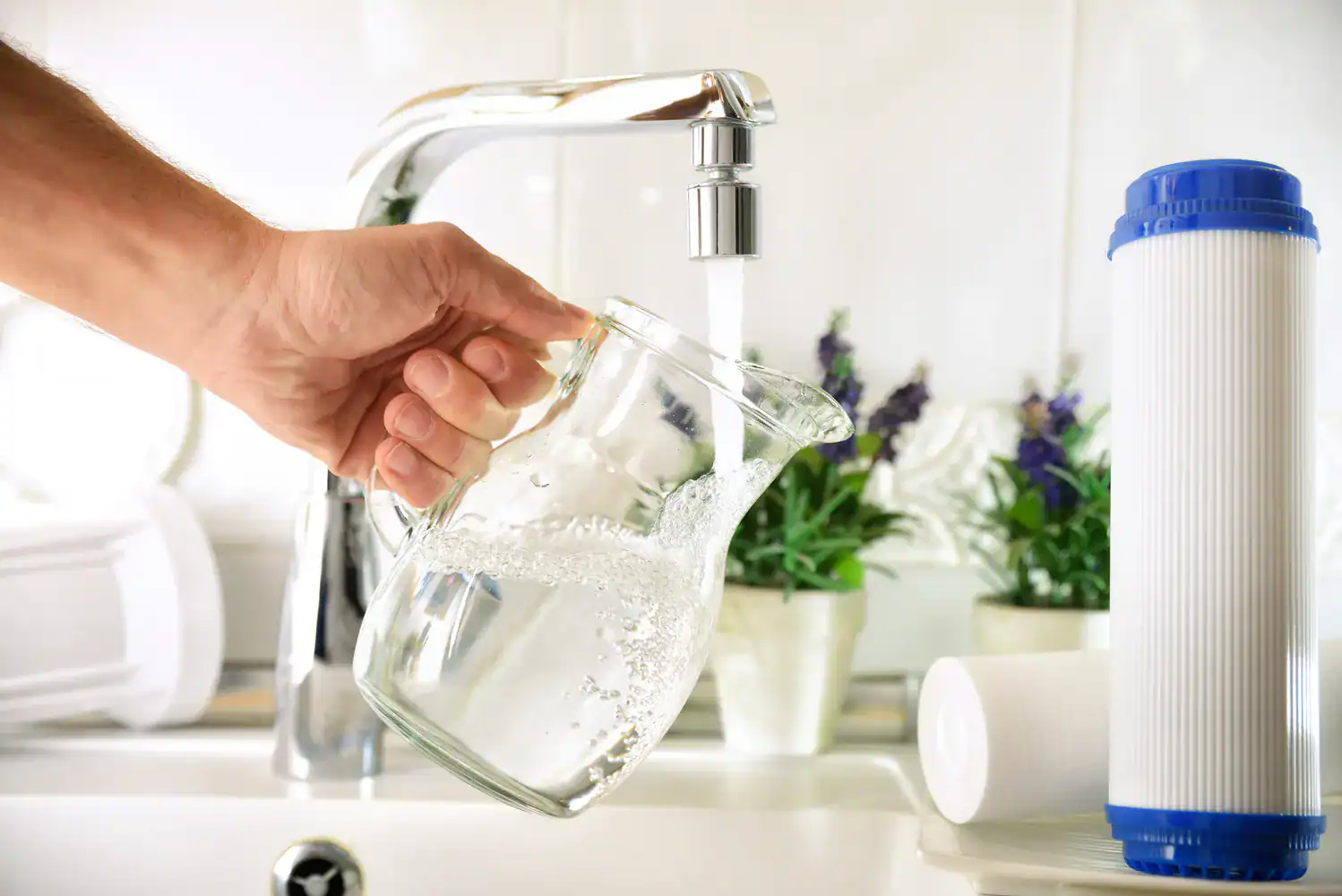
Yes, and it’s not a close call. The Villages’ water supply comes from the Floridan Aquifer, a deep limestone formation that naturally dissolves calcium and magnesium as water moves through it. That’s the definition of hard water, and multiple independent sources — including water treatment professionals who work in the area and residents who’ve tested it themselves — confirm that The Villages has elevated hardness levels.
What that means practically for a Belle Aire home is scale buildup inside your water heater, dishwasher, washing machine, and pipes. The longer it goes untreated, the more it accumulates. Homes in Belle Aire have been on this water since 2000 or 2002, which means the buildup is real and ongoing. A water softener or salt-free TAC conditioning system stops the mineral accumulation and protects the appliances and plumbing you’ve already invested in. The free water analysis gives you the exact hardness reading for your home so you’re not guessing.
The Villages of Lake-Sumter Water Treatment Plants — the utility that serves Belle Aire — has been independently tested by the Environmental Working Group. Detected contaminants include total trihalomethanes, haloacetic acids, bromochloroacetic acid, arsenic, chromium (hexavalent), chlorate, nitrate, thallium, barium, strontium, vanadium, and molybdenum. The water meets federal legal standards, but the EWG notes that those federal limits haven’t been updated in nearly 20 years and don’t reflect current health science.
Trihalomethanes and haloacetic acids are disinfection byproducts — they form when the chlorine used to treat municipal water reacts with naturally occurring organic matter. They’re the ones that exceed EWG health guidelines even while staying below the legal limit. For a health-conscious household in a 55-plus community like Belle Aire, that gap between “legal” and “what current research actually recommends” is exactly the reason to consider a filtration system that goes beyond what the utility is required to remove.
A water softener specifically targets hardness minerals — calcium and magnesium — by exchanging them for sodium ions through a process called ion exchange. It’s very effective at eliminating scale buildup, improving lather from soap and shampoo, and extending the life of water-using appliances. What it doesn’t do is filter out disinfection byproducts, chlorine taste, arsenic, or other chemical contaminants in the water supply.
A whole-house water filtration system — which typically includes sediment filtration and activated carbon filtration — addresses those chemical contaminants, improving taste, odor, and removing compounds that a softener won’t touch. In Belle Aire, where the water has both a documented hardness problem and a documented disinfection byproduct profile, the most complete solution is usually a combination of the two: a whole-house filter for chemical contaminants and a softener or salt-free conditioner for mineral hardness. The free water analysis determines exactly what your home needs — rather than defaulting to the most expensive option or the most basic one.
For a whole-house water filtration and softening system professionally installed in a Belle Aire home, you’re typically looking at a range of $1,800 to $3,200 depending on the size of the home, the complexity of the water issues identified in the analysis, and whether you’re adding a reverse osmosis drinking water filter at the kitchen tap. Larger homes or homes with more significant water quality issues may fall toward the higher end of that range.
It’s worth framing that against what you’re already spending. If you’re buying bottled water regularly, that’s $400 to $600 a year for a household of two. If hard water has shortened the life of a water heater or dishwasher by three to five years, the appliance replacement cost alone can exceed what a filtration system costs. The financial case for whole-house treatment is straightforward once you look at it across a five-year horizon rather than as a single upfront purchase. And if you’re active military, a veteran, or a first responder, we offer $500 off — which is a meaningful reduction at this price point.
In most cases, a standard water softener or whole-house filtration system installed on the interior plumbing of a Belle Aire home does not require a building permit in Sumter County. However, because Belle Aire is within The Villages and the water supply is managed by the Community Development Districts rather than a traditional city or county utility, any work that connects to or modifies the point of entry from the CDD-managed supply line may involve coordination with the relevant CDD.
The practical takeaway is that you want a licensed, credentialed installer who is familiar with how The Villages’ utility infrastructure works — not a general contractor who’s never dealt with a CDD-governed community. Our technicians are licensed water treatment professionals with direct experience in Central Florida’s CDD-managed communities. We handle the coordination so you don’t have to figure out which district to call or whether your installation is compliant. That’s part of what you’re paying for when you work with a company that actually knows this area.
Please provide your email address so that we can stay in touch and answer any questions you have! We will be reaching back out shortly.
"*" indicates required fields