Reach Out Today
Please provide your email address so that we can stay in touch and answer any questions you have! We will be reaching back out shortly.


Hear from Our Customers

The white crust on your showerhead is the visible part. The real damage is happening where you can’t see it — inside your water heater, along your pipe walls, on the heating elements in your dishwasher. In Largo, municipal water comes through Pinellas County Utilities via Tampa Bay Water’s blended regional system, and it consistently tests in the hard-to-very-hard range. That mineral load doesn’t take a day off, and in a subtropical climate where your water heater runs year-round, the efficiency losses add up fast.
Independent research from the Water Quality Research Foundation found that scale buildup reduces water heater efficiency by up to 48%. When a water heater fails early in a hard water home, the average replacement runs around $4,400. Beyond that, Largo homeowners in established neighborhoods like Harbor Bluffs, Ridgecrest, and Walsingham are dealing with plumbing systems that have been absorbing decades of hard Pinellas County water. The cumulative damage in a home built in the 1970s is not hypothetical — it’s in the pipes.
A salt free conditioning system changes the equation. The minerals are still there, but they’ve been converted into a form that can’t bond to surfaces. Your water heater runs cleaner. Your fixtures stay cleaner longer. Your appliances last closer to their intended lifespan. And you’re not hauling salt bags or scheduling service calls to make it happen.
We’ve been solving Florida’s hard water problems for more than five decades. That’s not a tagline — it means we’ve been working in this state, with this water, long enough to know exactly what Largo and Pinellas County homeowners are up against. We understand the blended Tampa Bay Water supply, the chloramine disinfection system Pinellas County Utilities uses, and the specific wear patterns hard water causes in homes built during Largo’s development boom years.
We hold an A+ rating with the Better Business Bureau with zero complaints ever filed. We’re also members of the Water Quality Association — a credential that requires passing a professional exam and committing to a code of ethics, not just paying a membership fee. In a market where national brands like Leaf routinely sell systems and then disappear, that record is the clearest signal available that we operate differently. You can look it up at bbb.org before you ever pick up the phone.

It starts with understanding your water. Before anything gets installed, we review your home’s water conditions — including the hardness levels typical of Pinellas County’s supply — and walk you through what a salt free TAC system will and won’t do. That honesty matters. A salt free conditioner doesn’t make your water feel slippery the way a salt-based softener does. That slippery sensation is actually sodium coating your skin, not a sign of cleaner water. TAC-conditioned water feels normal — because it is normal. What changes is what happens inside your pipes and appliances.
Once the system is sized for your home, installation is handled by a licensed, WQA-certified technician. In Pinellas County, whole-house water treatment installations that involve plumbing modifications are subject to standard county building permit requirements, and we handle that process correctly. The system itself requires no electricity, no drain connection, and no ongoing salt or chemical inputs — it connects inline with your existing plumbing and starts working immediately.
After installation, the system runs in the background for five to seven years before the TAC media needs replacement. There are no monthly service calls, no refill schedules, and no regeneration cycles wasting water overnight. For most Largo homeowners, the first sign something has changed is a showerhead that stops crusting up — and a water heater that keeps running the way it should.
Ready to get started?
The core of what we install is a whole-house Template Assisted Crystallization system — TAC for short. This technology has been independently tested under the DVGW Standard W512 protocol, which is the recognized benchmark for evaluating scale prevention systems. Results consistently show 90% or better scale prevention effectiveness. That’s not a manufacturer claim — it’s third-party verified data, and it’s the reason TAC outperforms magnetic descalers and electronic gadgets that make similar promises without the testing to back them up.
For Largo homeowners specifically, there are a few things worth knowing. If your home is on a septic system — which applies to some older or outlying properties in unincorporated Pinellas County — a salt free system is actually the only viable whole-house option. Salt brine from traditional ion-exchange softeners disrupts the bacterial balance that makes septic systems function. TAC produces zero discharge, which also means zero impact on Largo’s coastal waterways and the Tampa Bay watershed that defines this area.
Pinellas County’s water supply also uses chloramines as a disinfectant rather than plain chlorine. Chloramines are harder to remove than chlorine alone and require specific filtration media — catalytic carbon — to address effectively. If taste, odor, or chemical concerns are part of the picture alongside hardness, we can walk you through a whole-house carbon filtration addition that pairs directly with the TAC conditioner. Active-duty military, veterans, and first responders receive a $500 discount — straightforward, no hoops to jump through.
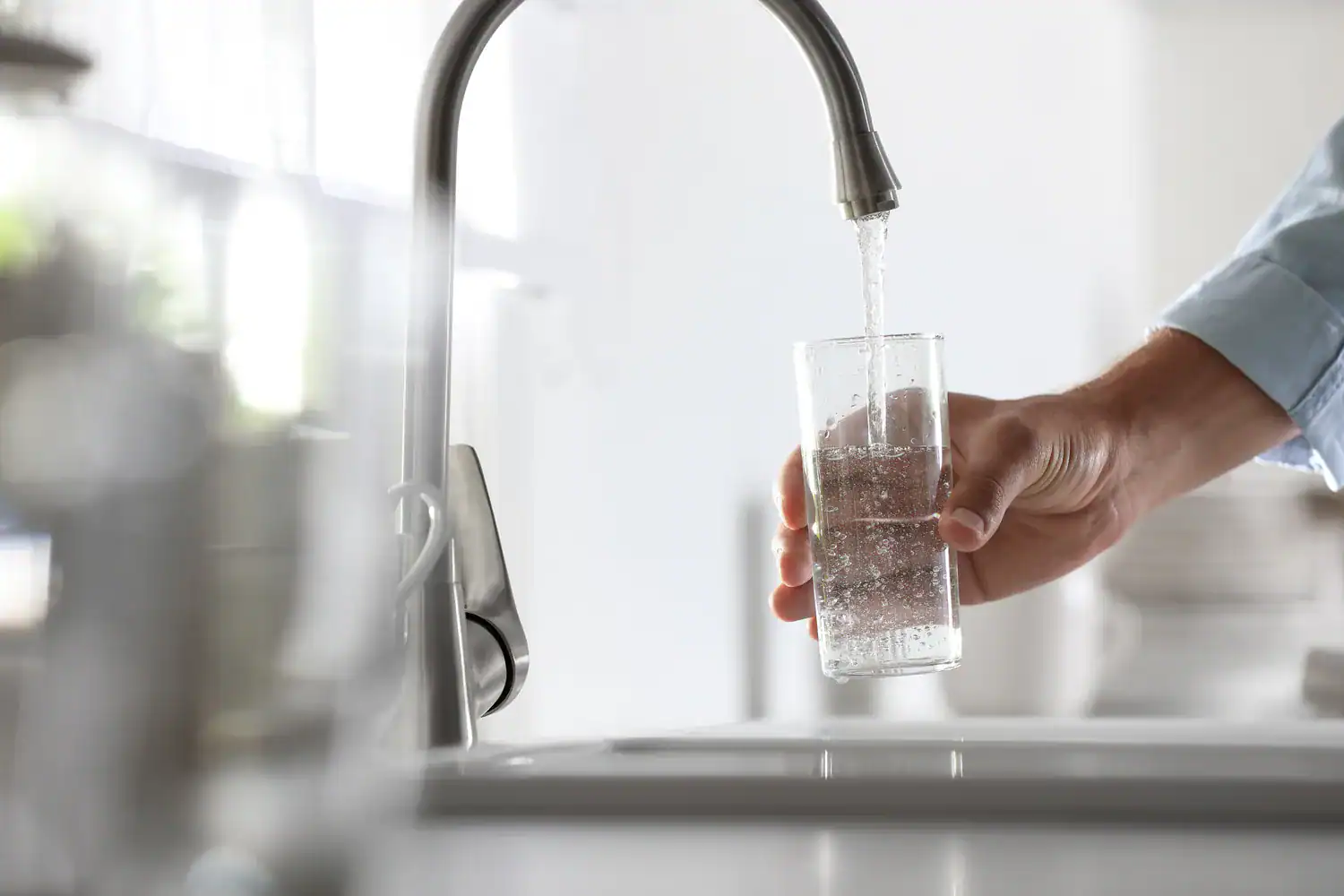
Largo’s tap water comes from Pinellas County Utilities, which draws from Tampa Bay Water’s blended regional supply. According to Pinellas County’s own published FAQ, the average hardness in the county runs between 10 and 15 grains per gallon — that puts it squarely in the hard-to-very-hard classification by Water Quality Association standards. For context, anything above 10.5 GPG is considered very hard.
At that level, yes — it causes real damage over time. Scale deposits build up on water heater heating elements, reducing efficiency by as much as 48% according to Water Quality Research Foundation data. It clogs showerheads, leaves film on dishes and glass, and wears down appliance components faster than they should wear. In Largo’s older neighborhoods — homes built in the 1960s through 1980s in areas like Ridgecrest, Walsingham, and Del Prado — that damage has been compounding for decades. A salt free conditioning system stops new buildup from forming, which is the most practical and cost-effective way to protect what’s already in your home.
Template Assisted Crystallization — TAC — is the technology inside a salt free conditioning system. Instead of removing calcium and magnesium from your water the way a traditional ion-exchange softener does, TAC converts those dissolved minerals into microscopic crystals. Those crystals stay suspended in the water and pass through your plumbing without bonding to pipe walls, heating elements, or fixture surfaces. The result is effective scale prevention without removing anything from the water.
The practical difference is significant. A traditional salt-based softener requires 40-pound salt bags, regular refills, regeneration cycles that use and discharge water overnight, and ongoing service. It also adds sodium to your water and sends salt brine into your drain system — which is a real concern in a coastal area like Largo where protecting the Tampa Bay watershed matters. A TAC system uses no salt, no electricity, no drain connection, and needs nothing from you for five to seven years beyond the eventual media replacement. It doesn’t make your water feel slippery — that sensation from salt softeners is actually sodium coating your skin — but it does protect your plumbing and appliances just as effectively, backed by independent testing under the DVGW W512 standard showing 90%+ scale prevention.
Yes — and for homes on septic, a salt free TAC system isn’t just a good option, it’s the right one. Traditional salt-based water softeners discharge salt brine into your drain system every time they regenerate. That brine disrupts the bacterial balance that makes a septic system function, which can lead to system failure over time. Some states have started restricting salt softener use in homes on septic for exactly this reason.
In Pinellas County, some older or outlying properties — particularly in unincorporated areas near Largo — are still on private septic systems. If that’s your situation, a TAC conditioner gives you whole-house scale protection without any brine discharge, any wastewater, or any negative impact on your septic system. The system produces zero discharge of any kind, which also makes it the cleaner choice for homes near Largo’s coastal waterways and the Intracoastal Waterway corridor. If you’re not sure whether your property is on municipal sewer or septic, your Pinellas County property records will confirm it, and we can help you work through the right setup from there.
That skepticism is fair, and it’s worth addressing directly. The market has a lot of products that claim to treat hard water — magnetic descalers, electronic devices, various gadgets — that have little to no independent testing behind them. That’s where the confusion comes from. Not all salt free systems are the same, and the technology matters.
The systems we install use Template Assisted Crystallization, which has been independently tested under the DVGW Standard W512 protocol — the recognized international benchmark for evaluating scale prevention technology. Results consistently show 90% or better scale prevention effectiveness. That’s not a number from a manufacturer’s brochure. It’s from third-party testing, and it’s publicly documented. TAC consistently outperforms magnetic and electronic alternatives in those tests. The other piece of evidence is our own record: an A+ BBB rating with zero complaints ever filed, which you can verify at bbb.org. If the systems didn’t perform, that record wouldn’t exist. Largo homeowners dealing with 10–15 GPG hardness deserve a straight answer, and that’s it.
Pinellas County Utilities uses chloramines — a combination of chlorine and ammonia — as its primary disinfectant. Chloramines are more stable than plain chlorine, which is why the county uses them, but they can produce a noticeable taste or chemical odor in tap water. The City of Largo has also issued documented notices about periodic switches in the disinfection process — temporary changes from chloramines back to plain chlorine during maintenance periods — which can cause sudden shifts in how your water tastes or smells. If you’ve noticed that your water doesn’t always taste the same, that’s likely why.
Chloramines are also harder to remove than plain chlorine. Standard carbon block filters that handle chlorine well don’t do the same job on chloramines — you need catalytic carbon media specifically. A whole-house catalytic carbon filtration system installed alongside a TAC conditioner addresses both problems at once: the scale protection from the TAC system and the taste and odor improvement from the carbon filter. If your concern is what your water tastes like coming out of the tap — not just what it’s doing to your pipes — that combination is worth a conversation.
Please provide your email address so that we can stay in touch and answer any questions you have! We will be reaching back out shortly.
"*" indicates required fields