Reach Out Today
Please provide your email address so that we can stay in touch and answer any questions you have! We will be reaching back out shortly.


Hear from Our Customers
Your appliances last longer. Your water heater stops fighting mineral buildup and cuts heating costs by nearly 30%. Your dishwasher and washing machine run cleaner, and you’re not replacing them years early because of hard water damage.
You stop buying bottled water. The chlorine taste disappears. Your family drinks more water because it actually tastes good, and you’re not second-guessing what’s coming out of the tap.
Your skin and hair feel different after a shower. No more film, no more dryness from harsh minerals. The soap rinses clean, and you use less of it because it actually lathers the way it should. That’s what a point-of-entry system does—it treats water before it reaches a single fixture in your home, so every tap delivers the same clean result.
We have an A+ Better Business Bureau rating, a 5-star review average, and zero complaints on record. We’re members of the National Water Quality Association, and we’ve spent five decades figuring out how to handle Florida’s unique water issues—high mineral content, aquifer contamination, and the kind of hardness that wrecks appliances if you ignore it.
Bryn Mawr sits in an area where water hardness regularly hits 150 to 250 PPM. That’s the range where you start seeing real damage to your plumbing and appliances. We test your water first, then design a system around what’s actually in it—not a one-size-fits-all setup that works for someone in another state but fails here.
We don’t do plumbing or water heaters. We do water treatment, and we do it right. Military and first responders get $500 off, and we support the Tunnels to Towers Foundation because some things matter more than profit.

We start with a water test. Not a guess, not a generic report—your water, tested for hardness, chlorine, iron, sulfur, and contaminants. That tells us what you’re dealing with and what kind of system you actually need.
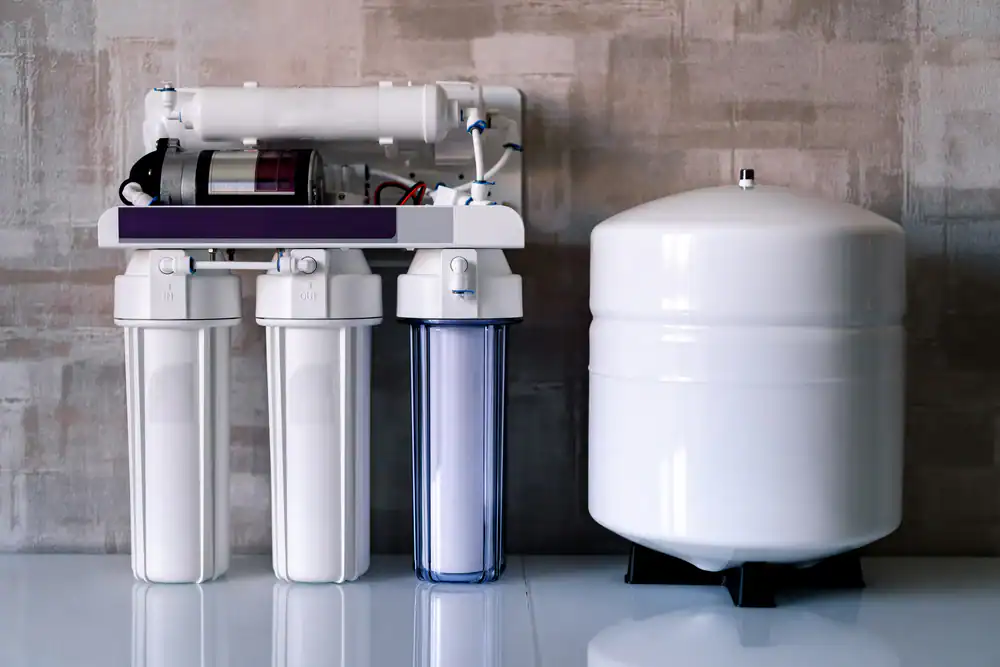
Then we design a multi-stage sediment filtration system based on your results and your household size. If you’ve got hard water, we’ll talk about whether a water softener combination makes sense or if a salt-free option fits better. If bacteria or pathogens are a concern, UV purification gets added to kill what filtration alone can’t catch.
Installation happens at your main water line—the point of entry. That means every faucet, every shower, every appliance gets treated water from day one. We size the system so it handles your flow rate without dropping pressure, and we walk you through how filter media backwashing works if your system uses it. You’ll know when to expect maintenance, what it costs, and what to watch for. No surprises.

Ready to get started?
A whole home carbon filter handles chlorine, chemicals, and taste issues. It’s one stage in a complete system, and it’s critical if your water comes from a municipal source that treats with chlorine. You’ll taste the difference immediately, and your appliances won’t be fighting oxidation from chemical residue.
If your water is hard—and in Bryn Mawr, it usually is—you’re looking at a system that addresses minerals like calcium and magnesium. Left untreated, those minerals cost you between $1,380 and $2,230 per year in appliance damage, wasted energy, and maintenance. Over ten years, that’s $13,800 to $22,300 walking out the door.
We also handle iron and sulfur, which are common in Florida’s aquifer-fed water supplies. Iron stains everything it touches. Sulfur smells like rotten eggs. Both are fixable with the right filtration setup, and both are issues we see regularly in this area. Your system gets built around what’s actually in your water, not what works for someone three states over. That’s the difference between a system that solves your problem and one that just takes up space in your garage.
You’re looking at anywhere from $1,500 to $5,000 depending on what your water test shows and how big your household is. A basic whole home carbon filter for chlorine removal sits on the lower end. Add in a water softener combination, UV purification, or iron filtration, and the price moves up.
Installation adds another $300 to $1,000 depending on your plumbing setup and whether we need to make modifications to your main line. If your water has multiple issues—hardness, chlorine, bacteria—you’ll need a multi-stage system, and that costs more upfront but saves you thousands in appliance repairs and energy waste down the road.
We don’t sell you more than you need. We test first, then design the system around your results. If your water is relatively clean and you just want chlorine out, we’ll tell you that. If you’ve got serious hardness or contamination, we’ll tell you that too. The goal is a system that actually fixes your problem, not one that checks a box.
It depends on your water hardness and what you’re trying to solve. A traditional water softener uses salt and ion exchange to remove calcium and magnesium. It’s the most effective option if your hardness is above 180 PPM and you’re seeing heavy scale buildup, appliance damage, and soap that won’t lather.
A salt-free system doesn’t remove minerals—it changes their structure so they don’t stick to pipes and appliances. It’s a good fit if your hardness is moderate, you want to avoid adding sodium to your water, and you don’t want the ongoing cost of buying salt. Salt-free systems use no electricity, waste no water, and require less maintenance. But they don’t soften water in the traditional sense, so if you’re expecting that slick feel in the shower, you won’t get it.
We test your water and talk through your priorities. If you’ve got kids drinking the water and you’re worried about sodium, salt-free makes sense. If you’ve got extreme hardness and you’re tired of replacing appliances, a traditional softener is the better move. There’s no universal right answer—just the right answer for your situation.
It depends on the type of system and what it’s filtering. A whole home carbon filter typically needs a media replacement every three to five years, depending on your water usage and how much chlorine or sediment it’s handling. If you’ve got a sediment pre-filter, that might need changing every six to twelve months.
A water softener needs salt refills if it’s a traditional system—usually every four to eight weeks depending on your hardness level and household size. Salt-free systems need almost no maintenance, though you’ll want to check them annually to make sure everything’s functioning properly.
If your system includes UV purification, the UV bulb needs replacing once a year. It’s not expensive, and it’s critical for keeping bacteria and pathogens out of your water. We walk you through the maintenance schedule when we install your system, and we offer service plans if you’d rather have us handle it. Most of our customers do their own filter changes once they see how simple it is, but the option’s there if you want it.
Not if it’s sized correctly. Pressure drop happens when a system is too small for your household’s flow rate or when filters get clogged and aren’t maintained. We size your system based on your home’s plumbing, your peak flow rate, and how many fixtures run at the same time.
A properly designed point-of-entry system should have minimal impact on pressure—usually less than 5 PSI, which you won’t notice during normal use. If you’ve got an older home with half-inch supply lines, we’ll talk about whether your plumbing can handle the flow before we install anything.
If your pressure drops after installation, it’s usually a maintenance issue—a clogged sediment filter or a carbon tank that needs backwashing. That’s why we give you a clear maintenance schedule and explain what to watch for. Most pressure problems are preventable if you stay on top of filter changes, and we make that part simple. If you’re ever unsure, we’re a phone call away.
That depends on what’s in your water and what type of filtration you’re using. A whole home carbon filter removes chlorine, chloramines, volatile organic compounds (VOCs), and chemicals that affect taste and odor. It also catches some pesticides and herbicides if they’re present in your water supply.
If you’ve got sediment, rust, or particulate matter, a multi-stage sediment filtration setup handles that before water reaches the carbon stage. If bacteria, viruses, or pathogens are a concern—common in well water or areas with aquifer contamination—UV purification kills them on contact. UV doesn’t remove anything, but it neutralizes living organisms so they can’t make you sick.
For hardness minerals like calcium and magnesium, you need a water softener or a salt-free conditioner. For heavy metals like lead or arsenic, you need a system with specific media designed to capture those contaminants. That’s why we test your water first. Florida’s aquifer system is porous and easily contaminated, and what’s in your water might not be what’s in your neighbor’s. We design around your test results, not assumptions.
Please provide your email address so that we can stay in touch and answer any questions you have! We will be reaching back out shortly.
"*" indicates required fields