Reach Out Today
Please provide your email address so that we can stay in touch and answer any questions you have! We will be reaching back out shortly.

Hear from Our Customers
You stop buying bottled water. Your whites stay white. The sulfur smell disappears when you turn on the tap.
Your appliances last longer because they’re not fighting iron buildup every day. Your water heater isn’t collecting sediment that cuts its life in half. The orange stains stop showing up in your toilets and sinks.
You’re not embarrassed when guests visit. You’re not second-guessing whether the water is safe for your kids. You’re just using your water the way you should be able to—without thinking about it.
That’s what a proper whole-house well water filtration system does. It removes what’s actually in your well—iron, sulfur, bacteria, sediment—and keeps it out. Not just for a few months. For years.
We don’t install water heaters or fix leaky pipes. We focus entirely on water purification, softening, and filtration—especially whole-house systems for well water.
We’re A-rated with the Better Business Bureau and carry a 5-star rating with zero complaints. We’re members of the National Water Quality Association, which means we follow industry standards that actually matter. If you’re military or a first responder, we offer a $500 discount—not because it’s good marketing, but because it’s the right thing to do.
We’ve built our reputation in Regency and surrounding areas by doing what larger national companies often don’t: showing up after the install, answering the phone, and servicing what we sell. You’re not getting a call center. You’re getting people who know Florida well water and how to fix it.
First, we test your water. Not a basic hardness test—a real analysis that tells us what’s actually in your well. Iron levels, sulfur content, bacteria, pH, total dissolved solids. That’s what determines which system you need.
Once we know what we’re dealing with, we recommend a system that matches your specific water issues. If you’ve got high iron, we’re likely talking about an air injection oxidation system or a hydrogen peroxide injection setup. If it’s sulfur, we address hydrogen sulfide treatment directly. If bacteria’s the issue, we install a disinfection system that keeps your water safe.
Installation is straightforward. We set up the system at your point of entry so every faucet, shower, and appliance gets filtered water. We walk you through how it works, what to expect, and how to maintain it.
After that, we’re available. If something changes with your water or you have questions six months down the road, you call us. We don’t disappear after the check clears.

Ready to get started?
Iron removal systems handle the rust-colored staining that shows up on everything. Florida well water is notorious for high iron content, and standard water softeners don’t touch it. We use air injection oxidation or chemical injection methods depending on your iron levels and water chemistry.
Hydrogen sulfide treatment gets rid of that rotten egg smell. It’s not just unpleasant—it’s corrosive and can damage your plumbing over time. We treat it at the source with oxidation or filtration designed specifically for sulfur.
Well water bacteria disinfection is critical if your water tests positive for coliform or other bacteria. We don’t mess around with this. UV systems or chemical disinfection—whichever fits your situation—but it gets handled correctly.
Regency’s well water can also carry sediment, tannins, and hardness issues. A whole-house system addresses all of it in the right sequence so you’re not just masking one problem while another one damages your home. You’re treating the water completely, from the well to every fixture.

If you’re seeing rust stains in your sinks or toilets, that’s iron. If your water smells like rotten eggs, that’s hydrogen sulfide. If it tastes metallic or leaves a film on dishes, you’ve likely got mineral content or hardness issues.
But some problems don’t show up as obviously. Bacteria, nitrates, and other contaminants don’t always have a taste or smell. That’s why testing matters. You can get a basic test kit, but a lab analysis gives you the full picture—iron levels, pH, hardness, bacteria, and anything else that’s in your water.
Most Regency homeowners with wells deal with at least one of these issues. Florida’s geology means iron and sulfur are common. The question isn’t whether you need treatment—it’s what kind and how much.
A water softener removes hardness—calcium and magnesium—that causes scale buildup. It’s useful, but it doesn’t remove iron, sulfur, bacteria, or sediment. If your well water has those issues, a softener alone won’t fix them.
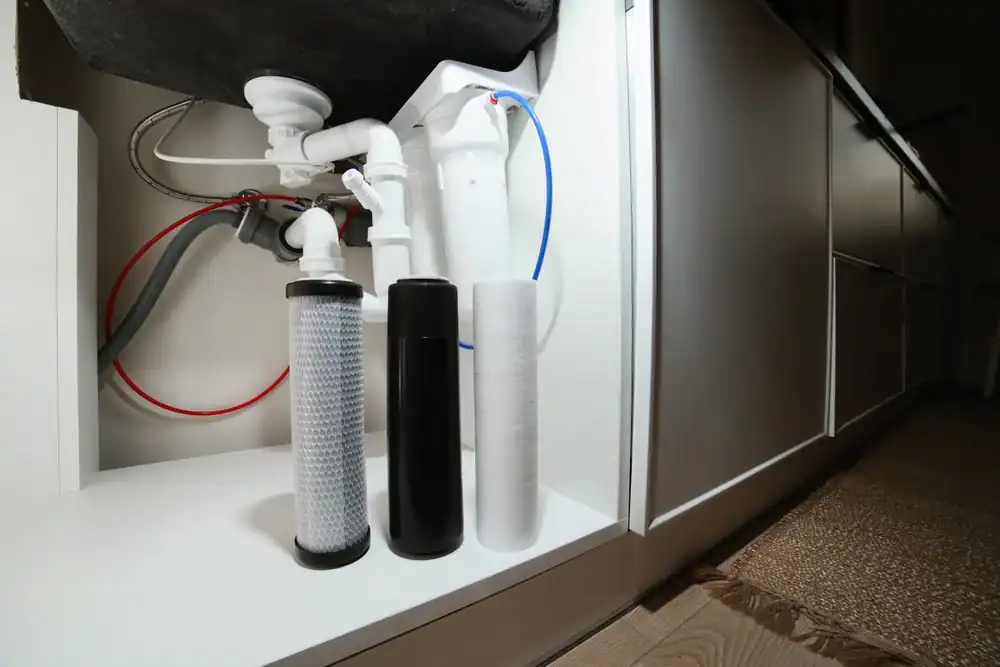
A well water filtration system is built to handle the specific contaminants in your water. That might include an iron filter, a sulfur treatment system, a sediment filter, and a bacteria disinfection unit. Some systems combine multiple stages. Some need a softener added after filtration.
The right setup depends on what’s in your water. If you’ve only got hardness, a softener works. If you’ve got iron, sulfur, or bacteria—which most Regency wells do—you need a filtration system designed for those problems. Trying to use a softener for iron or sulfur usually just ruins the softener.
It depends on the system and your water quality. Most whole-house systems need a filter change or media replacement once or twice a year. If you have a sediment pre-filter, that might need changing every few months depending on how much sediment your well produces.
Iron filters using air injection oxidation need occasional backwashing, but many systems do that automatically. Hydrogen peroxide injection systems need the peroxide tank refilled periodically. UV disinfection systems need a bulb replacement once a year.
None of this is complicated, and most of it you can handle yourself once we show you how. We also offer service plans if you’d rather have us handle it. The key is staying on top of it. A system that’s maintained works for decades. A system that’s ignored stops working in a few years and costs more to fix than it would’ve cost to maintain.
Not if it’s sized and installed correctly. Pressure drop happens when the system is too small for your flow rate or when filters get clogged and aren’t changed on schedule.
We size systems based on your home’s water demand and your well’s flow rate. If you’ve got a larger home or high water usage, we install a system that can handle it without restricting flow. If your well has low flow to begin with, we address that separately—but the filtration system itself shouldn’t be the bottleneck.
The other factor is maintenance. A clogged sediment filter will absolutely kill your pressure. That’s why regular filter changes matter. Keep the system maintained, and your pressure stays where it should be.
Technically, yes. Practically, it’s not a great idea unless you’ve done it before. These systems need to be installed in the right sequence, with the right fittings, at the right location in your plumbing. If the setup is wrong, the system won’t work correctly—or it’ll work for a while and then fail.
You also need to know what you’re treating. If you install an iron filter but your water also has bacteria, you haven’t solved the problem. If you install a UV system before a sediment filter, the UV won’t work because sediment blocks the light.
The bigger issue is warranty and service. Most manufacturers won’t honor a warranty on a DIY install. If something goes wrong, you’re on your own. When we install a system, it’s done right, it’s warrantied, and if you have an issue, we fix it. That’s worth more than saving a few hundred bucks on labor.
Please provide your email address so that we can stay in touch and answer any questions you have! We will be reaching back out shortly.
"*" indicates required fields