Reach Out Today
Please provide your email address so that we can stay in touch and answer any questions you have! We will be reaching back out shortly.

Hear from Our Customers
You turn on the tap and there’s no smell. No hesitation before filling a glass. No orange rings forming in the toilet bowl by Thursday.
Your whites stay white in the wash. The water heater isn’t collecting rust at the bottom. Guests don’t wrinkle their nose when they walk in.
That’s what happens when your filtration system is designed for Florida’s geology, not just copied from a national catalog. Ponte Vedra sits on a limestone aquifer that dissolves minerals as water moves through it. Iron, sulfur, and bacteria aren’t occasional problems here—they’re built into the ground. A system that works in Ohio won’t cut it.
You need oxidation that converts dissolved iron into particles you can filter out. You need bacteria disinfection that doesn’t create new problems. And you need it sized correctly for your household, because undersized systems fail fast and oversized ones waste money.
When it’s done right, you stop thinking about your water. It just works.
We don’t install water heaters or fix leaky pipes. We design and install whole-house water purification systems, and that’s it.
That focus matters because water chemistry in Ponte Vedra is specific. The same aquifer that gives you abundant well water also loads it with dissolved minerals and creates conditions where iron bacteria thrive. A plumber who installs filters on the side won’t know how hydrogen peroxide injection compares to air injection oxidation for your particular iron levels.
We’re members of the National Water Quality Association. We hold an A-rating with the Better Business Bureau with zero complaints. And we start every project with a free water analysis, because guessing doesn’t work when you’re dealing with sulfur, iron, and bacteria in the same system.
We start with water testing. Not a basic hardness test—a full analysis that identifies iron levels, sulfur concentration, bacteria presence, pH, and TDS. You can’t design a system without knowing what you’re treating.
Once we know what’s in your water, we design a system that addresses your specific issues. If you have hydrogen sulfide causing that rotten egg smell, we typically use hydrogen peroxide injection—it oxidizes sulfur without creating the harmful byproducts that chlorine can produce. For iron removal, we might combine chemical oxidation with filtration, depending on whether you’re dealing with ferrous iron, ferric iron, or iron bacteria.
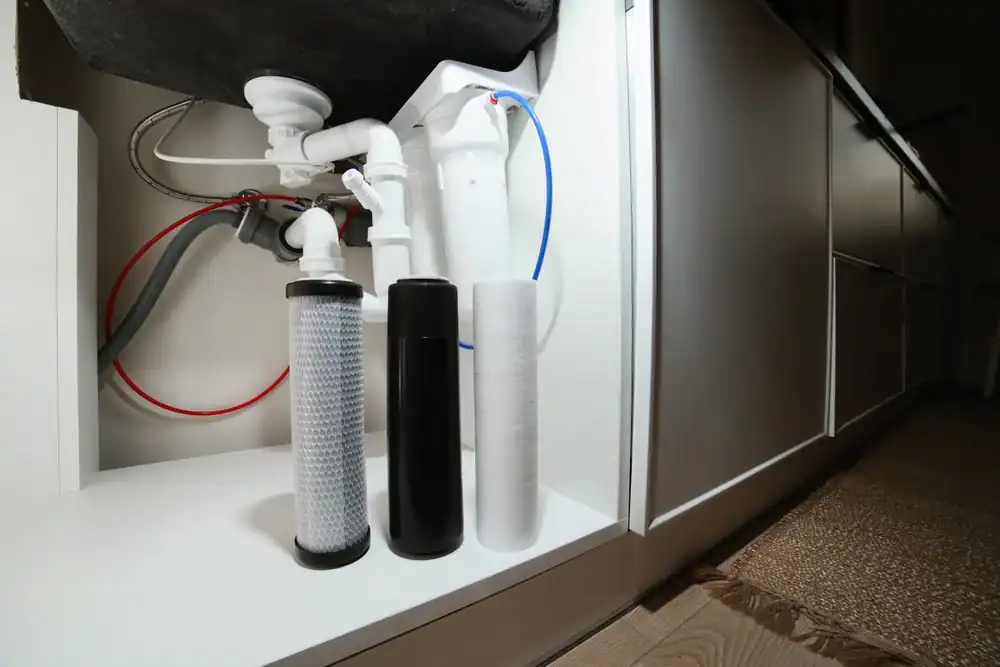
Bacteria disinfection usually means UV sterilization. It kills microorganisms without chemicals and without changing your water’s taste. If you have hard water on top of everything else, we integrate a water softener into the system so you’re not running multiple disconnected units.
Installation takes a day for most homes. We install the injection system, filtration tanks, and UV chamber in sequence so water flows through each treatment stage. Then we test output at multiple taps to confirm everything’s working.
You’ll need filter media replaced periodically—usually every few years depending on your water volume and iron levels. UV bulbs get swapped annually. We handle the maintenance or walk you through it, your call.
Ready to get started?
Every system we install in Ponte Vedra is built around your water test results and your household’s daily usage. That means the sizing is right, the treatment stages are in the correct order, and you’re not paying for equipment you don’t need.
For iron removal systems, we use either hydrogen peroxide injection or air injection oxidation depending on your iron type and concentration. Both methods oxidize dissolved iron so it becomes a particle that gets caught in the filter media. The difference is in how they handle other contaminants—peroxide works better when you’ve also got sulfur or bacteria.
Hydrogen sulfide treatment almost always means oxidation plus filtration. That rotten egg smell is sulfur gas, and you need to convert it to a solid form before you can remove it. We don’t use chlorine for this because it can react with organic matter in well water and create trihalomethanes—compounds you definitely don’t want to drink.
Well water bacteria disinfection uses UV light in most residential applications. The UV chamber sits after filtration so the light can reach all the water without particles blocking it. It kills bacteria, viruses, and other microorganisms as water flows through.
Ponte Vedra’s location means you’re likely dealing with multiple issues at once—iron and sulfur together, or hard water plus bacteria. We design systems that handle combined problems, not just one thing at a time. And because Florida’s aquifer chemistry can shift, we build in some flexibility so your system keeps working even if your water changes slightly over time.

If your water smells like rotten eggs, leaves orange or brown stains, or has a metallic taste, you need filtration. Those are iron and sulfur—the two most common well water problems in this area.
You might also notice your water heater failing earlier than it should, or your whites turning dingy in the wash. That’s iron sediment building up and causing damage you can’t always see. Some people don’t realize they have bacteria in their water until they get testing done, because not all bacteria create obvious smells or tastes.
The only way to know exactly what you’re dealing with is water testing. We do that for free because designing a system without testing is just guessing. Ponte Vedra’s limestone aquifer creates specific water chemistry issues, and your neighbor’s water might be different from yours even if you’re on the same street.
Both methods oxidize dissolved iron so you can filter it out, but they work differently. Air injection oxidation pumps oxygen into your water, which converts ferrous iron (dissolved) into ferric iron (a particle). It works well for straightforward iron problems and doesn’t require chemical refills.
Hydrogen peroxide injection uses a diluted peroxide solution to oxidize iron, sulfur, and kill bacteria all at once. It’s more effective when you have multiple contaminants, which is common in Ponte Vedra. The peroxide breaks down into water and oxygen, so you’re not adding anything harmful.
We choose based on your water test results. If you only have iron, air injection might be enough. If you’ve got iron plus that sulfur smell, or if bacteria showed up in testing, peroxide injection handles all three problems in one stage. It costs a bit more upfront because you need the injection pump and a peroxide tank, but you’re treating multiple issues with one system instead of stacking separate units.
No. Water softeners remove hardness minerals like calcium and magnesium—they’re not designed to handle iron or sulfur. If you run water with high iron through a softener, the iron will foul the resin bed and the softener will stop working properly.
You need to remove iron before water reaches the softener. That means an iron removal system using oxidation and filtration comes first in the treatment sequence. Once iron and sulfur are gone, then water can flow through the softener if you also have hardness issues.
A lot of Ponte Vedra homes need both—iron removal and softening—because the same aquifer that gives you iron also gives you hard water. We design the system so each stage handles what it’s supposed to handle, in the right order. Trying to make a softener do a job it’s not built for just means you’ll be replacing resin and calling for service constantly.
It depends on what’s in your water and how much water you use, but here’s the typical schedule. Filter media in your iron removal tank usually lasts two to five years before it needs replacing. If you have high iron levels or a large household using a lot of water, you’ll be on the shorter end of that range.
UV bulbs lose effectiveness after about a year even if they still look like they’re glowing, so those get swapped annually. If you have a hydrogen peroxide injection system, you’ll refill the peroxide tank every few months—it’s a simple process, basically like refilling a reservoir.
Water softeners need salt added regularly if that’s part of your system. And you should have your water retested every couple of years to make sure nothing’s changed in your well. Florida’s aquifer can shift, and catching changes early means adjusting your system before problems show up in your house.
We can handle all the maintenance, or we can show you how to do the simple stuff yourself. Most homeowners refill peroxide and salt on their own and call us for media replacement and UV bulbs.
That smell is hydrogen sulfide gas, and it’s extremely common in Ponte Vedra because of the geology. As groundwater moves through Florida’s limestone aquifer, it picks up sulfur. Certain bacteria also produce hydrogen sulfide as they break down organic matter in the water.
The smell is more than just unpleasant—it’s embarrassing when you have guests over, and at higher concentrations it can cause headaches and nausea. Hydrogen sulfide is also corrosive, so it damages your plumbing and water heater over time.
You can’t fix it by shocking your well with chlorine. That’s a temporary solution at best, and it can create other problems when chlorine reacts with organic material in the water. The reliable fix is oxidation—either through hydrogen peroxide injection or aeration—followed by filtration. That converts the sulfur gas into particles you can filter out, and it keeps working as long as the system is maintained. Once it’s installed, the smell is gone from every tap in your house.
Please provide your email address so that we can stay in touch and answer any questions you have! We will be reaching back out shortly.
"*" indicates required fields