Reach Out Today
Please provide your email address so that we can stay in touch and answer any questions you have! We will be reaching back out shortly.

Hear from Our Customers
You stop scrubbing orange stains off toilets and sinks every week. The rotten egg smell disappears when you turn on the tap. Your water heater lasts years longer because it’s not clogged with iron sediment.
That’s what happens when you address what’s actually in your well water instead of just living with it. Most Lake Richmond homeowners don’t realize their water issues are fixable until they see the test results—iron, hydrogen sulfide, and bacteria are almost always the culprits.
A whole-house well water filtration system handles all of it at the source. Every faucet, every shower, every appliance gets clean water. You’re not just masking the problem or treating symptoms—you’re removing what’s causing the smell, the stains, and the damage.
We have an A+ Better Business Bureau rating and over five decades of experience treating well water throughout Central Florida. We’re members of the National Water Quality Association, which means we follow industry standards that actually matter.
We don’t do plumbing or water heaters—just water treatment. That focus means we know exactly what works for Lake Richmond’s specific water chemistry, and we size systems based on your actual test results and household usage, not a one-size-fits-all approach.
You’ll work with people who’ve seen thousands of wells in this area. We know what iron bacteria looks like in Lake Richmond groundwater, how sulfur levels change seasonally, and which filtration media performs best in Florida’s limestone-heavy geology.
We start with a comprehensive water test because you can’t fix what you haven’t measured. That test tells us exactly what’s in your well—iron levels, hydrogen sulfide concentration, bacteria presence, hardness, pH, and anything else affecting your water quality.
Once we know what we’re dealing with, we design a system that targets those specific contaminants. For most Lake Richmond wells, that means a multi-stage approach: oxidation to convert dissolved iron and sulfur into particles, then filtration to remove those particles. If bacteria is present, we add disinfection—usually through hydrogen peroxide injection or UV treatment.
Installation typically takes a day. We connect the system to your main water line so every drop that enters your house gets treated. After installation, we test again to confirm everything’s working, then show you how to maintain it. Most systems need minimal attention—a filter change once or twice a year, depending on your water usage and what we’re removing.

Ready to get started?
Iron removal systems use air injection oxidation to eliminate dissolved iron before it stains your fixtures or damages your appliances. This is a chemical-free process—we’re using oxygen to convert the iron into a form that can be filtered out. It handles the orange staining that’s common in Lake Richmond wells.
Hydrogen sulfide treatment gets rid of that sulfur smell. We typically use either hydrogen peroxide injection or air injection, depending on your sulfur levels and water chemistry. Both methods oxidize the hydrogen sulfide so it can be filtered out before it reaches your taps.
For bacteria, we install disinfection systems that kill iron bacteria and other microorganisms. Hydrogen peroxide injection works well here because it disinfects while also helping with iron and sulfur removal. It’s a multi-purpose solution that keeps your well water safe.
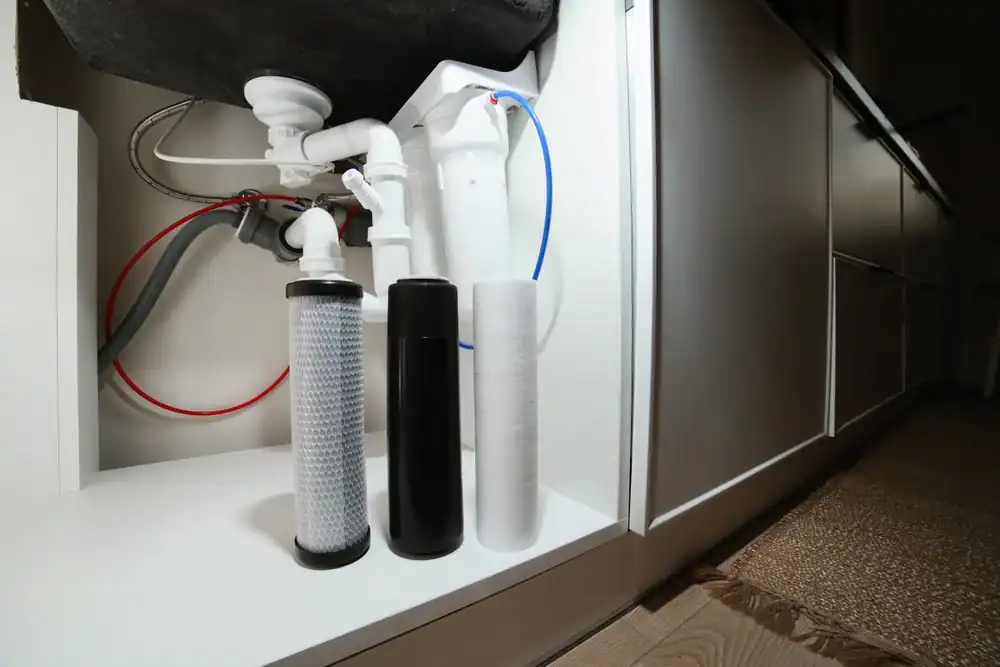
Every system includes the filtration media, control valves, and backwash capabilities needed to keep everything running efficiently. We size tanks based on your household’s daily water usage and the contamination levels in your specific well. Lake Richmond’s groundwater tends to have higher iron and sulfur than some other parts of Central Florida, so we account for that in our system design.

Most whole-house well water filtration systems run between $1,290 and $9,990 installed, depending on what you’re removing and how much water your household uses. A basic iron removal system with air injection sits on the lower end. If you need iron removal, sulfur treatment, bacteria disinfection, and water softening, you’re looking at the higher end.
The cost breaks down into equipment, installation labor, and the complexity of your water issues. A well with 3 ppm of iron needs a different setup than one with 10 ppm plus hydrogen sulfide and bacteria. We price based on your actual test results, not a generic package.
Financing is available if you’d rather spread the cost out. And if you’re military or a first responder, we offer a $500 discount. The bigger cost is usually what happens if you don’t treat your water—replacing a water heater every few years or dealing with constant plumbing repairs adds up fast.
That rotten egg smell is hydrogen sulfide gas, and it forms when bacteria break down sulfur compounds in your well. Florida’s limestone geology is loaded with sulfur, so bacteria have plenty to work with. The smell gets worse in warmer months when bacterial activity increases.
Hydrogen sulfide isn’t usually a health risk at the levels found in most Lake Richmond wells, but it’s corrosive. It damages copper plumbing, stains fixtures, and makes your water undrinkable. The smell is strong enough that guests notice it immediately, and it permeates your whole house when you run water.
Treatment involves oxidizing the hydrogen sulfide—converting it from a dissolved gas into solid sulfur particles that can be filtered out. We use either air injection or hydrogen peroxide injection depending on your sulfur levels. Both methods eliminate the smell completely when sized correctly for your well’s output and contamination levels.
Most systems need a filter change once or twice a year. If you have high iron or heavy water usage, you might need more frequent changes. The system will tell you—water pressure drops or you start seeing slight discoloration, which means the filter media is saturated.
Air injection systems are low maintenance because they’re chemical-free. The only upkeep is checking the air compressor occasionally and replacing filters. Hydrogen peroxide systems need peroxide refills every few months, depending on usage, but that’s a simple process.
We recommend annual water testing to make sure your system is still performing correctly and your well water chemistry hasn’t changed. Lake Richmond wells can shift over time—sulfur levels might increase seasonally, or you might develop iron bacteria that wasn’t there before. Testing catches those changes early so we can adjust your system if needed.
No. Water softeners remove hardness minerals like calcium and magnesium, but they’re not designed to handle iron, sulfur, or bacteria. If you run water with high iron through a standard softener, you’ll just clog the resin bed and ruin the unit.
You need an iron removal system before the softener. The iron filter takes out the iron and sulfur, then the softener addresses hardness. That’s the correct sequence for Lake Richmond wells, which typically have both issues—iron and sulfur from the geology, plus hardness from dissolved minerals.
Some companies sell “iron-fighting” softeners, but those only work with very low iron levels (under 1 ppm) and clear water iron. If you have the orange staining or sulfur smell that’s common here, you need dedicated iron and sulfur removal first. Trying to shortcut it with just a softener ends up costing more when you have to replace the softener and then install the right system anyway.
Installation usually takes one day for a standard whole-house system. We’re connecting the filtration equipment to your main water line, setting up drainage for backwash cycles, and programming the control valves. Most of the work happens where your well line enters the house or in your garage if that’s where your pressure tank is located.
More complex systems—if you need multiple stages of treatment or we’re working with limited space—might take a day and a half. We’ll know the timeline after we see your property and design your system based on the water test results.
You’ll have water during most of the installation. We only need to shut it off for a few hours while we’re making the actual connections. After everything’s installed and running, we test your water again to confirm the system is removing what it’s supposed to remove, then walk you through basic maintenance so you know what to expect going forward.
Please provide your email address so that we can stay in touch and answer any questions you have! We will be reaching back out shortly.
"*" indicates required fields