Reach Out Today
Please provide your email address so that we can stay in touch and answer any questions you have! We will be reaching back out shortly.

Hear from Our Customers
You turn on the tap and the water runs clear. No orange stains creeping across your sink. No rotten egg smell when you shower. No second-guessing whether it’s safe for your kids to drink.
That’s what happens when your well water filtration system is designed for the specific problems Florida wells deal with. Iron oxidizes and leaves rust-colored stains on everything it touches. Hydrogen sulfide creates that unmistakable sulfur smell. Bacteria can enter through surface contamination or exist naturally in low-oxygen environments underground.
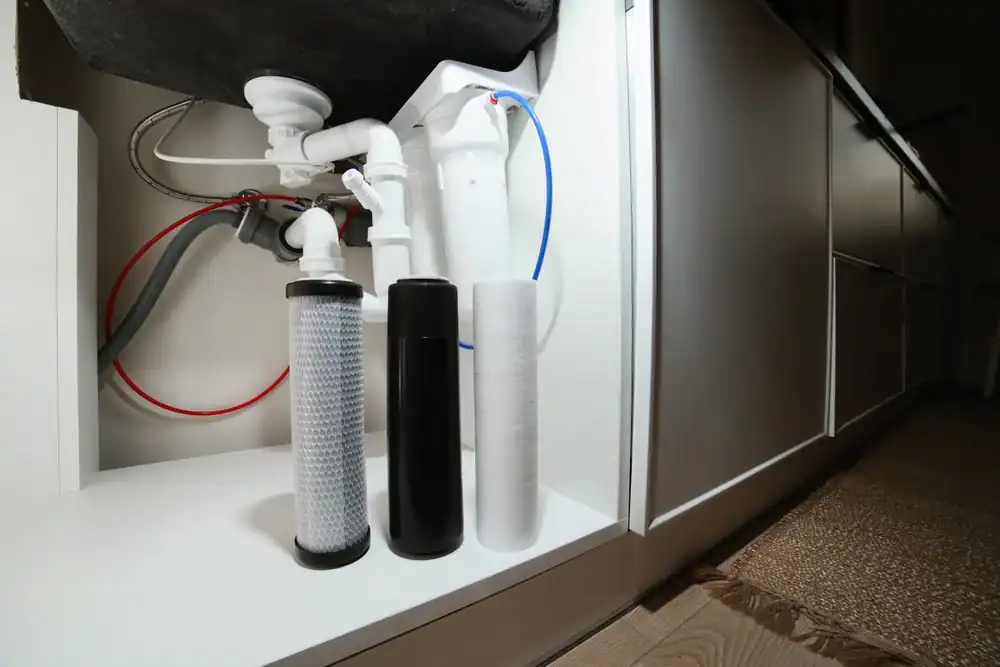
Most whole-house filtration systems in Beachwood, FL use a combination of air injection oxidation, hydrogen peroxide injection, and specialized filter media to handle these issues at the source. You’re not masking the problem or treating water at one faucet. You’re filtering every drop before it enters your home.
Your appliances last longer. Your fixtures stay clean. Your water tastes like water.
We’ve been handling well water issues across Florida for over five decades. We’re A-rated by the Better Business Bureau with a five-star rating and zero complaints. We’re members of the National Water Quality Association.
Beachwood homeowners deal with the same geology that affects wells throughout Central Florida—iron, sulfur, and bacteria aren’t rare here, they’re standard. We test your water first, then design a system based on what’s actually in it. No guessing. No one-size-fits-all boxes shipped to your door.
We install it. We service it. And if you’re military or a first responder, we take $500 off.
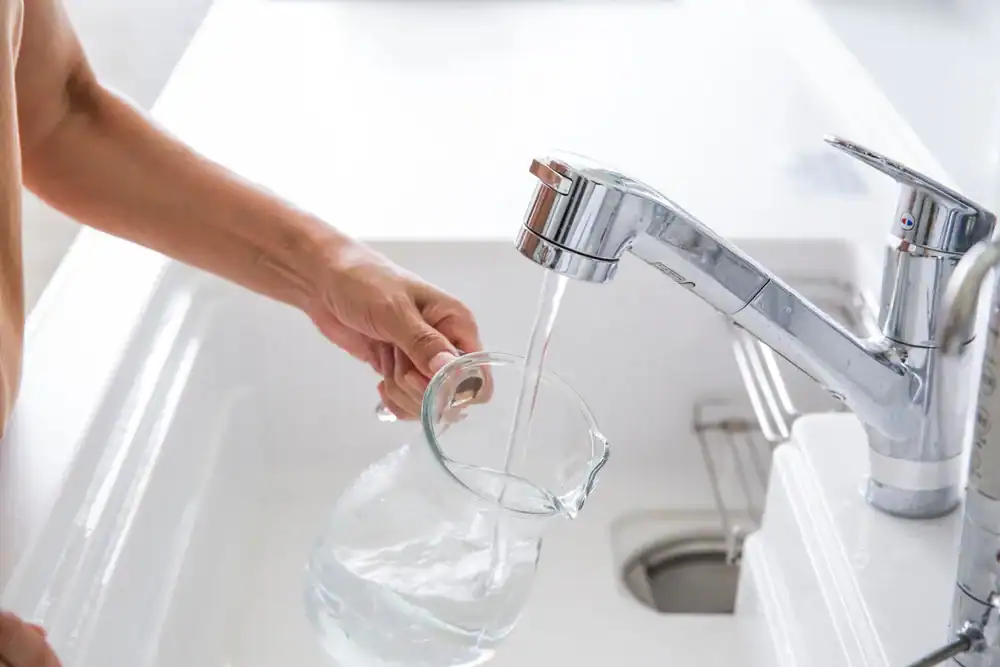
We start with a free water analysis at your Beachwood home. You can’t choose the right filters until you know what you’re filtering out. We test for iron, sulfur, bacteria, hardness, pH, and anything else that might be affecting your water quality.
Once we know what’s in your water, we design a system that handles it. If you’ve got iron and bacteria, that might mean an air injection oxidation system combined with a specialized filter that removes both rust and bacterial iron. If sulfur is the issue, we use filtration media that targets hydrogen sulfide specifically. For bacteria like E. coli, a UV disinfection system kills organisms as water passes through.
The system gets installed at your main water line, so it treats everything before it reaches your taps, showers, washing machine, or water heater. After installation, we walk you through basic maintenance and stay available for service calls. Most systems need minimal upkeep—media replacement every few years, occasional filter changes depending on your water usage.
You’re not dealing with this on your own. We handle the technical side so you can just use your water.
Ready to get started?
A complete well water filtration system in Beachwood, FL typically includes multiple stages depending on what your water test reveals. Iron removal systems use oxidation to convert dissolved iron into particles that get filtered out before they stain your fixtures. Hydrogen sulfide treatment eliminates sulfur gas that causes the rotten egg odor.
For bacterial contamination, UV disinfection systems use ultraviolet light to kill waterborne organisms without adding chemicals to your water. These systems are especially important in Florida, where surface water can seep into wells during heavy rains or where naturally occurring bacteria thrive in oxygen-depleted aquifers.
Some homeowners also need water softening if hardness is creating scale buildup, though we offer salt-free treatment options that condition water without adding sodium. Every system is custom-designed based on your water chemistry, your household size, and your daily water usage.
Installation includes connecting the system to your main line, setting up drainage for backwash cycles if needed, and programming any automated controls. We test the water after installation to confirm everything is working as it should. You get documentation of your system specs and a maintenance schedule.

If you’re seeing orange or red stains on your toilets, sinks, or laundry, that’s iron. If your water smells like rotten eggs, that’s hydrogen sulfide. If you notice a slimy buildup in your toilet tank or your water has a metallic taste, you might be dealing with bacterial iron.
Most private wells in Central Florida have at least one of these issues. The only way to know for sure is to test your water. We offer free water analysis that checks for iron, sulfur, bacteria, hardness, pH, and other contaminants.
Testing before treating is the first rule of well water filtration. You can’t fix what you haven’t identified. Once we know what’s in your water, we can recommend the specific treatment approach that’ll actually solve the problem instead of just reducing it.
Both methods oxidize contaminants like iron and sulfur so they can be filtered out, but they work differently. Air injection oxidation pulls oxygen into your water, which converts dissolved iron into solid particles. It’s effective, uses no chemicals, and requires no electricity beyond the control valve.
Hydrogen peroxide injection adds a small amount of peroxide to your water line, which is a stronger oxidizer than air. It works faster and handles higher levels of iron, sulfur, and bacteria. The peroxide breaks down into water and oxygen, so nothing harmful remains.
Which one you need depends on your water test results. If your iron levels are moderate and you don’t have bacterial iron, air injection usually works fine. If you’ve got heavy contamination or bacterial iron that’s already established in your plumbing, hydrogen peroxide is often the better choice because it’s more aggressive.
Not if it’s sized correctly. A properly designed well water filtration system accounts for your household’s flow rate and peak demand. We measure your current pressure and flow during the water analysis, then select equipment that maintains adequate pressure throughout your home.
Most whole-house systems use large filter tanks with minimal pressure drop. The key is matching the system capacity to your actual usage. A family of four has different needs than a couple, and a home with three bathrooms needs more flow capacity than a smaller house.
If you’ve already got low pressure from your well pump, a filtration system won’t fix that—but it won’t make it worse either if it’s installed correctly. In some cases, we’ll recommend a booster pump if your well pressure is borderline. But for most Beachwood homes with standard well pump setups, you won’t notice any difference in pressure after installation.
It depends on the type of system and how contaminated your water is. Most iron removal systems need the filter media replaced every three to five years. If your system uses a sediment pre-filter, that might need changing every six to twelve months depending on how much particulate is in your water.
UV disinfection systems need the bulb replaced annually because UV output decreases over time even if the bulb still lights up. The quartz sleeve that protects the bulb should be cleaned periodically to maintain effectiveness.
Systems with automated backwash cycles handle most of the cleaning themselves, but you should check salt levels if you have a softener, and make sure the drain line isn’t clogged. We provide a maintenance schedule specific to your system when we install it. Most homeowners handle basic upkeep themselves and call us for media replacement or if something stops working correctly.
Technically, yes—but it’s not usually a good idea. Whole-house systems require cutting into your main water line, installing bypass valves, setting up drain lines for backwash cycles, and programming control valves. If any of that’s done wrong, you’re looking at leaks, system failures, or equipment that doesn’t actually treat your water effectively.
More importantly, you need to know what you’re treating before you buy equipment. A system designed for iron won’t handle sulfur. A filter that works for moderate contamination will fail quickly if your iron levels are high. Without proper water testing and system design, you’re guessing.
Professional installation also means the system is set up correctly from day one. We test the water after installation to confirm it’s working. You get a warranty on parts and labor. And if something goes wrong six months later, you’ve got someone to call who knows exactly how your system was installed. DIY might save money upfront, but it usually costs more in the long run when things don’t work right.
Please provide your email address so that we can stay in touch and answer any questions you have! We will be reaching back out shortly.
"*" indicates required fields