Reach Out Today
Please provide your email address so that we can stay in touch and answer any questions you have! We will be reaching back out shortly.

Hear from Our Customers
You turn on the tap and get hit with that sulfur smell. The one that makes you apologize to guests before they even take a sip. Your toilets have orange rings that won’t scrub out, and your white laundry comes out rust-colored.
That’s what happens when iron and hydrogen sulfide move through Central Florida’s limestone aquifer into your well. The iron oxidizes on contact with air, leaving stains on everything it touches. The sulfur creates that unmistakable rotten egg odor.
A proper well water filtration system removes both before they reach your faucets. No more embarrassing smells when company comes over. No more replacing stained fixtures or rewashing clothes. Just clean water that looks, smells, and tastes the way it should.
Your appliances last longer too. Hydrogen sulfide is corrosive—it eats through copper pipes, brass fixtures, and water heater elements faster than you’d think. Removing it at the source protects your investment and saves you from expensive replacements down the line.
We’ve spent over five decades treating well water in Central Florida. We’re A-rated with the Better Business Bureau, hold a 5-star rating with zero complaints, and we’re members of the National Water Quality Association.
That matters because Anthony sits directly on Florida’s limestone aquifer system. The geology here creates specific water quality issues that need specific solutions. Generic filtration systems designed for other regions often fail in these conditions.
We test your water first, then design a system based on what’s actually in it and how much water your household uses. No guessing. No one-size-fits-all approach. Just a custom solution built for your well and your family’s needs.
We start with a free water analysis at your Anthony home. This test identifies exactly what’s in your well water—iron levels, sulfur content, bacteria presence, pH balance, and hardness. You can’t fix what you haven’t measured.
Once we know what we’re dealing with, we design a filtration system that addresses your specific issues. High iron might need an air injection oxidation system. Sulfur typically requires hydrogen peroxide injection or specialized media filtration. Bacteria calls for disinfection methods that work long-term, not just temporary chlorine shocks.
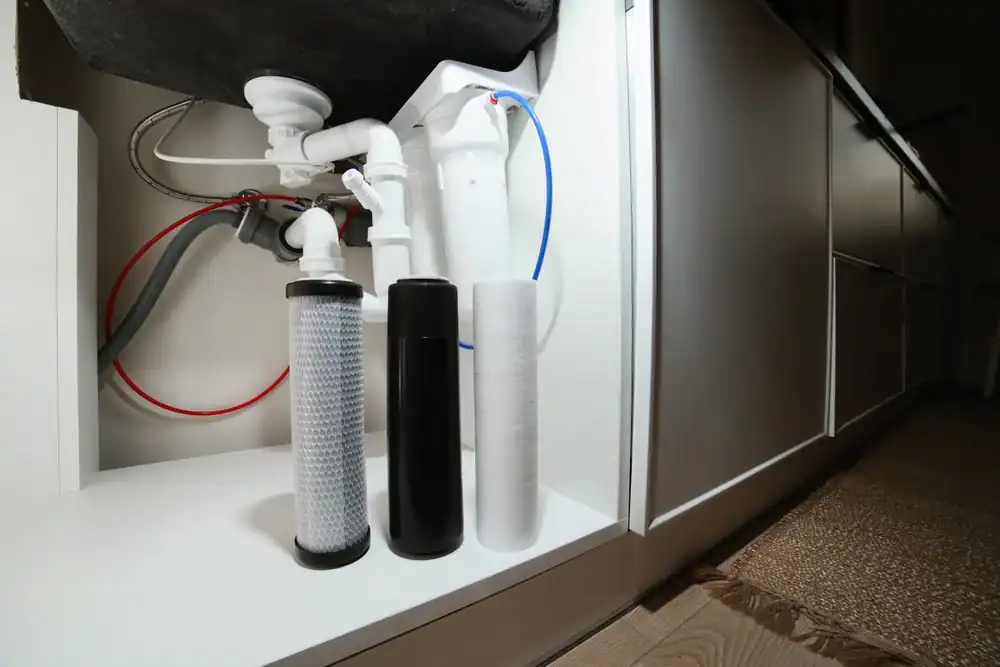
Installation happens in one day for most whole-house systems. We connect the filtration equipment between your well and your home’s plumbing, so every tap delivers treated water. After installation, we test again to confirm the system is performing exactly as designed.
You’ll notice the difference immediately. The smell disappears. Water runs clear. Staining stops. And unlike some companies in the area, we actually service what we install—you’re not left on your own if something needs adjustment.
Ready to get started?
Your well water filtration system gets built around your water test results, but most Anthony homes need similar components. Iron removal systems use air injection oxidation to convert dissolved iron into particles that get filtered out. This handles the staining and the metallic taste without adding chemicals.
Hydrogen sulfide treatment typically uses hydrogen peroxide injection, which oxidizes the sulfur and eliminates that rotten egg smell. It’s more effective than carbon filters alone, especially at the sulfur levels common in Marion County wells.
If your water test shows bacteria—and many wells in this area do—we add disinfection that works continuously, not just as a one-time shock treatment. Iron bacteria is particularly stubborn because it creates slimy biofilm in your pipes. Once established, it’s extremely difficult to eliminate, which is why prevention matters more than trying to fix it later.
Hard water is another issue we address, though it’s separate from contamination. A water softener protects your appliances and prevents scale buildup, but it doesn’t remove iron, sulfur, or bacteria. You need both softening and filtration for complete treatment in most Central Florida homes.

If you smell sulfur, see orange or brown staining, notice a metallic taste, or find slimy buildup in your toilet tanks, your well water needs treatment. These are the most obvious signs, but they’re not the only ones.
Some problems don’t announce themselves as clearly. Bacteria can be present without any smell or visible signs. High iron levels might not stain immediately but will shorten your appliance lifespan. Low pH water can corrode your pipes without you realizing it until you’re dealing with leaks.
The only way to know for certain what’s in your water is to test it. We offer free water analysis in Anthony that measures iron, sulfur, bacteria, pH, hardness, and other contaminants. You get a detailed report that shows exactly what needs to be addressed, and we can recommend the right filtration approach based on those results instead of guessing.
Regular water filters—the kind you buy at a hardware store—use carbon or sediment cartridges that clog quickly with iron. They’re designed for city water that’s already been treated, not well water with high mineral content.
Iron removal systems use air injection oxidation or chemical oxidation to convert dissolved iron into solid particles before filtration. Air injection works by exposing the water to oxygen in a retention tank, which causes the iron to oxidize and precipitate out. Then a filter media bed captures those particles before water enters your home.
This approach handles much higher iron levels than cartridge filters can manage, and it doesn’t require constant filter replacements. The media bed gets backwashed periodically to flush out accumulated iron, but it lasts for years instead of weeks. For Anthony well water, which often contains 3-5 ppm of iron or more, this type of system is necessary—standard filters just can’t keep up.
Yes, but only if it’s designed to treat hydrogen sulfide specifically. That rotten egg smell comes from sulfur gas dissolved in your water, and it requires oxidation to eliminate it completely.
Hydrogen peroxide injection is the most effective method for Anthony well water. The system injects a small amount of hydrogen peroxide into your water line, which oxidizes the hydrogen sulfide and converts it into sulfur particles that get filtered out. This removes both the smell and the corrosive properties of the gas.
Some companies try to treat sulfur with just carbon filters or water softeners, but those approaches don’t address the root cause. Carbon can mask the smell temporarily, but it doesn’t remove the hydrogen sulfide—it just absorbs some of it until the carbon is saturated. Then the smell comes back. A proper hydrogen sulfide treatment system eliminates the problem at the source, so the smell doesn’t return.
Most whole-house filtration systems need professional maintenance once a year, though some components require more frequent attention depending on your water quality and usage.
The filtration media that captures iron and other particles gets backwashed automatically—usually every few days—to flush out accumulated sediment. You don’t have to do anything for this; it’s programmed into the system. But the media itself eventually loses effectiveness and needs replacement every 5-7 years.
If your system includes hydrogen peroxide injection for sulfur treatment, you’ll need to refill the peroxide tank every few months. That’s a simple process—just pour in more peroxide, similar to adding salt to a water softener. The injection pump and check valves should be inspected annually to make sure they’re functioning correctly.
Bacteria disinfection systems have their own maintenance schedule depending on the method used. UV systems need bulb replacements annually. Chemical feed systems need tank refills and occasional pump service. We provide clear maintenance schedules for every system we install, and we’re available to handle the service if you’d rather not deal with it yourself.
Technically possible, but not recommended unless you have plumbing experience and understand water chemistry. Well water filtration isn’t like installing a faucet-mounted filter—it involves cutting into your main water line, installing retention tanks, setting up backwash drains, and programming control valves.
The bigger issue is sizing and configuring the system correctly. If you don’t know your exact flow rate requirements, peak demand times, and the specific contaminants in your water, you’ll likely end up with a system that’s either undersized and ineffective or oversized and wasteful.
Professional installation also matters for warranty coverage. Most equipment manufacturers require professional installation to honor their warranties. If something goes wrong with a DIY install, you’re paying for repairs out of pocket. And if the system doesn’t solve your water problems because it wasn’t designed correctly in the first place, you’ve wasted money on equipment that doesn’t do what you needed.
We handle the entire process—testing, system design, installation, and startup—so you know it’s done right the first time. That includes pulling any necessary permits and ensuring the installation meets local codes in Marion County.
Please provide your email address so that we can stay in touch and answer any questions you have! We will be reaching back out shortly.
"*" indicates required fields