Reach Out Today
Please provide your email address so that we can stay in touch and answer any questions you have! We will be reaching back out shortly.


Hear from Our Customers
Your skin stops feeling tight after every shower. Your hair isn’t brittle anymore. The white buildup around faucets disappears, and your coffee actually tastes like coffee instead of chlorine.
Your dishwasher stops leaving chalky residue on glassware. Your water heater lasts years longer because mineral deposits aren’t choking it out. You stop buying bottled water by the case because what comes out of your tap is cleaner than what you’ve been hauling home from the store.
Florida’s groundwater picks up calcium and magnesium as it moves through limestone, which is why Panama Park sits in one of the hardest water zones in the country. At 216 PPM average hardness, you’re dealing with water that’s classified as extremely hard. That’s not just an inconvenience—it’s costing you money in repairs, replacements, and products that don’t work as well as they should. A whole-house water filtration system handles the problem at the source, so every faucet, every appliance, and every shower delivers water that’s actually clean.
We have over 50 years of combined experience treating water in North and Central Florida. We’re members of the National Water Quality Association and hold an A+ rating with the Better Business Bureau—with zero complaints.
That matters because you’re not just buying equipment. You’re trusting someone to analyze your water correctly, install a system that actually works for your home, and be there when you need service. We’re a local company, not a national franchise that disappears after the sale.
Panama Park homeowners deal with the same water issues we see across Lake County—hard water that damages plumbing, chlorine taste and odor, and concerns about what’s really in the tap. We’ve built our reputation on solving those problems with systems designed specifically for Florida water, not generic solutions that underperform in our conditions.
First, we test your water. Not a guess based on your zip code—an actual analysis of what’s coming into your home. That tells us what we’re dealing with: hardness levels, chlorine or chloramine, iron, sulfur, bacteria, or other contaminants specific to your water source.
Then we design a system based on those results and how much water your household uses. A family of two doesn’t need the same setup as a family of five. Whole-house systems treat water at the point of entry, so everything from your kitchen sink to your washing machine gets filtered. If you want additional purification for drinking water, we can add reverse osmosis systems or under-sink filter installation for that extra layer.
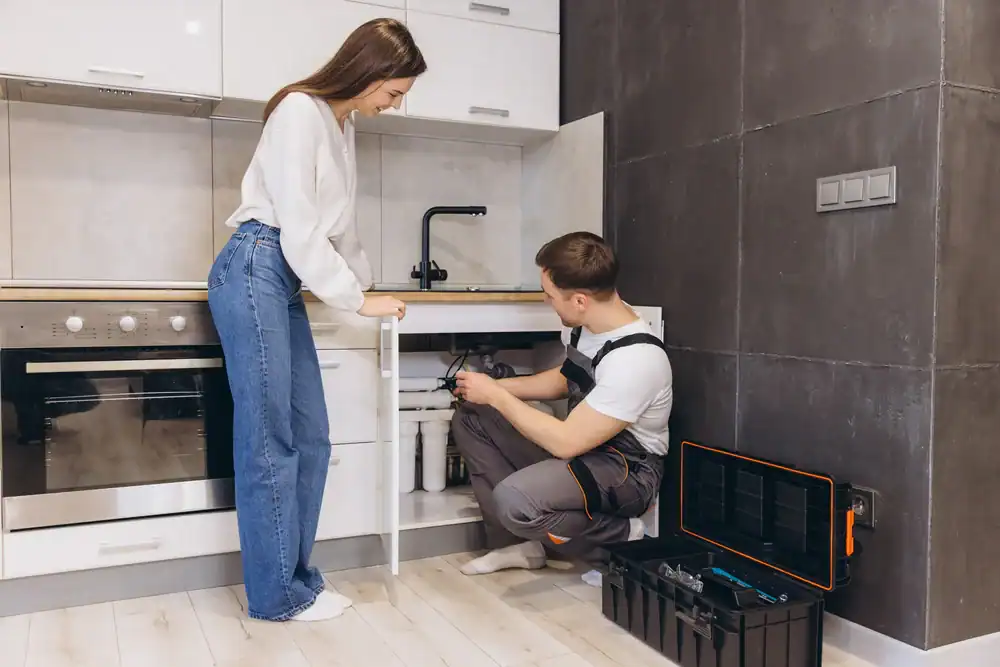
Installation typically takes a few hours. We connect the system to your main water line, set it up to handle your flow rate, and walk you through how it works. You’ll notice the difference immediately—softer water, no chemical taste, no more scrubbing mineral stains off everything. We also service what we install, which is something you won’t get from the national companies that treat water treatment like a one-and-done transaction.
Ready to get started?
Whole-house filtration covers every drop of water entering your home. That includes activated carbon filtration to remove chlorine, taste, and odor. It includes water softening to eliminate the calcium and magnesium causing hardness. And depending on your water test, it can include UV water purification to kill bacteria and viruses, or iron and sulfur filters if you’re dealing with rust stains or that rotten egg smell.
Reverse osmosis systems go a step further for drinking water. They push water through a membrane that filters out contaminants down to microscopic levels—things like lead, fluoride, nitrates, and PFAS. You get water that’s cleaner than bottled, straight from your tap. Some homeowners in Panama Park choose a combination: whole-house filtration for general use and reverse osmosis for drinking and cooking.
We also offer salt-free systems for people who want to prevent scale buildup without adding sodium to their water. These systems condition the water so minerals don’t stick to pipes and appliances, but they don’t technically soften it. It’s an eco-friendly option that uses no electricity, no salt, and no backwash water. Every system we install is custom-designed after we test your water and understand your household’s needs, so you’re not paying for features you don’t need or getting a system that’s undersized for your home.
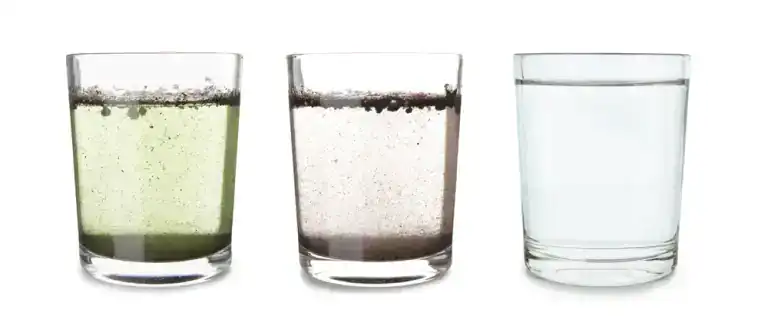
If your water leaves white spots on dishes, makes your skin feel dry, or has a chlorine taste, you’re dealing with hard water or chemical treatment issues. Panama Park falls into Florida’s extremely hard water zone, with average hardness around 216 PPM. That level of hardness damages appliances, clogs pipes, and makes soaps and detergents less effective.
You might also notice rust stains in sinks or toilets, which means iron in your water. A sulfur smell—like rotten eggs—comes from hydrogen sulfide gas. Both are common in Florida groundwater. If you’re concerned about bacteria, contaminants, or just want cleaner drinking water, a filtration system solves all of that at once.
The best way to know for sure is to test your water. We do that for free, and it tells us exactly what’s in your water and what type of system will handle it. You’re not guessing, and you’re not overpaying for equipment you don’t need.
A water softener specifically removes hardness—calcium and magnesium—by exchanging those minerals for sodium or potassium. It stops scale buildup in pipes and appliances, makes soap lather better, and eliminates that sticky feeling on your skin after a shower. But it doesn’t filter out chlorine, bacteria, or other contaminants.
A whole-house filtration system can include softening, but it also handles taste, odor, chemicals, and sediment. Think of it as a complete treatment solution instead of just addressing one issue. Depending on your water test, we might recommend a combination: a softener for hardness and activated carbon filtration for chlorine, plus UV purification if bacteria is a concern.
Some homeowners choose salt-free conditioning instead of traditional softening. That prevents scale without adding sodium to the water, but it doesn’t technically soften it. It’s a good option if you’re on a low-sodium diet or want an eco-friendly system. We design the system based on what your water test shows and what matters most to you.
Cost depends on the type of system, the size of your home, and what your water test reveals. A basic whole-house filter starts around a few thousand dollars. If you need softening, UV purification, or reverse osmosis for drinking water, the price goes up because you’re adding more treatment stages.
That sounds like a lot until you factor in what you’re spending now. Bottled water for a family of four runs $50 to $100 a month. Appliance repairs and replacements from hard water damage add up fast—water heaters, dishwashers, washing machines, and plumbing fixtures all fail sooner in hard water. A filtration system pays for itself over time by extending the life of everything that uses water.
We also offer a $500 discount for military members and first responders. After we test your water and understand your household’s needs, we’ll give you a detailed quote with no surprises. You’re paying for a custom system designed for your home, not a one-size-fits-all setup that underperforms.
Reverse osmosis systems are the most effective way to remove PFAS, also called “forever chemicals.” They filter water through a semi-permeable membrane that blocks contaminants down to 0.0001 microns. That includes PFAS, lead, fluoride, nitrates, arsenic, and most other dissolved solids. Research estimates that up to 45% of U.S. tap water contains some level of PFAS, and Florida doesn’t yet require testing for it in municipal water reports.
If PFAS removal is a priority, we typically recommend a reverse osmosis system for drinking and cooking water. Whole-house RO systems exist, but they’re expensive and not necessary for water you’re using to wash dishes or do laundry. Most homeowners pair whole-house filtration for general treatment with an under-sink RO system for the kitchen.
Activated carbon filters also remove some contaminants—chlorine, volatile organic compounds, pesticides, and herbicides—but they don’t catch everything. UV purification kills bacteria and viruses but doesn’t remove chemicals or dissolved solids. That’s why we test your water first. It tells us what’s actually in there, so we can recommend the right combination of filtration methods instead of guessing.
Most whole-house systems need a filter change every six to twelve months, depending on your water quality and how much water you use. Softeners need salt refills if you’re using a traditional ion-exchange system. Reverse osmosis systems have multiple filters—sediment, carbon, and membrane—that need replacing on different schedules, usually once a year for most components.
UV purification bulbs lose effectiveness over time and should be replaced annually, even if they still look like they’re working. The good news is that maintenance is straightforward, and we handle it if you don’t want to deal with it yourself. We also service all brands, not just the systems we install, which is something most national companies won’t do.
Skipping maintenance means your system stops working as well. Filters get clogged, flow rate drops, and contaminants start slipping through. We’ll set you up with a maintenance schedule after installation so you know exactly when things need attention. It’s not complicated, and it’s a lot easier than dealing with hard water damage or buying bottled water forever.
Please provide your email address so that we can stay in touch and answer any questions you have! We will be reaching back out shortly.
"*" indicates required fields