Reach Out Today
Please provide your email address so that we can stay in touch and answer any questions you have! We will be reaching back out shortly.

Hear from Our Customers
You stop wondering what’s coming out of your tap. No more buying bottled water by the case or worrying about what your kids are drinking after practice.
Your appliances last longer because hard minerals and sediment aren’t building up inside them. Your water heater runs more efficiently. Your washing machine doesn’t leave residue on clothes. Your coffee tastes better because it’s not competing with chlorine.
You’re not dealing with dry skin after every shower or that metallic aftertaste when you fill a glass. The water just works the way it should—clear, clean, and safe. That’s what a properly designed water filtration system does. It handles the contamination so you don’t have to think about it.
And here in Holden Lakes, FL, that matters more than most people realize. Florida’s aquifers are porous limestone, which means contaminants move through them fast. PFAS chemicals have been detected in over 60% of Florida’s spring samples. If your water comes from the ground here, it’s worth knowing what’s in it before you drink it.
Quality Safe Water of Florida LLC is a Florida-based water treatment company serving Lake County and Central Florida. We don’t do plumbing. We don’t install water heaters. We focus entirely on water purification, filtration, and softening—because that’s what we’re good at.
We’re A+ rated with the Better Business Bureau, hold a 5-star rating with zero complaints, and we’re members of the National Water Quality Association. We also offer a $500 discount to military members and first responders, and we support the Tunnels to Towers Foundation.
What sets us apart in Holden Lakes isn’t just our reputation. It’s that we actually service what we install. You’re not getting a system from a national company that disappears after the sale. You’re working with a local team that knows Florida water, understands what contaminants show up in this region, and designs systems based on your actual water test—not a one-size-fits-all package.
First, we test your water. Not a guess, not a generic recommendation—an actual analysis of what’s in your water supply. That tells us what we’re dealing with: hardness levels, chlorine, PFAS, heavy metals, sediment, bacteria, or other contaminants specific to your area.
Then we design a system based on your results and how much water your household uses. If you need reverse osmosis systems for drinking water, we’ll recommend that. If whole-house activated carbon filtration makes more sense, we’ll tell you why. If UV water purification is necessary to handle bacteria, that goes into the plan. Everything is custom.
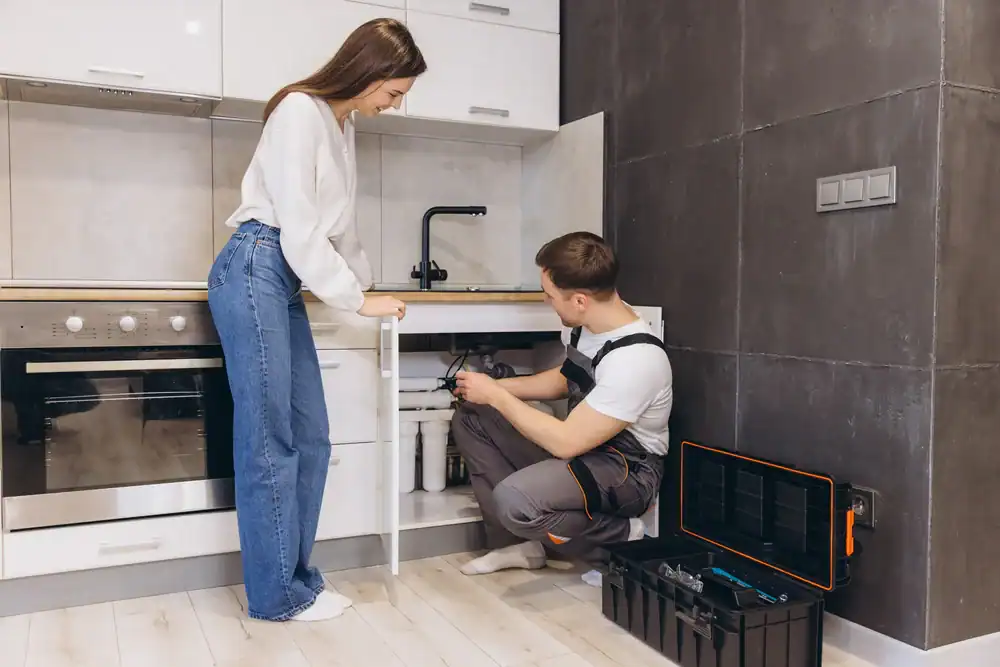
Once you approve the system, we schedule the installation. For under-sink filter installation, that’s usually a few hours. For whole-house systems, it takes longer but we’re not tearing apart your home to do it. We install at the point of entry so every faucet, shower, and appliance gets filtered water.
After installation, we walk you through how the system works, when filters need changing, and what to expect. Then we’re available if anything comes up. You’re not calling a 1-800 number—you’re calling the people who installed it.
Ready to get started?
Every system starts with drinking water quality testing. We’re looking at TDS levels, pH, hardness, chlorine, PFAS, nitrates, and anything else that shows up in Central Florida water supplies. You get a full report that explains what we found and what it means for your health.
From there, we build a system that fits your home. That might mean a reverse osmosis system under your kitchen sink that removes 99% of contaminants. It might mean a whole-house carbon filter that handles chlorine and organic chemicals before water even reaches your faucets. It could include UV purification if bacterial contamination is a concern, which happens more often than people think in Florida.
We’re not selling you the most expensive option. We’re recommending what actually solves your problem. If your water test shows high hardness but low contamination, a softener might be all you need. If PFAS levels are elevated—which they are in many parts of Florida—you need a system designed to remove those specific chemicals.
Installation is professional, and we don’t subcontract it out. The people who design your system are the same people who install it and service it. You’re also getting a system built to last. We’re talking 20+ years if it’s maintained properly, not a cheap unit that fails in five.
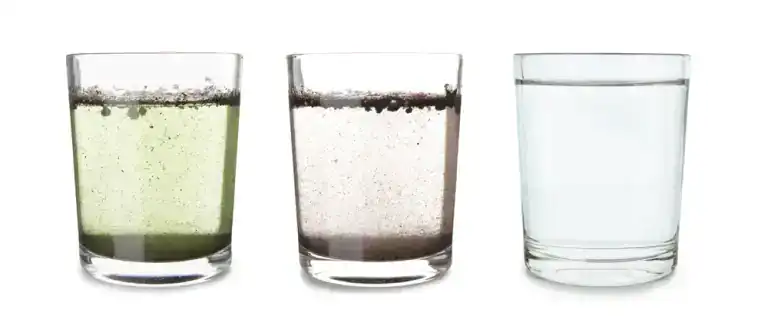
It depends on the system, but a properly designed setup removes the stuff that matters here: PFAS chemicals, chlorine and chlorination byproducts, heavy metals like lead and mercury, nitrates from agricultural runoff, sediment, and bacteria.
Reverse osmosis systems are the most thorough. They remove about 99% of dissolved contaminants, which is why they’re used to produce bottled-quality water. Activated carbon filters handle chlorine, organic chemicals, and bad tastes. UV purification kills bacteria and viruses if your water source has biological contamination.
Florida water has specific problems. Our aquifers are limestone, so they don’t filter contaminants well. PFAS has been found in over 60% of Florida’s springs, and more than 8 million Floridians have been exposed to PFOS levels above health guidelines. If you’re on well water or even some municipal supplies, you’re likely dealing with higher TDS levels, hardness, or chemical contamination than you’d see in other states. That’s why testing first matters—you need to know what you’re removing before you pick a system.
It varies based on what your water test shows and what kind of system you need. A basic whole-house carbon filter might run a few thousand dollars. A multi-stage system with reverse osmosis, UV purification, and softening can cost significantly more.
But here’s what that cost actually covers: equipment that lasts 20+ years, professional installation, and a system that’s designed specifically for your water. You’re not buying a generic unit off the shelf. You’re getting something built around your water analysis and your household’s usage.
The real cost isn’t the upfront price—it’s what happens if you don’t filter your water. Appliances break down faster. You’re buying bottled water every week. Your family is drinking contaminants linked to health problems. A filtration system is an investment that pays itself back in appliance longevity, health protection, and eliminating bottled water costs. We also offer a $500 discount for military members and first responders, which helps.
Yes, because municipal water treatment doesn’t remove everything. It disinfects water and removes some contaminants, but it doesn’t handle PFAS, many heavy metals, chlorination byproducts, or pharmaceutical residues.
Florida had the second-highest number of people exposed to Safe Drinking Water Act violations. That’s not a scare tactic—it’s public record. Disinfection byproducts, nitrate contamination, and aging infrastructure are ongoing problems. Even when city water meets federal standards, those standards don’t account for newer contaminants like PFAS, which weren’t regulated until recently.
City water also contains chlorine, which is added to kill bacteria but leaves a taste and smell most people don’t like. It can dry out your skin and hair. A whole-house carbon filter removes chlorine before it reaches your shower or washing machine. If you want drinking water that’s truly clean, a reverse osmosis system handles what the city can’t. Municipal treatment is a baseline, not a finish line.
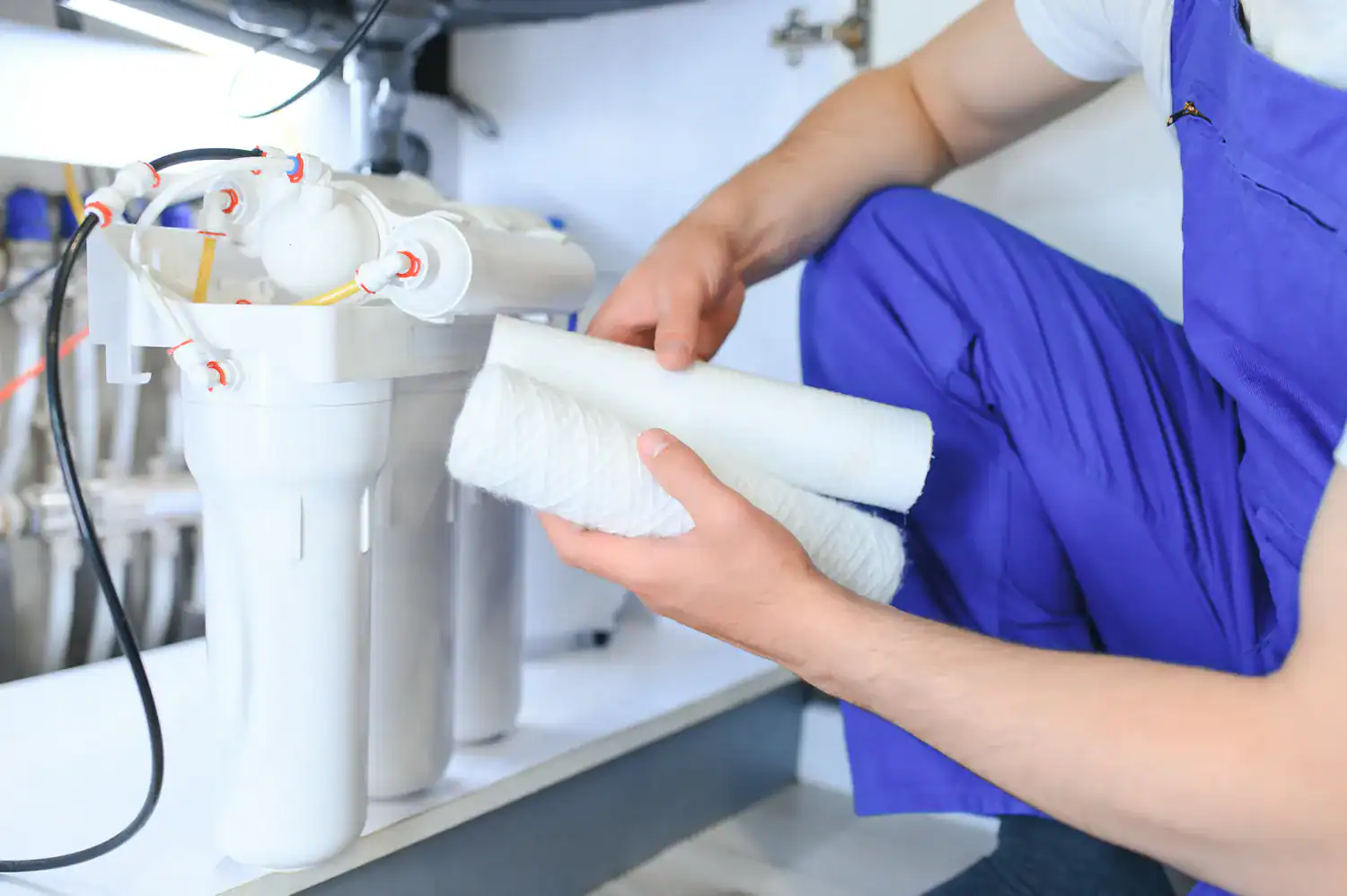
It depends on the system and how much water you use. Carbon filters in a whole-house system typically need replacing every 6 to 12 months. Reverse osmosis membrane filters last 2 to 3 years. Sediment pre-filters might need changing every 3 to 6 months if your water has a lot of particulate matter.
We’ll tell you exactly what your system needs during installation. Most systems have indicator lights or gauges that show when it’s time to change a filter. It’s not complicated, and in many cases, you can do it yourself. If you’d rather have us handle it, we offer service plans.
Skipping filter changes isn’t an option if you want the system to keep working. A clogged carbon filter stops removing chlorine. A worn-out RO membrane lets contaminants through. Regular maintenance is what keeps your water clean and your system running efficiently for decades. We make it easy to stay on schedule, and we’ll remind you when it’s time.
A water softener removes hardness—calcium and magnesium—that causes scale buildup in pipes and appliances. It doesn’t remove contaminants like chlorine, PFAS, heavy metals, or bacteria. It’s solving a different problem.
A water filtration system removes contaminants that affect your health and water quality. Carbon filters take out chlorine and organic chemicals. Reverse osmosis removes dissolved solids, heavy metals, and PFAS. UV purification kills bacteria. Filtration is about making water safe and clean to drink.
Most homes in Florida benefit from both. Hard water damages appliances and leaves spots on dishes. Contaminated water affects your health. If your water test shows high hardness and contamination—which is common here—you’ll want a system that handles both. We design systems that combine softening and filtration so you’re not choosing between the two. You get water that’s soft, clean, and safe.
Please provide your email address so that we can stay in touch and answer any questions you have! We will be reaching back out shortly.
"*" indicates required fields