Reach Out Today
Please provide your email address so that we can stay in touch and answer any questions you have! We will be reaching back out shortly.


Hear from Our Customers

Your dishes stop coming out of the dishwasher with spots. Your skin doesn’t feel tight and dry after every shower. The rotten egg smell disappears when you turn on the tap.
That’s what happens when you fix the water instead of working around it. No more buying cases of bottled water because your tap tastes like a swimming pool. No more orange stains creeping back onto your toilets and sinks a week after you scrub them.
Your appliances last longer because they’re not fighting mineral buildup every day. Your water heater doesn’t have to work twice as hard. Your plumbing stays clearer. And you stop wondering what’s actually in the water your family drinks, cooks with, and bathes in.
A proper water filtration system handles the problem at the source—every faucet, every shower, every appliance. You’re not just masking symptoms. You’re changing what comes through your pipes.
We’ve been doing this across Central Florida for over five decades. That’s long enough to know exactly what Bruceville homeowners deal with—the iron in well water, the hardness from the aquifer, the sulfur that shows up in certain areas.
We’re members of the National Water Quality Association and hold an A+ rating with the Better Business Bureau with zero complaints. Not because we’re perfect, but because when something needs attention, we handle it. We test your water first, design the system around what you actually need, and install it correctly the first time.
We also offer a $500 discount for military members and first responders. It’s a small way to give back to the people who’ve given more than most.
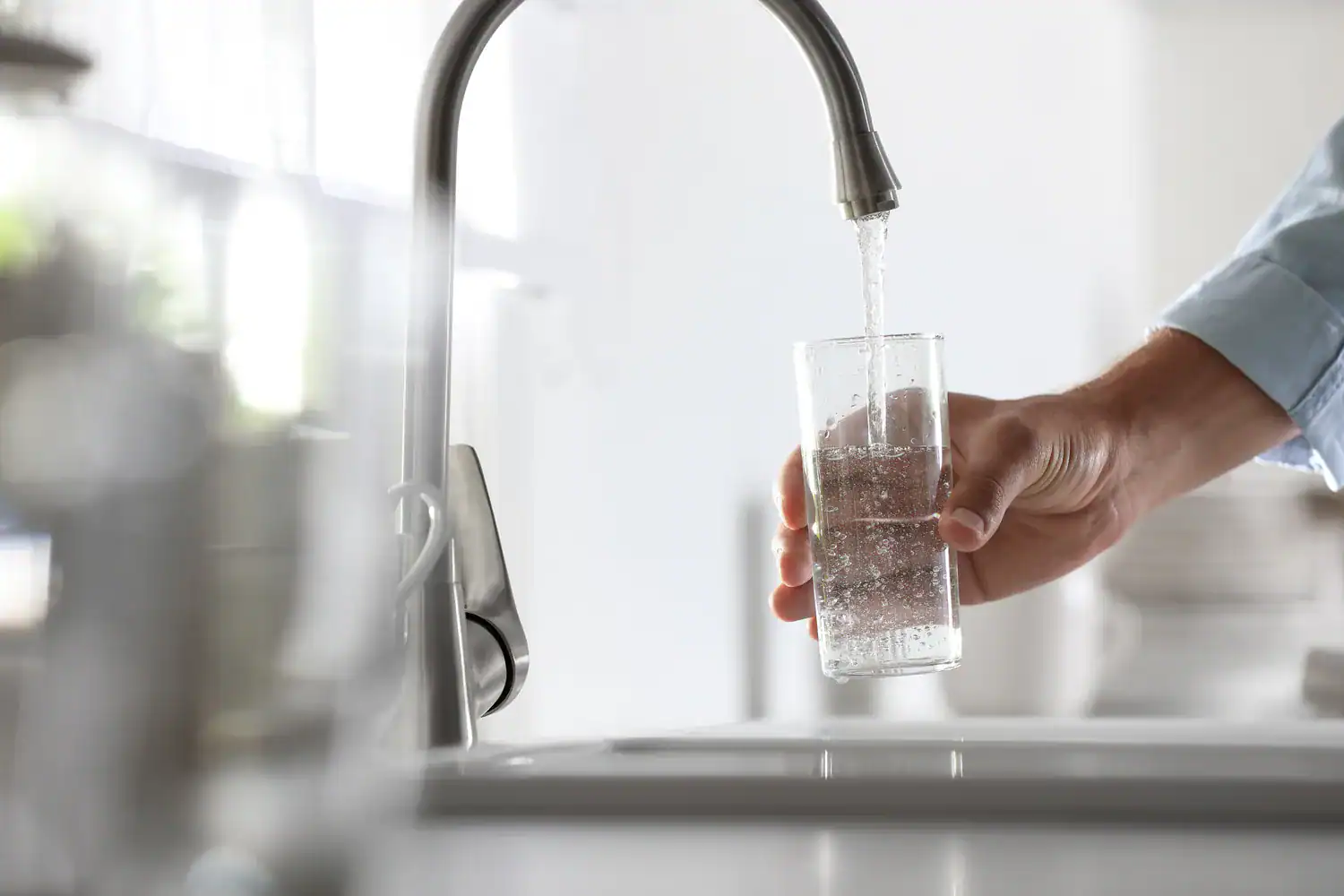
It starts with testing your water. Not a guess, not a generic recommendation—actual lab analysis that tells us what’s in your water and at what levels. Iron, hardness, sulfur, chlorine, bacteria, pH—we measure it all.
Then we design a system based on those results and how your household uses water. If you’ve got high iron and sulfur from a well, that’s a different setup than city water with heavy chlorine and hardness. We match the filtration technology to the problem—reverse osmosis for drinking water quality, activated carbon filtration for chlorine and taste, UV purification if bacteria is a concern.
Installation usually takes a day, depending on the system size and your home’s layout. We connect it to your main water line so every drop that enters your house gets filtered. Once it’s running, you’ll notice the difference immediately—clearer water, better taste, no more staining.
We also set you up with what to expect for maintenance. Most systems need a filter change once or twice a year. We handle that, and we service all brands—not just what we sell.
Ready to get started?
A whole-house water filtration system isn’t one piece of equipment. It’s a combination of technologies working together. You might need a sediment filter upfront to catch rust and particles. Then a water softener or salt-free conditioner to handle hardness. Activated carbon filtration to pull out chlorine, chemicals, and odors. And if you’re on well water, possibly an iron filter, sulfur filter, or UV purification system to kill bacteria.
For drinking water, we often add an under-sink reverse osmosis system. It’s a separate unit that gives you ultra-clean water at the kitchen tap—removes fluoride, lead, nitrates, and anything else you don’t want your family consuming.
In Bruceville and Lake County, hard water is nearly universal. The aquifer here has high mineral content, and it shows up fast—on your fixtures, in your appliances, on your skin. A good water softener or conditioner handles that. If you’re on well water, iron and sulfur are common too. Those need specific filtration media designed to remove metals and gases before they stain or smell.
We also install UV water purification systems for homes where bacterial contamination is a risk. It’s a light chamber that kills E. coli, coliform bacteria, and other organisms without adding chemicals. Especially important if your well is shallow or near septic systems.
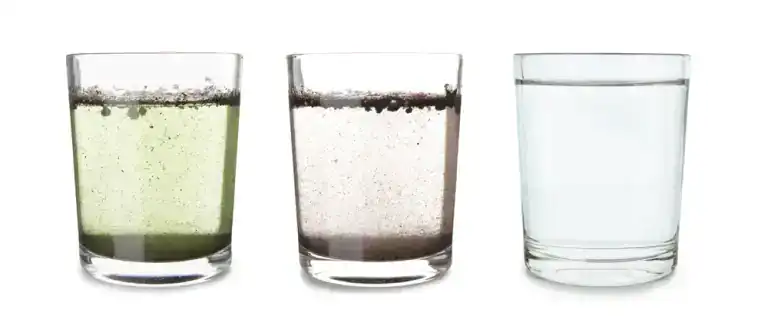
You start with a water test. Without knowing what’s actually in your water, you’re guessing—and that usually means paying for equipment you don’t need or missing the stuff that’s actually causing problems.
We test for hardness, iron, manganese, sulfur, chlorine, pH, bacteria, and other contaminants depending on whether you’re on city or well water. The results tell us exactly what filtration technology will work. High iron means you need an iron filter with the right media. Hardness means a softener or salt-free conditioner. Bacteria means UV purification. Chlorine and chemical taste means activated carbon filtration.
Most homes in Bruceville need a combination—rarely is it just one issue. We design the system around your test results and your household size. A family of five uses water differently than a couple, and the system has to keep up. We also factor in your goals—some people just want to stop buying bottled water, others want to protect expensive appliances, and some need to solve a specific problem like staining or odor.
A water softener specifically removes hardness—the calcium and magnesium that cause scale buildup, soap scum, and spots on dishes. It uses salt or, in salt-free versions, changes the structure of minerals so they don’t stick to surfaces. Softeners are great for protecting appliances and making water feel better on skin and hair.
A whole-house filter is broader. It can remove sediment, chlorine, chemicals, odors, and depending on the type, metals like iron and manganese. Some systems combine both—a softener for hardness and a carbon filter for taste and smell. Others add more stages depending on what’s in your water.
If you’ve got city water in Bruceville, you’re likely dealing with hardness and chlorine. That usually means a softener plus a carbon filter. If you’re on well water, you might need an iron filter, sulfur filter, and softener all working together. It depends entirely on your water test. The point is, one piece of equipment rarely solves everything. You need a system designed around what’s actually coming through your pipes.
A filtration system will stop new stains from forming, but it won’t remove stains that are already there. You’ll need to clean those separately. Once the system is running and removing iron from your water, the staining stops.
Iron in water is common across Central Florida, especially in well water. It shows up as orange or reddish-brown stains on sinks, toilets, tubs, and laundry. Sometimes it’s dissolved iron that you can’t see until it oxidizes and leaves a mark. Other times it’s bacterial iron, which is worse—it forms a slimy buildup in pipes and tanks.
An iron filter uses specific media to pull iron out before it reaches your fixtures. Some systems use oxidation to convert dissolved iron into particles that get trapped in a filter. Others use a combination of filtration and softening. If bacterial iron is present, you may also need a chlorination or UV system to kill the bacteria feeding on the iron.
Once it’s installed and working, your water runs clear. No more orange rings. No more rust-colored laundry. The stains you have now will need scrubbing or a cleaner designed for iron stains, but they won’t come back.
Most systems need a filter change or media replacement once or twice a year. Some components last longer—five to seven years depending on the type and your water quality. It’s not complicated, but it does need to be done.
Carbon filters typically need changing every six to twelve months because they absorb chlorine, chemicals, and odors until they’re saturated. Sediment filters catch rust and particles and need swapping when they clog. If you have a water softener, you’ll need to add salt periodically—or if it’s salt-free, those systems usually need less frequent attention.
Iron filters and sulfur filters use media that eventually gets exhausted and needs replacing. UV purification systems need a new bulb once a year, and the quartz sleeve that protects the bulb should be cleaned regularly. Reverse osmosis systems under the sink have multiple filters—sediment, carbon, and membrane—that need changing on different schedules.
We handle all of that. We’ll set you up on a maintenance schedule based on your system, and we service all brands, not just the ones we install. Regular maintenance keeps everything running efficiently and extends the life of the equipment. Skip it, and you’ll either get poor performance or damage components that cost more to replace.
Yes, and if you’re on well water in Bruceville, a filtration system is even more important. Well water doesn’t go through a municipal treatment plant, so whatever’s in the aquifer or your well is what’s coming into your home—minerals, metals, bacteria, and sometimes worse.
The most common issues we see with well water here are iron, manganese, sulfur, hardness, and bacterial contamination. Iron and manganese cause staining and metallic taste. Sulfur smells like rotten eggs. Hardness damages appliances and leaves residue. Bacteria can make you sick.
A well water system usually includes multiple stages. You might need a sediment filter first to catch sand and particles. Then an iron or sulfur filter depending on test results. A water softener or conditioner for hardness. And a UV purification system to kill bacteria and viruses. Some wells also have low pH, which makes water acidic and corrodes pipes—that needs a neutralizer.
We test your well water first to see exactly what you’re dealing with. Then we design a system that handles those specific problems. Well water systems tend to be more complex than city water setups, but they’re also more critical because there’s no treatment happening before the water reaches your house.
Please provide your email address so that we can stay in touch and answer any questions you have! We will be reaching back out shortly.
"*" indicates required fields