Reach Out Today
Please provide your email address so that we can stay in touch and answer any questions you have! We will be reaching back out shortly.

Hear from Our Customers
Your appliances last longer. The white film on your glassware disappears. Your skin stops feeling tight and dry after every shower.
Hard water in Baldwin Park contains calcium and magnesium that build up inside your pipes, water heater, and every appliance that uses water. Over time, that buildup reduces efficiency, clogs lines, and forces early replacements. A water softening system removes those minerals before they enter your home’s plumbing.
You’ll use less soap and detergent because soft water lathers better. Your water heater won’t have to work as hard to heat water through layers of scale. And you won’t spend weekends scrubbing mineral deposits off faucets and shower doors.
The return shows up in your utility bills, your appliance lifespan, and how your water actually feels. It’s not about luxury. It’s about stopping preventable damage.
We hold an A+ Better Business Bureau rating with a 5-star review average and zero complaints. We’re members of the National Water Quality Association, which means our team meets national standards for water treatment certification and expertise.
We don’t sell systems and disappear. We install, service, and support every water softener system we put in Baldwin Park homes. That’s why homeowners choose us over national companies with poor service reputations.
If you’re military or a first responder, we offer a $500 discount. We also support the Tunnels to Towers Foundation because we believe in giving back to the people who serve our community.
We start with a water quality test at your home. That tells us exactly what’s in your water and how much hardness we’re dealing with. Central Florida water varies by area, so we don’t guess.
Once we know your water profile, we recommend a system sized for your household. That includes flow rate, daily water usage, and the specific minerals we need to remove. We’re not upselling you into a bigger system than you need.
Installation typically takes a few hours. We connect the system to your main water line so every faucet, shower, and appliance gets softened water. The system uses a process called ion exchange—hard minerals go in, soft water comes out.
After installation, we walk you through basic maintenance. Most systems need salt refills every few weeks, depending on your usage. We’re available for service calls, repairs, and any questions that come up. You’re not figuring this out alone.

Ready to get started?
Every installation includes a whole-house water softener system designed for Florida’s water conditions. You get professional installation, system setup, and a walkthrough of how everything works.
Baldwin Park’s water supply, like most of Central Florida, contains high levels of calcium and magnesium. The average hardness level in our area ranges from 10 to 15 grains per gallon, which is considered very hard. That’s why scale buildup happens fast here, and why a properly sized system matters.
We also offer water softener repair for existing systems that aren’t performing. If your current system isn’t removing hardness, uses too much salt, or constantly needs attention, we’ll diagnose the issue and give you a straight answer about whether it’s worth fixing or replacing.
Our systems come with ongoing service support. We’re not a national company that sells equipment and refers you to a call center when something goes wrong. If you need help, you call us, and we show up.

If you see white buildup on faucets, your glassware has spots after washing, or your soap doesn’t lather well, you have hard water. Those are the visible signs.
The less obvious signs show up in your water heater and appliances. Scale builds up inside, making them work harder and fail sooner. If you’ve replaced a water heater before its expected lifespan, hard water was likely the reason.
We can test your water to measure hardness in grains per gallon. Anything above 7 grains is considered hard, and most Baldwin Park homes test between 10 and 15. At that level, a water softening system isn’t optional if you want to protect your plumbing and appliances.
A water softener removes hardness minerals like calcium and magnesium through ion exchange. It doesn’t filter out contaminants—it specifically targets the minerals that cause scale buildup.
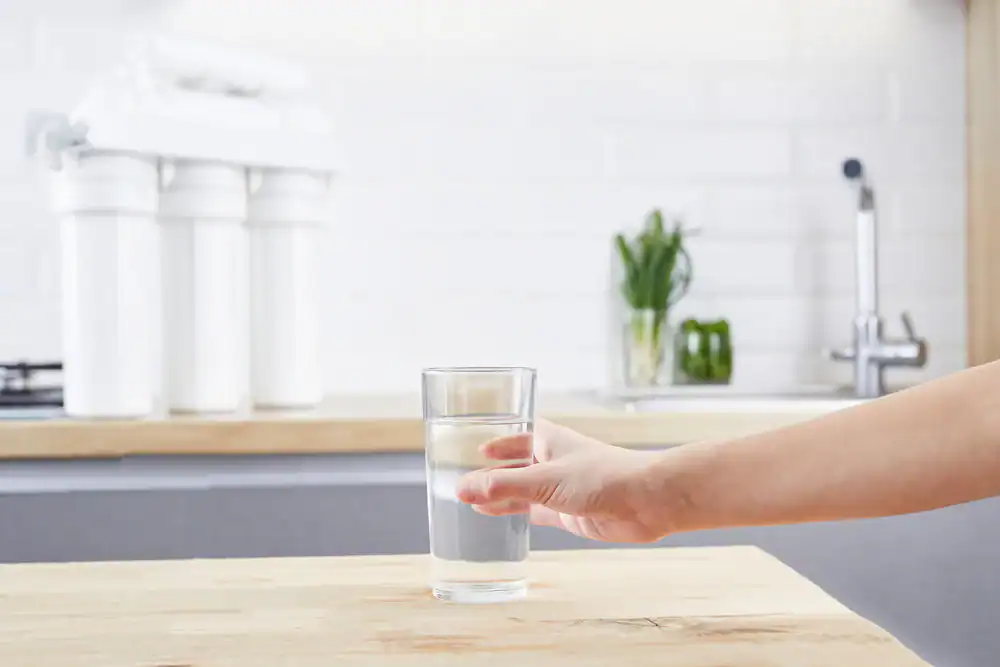
A water filter removes sediment, chlorine, and other contaminants depending on the type of filter. Some filters improve taste and odor. Others remove specific chemicals or particles. But they don’t address hardness.
Many Baldwin Park homeowners benefit from both. A whole-house water softener handles hardness, while a reverse osmosis system at the kitchen sink removes contaminants from drinking water. We can test your water and recommend what actually makes sense for your situation, not just sell you everything.
The main ongoing cost is salt, which most systems use to regenerate the resin that removes hardness. Depending on your water usage and household size, you’ll spend around $5 to $10 per month on salt.
There’s also a small increase in water usage during the regeneration cycle, usually a few dollars per month. Some systems use a bit of electricity to run the control valve, but it’s minimal—similar to a digital clock.
The savings show up in other areas. Your water heater runs more efficiently without scale buildup, which can cut energy costs by 20% or more. Appliances last longer, so you’re not replacing them as often. And you’ll use less soap, detergent, and cleaning products because soft water works better with all of them.
No. The system adds a small amount of sodium during the ion exchange process, but it’s not enough to taste or cause health concerns for most people. We’re talking about milligrams, not the amount you’d get from a typical meal.
If you’re on a sodium-restricted diet, we can install a potassium-based system instead of a salt-based one. Potassium works the same way to soften water without adding sodium.
For drinking water, many homeowners add a reverse osmosis system at the kitchen sink. That removes the small amount of sodium along with other contaminants, giving you the cleanest drinking water possible. It’s a separate system, but it pairs well with a whole-house water softener.
A quality system typically lasts 15 to 20 years with proper maintenance. The resin tank, which does the actual softening, can last even longer if the system is sized correctly and maintained.
The control valve is usually the first component that needs attention, and that’s often repairable. Regular salt refills and occasional cleaning of the brine tank keep the system running efficiently.
The key is correct sizing and professional installation. An undersized system works too hard and wears out faster. An oversized system wastes salt and water. We size systems based on your actual water usage and hardness levels, not a one-size-fits-all approach. That’s how you get 15-plus years out of the equipment.
Please provide your email address so that we can stay in touch and answer any questions you have! We will be reaching back out shortly.
"*" indicates required fields