Summary:
Most companies won’t give you a number until they’ve got a foot in your door. That’s frustrating — especially when you’re just trying to figure out whether this is even in your budget. If you live in Lake County, you already know the water here is hard. What you might not know is exactly what it costs to fix it, what drives the price up or down, and what questions to ask before you commit. This guide gives you the real numbers, the honest trade-offs, and enough context to make a confident decision — without the runaround.
Cost of Water Softener Installation in Lake County, FL
In Lake County, most homeowners pay somewhere between $1,500 and $4,000 for a professionally installed water softener — and that range is real, not padded. Where you fall within it depends on the type of system, your household size, your water source, and how complex the installation turns out to be.
That range tracks closely with what we see across Central Florida. Orlando-area averages hover around $1,521 according to Angi’s local data, and Lakeland averages around $2,758. Lake County sits right in that corridor, and the limestone geology here — courtesy of the Floridan Aquifer running beneath the county — means the hardness levels that drive system sizing are consistently in the hard-to-very-hard range.
Labor alone typically runs $500 to $1,200 for a standard residential install. If your home requires significant plumbing modifications or the installation point is in a tight or awkward space, that number can climb. Most straightforward installs take four to six hours.
What Makes Water Softener Prices Go Up — or Down
The biggest cost driver is grain capacity — the measure of how much hardness a system can remove before it needs to regenerate. Smaller households with moderate hardness levels can often get by with a 24,000 to 32,000 grain system. Larger homes, or homes with very hard water, typically need 40,000 to 48,000 grains or more.
Undersizing a system to save money upfront means it regenerates too frequently, burns through salt faster, and wears out sooner. That’s not a deal — it’s a delayed expense.
Water source matters too. If you’re on a private well — which is common in Groveland, Mascotte, Paisley, and other unincorporated parts of Lake County — you’re often dealing with iron, sulfur, or manganese on top of hardness. Those contaminants require pre-filtration before the softener, which adds $200 to $500 to the project depending on what’s in your water and at what levels.
This is exactly why a real water analysis matters before any system is recommended. Guessing at the solution based on zip code alone is how people end up with systems that don’t perform.
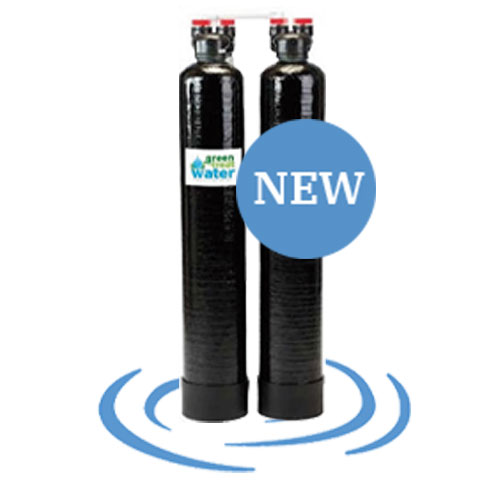
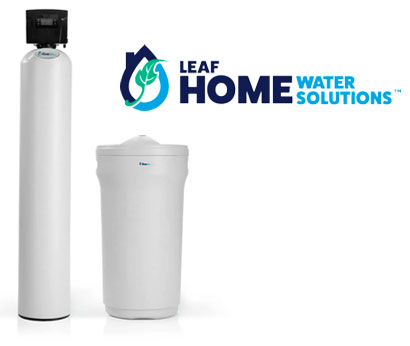
On the lower end of the range, you’ll find salt-based single-tank systems for smaller homes on city water with moderate hardness. On the higher end, you’re looking at larger dual-tank systems, homes on well water with multiple treatment needs, or households that want a whole-house setup combining softening with filtration and reverse osmosis at the tap.
That last scenario — a complete whole-house purification system — is where the investment makes the most sense long-term, and it’s the type of project we specialize in.
One more variable worth understanding: system quality. A big-box store softener might cost $400 to $800 for the unit alone, but consumer-grade systems in Florida’s conditions typically last seven to twelve years. A professionally installed, USA-made system from a WQA-certified company tends to last fifteen to twenty-five years.
Over a fifteen-year window, the math usually favors the professional installation — especially when you factor in what hard water does to water heaters, dishwashers, and washing machines along the way.
Salt-Based vs. Salt-Free: Which System Type Makes Sense for Lake County Water?
A salt-based water softener uses ion exchange to physically remove calcium and magnesium from your water, replacing them with a small amount of sodium. It’s the most effective method for eliminating hardness and is the standard for most Florida homes. The ongoing cost is modest — roughly $100 to $300 per year for salt and basic maintenance.
A salt-free water conditioner works differently. Rather than removing hardness minerals, it changes their structure so they don’t bind to surfaces and form scale. There’s no salt, no electricity required, and no wastewater produced during a regeneration cycle. For homeowners on septic systems — which is a real consideration in parts of Lake County — this is a meaningful advantage.
Salt-free systems are also a strong fit for people who want to avoid adding any sodium to their water at all. The price difference between the two isn’t dramatic, but the right choice depends on your specific situation. Someone on a well in Groveland with high iron content has different needs than someone on Clermont city water in a newer subdivision.
That’s not a distinction a national company operating out of a call center is going to get right. It’s the kind of thing that comes from testing your actual water and understanding what’s happening in your specific home.
We offer both salt-based and salt-free systems, and we’ll tell you honestly which one makes more sense for your water and your household — not which one has a better margin. That conversation starts with a free water analysis, where we test your actual water rather than hand you a generic report.

Water Softener Price vs. Long-Term Value: What You're Really Paying For
A $2,000 installed water softener that saves you $200 to $400 per year on energy costs, detergent, and appliance repairs pays for itself in five to ten years. Over a fifteen-year system lifespan, that’s $1,000 to $4,000 ahead — not counting what you avoid spending on a water heater that scaled up and failed at year eight.
Softened water delivers real, measurable benefits: roughly 24% energy savings when washing clothes in cooler water, about 30% more life from water-using appliances, and around 50% less detergent needed per load. Those aren’t marketing numbers — they come from appliance efficiency studies.
Lake County homeowners protecting a home with a median property value of $318,400 have good reason to care about what hard water does to the plumbing and appliances inside it. Scale buildup shortens the lifespan of your water heater by years. Hard water reduces the effectiveness of soap and detergent, meaning you spend more to get the same clean. Over time, those small costs add up to thousands.
Whole House Water Softener Cost: When It Makes Sense to Go Bigger
A standalone water softener handles hardness. A whole-house water purification system handles hardness, chlorine and chloramine from municipal treatment, sediment, bacteria, and drinking water quality at the tap — all in one coordinated setup. For most Lake County homeowners, this is the smarter long-term investment, and it’s what we focus on.
A whole-house system typically combines a point-of-entry softener or conditioner with a filtration stage and, in many cases, a reverse osmosis system for drinking water. The cost varies based on what your water actually needs, but the result is treated water at every faucet, shower, and appliance in the home — not just a softener on the main line with unfiltered water still coming out of the kitchen tap.
This matters particularly in newer communities along the southern growth corridor — Clermont, Minneola, and Groveland have seen significant new construction over the past several years, and many homeowners in those areas are encountering Florida’s hard, chlorinated water for the first time after moving from states where the water is softer. They’re not just dealing with scale on their showerheads — they’re noticing it in their appliances within months of move-in.
A complete system addresses all of it at once rather than solving one problem and leaving others. For homeowners in the Harris Chain of Lakes communities — Leesburg, Eustis, Tavares, Mount Dora — the situation is similar. These are established neighborhoods with older plumbing that has been accumulating mineral deposits for years. A whole-house approach cleans up the incoming water before it ever reaches those pipes.
The investment for a complete whole-house purification system is higher than a softener alone, but so is the return. And it’s the type of project where professional sizing, USA-made equipment, and a company that will actually service what they install makes all the difference.
Water Softener Financing Options for Lake County Homeowners
Not everyone wants to write a check for $2,000 to $4,000 on the spot, and that’s completely reasonable. We offer financing with low monthly payments, which changes the decision for a lot of homeowners — especially those on fixed incomes or tight monthly budgets.
Lake County has a large retiree population, particularly in communities near The Villages corridor and the Harris Chain of Lakes area. For homeowners in that demographic, a monthly payment that fits within a regular budget is often more practical than a single upfront cost. Financing also makes it easier to invest in the right system rather than the cheapest one — which, as we’ve covered, tends to cost more over time.
If you’re active military or a first responder, there’s also a $500 discount available. Half our team has served, and that discount reflects something real about who we are — not a coupon code buried in the fine print. On a $2,500 to $3,500 installed system, $500 off is a meaningful reduction.
The cheapest quote is rarely the best deal in this industry. A company that won’t give you a real number until they’re in your home, pressures you to decide on the spot, or disappears after installation isn’t saving you money — they’re transferring their risk onto you. We’ve been doing water treatment in Florida for over 50 years. We’re based in Leesburg, right here in Lake County. We service all major brands including Culligan, Kinetico, and Leaf Water Solutions, which means we’ll still be here to service your system years from now — regardless of who installed it.
We’re also accredited by the Better Business Bureau with an A-rating, a 5-star rating, and zero complaints — and we hold membership in the National Water Quality Association. Those aren’t things you put on a website and forget about. They’re standards you maintain.

Ready to Find Out What a Water Softener Actually Costs for Your Home?
The honest answer is that the right price depends on your water, your home, and what you actually need — and the only way to know that is to test your water first. National ranges and online calculators give you a starting point, but Lake County’s geology, your specific water source, and your household’s usage are what determine the right system and the right investment.
What you’ve read here is what we tell every homeowner before they spend a dollar. Pricing transparency isn’t a sales tactic — it’s just how a straightforward conversation should start.
If you’re ready to get a real answer instead of a runaround, reach out to Quality Safe Water of Florida LLC for a free water analysis. We’ll test your actual water, explain what we find, and give you an honest recommendation — with no pressure and no surprises.