Summary:
You’ve scrubbed the white buildup off your faucets again. Your dishwasher leaves spots on every glass. Your water heater is making strange noises, and your energy bill keeps climbing. If this sounds familiar, you’re dealing with Marion County’s hard water problem—and it’s quietly costing you money every single day.
The good news? You don’t have to live with it. A properly installed hard water softener can stop the damage, protect your appliances, and make your daily water use easier. Let’s walk through what’s actually happening in your home and how the right system fixes it.
What Hard Water Does to Your Marion County Home
Marion County water sits around 180 ppm hardness—that’s 10.5 grains per gallon. It’s classified as hard water, which means every gallon flowing through your pipes carries dissolved calcium and magnesium picked up from Florida’s limestone aquifer.
Those minerals don’t just disappear. They stick to everything. Your pipes narrow from the inside out. Your water heater works harder to heat the same amount of water because scale coats the heating elements. Your dishwasher, washing machine, and coffee maker all accumulate deposits that reduce efficiency and shorten their lifespan.
Studies show appliances lose up to 30% of their efficiency when hard water goes untreated. That inefficiency shows up in higher electric bills, more frequent repairs, and appliances that quit years earlier than they should.
How a Hard Water Softener System Actually Works
A hard water softener system uses a process called ion exchange to remove calcium and magnesium from your water before it reaches your faucets and appliances. Here’s the straightforward version of what happens.
Water flows into a tank filled with resin beads. These beads carry a negative charge and are coated with sodium or potassium ions. As hard water passes through, the positively charged calcium and magnesium ions stick to the resin beads, and the sodium ions release into the water. What comes out the other side is soft water—free of the minerals that cause scale.
Over time, the resin beads fill up with hardness minerals and need to regenerate. During regeneration, a saltwater solution flushes through the tank, washing away the accumulated calcium and magnesium and recharging the beads with fresh sodium. The system then returns to normal operation.
For Marion County homes, this process happens automatically. You keep salt in the brine tank, and the system handles the rest. Some homeowners prefer dual-tank systems, which provide continuous soft water even during regeneration. One tank operates while the other regenerates, so you never experience a gap in soft water availability—particularly helpful for larger households or homes with high water use.
The technology isn’t new, but it works. Water softeners have been protecting Florida homes for decades because ion exchange reliably removes the minerals that cause problems. You’re not masking the issue or conditioning the water—you’re removing the hardness before it enters your plumbing.
Why Florida's Limestone Aquifer Creates Hard Water Problems
Florida sits on top of massive limestone deposits. When rain falls and seeps into the ground, it travels through this limestone on its way to the aquifer that supplies most of Marion County’s water. Limestone is made of calcium carbonate, and as water moves through it, the stone dissolves slightly, releasing calcium and magnesium into the water supply.
This geological reality means hard water is the default across most of Florida. Whether you’re on a private well or connected to municipal water, your source is likely the Floridan Aquifer, and that water carries minerals. Marion County’s wells draw from within this carbonate landmass, which is why local water hardness levels stay consistently high.
The minerals themselves aren’t harmful to drink. Calcium and magnesium are actually nutrients your body needs. But when those minerals flow through your home’s plumbing system day after day, they create scale. That scale builds up in water heaters, clogs showerheads, leaves white residue on fixtures, and makes soap less effective.
Hard water also reacts with soap to form a sticky film instead of lather. That film clings to your skin, hair, dishes, and laundry. It’s why your shower doors develop that cloudy coating, why your hair feels heavy after washing, and why your towels come out of the dryer stiff instead of soft.
You can’t change Florida’s geology, but you can treat the water before it enters your home. A whole home water softener system installed at the point where water enters your house ensures every tap delivers soft water. That means your shower, kitchen sink, washing machine, and dishwasher all benefit—not just one fixture.
The longer hard water flows untreated, the more damage accumulates. Pipes narrow. Appliances strain. Energy costs rise. A water softener stops that cycle and protects the plumbing infrastructure you’ve invested in.

Whole Home Water Softener System: What You're Actually Getting
A whole home water softener system treats all the water entering your house, not just one faucet or fixture. It installs on your main water line, so every drop that flows through your plumbing gets softened before it reaches a tap.
That comprehensive approach protects everything. Your water heater doesn’t accumulate sediment. Your washing machine doesn’t leave mineral residue on clothes. Your shower doesn’t coat you in a film that makes your skin feel dry and your hair feel dull.
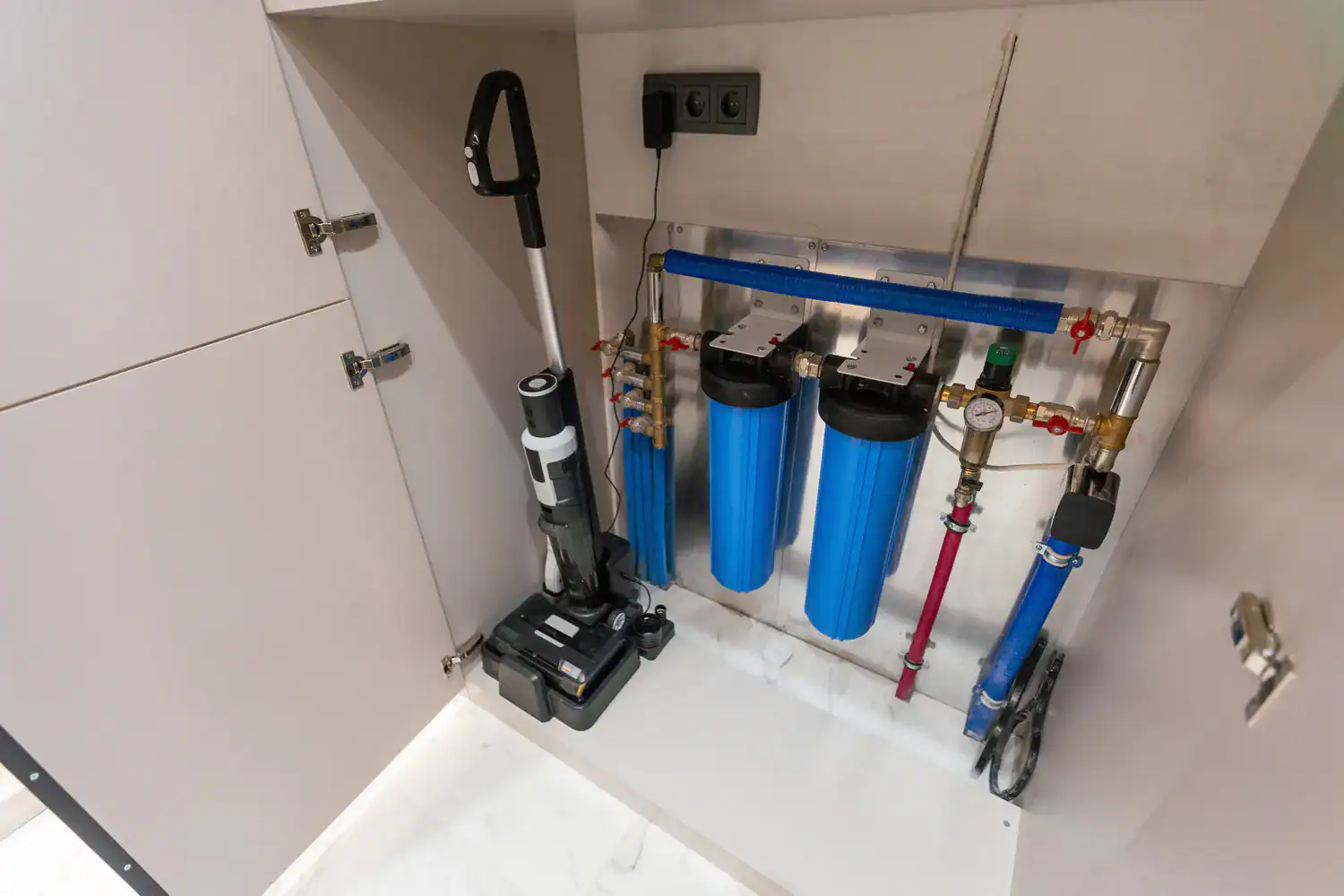
The system itself typically includes a mineral tank where the ion exchange happens, a brine tank that holds salt for regeneration, and a control valve that manages the regeneration cycles. Modern systems regenerate based on actual water usage rather than a timer, so you’re not wasting salt or water on unnecessary cycles.
Choosing the Right Water Softener System for Your Home
Not every water softener system is built the same, and the right choice depends on your household size, water usage, and hardness level. Here’s what actually matters when you’re evaluating options.
Capacity is measured in grains—the number of hardness grains the system can remove before it needs to regenerate. A family of four in Marion County with 180 ppm water hardness typically needs a system rated around 40,000 to 48,000 grains. If you have higher water usage or more people in the home, you’ll want a larger capacity or a dual-tank system that ensures continuous soft water.
Single-tank systems are the most common and cost-effective. They work well for most households, but they do go offline during regeneration, which usually happens overnight. If someone showers or runs the dishwasher during that regeneration cycle, they’ll get hard water temporarily.
Dual-tank systems eliminate that issue. One tank operates while the other regenerates, so you have soft water 24/7. This setup costs more upfront but makes sense for larger families, homes with high water use, or anyone who wants uninterrupted soft water at all times.
Salt-based systems are the industry standard because they actually remove hardness minerals from the water. Salt-free systems—often called conditioners—don’t remove minerals; they change the structure so the minerals don’t stick to surfaces as easily. That can reduce visible scale, but it doesn’t give you the same benefits as true soft water. Your soap still won’t lather as well, and your skin and hair won’t feel the difference.
Installation quality matters as much as the equipment. A hard water softener system that’s improperly sized, incorrectly plumbed, or set to the wrong hardness level won’t perform the way it should. Professional installation ensures the system is calibrated for Marion County’s specific water conditions and integrated correctly with your plumbing.
USA-made systems tend to offer better component quality, easier access to replacement parts, and more reliable long-term performance. When you’re investing in a system that should last 10 to 15 years or longer, build quality and manufacturer support make a difference.
What Soft Water Actually Feels Like in Your Home
The difference between hard water and soft water isn’t subtle. You notice it the first time you wash your hands. Soap lathers immediately. Your skin feels clean when you rinse, not coated. Shampoo works the way it’s supposed to, and your hair dries softer.
In the kitchen, dishes come out of the dishwasher without spots. Glassware looks clear instead of cloudy. Pots and pans rinse clean without leaving a white film. Your coffee maker and ice maker don’t develop scale buildup that affects taste and performance.
Laundry is one of the most obvious changes. Clothes come out brighter because detergent actually dissolves and rinses away instead of forming a residue. Towels feel soft instead of stiff and scratchy. Colors stay vibrant longer because minerals aren’t embedding in the fabric fibers.
Your bathroom stays cleaner with less effort. Shower doors don’t develop that stubborn cloudy coating. Faucets and fixtures don’t accumulate white crusty deposits. Soap scum doesn’t cling to tubs and tile the way it does with hard water.
Appliances run more efficiently. Water heaters maintain their heating capacity instead of losing efficiency to scale buildup. Research shows water heaters operating with softened water maintain up to 29% better efficiency than those running on hard water. Even a thin layer of scale forces your heater to work harder, consuming more energy to deliver the same hot water.
The financial impact adds up quickly. Homeowners with soft water use about 50% less laundry detergent and 29% less soap, saving over $400 annually just on cleaning products. Energy savings from more efficient appliances add to that total. And because appliances last longer when they’re not fighting mineral buildup, you avoid premature replacements that can cost thousands.
Soft water also protects your plumbing infrastructure. Pipes don’t narrow from scale accumulation, so water pressure stays consistent. Fixtures don’t corrode as quickly. Water flow remains strong throughout the house. These aren’t dramatic changes you see overnight, but over years, the difference in plumbing longevity is significant.
For Marion County homeowners dealing with 180 ppm water hardness, soft water isn’t a luxury—it’s a practical solution to a real problem that’s costing you money and creating daily frustration.

Protecting Your Marion County Home from Hard Water Damage
Hard water isn’t going to fix itself. Every day it flows through your plumbing, it’s causing damage you can’t see and problems you’re already dealing with. The white buildup on your faucets is the visible part. The real cost is happening inside your pipes, your water heater, and your appliances.
A professionally installed water softener system stops that damage and protects the investment you’ve made in your home. You’ll see lower energy bills, longer appliance life, easier cleaning, and water that actually feels good on your skin and hair.
We’ve been helping Marion County homeowners solve hard water problems with the right systems, proper installation, and ongoing support. If you’re ready to stop fighting hard water and start protecting your home, reach out to us for a consultation.