Summary:
You want clean drinking water. That much is obvious. What’s less obvious is which filtration system actually removes the contaminants in your water, not just the ones in someone else’s sales pitch. Marion County homeowners face specific water quality challenges—hard water from the Floridan Aquifer, chlorine from municipal treatment, and emerging concerns like PFAS that standard filters don’t touch. This comparison breaks down reverse osmosis systems, carbon filtration, and tankless options so you can match the technology to your actual water test results. Let’s start with understanding what you’re really filtering.
Understanding Water Filtration System Types
Water filtration isn’t one-size-fits-all, and that’s where most homeowners get stuck. The “best” system depends entirely on what’s coming out of your tap. A carbon filter that handles chlorine beautifully won’t touch dissolved minerals causing hard water scale. A basic pitcher filter might improve taste but leaves lead and PFAS untouched.
The three main technologies you’ll encounter are carbon filtration, reverse osmosis, and UV purification. Carbon filters use activated carbon to trap chlorine, VOCs, and some heavy metals as water flows through. Reverse osmosis pushes water through a semipermeable membrane that blocks contaminants down to 0.0001 microns—including dissolved solids, heavy metals, and forever chemicals. UV systems use ultraviolet light to kill bacteria and viruses but don’t remove any physical contaminants.
Most effective home systems combine multiple technologies in stages. That’s why you’ll see “5-stage” or “7-stage” systems—each stage targets different contaminant categories.
Best Reverse Osmosis System Consumer Reports
Consumer Reports has tested dozens of reverse osmosis systems, and their findings consistently show that RO technology removes the widest range of contaminants compared to any other home filtration method. The testing focuses on flow rate, clogging resistance, contaminant reduction, and filter lifespan—the factors that actually impact daily use.
What makes reverse osmosis stand out is the membrane itself. Traditional RO systems force water through a semi-permeable membrane under pressure, trapping contaminants as small as individual atoms while allowing water molecules to pass through. This process effectively removes lead, arsenic, fluoride, nitrates, PFAS, and dissolved minerals that cause hard water.
The systems that score highest in independent testing share several characteristics. They maintain consistent flow rates even as filters age. They include pre-filtration stages to protect the RO membrane from sediment and chlorine damage. They’re certified to NSF/ANSI standards 42, 53, and 58—which verify specific contaminant reduction claims rather than just general performance.
One important consideration Consumer Reports highlights is water waste. Traditional RO systems can waste 3 to 5 gallons for every gallon of purified water produced. That’s where newer technology comes in. Modern systems have improved this ratio dramatically, with some achieving 2:1 or even 1:1 pure-to-waste ratios through better membrane design and booster pumps.
The testing also reveals that price doesn’t always correlate with performance. Some mid-range systems outperform premium models on contaminant removal while maintaining better flow rates. What matters more than the price tag is proper system sizing for your household water usage and whether the system is certified to remove your specific contaminants of concern.
For Marion County homeowners dealing with hard water and chlorine from municipal treatment, RO systems address both issues simultaneously. The membrane removes the calcium and magnesium causing scale buildup, while carbon pre-filters eliminate chlorine taste and odor. That’s a combination carbon-only filters can’t match.
Best Tankless Reverse Osmosis System
Tankless reverse osmosis systems represent the newest evolution in home water purification, and they’re solving problems that traditional tank-based systems created. The old approach stored filtered water in a 3-4 gallon pressure tank under your sink. That tank took up valuable cabinet space, could develop bacterial growth between uses, and limited how much purified water you could access at once.
Tankless systems filter water on demand as you turn on the faucet. There’s no storage tank, no waiting for the tank to refill, and no concerns about water sitting stagnant. The trade-off is that tankless systems need higher-capacity membranes and booster pumps to deliver adequate flow rates without pre-filtered water in reserve.
The best tankless RO systems now offer 400 to 800 gallons per day (GPD) filtration capacity—far exceeding what most households need but ensuring you never run out during high-demand situations like filling large pots or pitchers. They maintain flow rates of 0.5 to 1.0 gallons per minute, which feels comparable to regular tap water for most uses.
Space savings is the most obvious benefit. Tankless systems are typically one-third the size of traditional RO setups, leaving room under your sink for other storage. Installation is often simpler too, with fewer connections and no tank to position and secure.
Water quality can actually improve with tankless designs. Because there’s no storage tank, you’re drinking freshly filtered water every time rather than water that’s been sitting in a tank for hours or days. This matters for taste and eliminates any possibility of bacterial growth in stored water.
The efficiency gains are substantial. Modern tankless systems achieve 1:1 or 2:1 pure-to-waste ratios compared to the 3:1 or 4:1 ratios common in older tank systems. Over a year, that difference adds up to thousands of gallons of water savings—meaningful both for your utility bill and for responsible water use in Florida.
One consideration is upfront cost. Tankless systems typically cost more initially than traditional RO units because they require more advanced filtration technology and booster pumps. However, the long-term value often justifies the investment through lower maintenance, better efficiency, and longer-lasting components.
For Florida homeowners, tankless systems handle the high mineral content in local water without the tank-related issues that hard water can create. The continuous flow design means you’re not limited by tank capacity when you need purified water for cooking, coffee, or filling containers.
Choosing the Right Filtration System for Your Water
The best drinking water filtration system for your home isn’t necessarily the highest-rated one online—it’s the one that removes your specific contaminants. That requires knowing what’s actually in your water before you spend a dollar on equipment.
Marion County residents on municipal water can request their Consumer Confidence Report, which lists detected contaminants and their levels. Well water owners need professional testing because they’re responsible for their own water quality monitoring. Either way, you’re making decisions based on data rather than assumptions.
Once you know what you’re dealing with, match the filtration technology to the problem. Chlorine taste and odor? Carbon filtration handles that efficiently. Lead, PFAS, or dissolved minerals? You need reverse osmosis. Bacteria or viruses in well water? UV purification becomes essential. Many homes benefit from combining technologies—whole-house carbon filtration to protect plumbing plus under-sink RO for drinking water.
What Certifications Actually Matter
NSF/ANSI certifications aren’t marketing fluff—they’re third-party verification that a system actually removes what it claims to remove. But not all certifications test for the same things, which is where confusion creeps in.
NSF 42 certifies that a filter improves taste and odor by removing chlorine. That’s the baseline for most carbon filters. NSF 53 goes further, verifying removal of health-related contaminants including lead, cysts, and VOCs. NSF 58 specifically tests reverse osmosis systems for TDS (total dissolved solids) reduction and removal of specific contaminants like arsenic, fluoride, and hexavalent chromium.
The newer NSF 401 standard addresses emerging contaminants that older standards didn’t cover—pharmaceuticals, PFAS, and other chemicals increasingly detected in water supplies. If forever chemicals concern you, look for NSF 401 certification specifically, not just general approval claims.
Here’s what matters: a system can be “NSF certified” for taste and odor improvement while doing nothing for lead or PFAS. Always check which specific standards the certification covers. The best systems carry multiple certifications covering different contaminant categories.
Independent testing from Consumer Reports or similar organizations adds another layer of verification. These tests often reveal performance differences between systems with identical certifications, showing which ones maintain their effectiveness as filters age and which ones experience significant flow rate drops.
For Marion County homeowners, certifications for lead removal (NSF 53), PFAS reduction (NSF 401), and TDS reduction (NSF 58) address the most common local water quality concerns. A system certified for all three gives you comprehensive protection rather than partial solutions.
Professional Installation vs DIY Systems
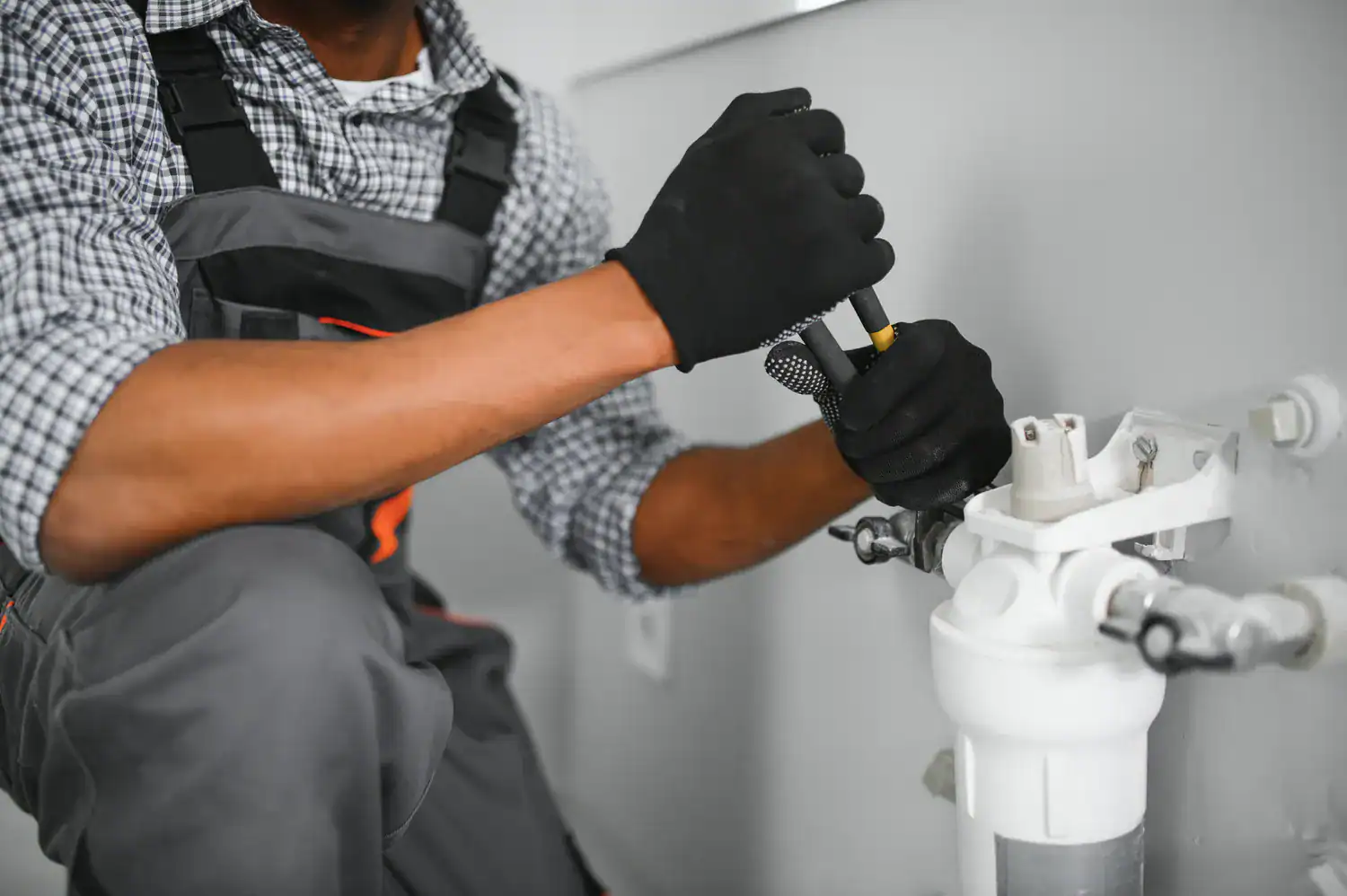
Some filtration systems are genuinely DIY-friendly. Countertop units and basic under-sink carbon filters usually involve simple connections that most homeowners can handle with basic tools. Reverse osmosis systems and whole-house filtration fall into a different category—technically possible to install yourself but with enough complexity that professional installation often makes sense.
The challenge isn’t just making connections. It’s knowing whether your water pressure is adequate for RO operation, whether you need a booster pump, how to properly size the system for your household usage, and where to position everything for optimal performance and future maintenance access. Get any of these wrong and you’ve compromised the system’s effectiveness before you’ve used it.
Professional installation also matters for warranty coverage. Many manufacturers require professional installation to honor their warranty, and that’s not arbitrary. Properly installed systems last longer and perform better because the installer has accounted for your specific plumbing configuration, water pressure, and usage patterns.
The cost difference between DIY and professional installation is typically $200 to $500 for under-sink systems. For whole-house filtration, professional installation becomes even more valuable because you’re integrating the system into your main water line—work that requires plumbing knowledge and often local code compliance.
What you’re really paying for is expertise. A qualified installer knows Marion County’s water characteristics, understands which pre-filtration stages matter for local water chemistry, and can troubleshoot issues that would leave a DIY installer stuck. They also handle the initial system setup, flushing, and testing to ensure everything operates correctly from day one.
The exception is if you’re replacing filters on an existing system. That’s maintenance work that most homeowners can handle once the system is properly installed. But for initial installation of RO systems or whole-house filtration, professional installation protects your investment and ensures the system actually delivers the water quality improvement you’re paying for.

Making Your Water Filtration Decision
The best drinking water filtration system removes your specific contaminants, fits your space and budget, and comes from a company that services what they sell. Consumer Reports data shows reverse osmosis systems remove the widest range of contaminants, while tankless designs offer space savings and continuous purified water without storage concerns.
What matters most is starting with water testing rather than product shopping. Know what you’re filtering before you choose how to filter it. Look for NSF certifications that match your contaminant concerns, not just general approval claims. And consider the total cost of ownership—initial price, filter replacements, water waste, and whether you’ll have service support when you need it.
For Marion County homeowners dealing with hard water, chlorine, and emerging contaminants like PFAS, a multi-stage approach often makes sense. Whole-house filtration protects your plumbing and appliances while under-sink reverse osmosis ensures your drinking and cooking water meets the highest standards. We specialize in matching the right system to your specific water quality challenges, backed by our WQA certification and A-rated BBB standing with zero complaints.