Reach Out Today
Please provide your email address so that we can stay in touch and answer any questions you have! We will be reaching back out shortly.

Hear from Our Customers
When your water is running at 15–25 grains per gallon hardness which is what Orange County Utilities’ Western Service Area delivers to most Windermere homes the damage is gradual but real. Scale builds inside water heaters and dishwashers. Heating elements work harder. Seals wear faster.
If your kitchen is outfitted with Wolf, Miele, or Sub-Zero appliances, those systems were engineered for soft water. Running them on Windermere’s aquifer water is shortening their lifespan in ways you won’t notice until something fails.
A reverse osmosis system at the point of use removes 95–99% of dissolved contaminants from your drinking and cooking water including the ones that show up in Orange County’s own water quality data. Total trihalomethanes, haloacetic acids, arsenic, fluoride, and radium are documented in the Western Service Area’s supply. They’re within legal limits, but legal and clean aren’t the same thing, and the gap between those two words is exactly what an RO system closes.
For homes in Isleworth, Keene’s Pointe, or along the Butler Chain that draw from private wells, there’s no utility monitoring your water at all. What comes out of the ground is entirely your responsibility. Testing it is the first step. Treating it is the second. Both are things we handle.
Quality Safe Water of Florida is a water treatment company not a plumbing company that installs filters on the side. Water purification, softening, and filtration is all we do. That focus matters when you’re making a decision about a system that’s going to be running in your home for the next 15–20 years.
We hold an A-rating with the Better Business Bureau, a 5-star rating, and zero complaints on record something you can verify at bbb.org right now, not just take our word for. We’re also members of the National Water Quality Association, which means our technicians are trained specifically in water chemistry and treatment, not just general installation.
We serve Windermere and the surrounding Orange County communities with the same commitment to follow-through that builds trust in neighborhoods like this. When we install a system, we’re still here when you need service years down the road. That’s not a promise it’s a record.
The first thing we do is test your water. Not a 60-second hardness strip actual lab analysis of what’s in your specific supply. For Windermere homes on Orange County Utilities, that means checking hardness, dissolved solids, chlorine byproducts, and any contaminants relevant to the Western Service Area’s documented water profile. For homes on private wells along the Butler Chain, we’re also looking at iron, sulfur, pH, and anything the aquifer may be contributing that no utility is monitoring on your behalf.
Once we know what’s in your water, we recommend the right system for your home not the most expensive one, the right one. For most Windermere homes, that’s a combination approach: a whole-house water softener to address the 15–25 GPG hardness at every tap, paired with an under-sink reverse osmosis system for drinking and cooking water. For estate properties or homeowners who want comprehensive treatment at every point of use, a whole-house RO setup may be the better fit. We’ll walk you through the difference and let the test results drive the conversation.
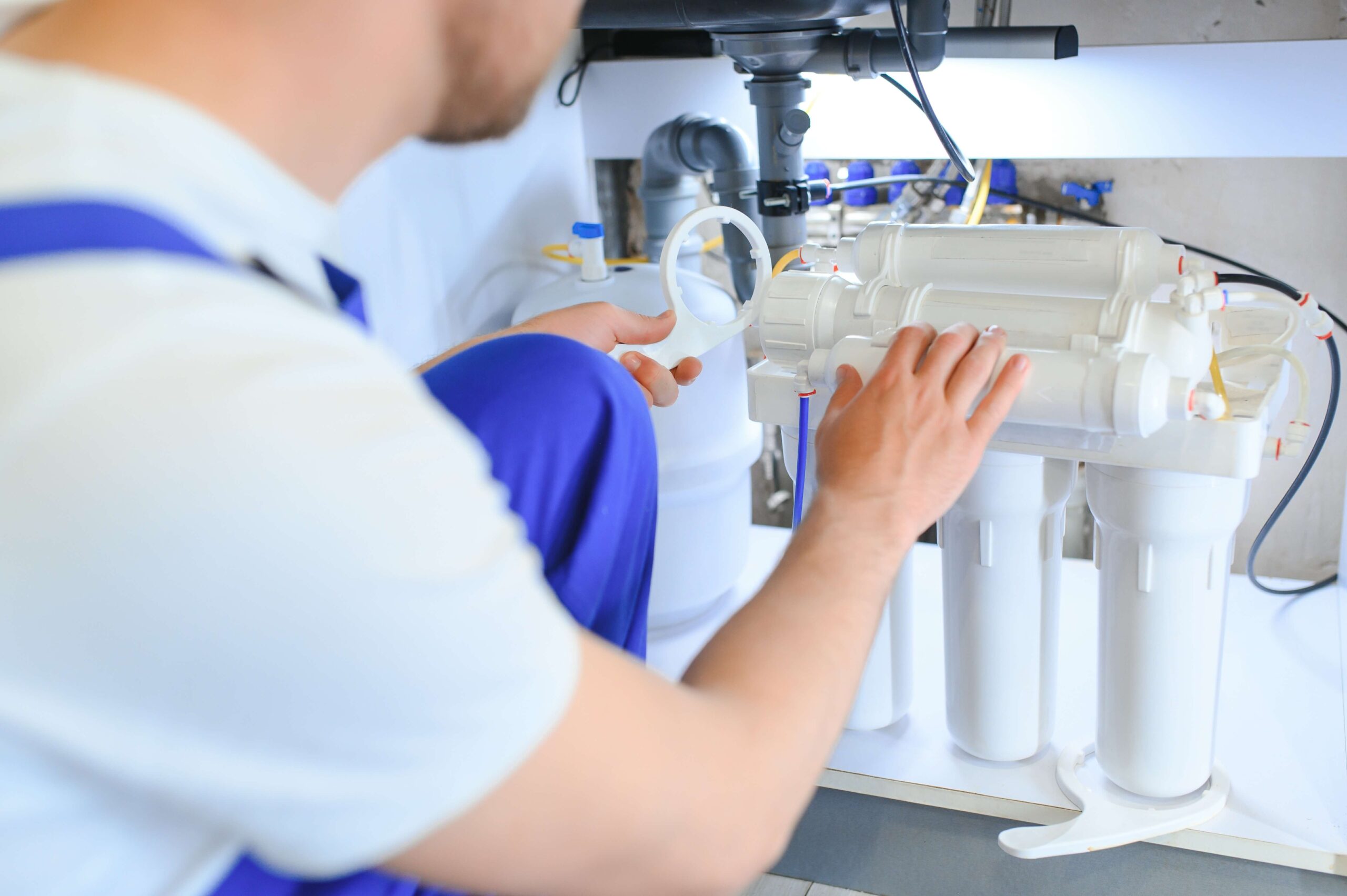
Installation is handled by our trained technicians who work cleanly and carefully especially important in the kind of homes common to Windermere, where finish quality and minimal disruption matter. Under-sink RO systems typically don’t require permits, but whole-house installations in the incorporated town may involve the Windermere Building Department, and we handle that coordination as part of the job.
Ready to get started?
Every installation starts with that water test, so the system we put in is matched to your actual water chemistry not a generic setup pulled off a truck. For most Windermere homeowners, the conversation ends up covering both softening and RO filtration together, because at 15–25 GPG, the hardness problem and the drinking water problem need to be addressed as a pair. The softener protects the RO membrane from premature fouling by mineral buildup, and the RO handles the dissolved contaminants the softener doesn’t touch.
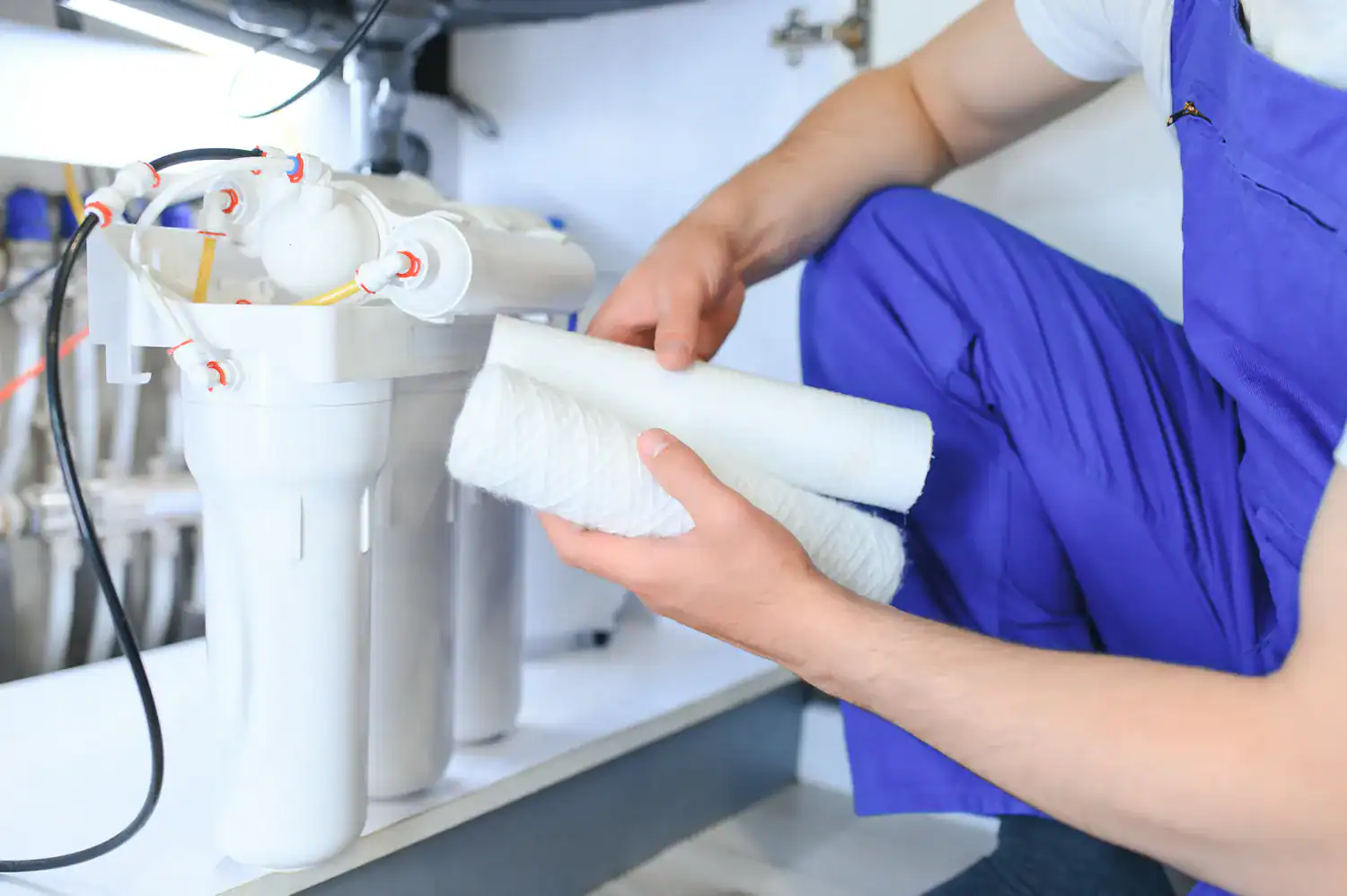
The systems we install use NSF-certified components and are built to last. After installation, filter maintenance is straightforward sediment and carbon pre-filters every 6–12 months, RO membrane replacement every 2–5 years depending on usage and water quality. We don’t disappear after the sale. When your system needs service or a filter swap, you call us and we come out. That’s the part of this industry that breaks down most often with national companies, and it’s the part we take seriously.
Active military, veterans, and first responders receive a $500 discount on system installation. Windermere and the surrounding Orange County communities have a strong presence of people who’ve served, and this is a straightforward way of acknowledging that. No complicated process just let us know when you call.
Windermere’s water supply comes from the Floridan Aquifer through Orange County Utilities’ Western Regional Water System, and it tests at roughly 15–25 grains per gallon which puts it firmly in the “very hard” category. The national average is around 7 GPG, so Windermere is running two to three times that. At that level, scale accumulates inside water heaters, dishwashers, ice makers, and coffee systems over time.
For homes with premium appliances Wolf ranges, Miele dishwashers, Bosch washing machines this matters more than it might in an average home. Those appliances are engineered and rated for soft-to-moderately-hard water. Running them on 15–25 GPG water accelerates wear on heating elements and internal seals well ahead of the manufacturer’s expected lifespan. A water softener addresses the hardness at every tap in your home, and pairing it with an RO system handles the drinking water side separately. The combination is what most Windermere homes actually need.
Orange County Utilities meets federal EPA legal standards that part is true. But meeting the legal threshold and delivering genuinely clean drinking water aren’t the same thing. Independent water quality data for Windermere’s ZIP code (34786) identifies contaminants present above EPA health-based guidelines in at least one utility serving the area, even when those contaminants fall within the legal enforcement limit.
The Western Service Area’s water has been documented to contain total trihalomethanes, haloacetic acids, arsenic, fluoride, radium, and barium. TTHMs and haloacetic acids are disinfection byproducts they’re actually created by the treatment process when chlorine reacts with organic matter in the water. So the process that makes your water legally safe is also producing byproducts that a reverse osmosis system is specifically designed to remove. An RO membrane operating at 0.0001 microns removes 95–99% of dissolved contaminants, including the ones that municipal treatment can’t fully address. If you want to know exactly what’s in your specific supply, a water test is the right starting point before making any decisions.
Yes, and the difference matters. Homes on private wells along the Butler Chain of Lakes including many estate properties in Isleworth and Keene’s Pointe draw directly from the Floridan Aquifer without any municipal treatment in between. That means no chlorination, no utility monitoring, and no annual Consumer Confidence Report telling you what’s in your water. Whatever the aquifer is carrying arrives at your tap unfiltered.
In this area, well water commonly presents with the same high hardness as municipal supply 15–25 GPG plus the potential for elevated iron, hydrogen sulfide odor, and other geological contaminants that vary by well depth and location. The treatment approach for well water typically involves additional pre-filtration stages before the RO membrane, and sometimes an iron filter or sulfur treatment upstream of the softener. The only way to know what your well is actually producing is to test it. We do that analysis before recommending anything, and the system we install is built around what the test actually shows not a one-size-fits-all package.
They solve different problems, and in Windermere, most homes benefit from having both working together. A water softener targets hardness specifically the calcium and magnesium that cause scale buildup, reduce appliance efficiency, and leave that film on glass shower doors and fixtures. It treats all the water coming into your home, which means every tap, every appliance, and every shower gets the benefit.
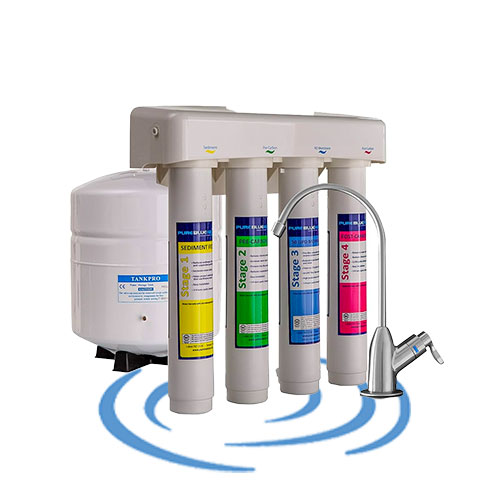
A reverse osmosis system works at the point of use typically under the kitchen sink and removes dissolved contaminants that a softener doesn’t touch. Arsenic, fluoride, nitrates, radium, and TTHMs pass right through a softener but get stopped by an RO membrane. The two systems actually work better together: the softener removes the hardness minerals that would otherwise foul the RO membrane prematurely, which extends the membrane’s lifespan and keeps the system running efficiently. For a Windermere home dealing with 15–25 GPG water and a documented contaminant profile from Orange County Utilities, the combination isn’t overkill it’s the right answer for the actual problem.
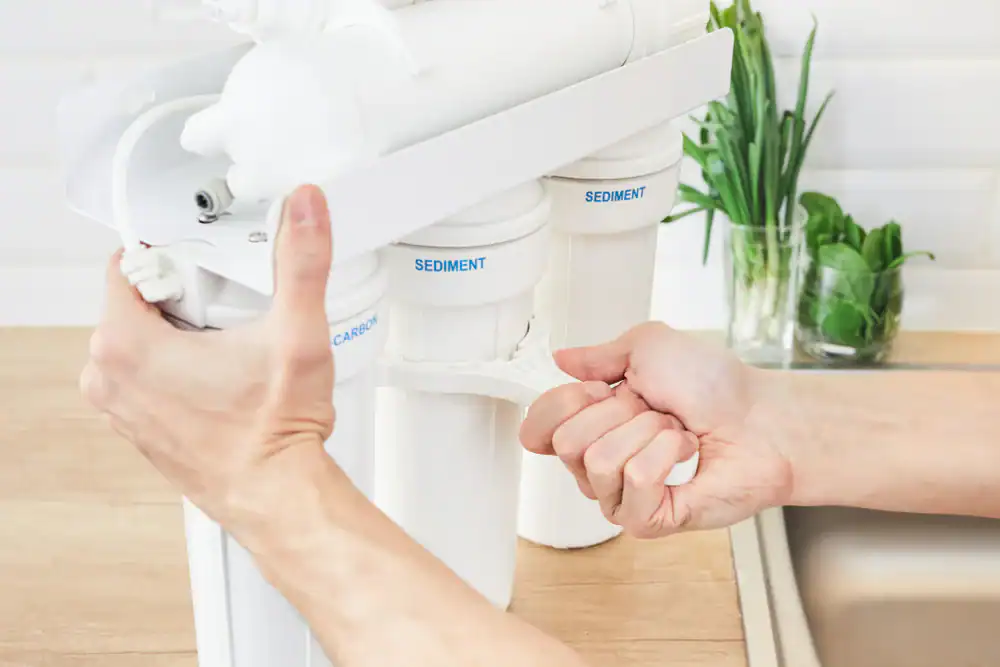
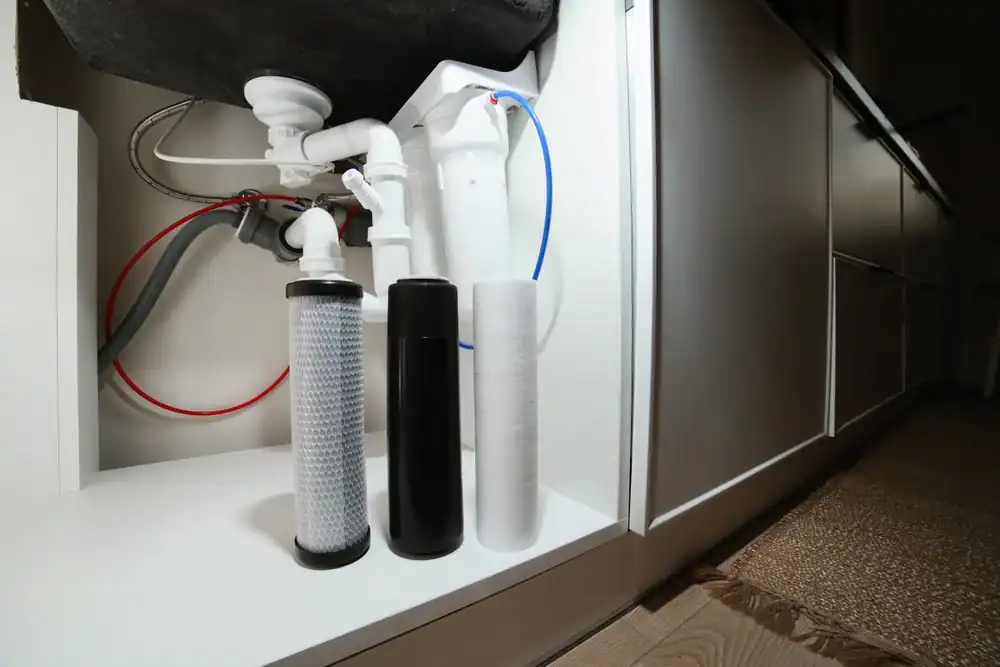
An RO system has a few components that need periodic attention to keep it running at full performance. The sediment pre-filter and carbon pre-filter which protect the RO membrane from particulates and chlorine typically need replacement every 6–12 months depending on your water quality and usage. In a home on Orange County Utilities water with documented chlorine byproducts, staying on top of the carbon filter is especially important because it’s doing real work. The RO membrane itself usually lasts 2–5 years before it needs replacement, and the post-carbon polishing filter runs on a similar schedule.
The maintenance side of this industry is where a lot of companies fall short. A national brand sells you a system and then becomes hard to reach when a filter needs swapping or something needs servicing. We handle ongoing maintenance for the systems we install you call us, we come out. That’s not a complicated promise, but it’s one that a lot of companies in this space don’t keep. When you’re investing in a system for a home in Windermere, knowing we’ll still be accountable in year three or year seven is part of what you’re paying for.
Please provide your email address so that we can stay in touch and answer any questions you have! We will be reaching back out shortly.
"*" indicates required fields