Reach Out Today
Please provide your email address so that we can stay in touch and answer any questions you have! We will be reaching back out shortly.

Hear from Our Customers
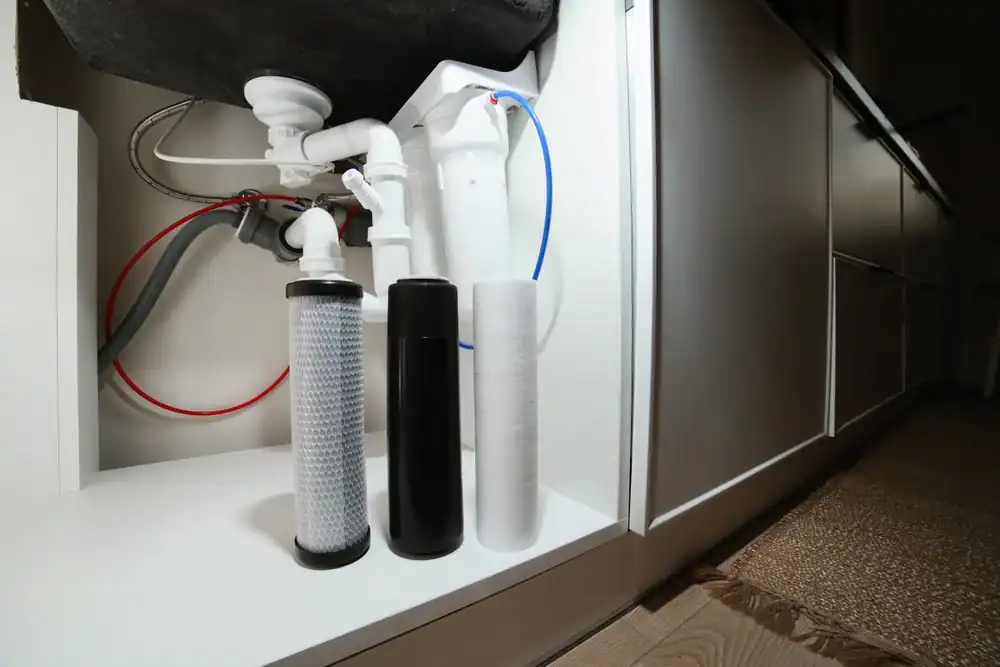
If you’ve been buying bottled water because your tap tastes off, or you’ve noticed white scale building up on your faucets and inside your dishwasher, that’s not a minor inconvenience that’s your water telling you something.
The Floridan Aquifer that feeds much of St. Johns County’s groundwater runs through limestone and dolomite, and that geology naturally pushes calcium and magnesium into your supply. The result is hard, mineral-heavy water that shortens the life of your water heater, clogs appliance spray arms, and leaves deposits on every surface it touches.
A properly installed reverse osmosis system removes what your current filter can’t. That means no more chalky residue on your glassware, no more buying cases of bottled water every week, and no more wondering what’s actually in the water your kids are drinking.
For homes in the Whites Ford and Switzerland corridor where many properties sit on private wells drawing from the surficial aquifer a reverse osmosis system also addresses nitrates, bacteria, and emerging contaminants like PFAS that activated carbon alone won’t touch.
The difference isn’t subtle. Water that tastes clean, appliances that last longer, and one less thing you’re spending money on every month. That’s what this system does for a home in this part of St. Johns County.
We don’t install HVAC systems, fix plumbing leaks, or replace water heaters. Water treatment is the only thing on our menu which means when you call about a reverse osmosis system for your home near Whites Ford, you’re talking to someone who does this every day, not a plumber who installs filters on the side.
We hold a BBB A-rating with a 5-star score and zero complaints on file. That’s a public record you can verify before you make a single phone call. In an industry where the most common complaint is “they sold me a system and I can never get them back out here,” that track record matters.
We’re also a member of the National Water Quality Association, which means ongoing training specific to Florida’s water chemistry including the hard, mineral-loaded water that comes with living in limestone country along the St. Johns River corridor.
We service what we sell. In a semi-rural, unincorporated area like Whites Ford where a national franchise’s nearest service tech might be an hour out and weeks away that’s not a small thing.
It starts with a real water test not a quick hardness strip designed to justify selling you the most expensive system on the truck, but a lab-grade analysis that identifies what’s actually in your water. Hardness, pH, iron, nitrates, total dissolved solids, and more.
If you’re on a private well in the Orangedale or Switzerland area, that test matters even more, because well water chemistry varies property to property and the only way to know what you’re dealing with is to actually measure it.
Once the test results are in, our system recommendation follows from the data. Under-sink reverse osmosis for drinking and cooking water, or a whole-house configuration if your situation calls for it the recommendation is based on your water, your home, and what you’re trying to solve.
For properties in unincorporated St. Johns County, installations are subject to county permitting requirements rather than a municipal code, and we handle that process as part of the job.
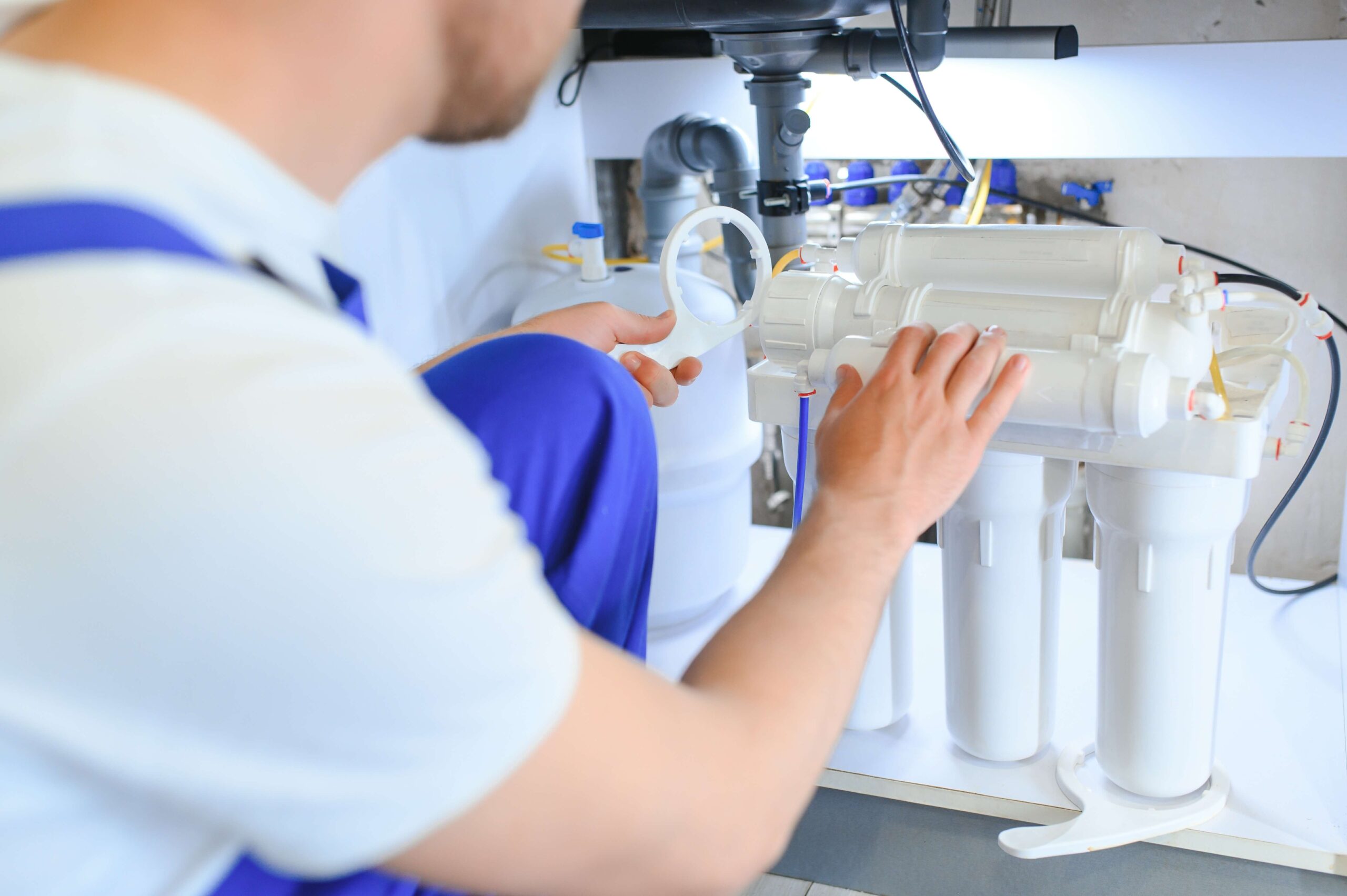
Installation is clean, professional, and explained to you as it happens. After the system is in, you’re shown exactly how it works, what to expect from maintenance, and when filters and membranes will need replacing. That follow-through is part of the service, not an upsell.
Ready to get started?
St. Johns County Utility Department uses chloramines as its primary disinfectant not free chlorine. That’s a critical detail most homeowners don’t know, because standard activated carbon filters (including most pitcher filters and refrigerator filters) are designed for free chlorine, not chloramines.
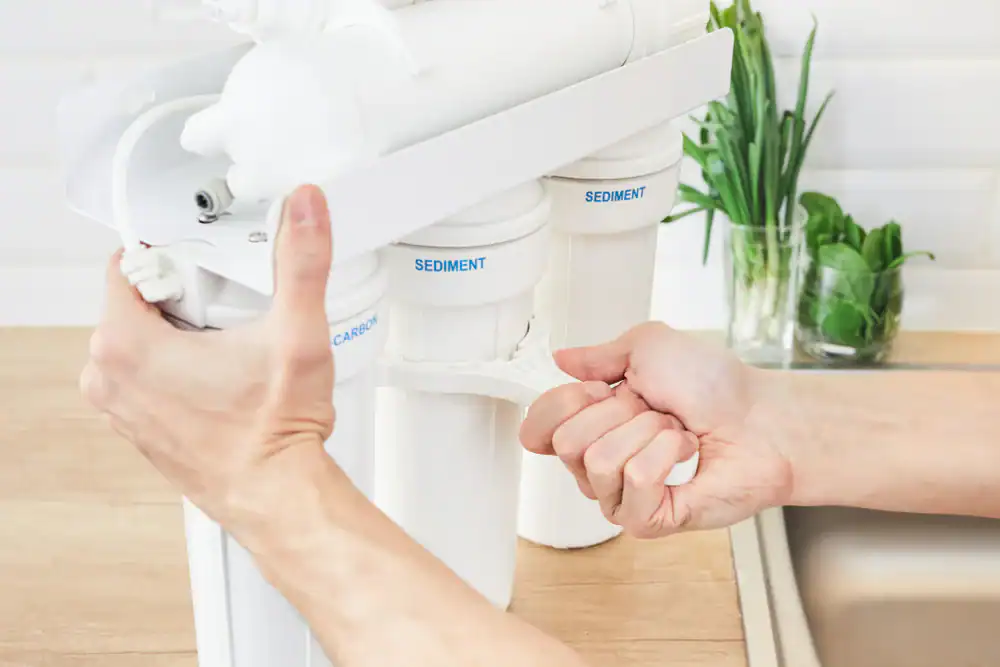
Chloramines don’t dissipate when you leave water sitting out, and they require catalytic carbon to remove effectively. The multi-stage reverse osmosis systems we install are configured for the water you actually have here, with the right pre-filtration for chloramine removal built into the process.
For homes in the Whites Ford area on private wells which is common on the larger-lot properties along the SR 13 corridor the system addresses a broader range of concerns: nitrates from nearby septic systems and fertilizer runoff, potential bacterial contamination, dissolved minerals from the surficial aquifer, and PFAS compounds that most water treatment facilities remove less than 10% of.
The St. Johns Riverkeeper has documented impaired water quality throughout the Lower St. Johns Basin, and that context matters for anyone drawing from a private well in this area.
Our systems carry NSF/ANSI 58 certification, which establishes verified standards for contaminant reduction including lead, arsenic, nitrate, and volatile organic compounds. Components are manufactured in the USA. Whether you need an under-sink RO for drinking water or a whole-house configuration, the system is sized and specified for your actual water test results not a generic package.
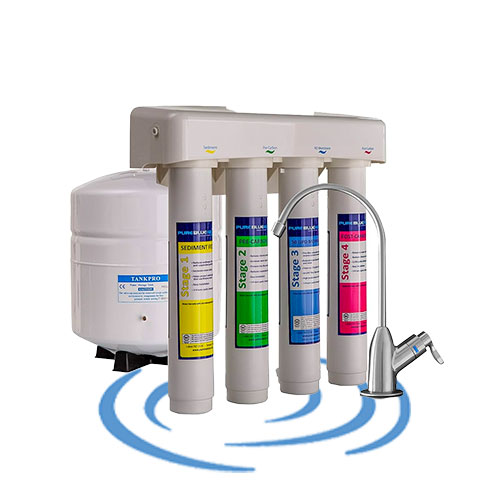
For most homes in the Whites Ford area, the honest answer is yes and the reason comes down to the geology. St. Johns County sits on top of a limestone-dominant aquifer system, and that geology naturally loads groundwater with calcium, magnesium, and dissolved minerals.
The U.S. Geological Survey has documented that water from the Floridan Aquifer in much of St. Johns County doesn’t meet secondary EPA drinking water standards. Even water from the surficial aquifer the primary drinking water source for most of the county carries the mineral signature of that same limestone terrain.
If you’re on municipal supply from St. Johns County Utility Department, you’re also dealing with chloramine disinfection, which standard carbon filters don’t handle well. If you’re on a private well, which is common on the larger properties in the Whites Ford and Switzerland area, you have additional exposure to nitrates, bacteria, and agricultural runoff.
A reverse osmosis system addresses all of it at the molecular level it’s not filtering your water, it’s actually purifying it.
They solve different problems, and in Whites Ford, many homeowners end up needing both. A water softener targets hardness it uses an ion exchange process to swap calcium and magnesium ions for sodium ions, which eliminates scale buildup on fixtures, protects appliances, and makes soap lather properly.
If you’ve got white deposits on your faucets or your water heater is scaling up faster than it should, that’s a hardness problem and a softener addresses it at the whole-house level.
A reverse osmosis system goes further, but at the point of use typically under your kitchen sink. It forces water through a membrane with pores of 0.0001 microns, removing not just hardness minerals but also nitrates, chloramines, dissolved solids, heavy metals, PFAS, and other contaminants that a softener doesn’t touch.
For drinking and cooking water in a home on a Whites Ford private well, a reverse osmosis system is the more comprehensive solution. A lot of homeowners in this area run a softener for whole-house protection and an RO system for the water they actually drink.
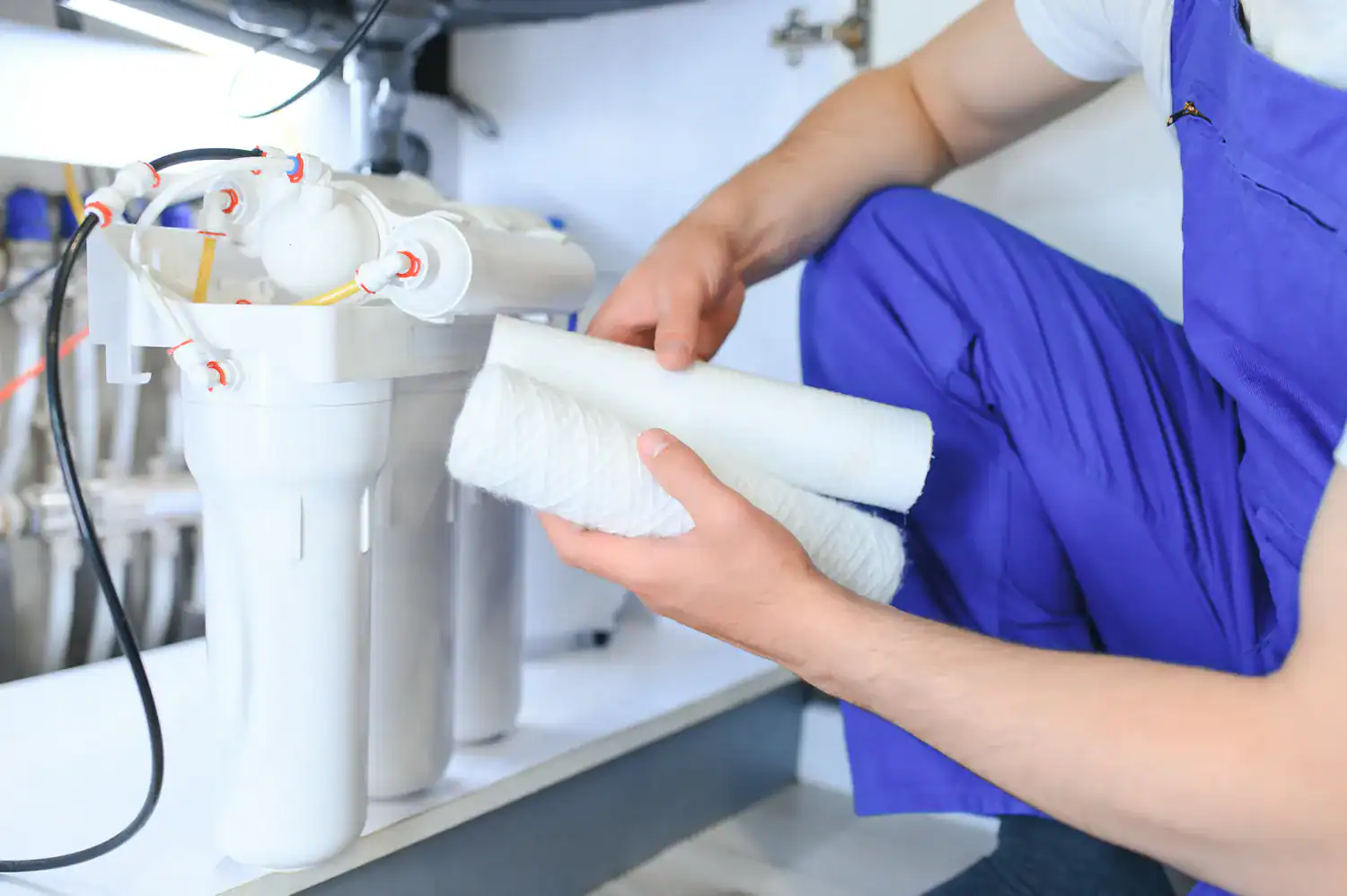
Pre-filters typically sediment and carbon stages usually need replacement every six to twelve months depending on your water quality. In the Whites Ford area, homes on private wells with higher sediment or mineral loads may be on the shorter end of that range.
The RO membrane itself, which does the heavy lifting of contaminant removal, typically lasts two to three years under normal residential use. A post-filter, which polishes the water before it reaches your tap, usually runs about twelve months.
The maintenance schedule isn’t complicated, but it does matter. A membrane that’s past its service life doesn’t fail dramatically it just gradually stops rejecting contaminants as effectively, which means your water quality degrades without you necessarily noticing.
We track your system’s installation date and filter schedule, so when it’s time for a replacement, you’re not left trying to figure it out on your own. We service what we sell, which is why the maintenance side of this is built into the relationship from day one.
Yes reverse osmosis is one of the most effective technologies available for PFAS removal, and it’s a legitimate concern for well owners in this part of Florida. University of Florida Health research confirms that PFAS compounds are present in Florida’s springs and waterways, and most wastewater treatment facilities remove less than 10% of them.
The St. Johns River watershed which runs directly through the Whites Ford area has documented water quality impairments throughout the Lower Basin, including contamination from failing septic systems, agricultural runoff, and poorly treated wastewater.
For private well owners in the Whites Ford, Orangedale, and Switzerland corridor, that’s not an abstract concern. PFAS are called “forever chemicals” because they don’t break down in the environment or in your body.
An NSF/ANSI 58-certified reverse osmosis system, properly maintained, provides a verified level of PFAS reduction that no pitcher filter or refrigerator filter can come close to matching. If you’re on a private well and haven’t had your water tested recently, that’s the right place to start and it’s exactly how we begin every client conversation.
For most residential applications in the Whites Ford area, an under-sink reverse osmosis system handles what matters most your drinking and cooking water. That’s where the health impact is highest, and an under-sink system delivers purified water at the tap where you use it most without the significant cost and flow-rate considerations of a whole-house configuration.
A whole-house RO system makes more sense in specific situations: well water with severe contamination across multiple parameters, a household with immune-compromised members who need purified water for bathing and laundry as well as drinking, or a property where the water quality issues are broad enough that point-of-use treatment alone isn’t sufficient.
The right answer depends on what your water test shows. If the test reveals that your primary concerns are taste, chloramines, nitrates, and dissolved solids at the drinking water level, an under-sink system is likely the most cost-effective and practical solution. If the scope is wider, the recommendation changes accordingly and that’s exactly why the water test comes before any system recommendation.
Please provide your email address so that we can stay in touch and answer any questions you have! We will be reaching back out shortly.
"*" indicates required fields