Reach Out Today
Please provide your email address so that we can stay in touch and answer any questions you have! We will be reaching back out shortly.

Hear from Our Customers
Most Washington Shores residents on OUC water assume their tap water is fine because it meets the legal standard. But meeting the EPA’s minimum and actually being clean are two different things.
Independent analysis of Orlando’s water supply has found arsenic detected at up to 4.55 ppb, active PFAS monitoring underway across Orange County, and disinfection byproducts from chlorination that accumulate over years of daily use. A reverse osmosis system filters down to 0.0001 microns removing what the treatment plant doesn’t, right at the point where your family drinks the water.
If your Washington Shores home was built before the 1980s which describes a significant portion of the neighborhood’s mid-century housing stock lead is a separate concern entirely. It doesn’t come from the aquifer or OUC’s treatment process. It leaches from aging internal pipes after the water leaves the plant. No municipal upgrade fixes that. A reverse osmosis system does.
And then there’s the practical side. If your family is spending $50 to $100 a month on bottled water because you don’t trust what comes out of the tap, that habit costs you $600 to $1,200 every year. A properly installed residential reverse osmosis system produces water that outperforms most bottled brands at a fraction of the cost per gallon and it’s there every time you turn on the faucet.
We don’t do plumbing, HVAC, or water heaters. Water treatment is our entire business. That focus means every technician who shows up at your Washington Shores home has spent their career diagnosing water problems not splitting time between drain calls and filter installs.
We know OUC’s water chemistry, we understand the aging pipe risk that comes with Washington Shores’ older housing stock, and we know how to size a system correctly for your home.
We hold a BBB A-rating with a 5-star rating and zero complaints on file a record you can verify at bbb.org before you ever pick up the phone. We’re also members of the National Water Quality Association, which is the professional standard that separates trained specialists from anyone with a truck and a catalog. And we support the Tunnels to Towers Foundation, which says something about who we are beyond the work itself.
It starts with a real water analysis not a quick hardness check designed to justify the most expensive system on the truck. We test your Washington Shores home’s water first, look at what’s actually present, and then recommend a system based on those results.
OUC water chemistry can vary across distribution zones, and older homes in Washington Shores may show lead or pipe-related concerns that only surface in a proper test. The recommendation follows the data.
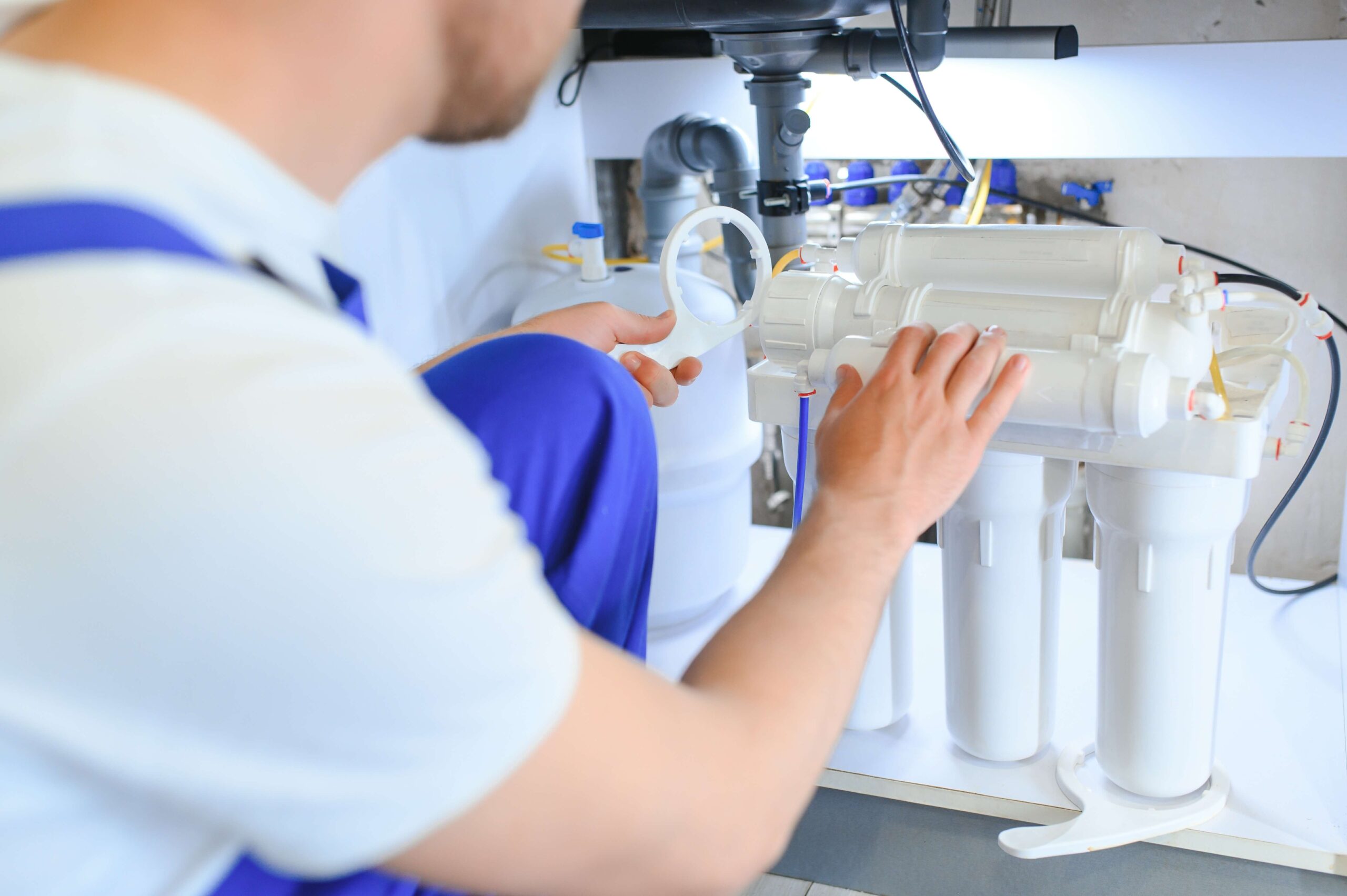
Once the right system is identified, installation is handled by our trained technicians who work exclusively in water treatment. For most under-sink reverse osmosis systems, the process is clean and straightforward typically completed in a single visit with minimal disruption to your kitchen. Whole-house systems that connect to the main water line may require a permit through the City of Orlando or Orange County, and we handle that compliance as part of the process so you don’t have to navigate it yourself.
After installation, you’re not left on your own. Filters need to be replaced on a schedule, membranes have a service life, and the system performs best when it’s maintained correctly. We service what we sell which sounds like a basic expectation, but in this industry, it’s genuinely not the norm.
Ready to get started?
Washington Shores sits on OUC water drawn from the Lower Floridan Aquifer a deep limestone source that comes in at an average hardness of 129 ppm, or about 7 grains per gallon. That’s enough to leave scale on your fixtures, shorten the life of your water heater, and put wear on your appliances over time.
A properly specified reverse osmosis drinking water system addresses the contaminant concerns at the tap, while a whole-house water treatment setup handles the hardness and scale protection throughout your plumbing.
For homeowners in the older sections of Washington Shores particularly those near Lake Mann Estates and the surrounding mid-century streets the combination of aging internal plumbing and OUC’s chlorinated supply creates a specific set of concerns that a single filter type won’t fully solve. We evaluate your home’s complete picture before recommending any system, which is why the water test comes first.
It’s also worth knowing that as of July 1, 2025, OUC stopped adding fluoride to Orlando’s drinking water under Florida Senate Bill 700. That regulatory change doesn’t make the water less safe, but it does mean the composition of what comes out of your tap has shifted and it’s a reasonable moment to take a fresh look at what your household is actually drinking.
Washington Shores is served by OUC, which draws from the Lower Floridan Aquifer and treats with ozone and chlorination. Independent analysis of Orlando’s water supply has identified arsenic detected at up to 4.55 ppb in Orange County water systems, disinfection byproducts from the chlorination process, and active testing underway for 29 PFAS compounds under the EPA’s UCMR 5 program.
These contaminants are all within or near legal limits but legal and clean aren’t the same thing. Four of the nine detected contaminants in Orlando’s supply exceed independent health advocacy guidelines set by researchers and medical organizations, even while staying below the EPA’s enforceable maximum.
For Washington Shores homeowners specifically, there’s an additional concern that doesn’t show up in OUC’s annual water quality report: lead from aging internal plumbing. Lead doesn’t come from the source water it leaches from older pipes inside homes built before the 1980s. Washington Shores has a significant portion of mid-century housing stock, which means this is a real and practical risk for many households. A reverse osmosis system addresses both the municipal supply contaminants and the lead risk at the point of use.
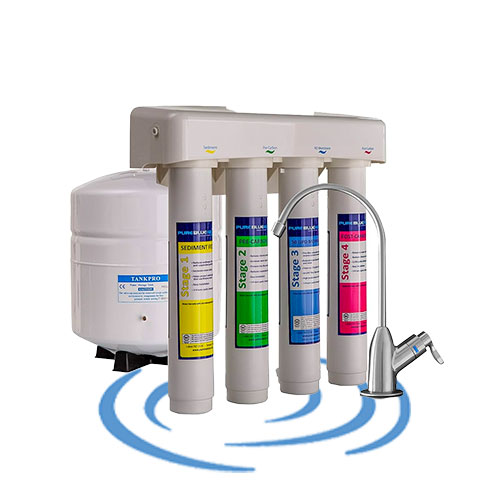
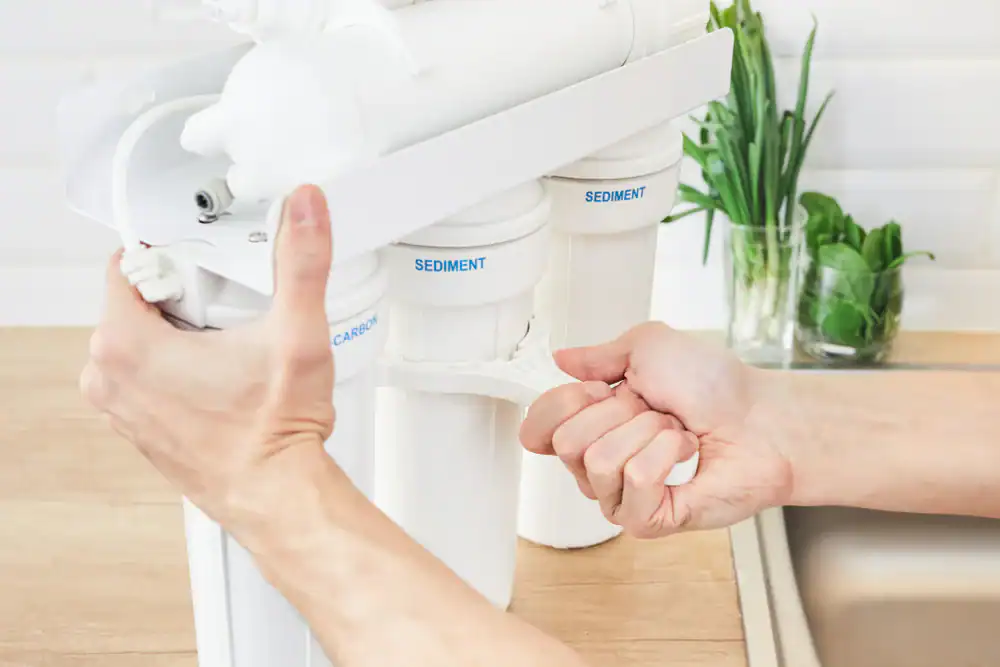
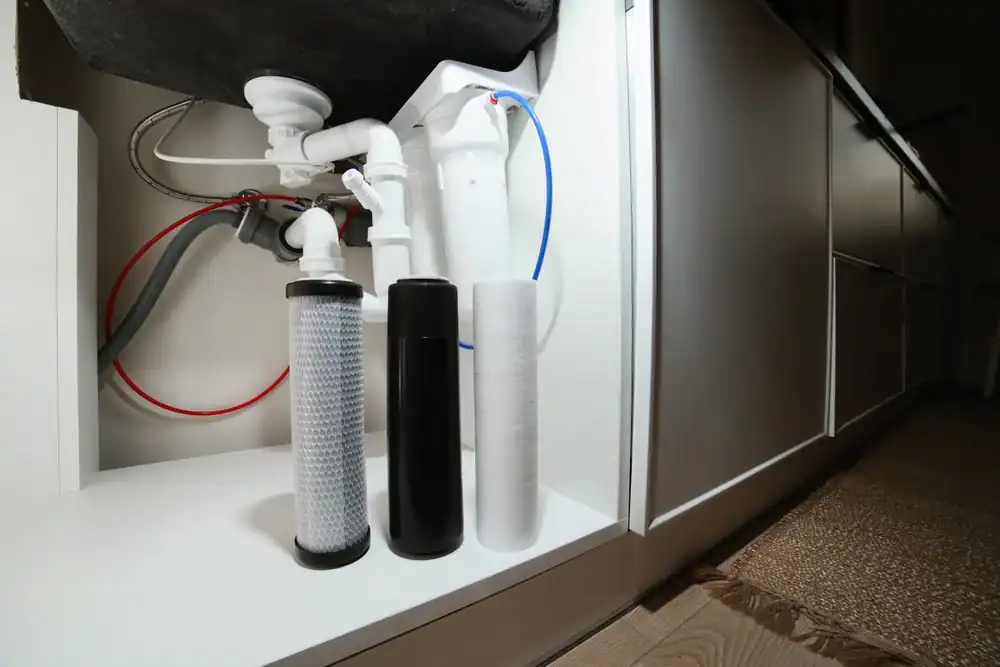
A reverse osmosis system works by pushing water through a semi-permeable membrane at a pore size of 0.0001 microns small enough to reject dissolved metals, synthetic chemicals, chlorination byproducts, arsenic, nitrates, and a wide range of other contaminants. Most residential RO systems used in homes like those in Washington Shores include a sediment pre-filter to catch larger particles, a carbon stage to reduce chlorine and organic compounds before they hit the membrane, the RO membrane itself, and a final polishing filter before the water reaches your tap.
What comes out the other side is water that’s been stripped of the vast majority of what was dissolved in it including the minerals that cause hard water taste and the chemical byproducts that give OUC water its occasional chlorine smell in summer. The system stores filtered water in a small tank under the sink so it’s ready on demand.
It’s not a complicated setup, but the sizing and configuration need to match your home’s specific water chemistry which is why testing first matters more than picking a system off a shelf.
This is one of the most common questions, and it’s a fair one. OUC does treat the water before it reaches your home that’s real. But treatment at the plant and clean water at your tap are two different things.
By the time OUC water travels through the distribution system and into a Washington Shores home with older plumbing, it may have picked up lead from aging pipes, accumulated chlorination byproducts, or carried trace levels of arsenic and PFAS that the treatment process doesn’t fully eliminate.
For Washington Shores residents specifically, the case is stronger than it would be for someone in a newer Orlando suburb. The neighborhood’s housing stock dates primarily from the mid-20th century, which means internal plumbing concerns are more common here than in newer developments. If you’re currently buying bottled water because you don’t love what comes out of the tap, the math is also straightforward: most households recoup the cost of an under-sink RO system within two to four years just in avoided bottled water spending.
For a standard under-sink reverse osmosis drinking water system, permits are typically not required it’s classified as a minor plumbing modification and falls within the scope of work that a licensed water treatment technician can complete without pulling a permit. That said, the rules can vary depending on the scope of the project and whether any work involves the main water supply line.
Whole-house reverse osmosis or whole-house filtration systems that tie into the main line are a different story. Those installations are more likely to require a permit and inspection through the City of Orlando or Orange County, depending on the specific setup. We handle permit compliance as part of the installation process we know what’s required in this jurisdiction and take care of it so you’re not left guessing. If you’re unsure whether your project requires a permit, it’s worth asking before any work begins rather than after.
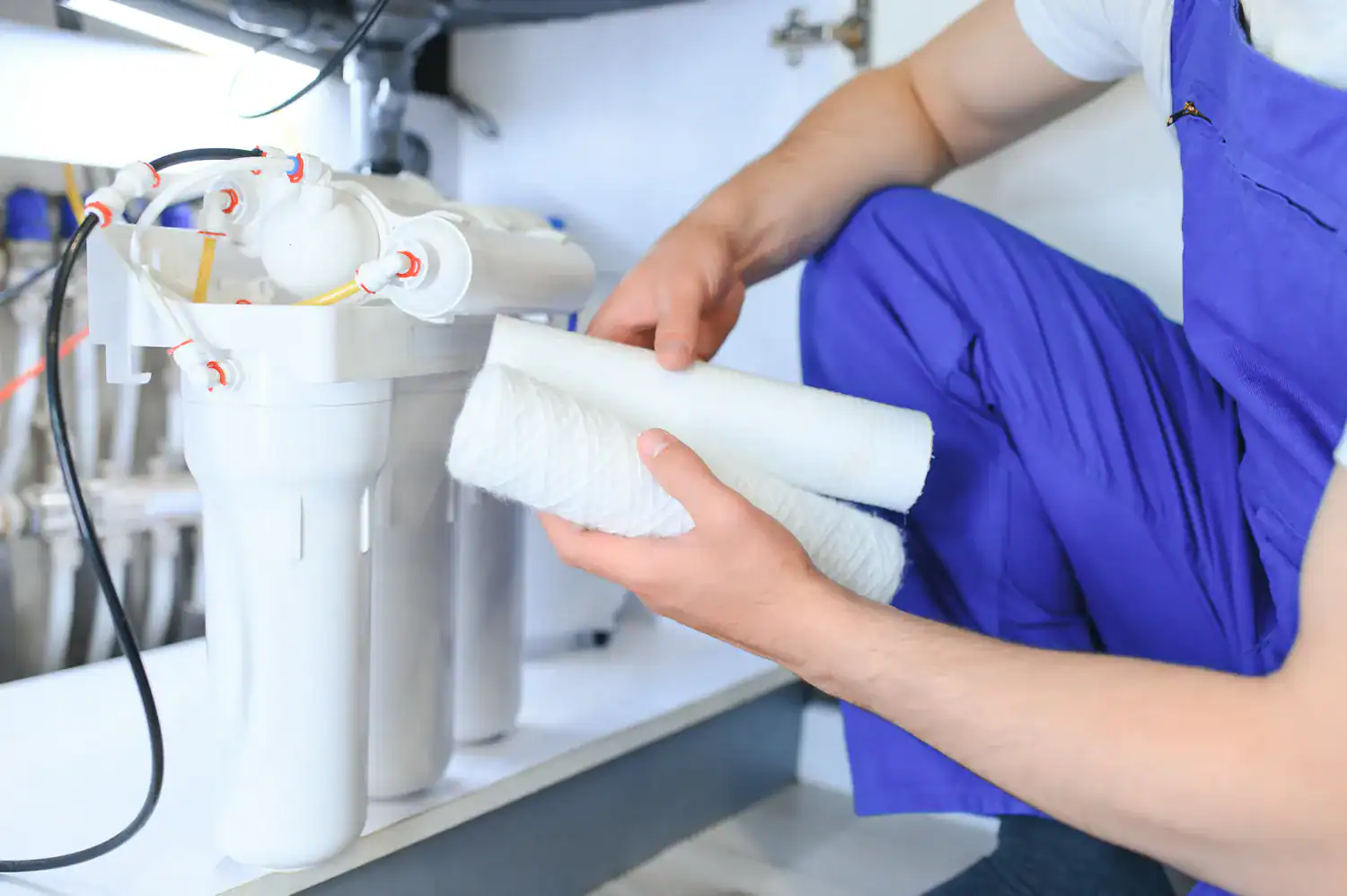
Most under-sink RO systems have two maintenance intervals to keep track of. The pre-filters and post-filters the carbon and sediment stages typically need to be replaced every six to twelve months depending on your water usage and the quality of water coming in. For Washington Shores homes on OUC water, which carries chlorination byproducts and some sediment load, staying on the lower end of that range keeps the system performing at its best.
The RO membrane itself has a longer service life usually two to five years but it does need to be replaced eventually. A membrane that’s past its useful life doesn’t fail dramatically; it just starts letting more contaminants through, which means your water quality degrades without any obvious sign.
That’s why having a company that actually follows up on maintenance matters. We service the systems we install, which means you’re not left tracking down a technician every time a filter is due. For families in Washington Shores who installed a system and then never heard from the company again, that follow-through is the part of the experience that actually makes a difference.
Please provide your email address so that we can stay in touch and answer any questions you have! We will be reaching back out shortly.
"*" indicates required fields