Reach Out Today
Please provide your email address so that we can stay in touch and answer any questions you have! We will be reaching back out shortly.

Hear from Our Customers
If your tap water in Usina Beach tastes slightly off mineral-heavy, maybe a little brackish that’s not your imagination. St. Johns County’s own annual water quality report has documented Total Dissolved Solids exceeding the secondary standard. That’s the county’s own paperwork telling you the water isn’t quite right.
A properly installed reverse osmosis system removes 95–99% of those dissolved solids, and the difference in taste is immediate. You’ll notice it the first time you fill a glass.
The harder-to-see problem is what that water is doing to your home. Usina Beach sits in the southeastern portion of St. Johns County, where USGS data shows the Floridan Aquifer carries hardness levels up to 1,700 milligrams per liter and chloride concentrations exceeding 1,000 mg/L driven by ancient saline intrusion from the Atlantic side. At 20–28 grains per gallon of hardness, which is what local water testing professionals have recorded across parts of this county, scale is building inside your water heater, your dishwasher, your ice maker, and your plumbing right now.
In a home on this barrier island where appliances and fixtures represent a real investment, that’s not a minor inconvenience it’s a slow, expensive problem.
An under-sink RO system stops that at the point of use. A whole-house reverse osmosis system stops it everywhere. Either way, the water you’re drinking, cooking with, and running through your appliances stops working against you and starts working for you.
Quality Safe Water of Florida does one thing: water treatment. Not plumbing, not water heaters, not drain lines. Just water quality which means every recommendation we make is built entirely around what your water actually needs, not what’s easiest to sell.
Before we suggest a system, we test your water with real lab analysis. That matters more in Usina Beach than most places, because water chemistry here varies depending on your proximity to the Intracoastal, your depth into the aquifer, and whether you’re on St. Johns County Utilities or a private well. The test drives the recommendation always.
We hold a BBB A-rating with a 5-star record and zero complaints on file. That’s a public record you can verify at bbb.org right now. We’re also members of the National Water Quality Association, which means our technicians are trained to current water treatment standards not just licensed to turn a wrench.
If you’re active military, a veteran, or a first responder, we offer a $500 discount. We’re proud supporters of the Tunnels to Towers Foundation.
It starts with a real water test. Not a quick hardness strip designed to justify a sale actual lab analysis of what’s present in your water at your specific address in Usina Beach. That means testing for dissolved chlorides, total hardness, TDS, and the contaminants the Environmental Working Group has flagged in St. Johns County water systems, including barium and fluoride at levels that exceed EWG health guidelines even when they meet federal legal limits.
The test tells us what you’re dealing with. Everything after that follows from the results.
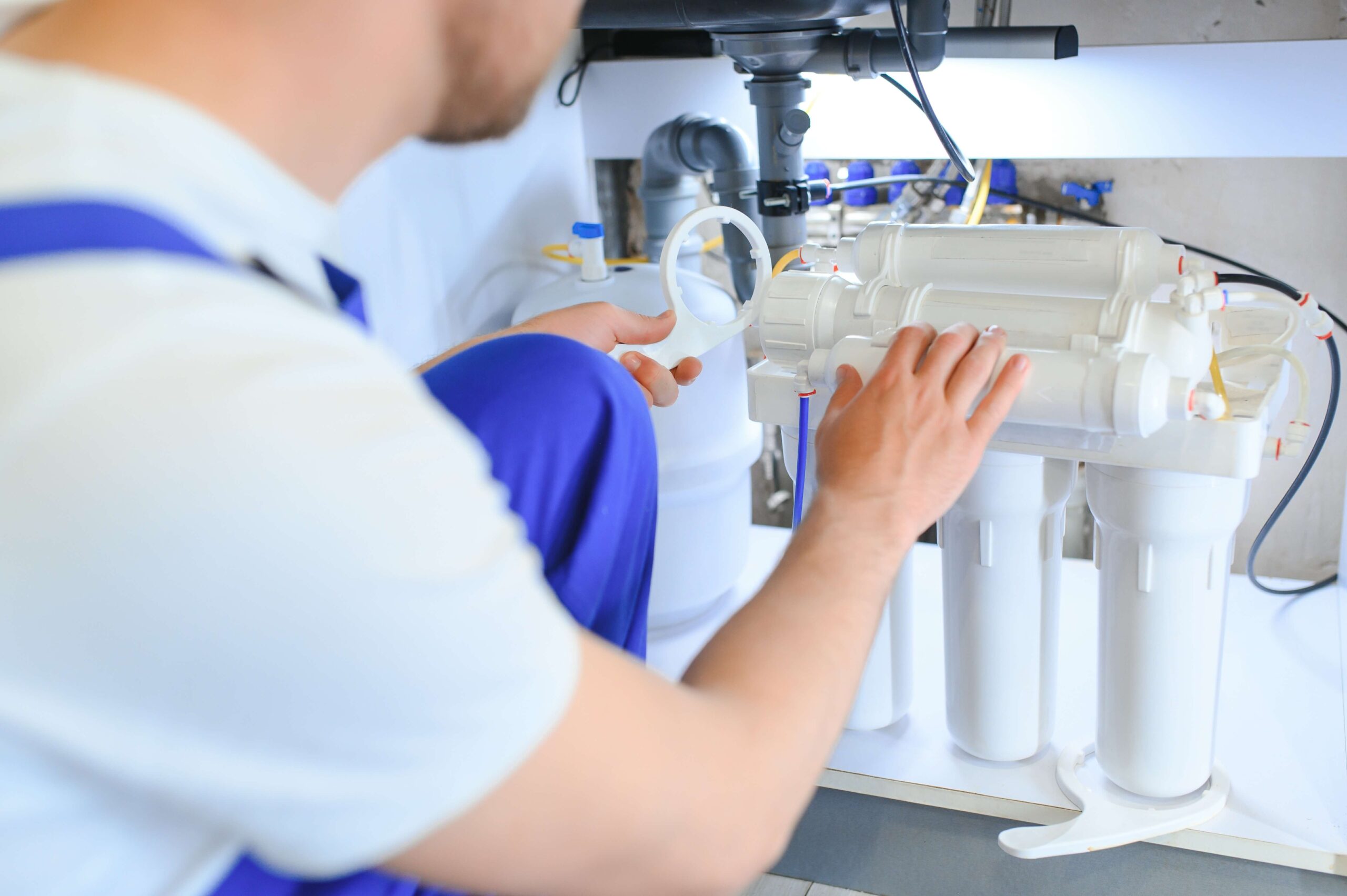
Once we know what’s in your water, we walk you through the right system for your situation. For most Usina Beach homeowners, that’s either an under-sink RO drinking water system installed at the kitchen tap and typically connected to the refrigerator line as well or a whole-house reverse osmosis system that protects every fixture and appliance in the home.
Under-sink installations are typically completed in a few hours and don’t require a permit in Florida when they involve only an existing supply line connection. Whole-house systems that involve new plumbing connections may require a St. Johns County building permit, and we handle that process.
After installation, we walk you through the system, explain the maintenance schedule, and make sure you know exactly when filters and membranes need attention. We service what we sell we’re not a company that installs a system and becomes unreachable. You’re on a barrier island with one road in and one road out. You need a service provider who will actually cross the bridge when it’s time for a membrane replacement. That’s what we do.
Ready to get started?
There’s a real difference between hard water in an inland Florida county and the water chemistry on a barrier island in southeastern St. Johns County. The elevated chlorides, the TDS exceedance documented in the county’s own report, the saltwater-influenced aquifer these aren’t problems a standard carbon filter or a basic water softener fully addresses.
Reverse osmosis is the only residential technology that removes dissolved salts, reduces TDS to clean drinking levels, and handles the full mineral load that coastal Florida geology puts into your water.
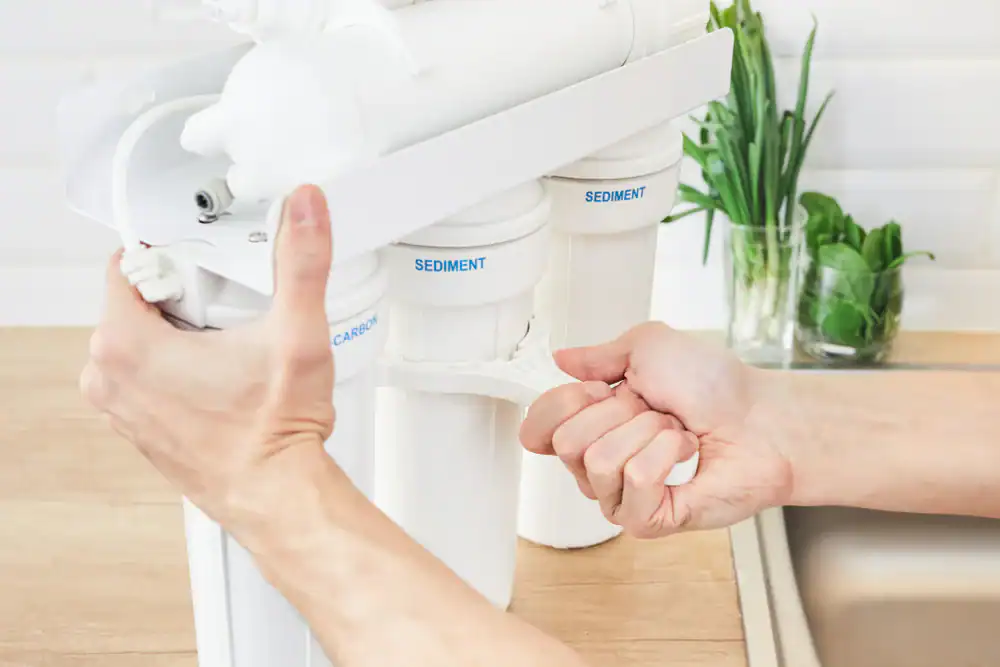
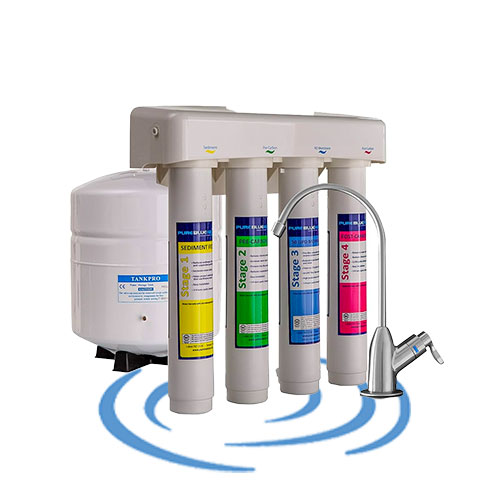
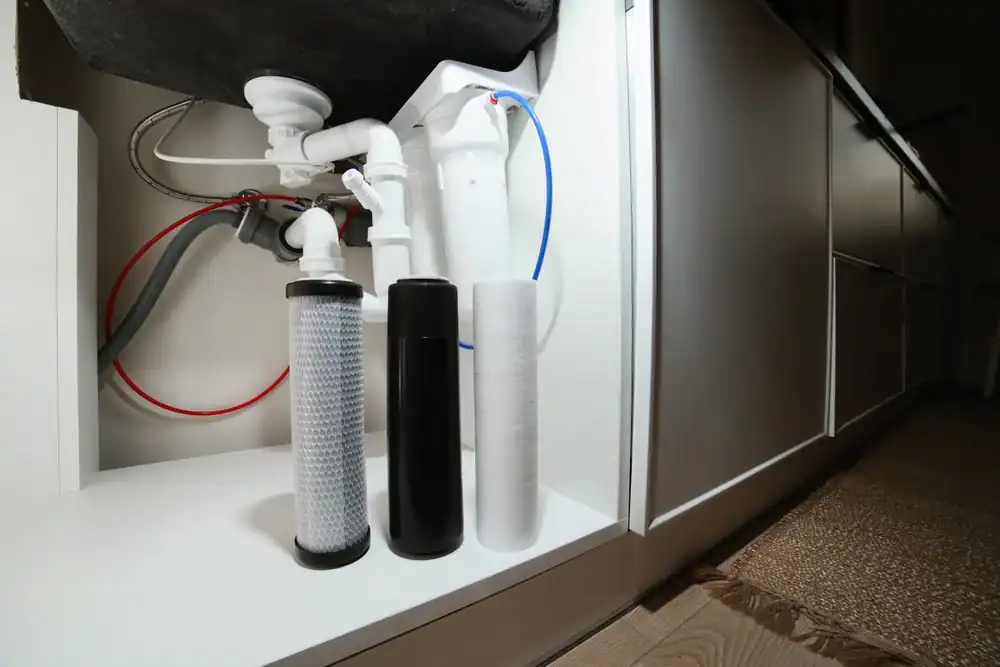
For under-sink RO systems, you’re getting a compact, point-of-use unit installed beneath your kitchen sink with a dedicated faucet and, in most cases, a line run to your refrigerator for filtered ice and water. The system typically includes a sediment pre-filter, a carbon pre-filter, the RO membrane itself, and a post-carbon polishing filter.
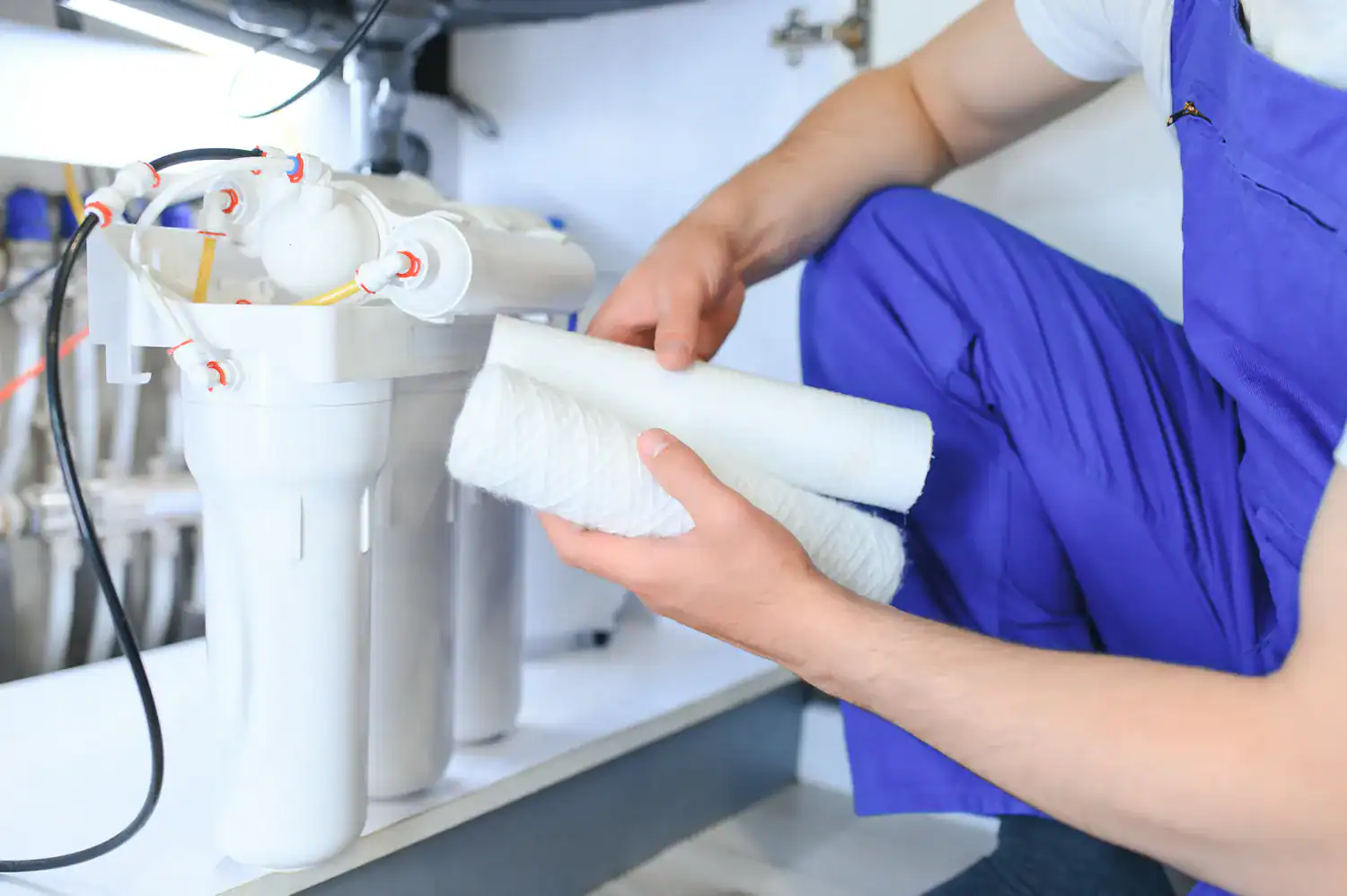
Membranes last two to five years depending on your water quality and usage. Filters are typically replaced annually. We use NSF-certified components throughout.
For whole-house reverse osmosis, the system is installed at the main water entry point and treats every drop of water that enters your home protecting your water heater from scale, your fixtures from mineral buildup, and your family from the contaminants that legal compliance allows to remain in municipal supply. For homes in the Usina Beach area, on private wells, or anywhere along the North Beaches corridor, we size the system to your actual water demand and usage. Nothing is one-size-fits-all here, because the water isn’t one-size-fits-all here.
This is one of the most common things homeowners notice after moving to Usina Beach, and it has a specific geological explanation. The Floridan Aquifer in the southeastern portion of St. Johns County the source of the region’s water supply carries elevated chloride concentrations due to ancient saline water that entered the aquifer during the Pleistocene Epoch and never fully flushed out.
USGS data documents chloride concentrations in this part of the county that can exceed 1,000 milligrams per liter, which is the signature of saltwater-influenced groundwater chemistry. That’s what you’re tasting.
St. Johns County Utilities treats the water before it reaches your tap, but treatment doesn’t fully remove dissolved chlorides or bring Total Dissolved Solids down to levels most people find pleasant to drink. A reverse osmosis system addresses this directly the semi-permeable RO membrane removes dissolved salts, chlorides, and the mineral load responsible for that brackish or heavy taste, producing water that tastes genuinely clean at your kitchen tap.
A properly certified reverse osmosis system removes a wide range of contaminants that standard filters don’t touch. The RO membrane with pores of approximately 0.0001 microns physically blocks dissolved salts, heavy metals including lead, barium, and arsenic, nitrates, fluoride, chlorides, and PFAS compounds.
For St. Johns County residents in Usina Beach and surrounding areas, this matters because the Environmental Working Group’s Tap Water Database has identified contaminants in local water systems including barium and fluoride at levels that exceed EWG’s health-protective benchmarks, even when those levels comply with federal legal standards. Complying with the law and providing genuinely clean water are two different things.
Carbon pre-filters in the RO system also remove chlorine, chloramines, and volatile organic compounds before water reaches the membrane, which addresses taste and odor issues as well as chemical concerns. Post-carbon polishing filters finish the process before water reaches your tap. The result is water that has been through multiple stages of filtration, not just one. We use NSF/ANSI 58 certified systems, which means the contaminant reduction claims have been independently tested and verified not just printed on a box.
It depends on what you’re trying to solve. An under-sink reverse osmosis system is a point-of-use solution it treats the water at one location, typically the kitchen sink, and can be connected to your refrigerator for filtered ice and water. It’s the right choice if your primary concern is drinking water quality, cooking water, and the water going into your coffee maker and ice machine.
Installation is straightforward, typically completed in a few hours, and the ongoing cost is low filter replacements run annually, and membranes last two to five years.
A whole-house reverse osmosis system treats every drop of water that enters your home before it reaches any fixture or appliance. For Usina Beach homeowners dealing with 20–28 grains per gallon of hardness, this protects your water heater, dishwasher, washing machine, and plumbing from scale accumulation which at those hardness levels is a real and ongoing source of appliance damage and repair costs.
If you’re in a home with premium fixtures and appliances, or if you’re on a private well where the water chemistry is entirely unregulated, a whole-house system is often the stronger long-term investment. We test your water first and give you a straight answer on which one actually makes sense for your situation.
Living on a barrier island during hurricane season introduces water quality risks that mainland homeowners don’t face in the same way. Storm surge, flooding, and saltwater intrusion events can temporarily compromise both municipal water supply and private well water introducing bacteria, sediment, elevated chlorides, and chemical contamination that a basic carbon pitcher filter or refrigerator filter is not designed to handle.
St. Johns County issues boil water notices after significant storm events, and the period immediately following a major hurricane is when water quality is most uncertain.
A whole-house reverse osmosis system provides a meaningful baseline of protection in these situations. The RO membrane removes bacteria, dissolved salts, heavy metals, and chemical contaminants it functions as a genuine physical barrier, not just a chemical treatment. An under-sink RO system provides the same protection at the point of use for drinking and cooking water.
Neither system eliminates the need to follow county advisories during an active emergency, but both significantly reduce your exposure to the contaminants that storm events introduce into a coastal water supply. For homeowners on the Usina Beach barrier island, that peace of mind has real, practical value during a six-month hurricane season.
Under-sink reverse osmosis systems for residential use typically range from $300 to $800 for the unit, with professional installation adding to that cost depending on the complexity of the connection. Whole-house reverse osmosis systems are a larger investment generally in the range of $1,500 to $5,000 or more depending on the size of the home, the water flow requirements, and the specific system components needed for your water chemistry.
In Usina Beach, where water hardness and TDS levels are among the more demanding in St. Johns County, system sizing matters. We spec the right unit for your actual conditions rather than undersizing to hit a lower price point.
The payback calculation is straightforward for most households. If you’re currently spending $50–$100 per month on bottled water which is common in this area given how many residents don’t trust the tap an under-sink RO system pays for itself within two to four years and then produces clean water for pennies per gallon after that.
For whole-house systems, the payback comes from appliance protection: a single water heater replacement runs $800–$1,500 or more, and scale damage to dishwashers, washing machines, and plumbing adds up quickly at 20+ grains per gallon of hardness. The system doesn’t just improve your water it protects the investment you’ve already made in your home.
Please provide your email address so that we can stay in touch and answer any questions you have! We will be reaching back out shortly.
"*" indicates required fields