Reach Out Today
Please provide your email address so that we can stay in touch and answer any questions you have! We will be reaching back out shortly.

Hear from Our Customers
If you’ve been living with orange staining on your sinks, a faint sulfur smell in the morning, or water that just doesn’t taste right that’s not a quirk of rural living near Tocoi. That’s the Floridan Aquifer doing what it does.
The limestone geology under St. Johns County loads your well water with dissolved minerals, iron, and hardness before it ever reaches your tap. A properly installed reverse osmosis system removes 95–99% of what’s in that water, including the stuff that has no taste or smell at all.
The difference shows up fast. Your drinking water tastes clean. The scale stops building on your fixtures. The orange stain in the toilet bowl stops coming back. If you’ve been hauling bottled water from St. Augustine because you don’t trust what’s coming out of the tap in Tocoi, that stops too and so does the $600–$1,200 a year you’re spending on it.
There’s also the longer game. Hard water from the Floridan Aquifer shortens the life of your water heater, degrades your plumbing, and forces more frequent appliance replacements. On a rural property near Tocoi where everything is your responsibility no utility company, no HOA maintenance crew protecting your systems matters. An RO system at the point of use, paired with the right whole-house treatment, is one of the most cost-effective home investments you can make on a well-dependent property in western St. Johns County.
Quality Safe Water of Florida LLC is a North and Central Florida water treatment company, and water treatment is the only thing on the menu. No plumbing calls, no drain jobs, no HVAC. Just water tested, treated, and handled by people who have been inside St. Johns County wells long enough to know what the Floridan Aquifer delivers before the lab results even come back.
That focus shows in the track record. We hold a BBB A-rating with a 5-star rating and zero complaints on record something you can verify yourself at bbb.org. We’re also members of the National Water Quality Association, which means the technician coming to your property near Tocoi isn’t guessing at your water chemistry. They’re trained specifically for this.
If you’re active military, a veteran, or a first responder, there’s a $500 discount waiting for you no fine print. We also support the Tunnels to Towers Foundation, which builds mortgage-free homes for Gold Star and fallen first responder families. That’s not a footnote. It’s who we are.
It starts with a real water test. Not a quick strip test designed to justify a sale, but an actual lab analysis of what’s coming out of your well. In the Tocoi area, where every property’s water chemistry can vary based on well depth, casing condition, and proximity to the river corridor, this step isn’t optional it’s the only way to design a system that actually works for your specific water, not a regional average.
Once the test results are in, the right system gets matched to your actual problem. If your water is carrying iron and sulfur alongside the hardness, the solution looks different than if hardness is the only issue. For many rural properties near Tocoi in western St. Johns County, a whole-house treatment approach combined with an under-sink reverse osmosis system at the drinking water point of use is the most effective combination. Everything is sized correctly for your home and your water chemistry before anything gets installed.
Installation is handled by our own technicians not a subcontractor who’s never seen your water report. Work connecting to your home’s plumbing in unincorporated St. Johns County may require a permit through the county building department, and that process gets handled properly. After installation, you’ll know what filter and membrane replacements look like, when they’re due, and who to call. Because the company that installed your system is the same one that services it and that matters more than most people realize until the day they need it.
Ready to get started?
A reverse osmosis system forces your water through a semi-permeable membrane at 0.0001 microns smaller than any bacteria, dissolved chemical, agricultural contaminant, or PFAS compound. What comes out the other side is water that has been stripped of virtually everything your Floridan Aquifer well was carrying.
For properties along the CR 214 corridor near Tocoi and the rural stretches of CR 13, where private wells are the rule and the aquifer is the only source, that level of filtration is not overkill. It’s the right tool for the actual problem.
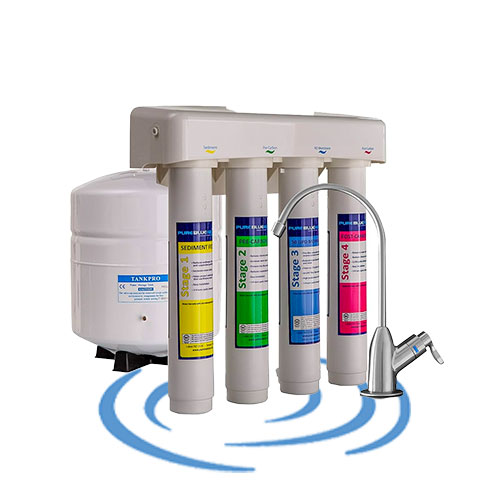
What you get from us is a multi-stage RO drinking water system designed around your tested water chemistry not a shelf unit pulled from inventory and installed without context. Under-sink reverse osmosis is the most common configuration for residential drinking water, and it integrates cleanly into your existing kitchen setup. For properties with more complex water profiles high iron, active sulfur, significant hardness whole-house pre-treatment is often recommended before the RO stage, and that gets assessed during the initial water test, not after the sale.
Maintenance is straightforward: filter and membrane replacements typically run $100–$200 per year, and we handle that service ourselves. The St. Johns River Water Management District’s current Phase III Extreme Water Shortage conditions are causing groundwater levels to drop across the county, which can concentrate contaminants in private wells. If your water has changed recently more odor, more staining, different taste that’s worth testing now.
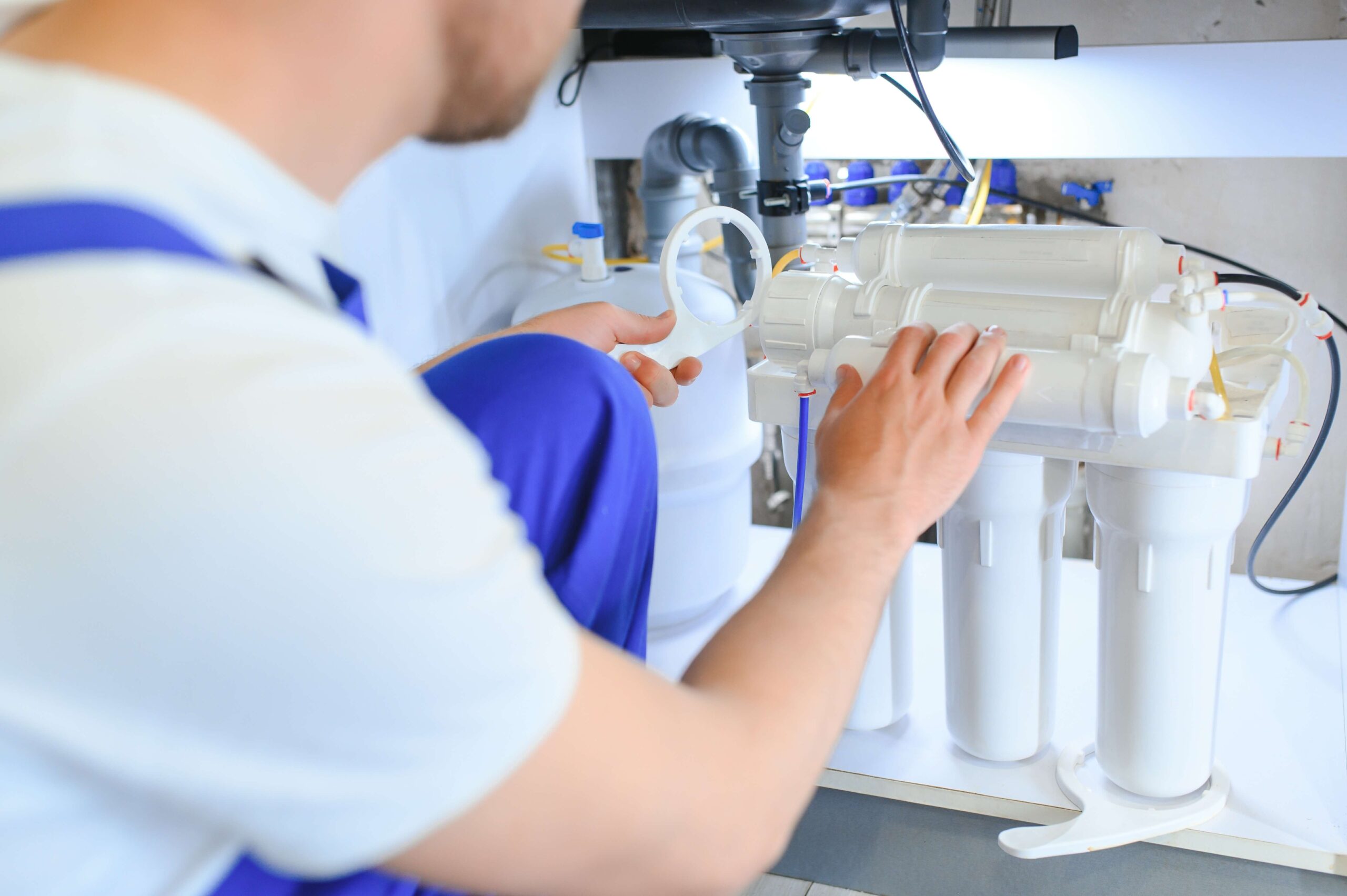
Yes and it’s one of the most effective treatment options specifically for the water chemistry that comes out of Floridan Aquifer wells in this part of St. Johns County. The aquifer delivers water that has traveled through porous limestone, picking up calcium, magnesium, iron, and sometimes hydrogen sulfide along the way. USGS data documents total hardness concentrations in St. Johns County wells ranging from 110 mg/L all the way to 1,700 mg/L depending on location and depth. A reverse osmosis membrane filters at 0.0001 microns, which is fine enough to reject dissolved minerals, heavy metals, bacteria, agricultural contaminants, and PFAS compounds that have no taste or odor.
The key is making sure the system is sized and configured for your specific water. High iron levels, for example, can foul an RO membrane quickly if there isn’t appropriate pre-treatment upstream. That’s why we test your water before recommending anything so the system is built around what’s actually in your well near Tocoi, not what’s typical for the region.
The cost depends on what your water test shows and what configuration makes sense for your property. A standard under-sink reverse osmosis system for drinking water typically runs in the range of a few hundred dollars on the low end for a basic unit, up to $1,000–$2,500 installed for a quality multi-stage system with professional installation and correct sizing. If your well water near Tocoi also has significant iron or sulfur which is common for properties drawing from deeper Floridan Aquifer wells whole-house pre-treatment may be recommended alongside the RO unit, and that affects the overall investment.
What’s worth keeping in mind is the cost comparison. If you’re currently spending $50–$100 per month on bottled water because you don’t trust your tap, that’s $600–$1,200 a year going out the door for a problem a properly installed RO system solves once. Add in the appliance protection value water heaters and plumbing that aren’t being destroyed by hard water scale and the system pays for itself faster than most people expect. We can walk you through the numbers after your water test.
The rotten egg smell is hydrogen sulfide, and it’s one of the most common complaints from homeowners on deeper Floridan Aquifer wells in rural St. Johns County. The short answer is that reverse osmosis will remove hydrogen sulfide at the point of use meaning your drinking water won’t smell. But if the odor is strong throughout the house, coming from every tap and the shower, the source problem is bigger than a point-of-use RO system can address on its own.
For whole-house sulfur odor, the right solution is typically an oxidizing filter or aeration system upstream before the water reaches your fixtures combined with an RO system at the kitchen tap for drinking and cooking water. We test for hydrogen sulfide as part of the initial water analysis, and if it’s present at levels that affect the whole house, we’ll tell you that upfront rather than sell you a system that only partially addresses the problem. Getting the full picture from the water test is what makes the difference between a fix and a partial fix.
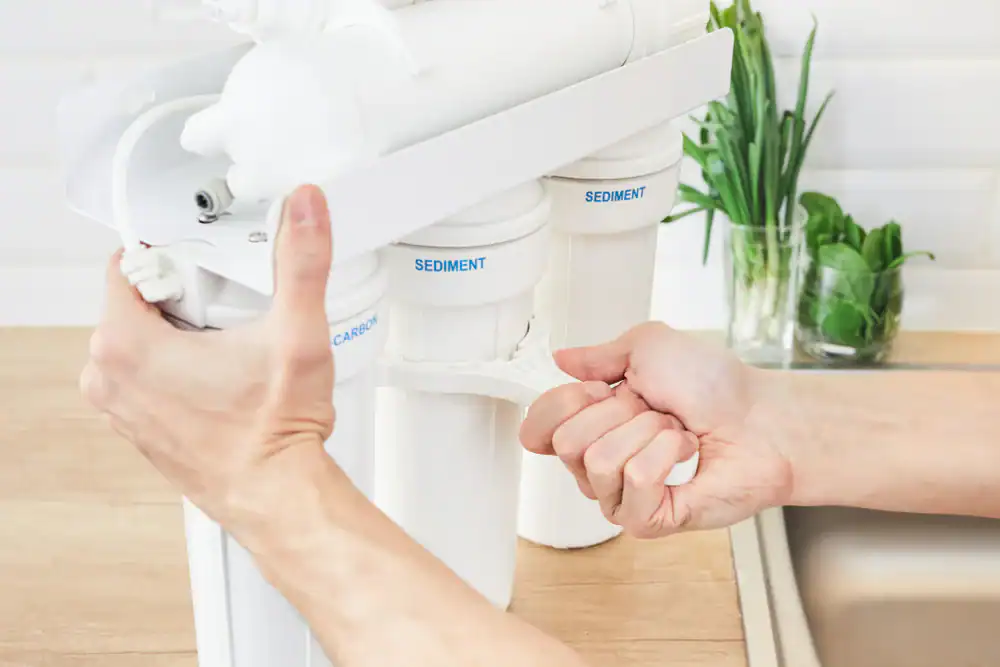
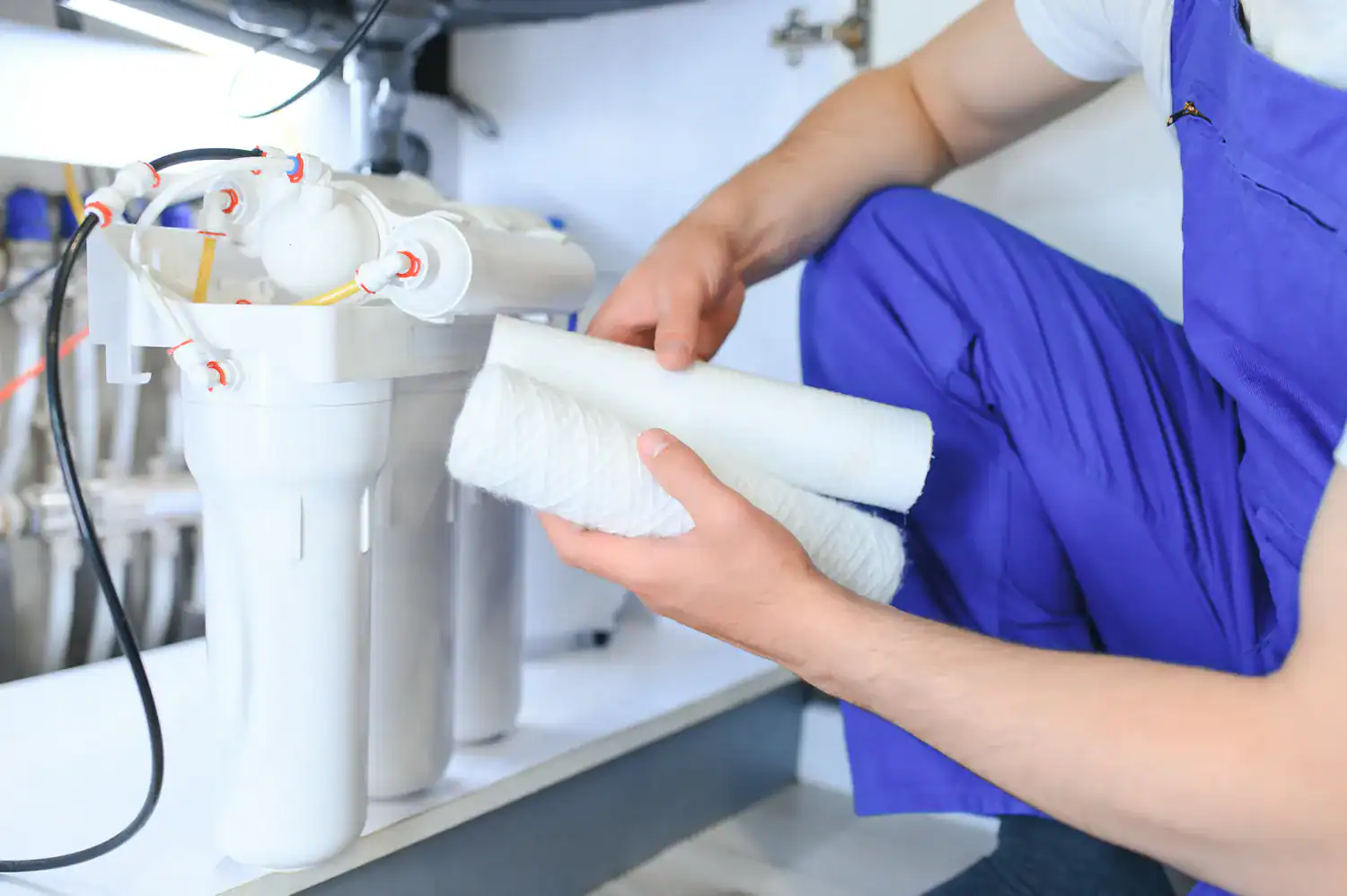
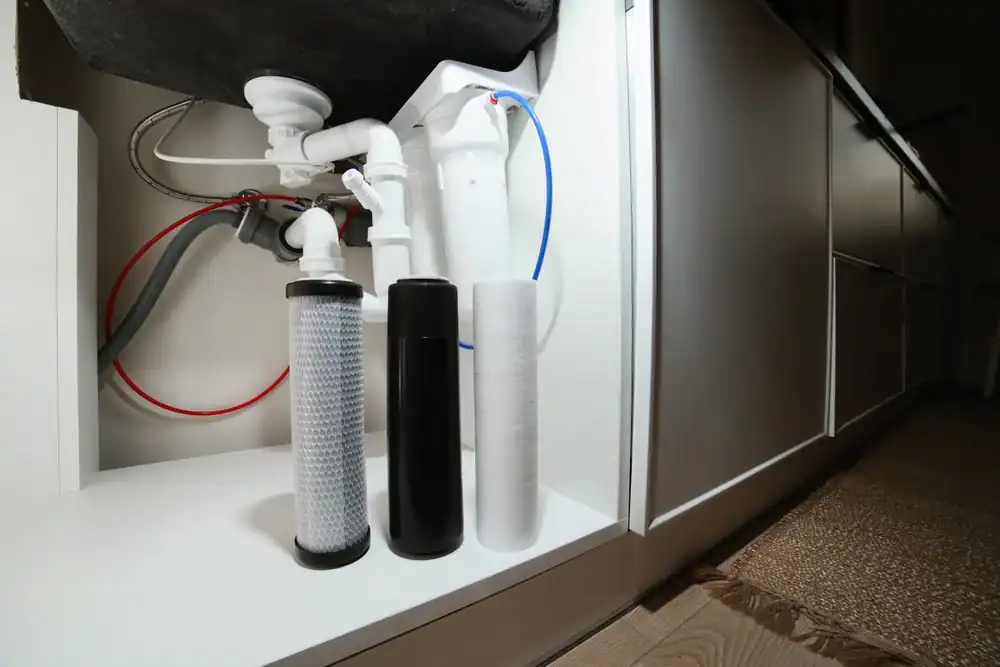
For most residential RO systems, pre-filters (sediment and carbon stages) need to be replaced every 6–12 months, and the RO membrane itself typically lasts 2–3 years depending on water quality and usage. In the Tocoi area, where well water from the Floridan Aquifer tends to carry higher mineral loads and iron content than municipal supplies, filter life can run on the shorter end if the system doesn’t have appropriate pre-treatment in place. A well-designed system with the right pre-filtration upstream will protect the membrane and extend its useful life significantly.
Annual maintenance cost for a residential RO system generally runs $100–$200 for filter and membrane replacements a fraction of what most families spend on bottled water in the same period. We service what we sell, so when your filters are due, you’re calling the same company that installed the system not hunting for a technician who’s never seen your setup. That continuity matters, especially on a rural property where you don’t have a lot of backup options if something goes wrong.
Most properties in the Tocoi area are on private wells there is no municipal water system serving the majority of this unincorporated part of St. Johns County. The St. Johns County Utility CR 214 Mainland Water System does serve some properties along the CR 214 corridor, but it draws from Floridan Aquifer wells at depths of 400–450 feet and treats the water to basic compliance standards not to the level that a residential reverse osmosis system provides. So whether you’re on a private well or on county utility service in this area, the source water is the same aquifer, and the treatment need is real either way.
If you’re not sure whether your property is on a private well or county service, your water bill (or the absence of one) will tell you. Private well owners are entirely responsible for their own water quality there’s no utility monitoring your water between the well and your tap. Annual testing for bacteria and nitrates is recommended by the Florida Department of Health for all private well owners, and a comprehensive water analysis every few years is the baseline for staying ahead of any changes in your water chemistry.
Please provide your email address so that we can stay in touch and answer any questions you have! We will be reaching back out shortly.
"*" indicates required fields