Reach Out Today
Please provide your email address so that we can stay in touch and answer any questions you have! We will be reaching back out shortly.

Hear from Our Customers
When you stop tolerating your water and actually fix it, the difference shows up everywhere. The white scale buildup on your fixtures slows down. Your water heater stops working against a constant load of dissolved minerals from the Floridan Aquifer which, if you’ve lived in Tavares for any amount of time, you already know is some of the hardest water in Central Florida.
That mineral load doesn’t just affect taste. It quietly shortens the life of your appliances, clogs showerheads, and leaves your dishes looking like they never got clean. A properly installed reverse osmosis system removes up to 99% of what municipal treatment leaves behind dissolved solids, chloramines, nitrates, heavy metals, and contaminants like perchlorate and volatile organic compounds that have been flagged in Tavares Water Department monitoring data.
What you’re left with is water that actually tastes like water, not like a swimming pool or a mineral spring. For the roughly one in three Tavares residents who are 65 or older, or for families with young kids in newer subdivisions along SR 19 or US 441, that’s not a luxury it’s just the right call.
If you’ve been buying bottled water because you don’t trust the tap, the math on a home RO system makes itself. Most households recoup the investment within two to four years, and the system runs for fifteen to twenty years with basic maintenance.
We’re headquartered in Leesburg right down US 441 from Tavares and water treatment is the only thing we do. Not plumbing. Not HVAC. Not a side service tacked onto a bigger operation. Just water: filtration, purification, softening, and reverse osmosis systems for homeowners across Lake County and surrounding areas.
That focus matters more than it sounds. The technician coming to your home has spent their entire career on water treatment not splitting time between drain calls and duct cleaning. We know what the Floridan Aquifer delivers to homes in Tavares, what the Tavares Water Department’s own reports say, and what the difference looks like between city water on the US 441 corridor and well water out toward Grand Island or the rural stretches of unincorporated Lake County.
We hold an A-rating with the Better Business Bureau with zero complaints on record. Add a 5-star rating, National Water Quality Association membership, and a $500 discount for military and first responders, and you have a company that’s built its reputation the slow, right way: by doing the work correctly and showing up when it matters.
It starts with a real water test not a quick hardness reading designed to justify a sale, but an actual lab-grade analysis of what’s coming out of your tap. For Tavares homeowners on city water, that means looking at what the Floridan Aquifer delivers after municipal treatment, including dissolved solids, chloramines, and any contaminants that have shown up in local Water Department monitoring.
For well water users out in the areas east of Tavares toward Grand Island or in unincorporated Lake County, we also check for iron, sulfur, and potential agricultural runoff the stuff that doesn’t come with a municipal monitoring backstop.
Once the test results are in, the recommendation follows the data. If an under-sink RO system is the right fit, that gets recommended. If the water chemistry points toward a whole-house solution, that conversation happens honestly and transparently. Nothing gets sold that the test doesn’t support.
Installation itself is clean and straightforward for most Tavares homes. An under-sink reverse osmosis system connects to your existing cold water line and drains to your existing drain no major plumbing work required in most cases. Whole-house systems involve a connection at the main water entry point and may require a permit through the City of Tavares Building Department; we handle those details so you don’t have to navigate the process alone.
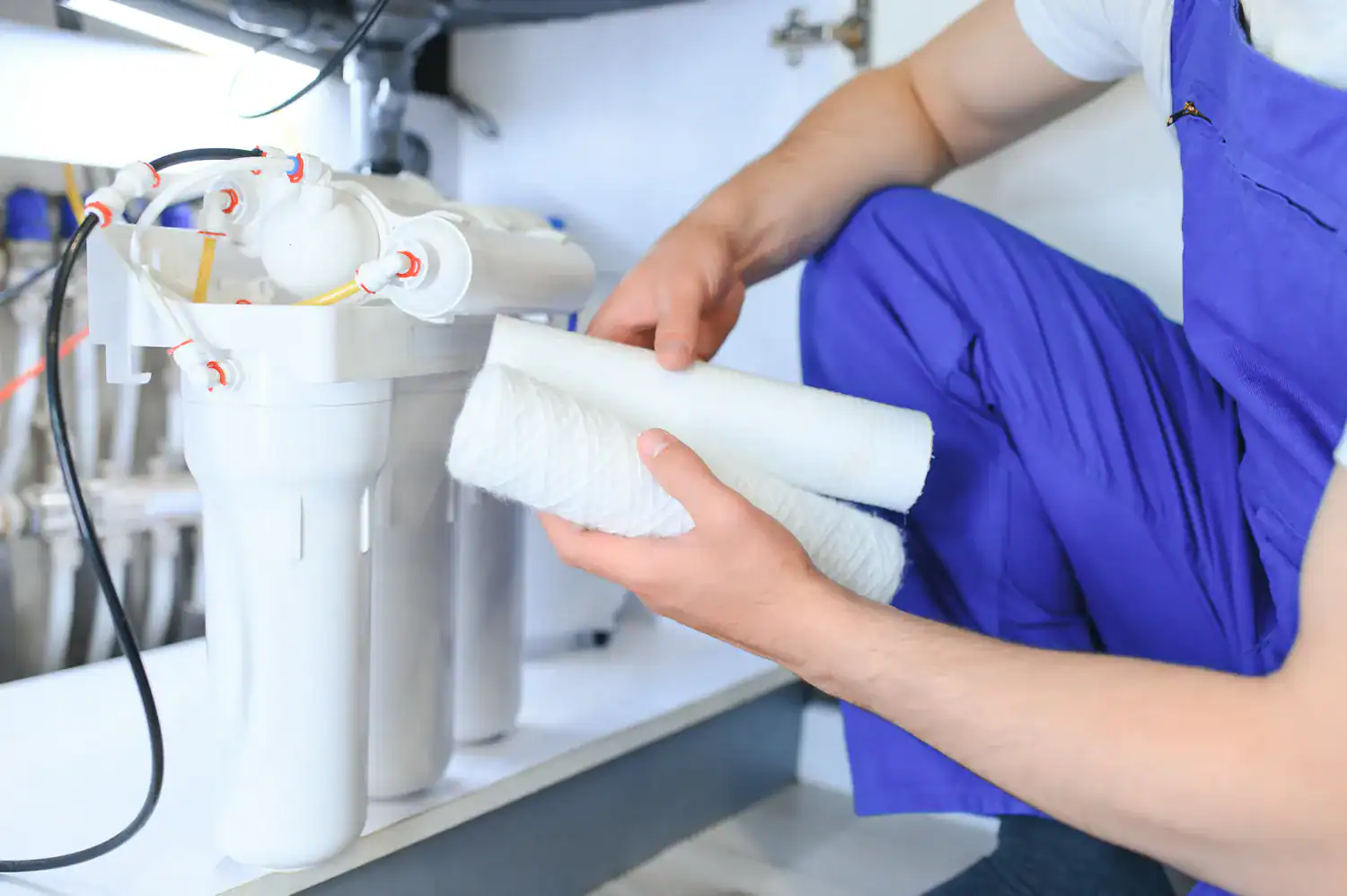
After installation, you’ll know what filters need replacing and when, and the same team that installed your system handles ongoing maintenance. There’s no handoff to a third-party service department.
Ready to get started?
The Floridan Aquifer doesn’t deliver the same water everywhere, and Tavares has its own documented profile. Our city’s water has been flagged for contaminants including perchlorate a chemical that can interfere with thyroid function along with benzo[b]fluoranthene and 1,2-dichloropropane, both of which carry health implications that go well beyond taste and odor.
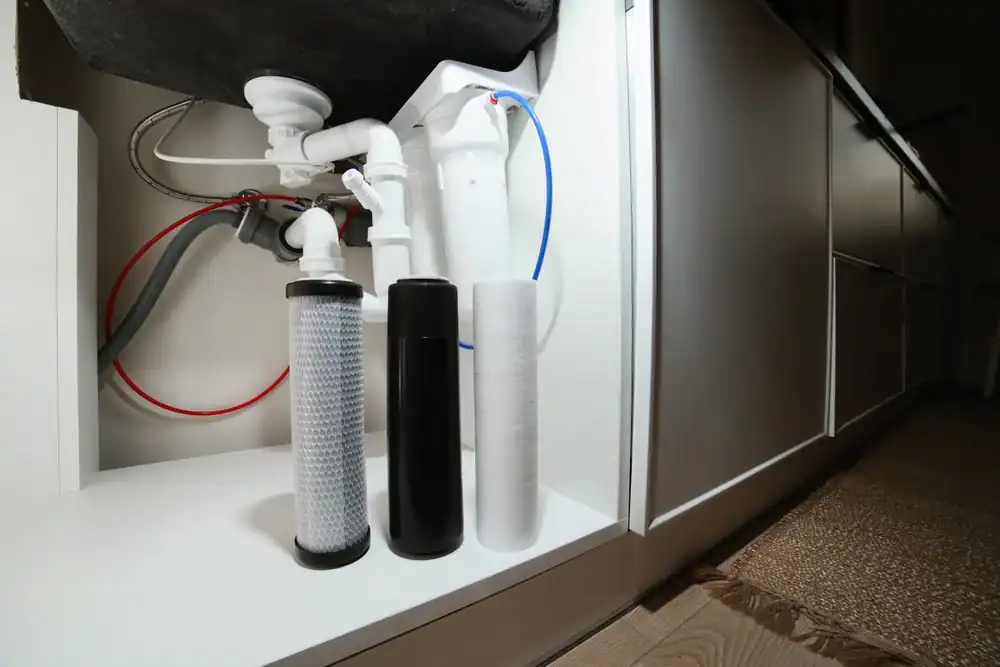
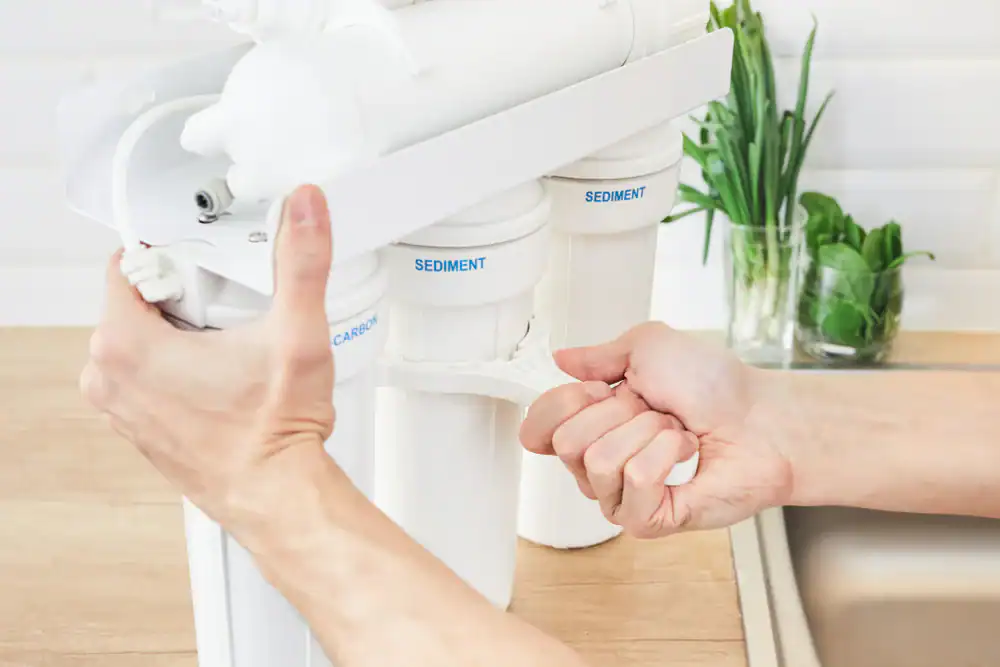
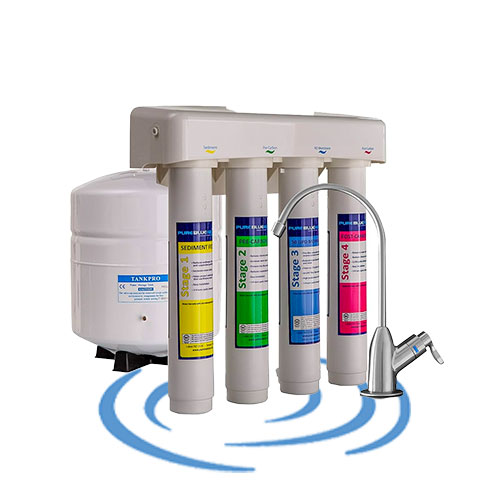
We design every system we install here with that backdrop in mind. For most Tavares homeowners, the starting point is an under-sink reverse osmosis drinking water system a compact, multi-stage unit installed beneath the kitchen sink that filters water through a semi-permeable membrane with pores small enough to stop dissolved chemicals, heavy metals, bacteria, and most pharmaceutical traces. It’s the most cost-effective way to get genuinely clean drinking and cooking water without changing anything else about your home’s plumbing.
For homeowners dealing with the full impact of hard water on appliances, fixtures, and laundry which is most of Lake County a whole-house approach addresses the problem at every point in the home. If you’re in an established neighborhood near the Lake Dora waterfront, or if you’re on a private well in the rural areas east of Tavares, the right configuration depends on your specific water test results. That’s exactly why the test comes first.
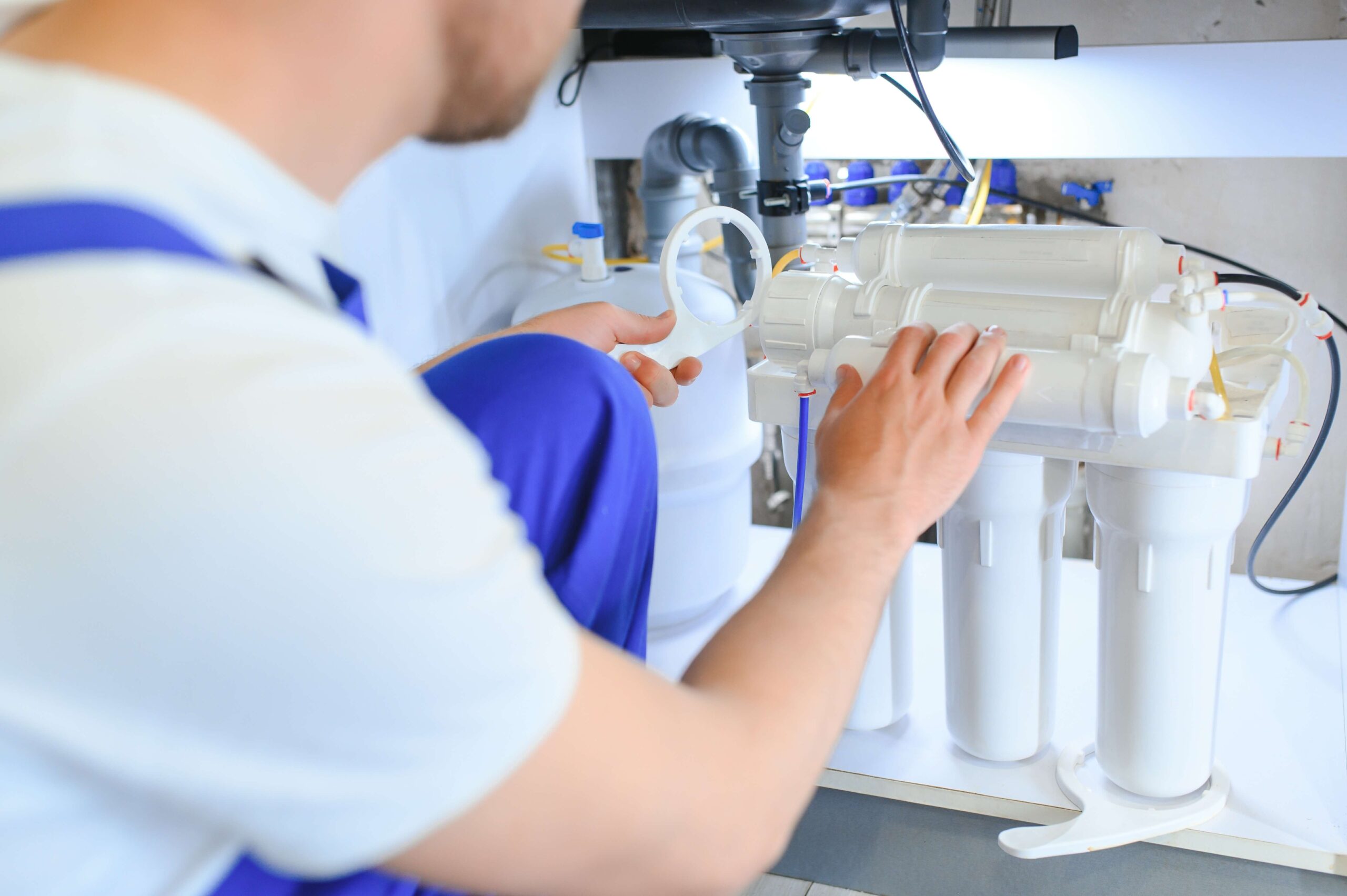
The Tavares Water Department meets EPA regulatory standards, which means it’s legally safe. But meeting the minimum standard and delivering the cleanest possible water aren’t the same thing. Third-party water quality data has flagged contaminants in Tavares municipal water including perchlorate, which can affect thyroid function, and benzo[b]fluoranthene, which carries cancer risk concerns at levels that exceed EPA health-based guidelines in at least one reporting period.
Beyond the documented contaminants, municipal treatment in Tavares uses chloramines not just chlorine as a disinfectant. Chloramines are harder to remove than chlorine and require catalytic carbon filtration, not just a standard activated carbon pitcher filter. A properly configured reverse osmosis system addresses chloramines, dissolved solids, heavy metals, and a wide range of unregulated contaminants that the city’s treatment process doesn’t fully eliminate.
If you’re drinking Tavares tap water unfiltered and it tastes or smells off, that’s your water telling you something worth paying attention to.
For most Tavares homeowners, an under-sink reverse osmosis drinking water system installed, tested, and ready to use typically runs in the range of $500 to $1,200 depending on the number of filtration stages, the membrane quality, and whether any additional pre-filtration is needed based on your water test results. Whole-house reverse osmosis systems, which treat water at the point of entry and protect every faucet and appliance in the home, are a larger investment and are priced based on the size of the home and the specific water chemistry findings.
What most Tavares households find when they run the numbers is that the system pays for itself relatively quickly. If you’re currently buying bottled water which many Lake County residents do because they don’t love the taste of the tap you’re likely spending $50 to $100 a month, or $600 to $1,200 a year. An under-sink RO system produces cleaner water than most bottled brands at a fraction of the per-gallon cost, and it runs for fifteen to twenty years with routine filter and membrane replacements.
The long-term math tends to be pretty clear.
A properly installed reverse osmosis system filters water through a semi-permeable membrane with pores measuring 0.0001 microns smaller than any bacteria, virus, or dissolved chemical. That means it removes 95 to 99 percent of total dissolved solids, along with lead, arsenic, nitrates, fluoride, chloramines, volatile organic compounds, PFAS (“forever chemicals”), pharmaceutical traces, and most heavy metals.
For Tavares specifically, this matters because the Floridan Aquifer delivers naturally mineral-heavy water with elevated calcium and magnesium, and the city’s own monitoring data has documented contaminants including perchlorate and 1,2-dichloropropane in the municipal supply. A reverse osmosis system addresses what municipal treatment leaves behind not because the city isn’t doing its job, but because the EPA’s regulatory minimums weren’t designed to deliver the cleanest possible water, just the safest legally permissible one.
If you’re on a private well in the areas east of Tavares toward Grand Island or in unincorporated Lake County, RO also handles iron, sulfur compounds, and potential agricultural runoff contaminants that have no municipal monitoring backstop.
They solve different problems, and in most Tavares homes, you actually want both. A water softener targets hardness the calcium and magnesium that the Floridan Aquifer loads into Lake County water. It uses an ion exchange process to swap those minerals for sodium, which eliminates scale buildup in pipes and appliances, makes soap lather properly, and extends the life of your water heater and dishwasher.
What a softener doesn’t do is remove dissolved chemicals, heavy metals, chloramines, nitrates, or the other contaminants that show up in Tavares water quality monitoring.
A reverse osmosis system works at the point of use typically under the kitchen sink and filters your drinking and cooking water through a membrane fine enough to remove virtually everything a softener leaves behind. Softened water actually flows more efficiently through an RO membrane, which is why pairing the two makes sense for most households dealing with hard water.
If you’re in a home on city water in Tavares and you’re dealing with both scale buildup and water that tastes or smells off, a whole-house softener upstream combined with an under-sink RO system for drinking water is usually the most complete answer. Our water test results will tell you exactly what your home’s water chemistry calls for before anything gets recommended.
Well water users in the areas surrounding Tavares out toward Grand Island, along County Road 448, or in the rural stretches of unincorporated Lake County are working without a municipal monitoring backstop. There’s no city report telling you what’s in your water, because nobody’s testing it for you.
Common issues with well water in this part of Lake County include iron staining (the orange-brown discoloration on fixtures and laundry), hydrogen sulfide the rotten egg smell that’s hard to miss and potential agricultural runoff contaminants from historic citrus grove areas. A reverse osmosis system can address many of these, but the right configuration depends heavily on what your specific well water contains.
Iron at high concentrations, for example, needs to be addressed upstream of an RO membrane or it will foul the membrane quickly. That’s exactly why we start with a lab-grade water analysis before recommending anything. For well water users near Tavares, skipping that step and buying a system off the shelf is how you end up with equipment that doesn’t actually solve your problem.
Please provide your email address so that we can stay in touch and answer any questions you have! We will be reaching back out shortly.
"*" indicates required fields