Reach Out Today
Please provide your email address so that we can stay in touch and answer any questions you have! We will be reaching back out shortly.

Hear from Our Customers
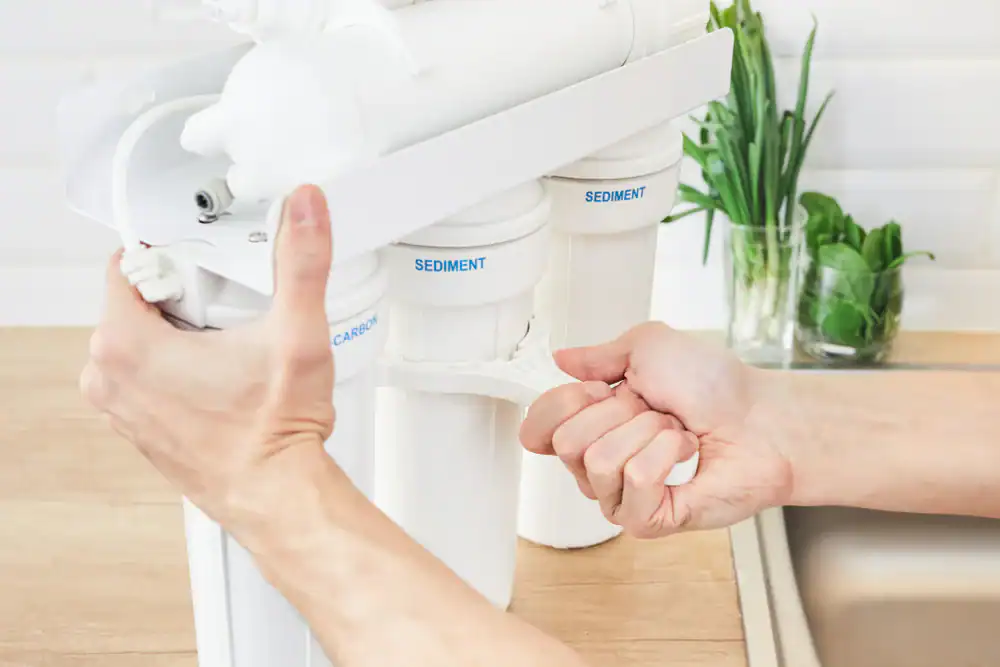
The City of St. Augustine runs its own water through industrial-scale reverse osmosis before it ever reaches the distribution system. That tells you something important aquifer water here needs serious treatment. But municipal treatment stops at legal minimums. What hits your tap in St. Augustine still carries disinfection byproducts like TTHMs, trace minerals that survived the process, and whatever picked up along aging distribution lines between the plant and your faucet. A residential reverse osmosis system at your sink finishes the job.
If you’re in Davis Shores, Lincolnville, or anywhere in the Historic District, your home’s plumbing may already be working harder than it should. Hard water in St. Augustine typically runs between 100 and 300-plus PPM depending on your neighborhood and which utility serves you. That mineral load accelerates scale buildup in older pipes, shortens the life of water heaters and dishwashers, and leaves deposits on fixtures that no cleaning product fully removes.
For homeowners on Anastasia Island, the coastal environment adds another layer. Salt air and hard water together are harder on appliances than either one alone. An RO drinking water system addresses what’s actually in the water not just how it tastes.
We hold a BBB A-rating, a 5-star score, and zero complaints on record and you can verify that at bbb.org right now. In an industry where national companies collect your money and become unreachable the moment something needs attention, that record is not a small thing. It’s the whole thing.
Water treatment is all we do. No plumbing. No HVAC. No upsells into services outside our lane. Our WQA membership means ongoing training in water treatment science, including the specific chemistry of the Floridan Aquifer that supplies most of St. Johns County. We know what’s in the ground here not because we read a brochure, but because we’ve been testing and treating water in St. Augustine and the surrounding region for years.
From the older homes near Flagler College to the new construction going up throughout St. Johns County, we’ve seen what this water does to a home over time. That experience is what you’re hiring when you call us.
It starts with a real water analysis, not a quick sales demo. St. Augustine and St. Johns County are served by multiple water providers the City of St. Augustine system, St. Johns County Utilities, and private wells in areas west of US-1 toward Elkton and Hastings. Water quality varies significantly across all of them. USGS data on the Floridan Aquifer in this county shows chloride concentrations ranging from under 10 mg/L in some areas to over 1,000 mg/L in others. A generic recommendation doesn’t hold up in a market with that kind of variability.
The water test tells you exactly what you’re dealing with before we recommend anything. Once the analysis is complete, you get a clear recommendation based on your actual water not a price sheet with three tiers and a sales pitch.
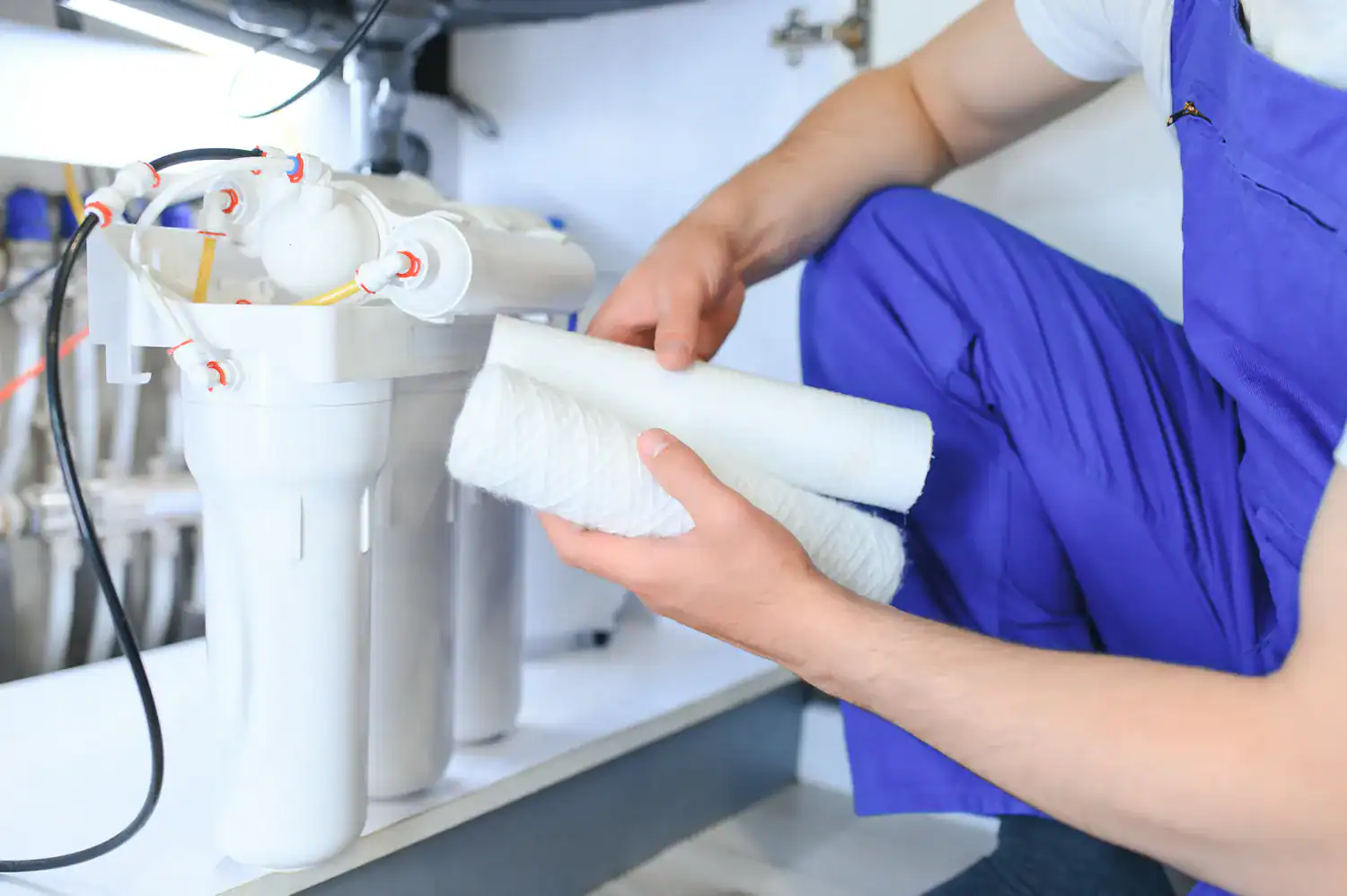
Under-sink reverse osmosis systems are typically installed as point-of-use drinking water appliances and don’t require a permit in Florida. Whole-house RO systems that connect to the main supply line may require coordination with a licensed contractor, and we handle that process. After installation, the system runs quietly under your sink or inline with your supply. Filter and membrane replacements are scheduled on a real maintenance timeline not ignored until you notice a problem. We service what we sell. That’s the part most companies skip.
Ready to get started?
Every job starts with a professional-grade water analysis. Not a hardness strip. Not a demo kit. A real test that shows what’s in your water whether that’s TTHMs from municipal disinfection, iron and sulfur from a private well in unincorporated St. Johns County, radium from the aquifer, or hardness levels that can exceed 300 PPM in some St. Augustine locations.
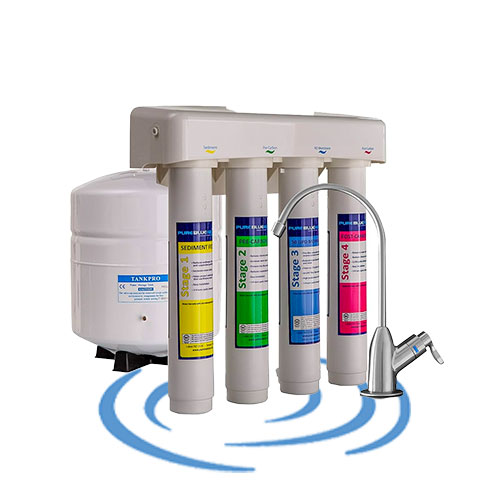
That test is the foundation. Everything after it is built on what your water actually needs. For most St. Augustine homeowners, the right solution is an under-sink reverse osmosis drinking water system a compact, point-of-use unit that delivers filtered water directly to a dedicated faucet at your kitchen sink. These systems remove a broad range of contaminants including TTHMs, heavy metals, dissolved solids, and chlorine taste and odor.
For homeowners dealing with whole-house hard water issues common in older Historic District properties and throughout St. Johns County a whole-house reverse osmosis or water softener and reverse osmosis combination may be the more complete answer. We walk you through which approach fits your home based on your test results, not on what carries the highest margin.
Active military, veterans, and first responders receive a $500 discount on their system the largest such discount in this market, with no fine print. St. Johns County has a significant military and public safety workforce, and St. Augustine sits within commuting distance of Naval Air Station Jacksonville. If you’re active duty, a veteran, or a first responder in the St. Augustine area, call and mention it upfront the discount applies to your system.
We also support the Tunnels to Towers Foundation, which builds mortgage-free homes for Gold Star families and fallen first responder families. That affiliation reflects something about how we operate, not just how we market ourselves.
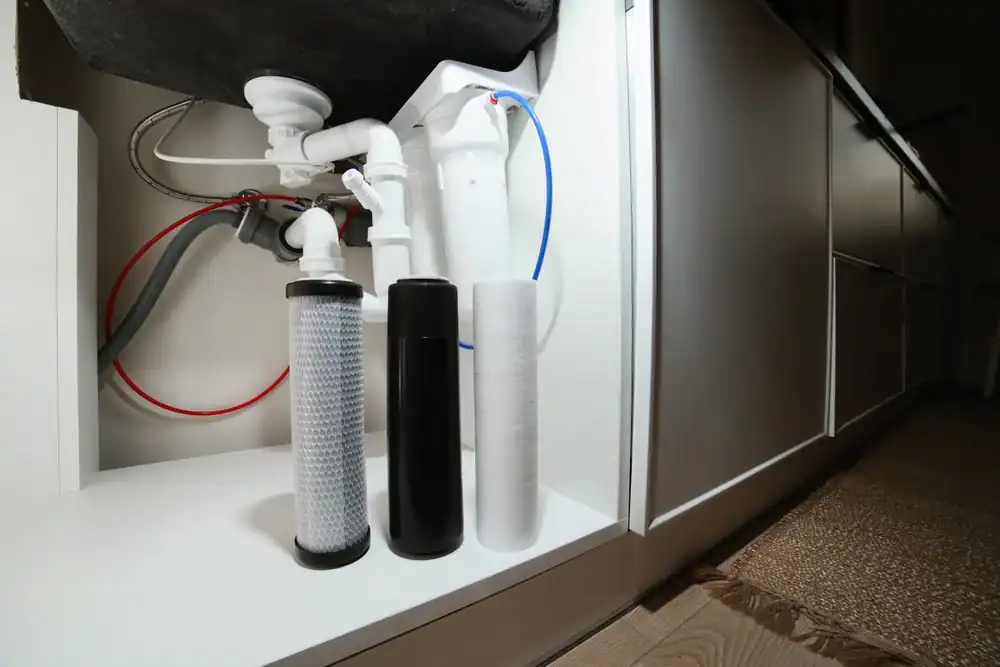
Technically, yes the City of St. Augustine’s water meets EPA legal standards. But meeting legal standards and delivering the cleanest possible water are two different things. The Environmental Working Group’s Tap Water Database flags Total Trihalomethanes (TTHMs) in St. Augustine’s municipal water at levels that exceed EWG’s health guidelines, even though they fall within EPA limits.
TTHMs are disinfection byproducts they form when chlorine reacts with naturally occurring organic matter in the aquifer water during treatment. Long-term exposure to elevated TTHM levels is associated with increased cancer risk. The city’s 2023 water quality report confirmed that no PFAS were detected in St. Augustine’s system, which is genuinely positive. But TTHMs are a separate issue, and they’re present in St. Augustine tap water.
An under-sink reverse osmosis system removes TTHMs and other disinfection byproducts at the point of use, giving you water that goes beyond what comes out of the tap without relying on bottled water or filtration pitchers that don’t remove the same range of contaminants.
Hard water is the most widespread issue and in St. Johns County, it’s not subtle. The Floridan Aquifer delivers water with hardness levels that typically run between 100 and 300-plus PPM across the county, depending on your location and which utility serves your home. That mineral load shows up as white scale on faucets and showerheads, buildup inside water heaters and dishwashers, and a flat, chalky taste in your drinking water.
For homeowners in older St. Augustine neighborhoods like Lincolnville or the Historic District, hard water accelerates wear on plumbing fixtures and pipes that are already decades old. For properties on private wells common west of US-1 in areas like Elkton and Hastings iron and hydrogen sulfide are frequent problems on top of hardness. Iron causes the orange staining you see in toilet bowls and on sink basins. Hydrogen sulfide creates the rotten egg odor that makes the water unpleasant to use.
These issues don’t fix themselves, and they don’t respond to the same treatment. A proper water test identifies which problems are present in your St. Augustine home before any system is recommended.
A water softener and a reverse osmosis system do different things, and in many St. Augustine homes, you actually need both. A water softener addresses hardness it exchanges the calcium and magnesium minerals in your water for sodium ions, which prevents scale buildup in pipes, appliances, and fixtures. It makes your water feel better for bathing and protects your home’s plumbing infrastructure. But it doesn’t filter out contaminants like TTHMs, heavy metals, nitrates, or dissolved solids. It’s not a drinking water solution on its own.
A reverse osmosis system works at the point of use typically under your kitchen sink and filters your drinking and cooking water through a semipermeable membrane that removes a much broader range of contaminants. The two systems are complementary, not interchangeable. In St. Johns County, where the aquifer delivers both significant hardness and disinfection byproducts from municipal treatment, combining a whole-house softener with an under-sink reverse osmosis system is often the most complete approach. Our water analysis tells you exactly what your St. Augustine home needs before any recommendation is made.
Hard water doesn’t announce itself all at once. It works slowly scaling up the inside of your water heater, narrowing the flow in your pipes, leaving mineral deposits on fixtures and glass that get harder to remove over time. In a newer home in World Golf Village or a recently built subdivision in St. Johns County, the damage is gradual. In an older St. Augustine home in the Historic District or Davis Shores, where the plumbing may already be decades old, hard water accelerates wear on infrastructure that doesn’t have a lot of margin left.
Water heaters are especially vulnerable. Hard water scale acts as an insulator inside the tank, forcing the heating element to work harder and driving up energy costs before the unit eventually fails early. Dishwashers, washing machines, and ice makers all experience shortened lifespans under consistent hard water exposure. On Anastasia Island, where coastal humidity already puts stress on appliances, hard water compounds the problem. Treating your water isn’t just a comfort upgrade it extends the life of every water-using system in your home.
If your home runs on a private well in St. Johns County, a reverse osmosis system isn’t just a nice-to-have it’s one of the most important things you can install. Municipal water goes through a treatment plant before it reaches your tap. Well water doesn’t. Whatever the Upper Floridan Aquifer delivers iron, hydrogen sulfide, hardness, naturally occurring radium, bacteria comes straight to your faucet without any treatment step in between. You are entirely responsible for your own water quality.
The aquifer in St. Johns County is well-documented for delivering iron that stains fixtures orange, sulfur that creates odor, and hardness that can exceed 300 PPM in some locations. An RO system at your kitchen sink removes dissolved contaminants that a softener or sediment filter won’t catch. For well water homes in the St. Augustine area, the right setup usually involves a multi-stage treatment approach a softener or iron filter for the whole house, followed by an under-sink reverse osmosis system for drinking and cooking water. We test your well water first and build the recommendation around what’s actually in it.
Please provide your email address so that we can stay in touch and answer any questions you have! We will be reaching back out shortly.
"*" indicates required fields