Reach Out Today
Please provide your email address so that we can stay in touch and answer any questions you have! We will be reaching back out shortly.

Hear from Our Customers
The white crust around your faucets isn’t a cleaning problem it’s a water problem. The Floridan Aquifer delivers water through miles of limestone before it reaches your St. Augustine South tap, and that geology loads it with calcium, magnesium, and dissolved minerals that no amount of scrubbing will fix.
USGS data shows total hardness in the southeastern portion of St. Johns County where St. Augustine South sits can reach 1,700 milligrams per liter. That’s not just a nuisance. That’s scale building up inside your water heater, coating your appliances, and quietly shortening the life of everything that touches water in your home.
Then there’s what you can’t see. The Environmental Working Group gives St. Augustine’s tap water an overall grade of C+, with documented concerns around cadmium, radium, strontium, and total trihalomethanes all detected above health advocacy guidelines, even while technically meeting EPA minimums. Meeting the legal standard and meeting a health standard aren’t the same thing, and for a lot of homeowners in this area, that distinction matters more the older they get.
When a reverse osmosis system is working correctly, the water coming out of your kitchen tap is genuinely different. It tastes cleaner because it is cleaner. You stop buying cases of bottled water. Your ice is clearer. Your coffee tastes better. And the appliances you’ve spent money on stop getting quietly destroyed by mineral buildup.
Quality Safe Water of Florida is a water treatment specialist not a plumber who installs filters on the side, not a national franchise running through a call center. Water treatment is the only thing we do, which means when you call with a question six months after installation, someone who actually knows your system picks up.
We hold an A-rating with the Better Business Bureau and a 5-star record with zero complaints. You can look that up yourself at bbb.org we invite you to. We’re also a member of the National Water Quality Association, which means our technicians are trained specifically in Florida’s water chemistry, including the Floridan Aquifer’s behavior in southeastern St. Johns County and the elevated mineral and chloride concentrations that come with it.
We’ve been serving homeowners throughout St. Johns County including St. Augustine South and the surrounding communities for years. We start every job with a real water test, not a guess. We also support the Tunnels to Towers Foundation and offer a $500 discount for active military, veterans, and first responders.
It starts with an actual water analysis. Before anything is recommended or installed, we test your water to understand exactly what’s in it. In St. Augustine South, that typically means looking at mineral hardness, total dissolved solids, chloride levels, and the contaminants documented in the St. Johns County Utility CR214 Mainland Water System’s own water quality reports.
The southeastern corner of St. Johns County where St. Augustine South is located has some of the highest hardness and chloride readings in the county. So the system that’s right for your home may be different from what works a few miles inland.
Once the test results are in, we’ll walk you through what we found and what we recommend. If an under-sink reverse osmosis system addresses your main concern drinking water quality at the kitchen tap that’s what we’ll recommend. If your water test shows the kind of whole-house mineral load that’s damaging appliances and plumbing throughout your home, we’ll explain why a whole-house system makes more sense and what that investment looks like.
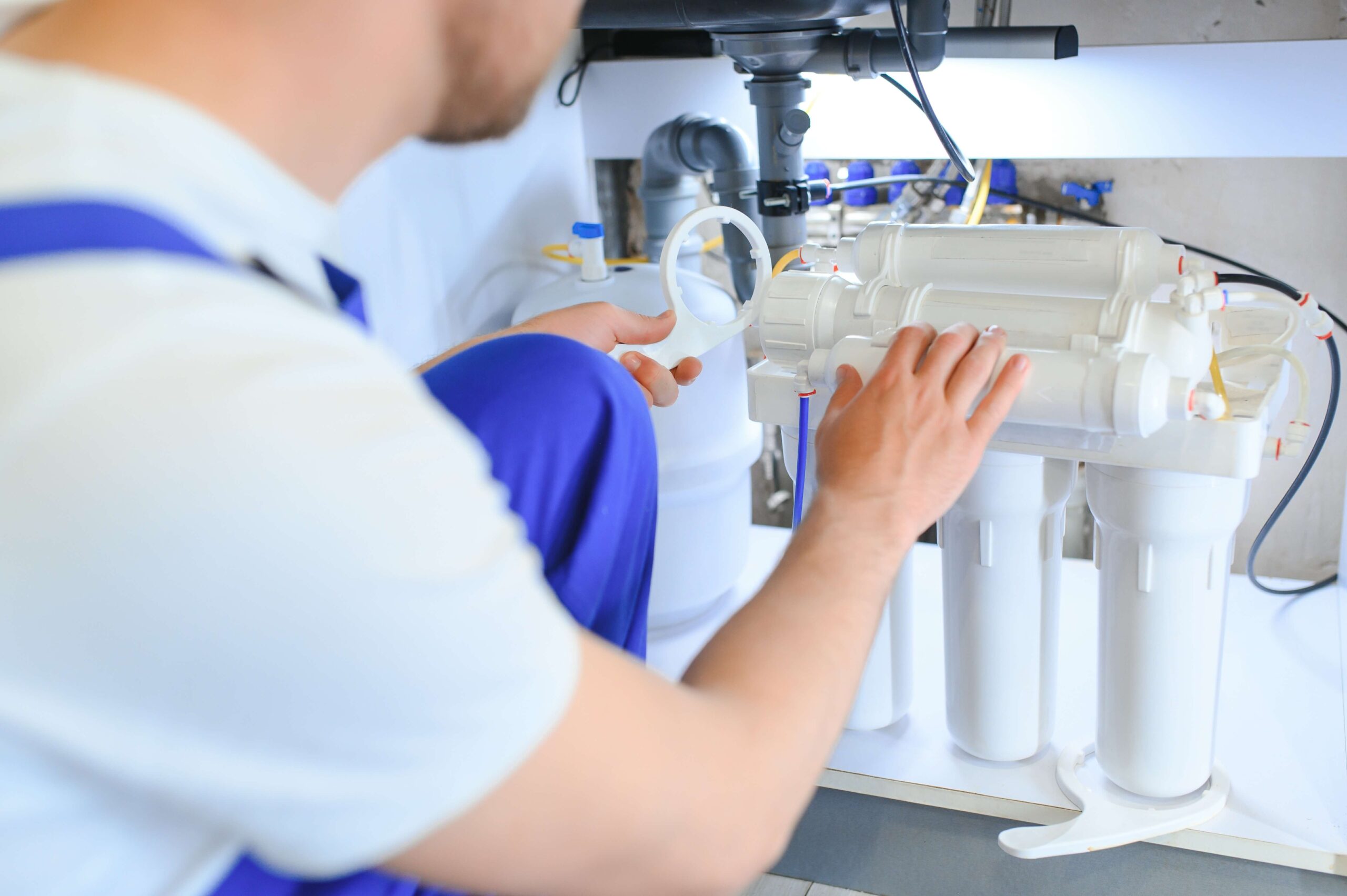
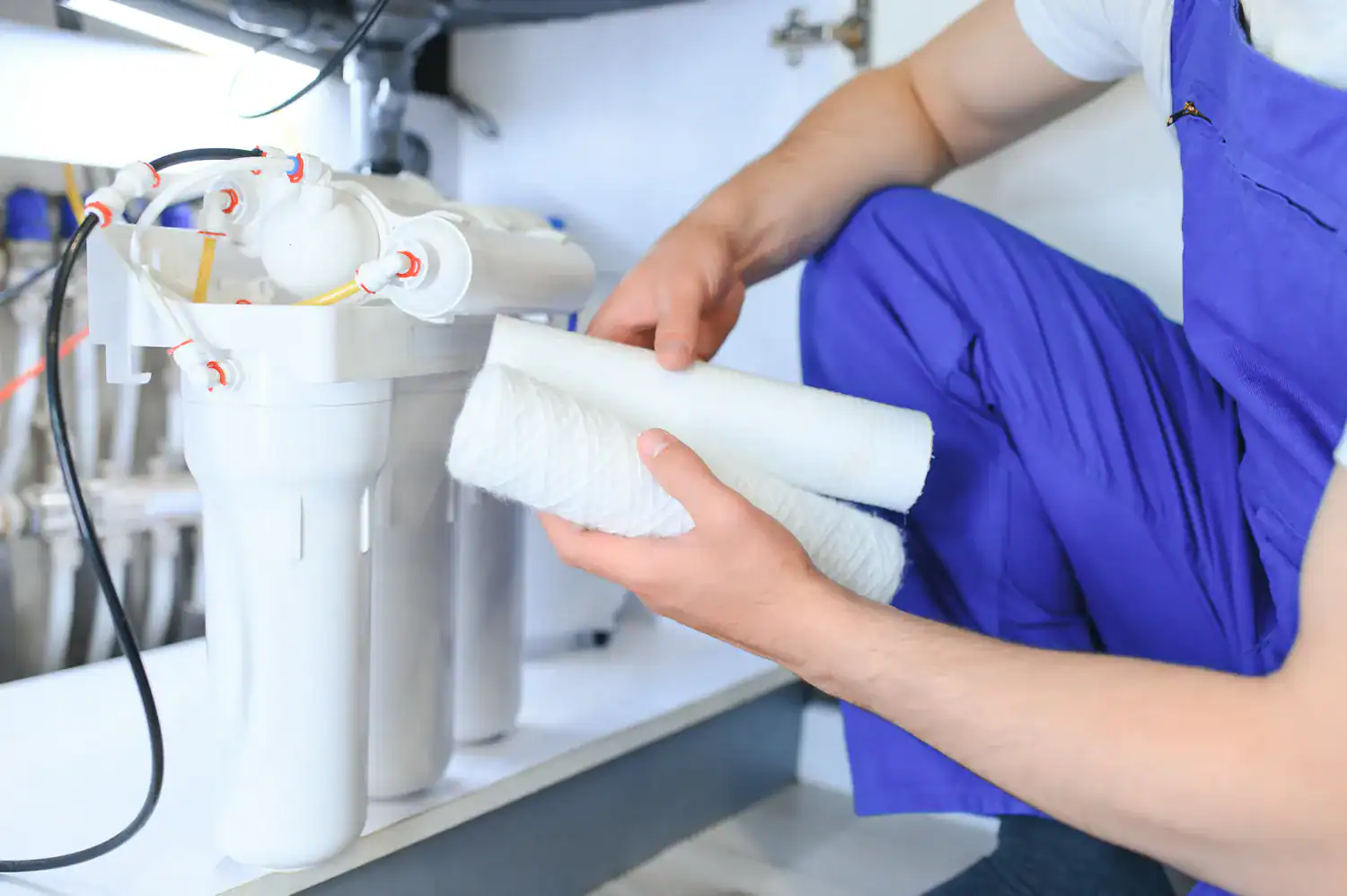
Installation is handled by our trained specialists, not subcontractors. For whole-house systems, which connect to your main water supply line, St. Johns County may require a plumbing permit we handle that as part of the process. After installation, we walk you through filter replacement schedules, what to watch for, and how to reach us when you need service.
Ready to get started?
Not every reverse osmosis system is built the same, and not every water supply has the same problems. In St. Augustine South, you’re dealing with a specific combination: high mineral hardness from the Floridan Aquifer, documented contaminants including radium and TTHMs that exceed health advocacy guidelines, and depending on your proximity to the Matanzas River and the coast elevated chloride levels from saltwater intrusion into the aquifer.
The system that addresses all of that is different from what you’d install in a city drawing from a surface reservoir.
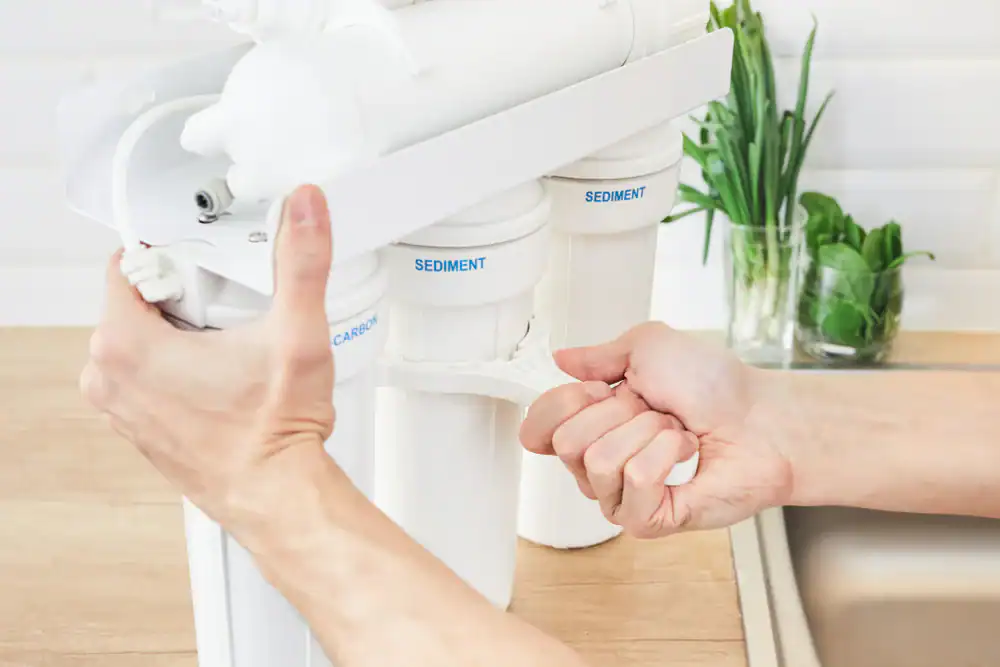
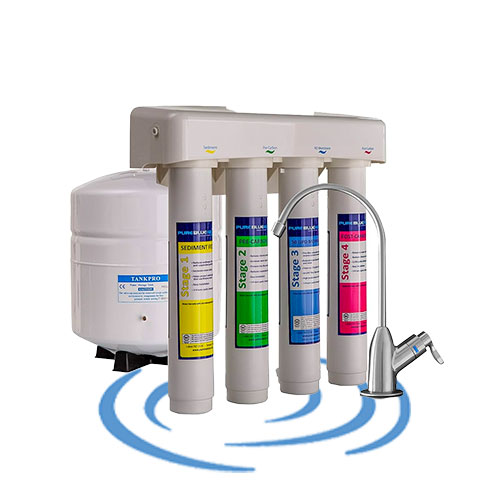
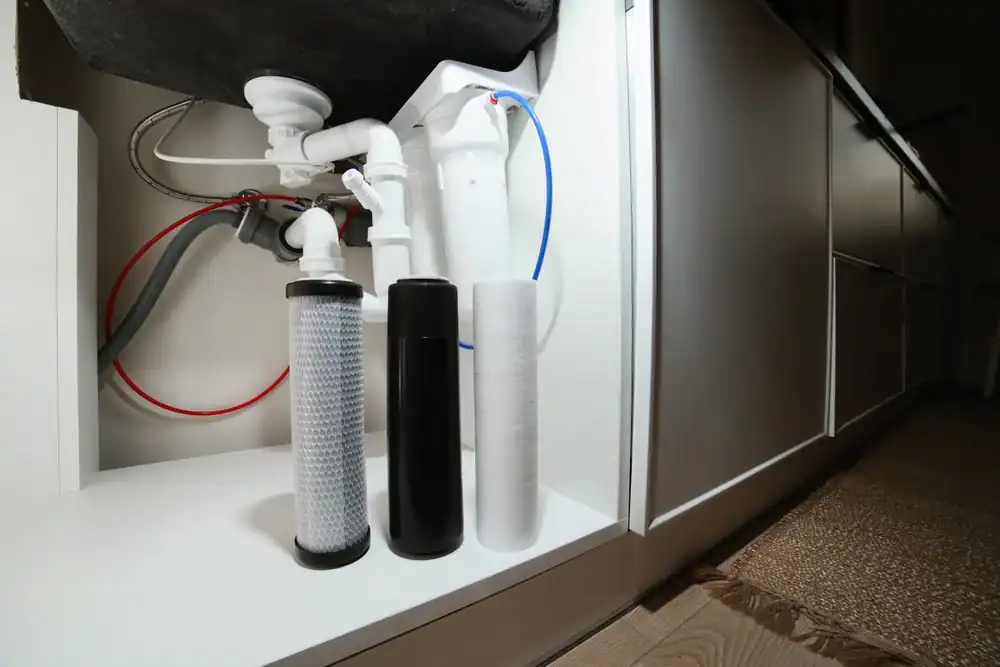
For homeowners primarily concerned with drinking water, an under-sink reverse osmosis system handles the job at the point of use typically installed beneath the kitchen sink, feeding a dedicated faucet. It removes dissolved solids, heavy metals, radium, nitrates, and the chlorine taste that comes from the county utility’s periodic switch to free chlorine disinfection. These systems use NSF/ANSI 58-certified components, which means they’re independently tested and verified to reduce the specific contaminants documented in St. Augustine’s water supply.
For homeowners dealing with scale buildup on appliances, white deposits on fixtures, or whole-house water quality concerns, a whole-house reverse osmosis or whole-house purification system treats the water at the point it enters your home protecting every faucet, every appliance, and every pipe. This is our specialty, and for a community like St. Augustine South where many homes have been around long enough to show real hard water damage it’s often the more complete answer.
We service what we sell, which means if you need a filter replaced or your system needs maintenance two years from now, we’re still here and we still answer the phone. That’s not standard in this industry. It should be.
Active military, veterans, and first responders receive $500 off any system installation.
Technically, yes St. Augustine’s water meets EPA legal standards. But “meets legal standards” and “is as clean as it could be” are two different things. The Environmental Working Group’s analysis of the St. Augustine water supply gives it an overall grade of C+, citing contaminants including cadmium, radium (combined 226 and 228), strontium, and total trihalomethanes that are detected above health advocacy guidelines.
These aren’t violations they’re legal. But health researchers and independent advocacy organizations set their recommended thresholds lower than the EPA’s enforceable limits, and the gap between those two standards is where the concern lives.
For most healthy adults, short-term exposure isn’t an acute risk. But for older residents, people with compromised immune systems, or anyone who simply wants their drinking water to meet a higher standard than the legal minimum, a point-of-use reverse osmosis system addresses all of these contaminants at the tap. It’s the same technology the City of St. Augustine uses at the municipal level just applied at your kitchen faucet instead of a treatment plant miles away.
The water in southeastern St. Johns County which includes St. Augustine South is among the hardest in the county. USGS data shows total hardness concentrations in this part of the county can reach 1,700 milligrams per liter. To put that in context, water above 180 mg/L is classified as “very hard.” At 1,700 mg/L, you’re dealing with mineral concentrations that leave visible deposits on everything and invisible damage inside everything.
The most common damage shows up in water heaters first. Hard water scale coats the heating element, forcing it to work harder and burn out faster. A water heater that should last 12 years in softer water conditions may last 6 or 7 years here in St. Augustine South. The same buildup affects dishwashers, washing machines, ice makers, and any appliance with a water line.
You’ll also notice it on shower glass, around faucet aerators, and on any surface that gets regular water contact. A whole-house treatment system addresses the mineral load before it reaches your appliances which is why many homeowners in this area find the investment pays for itself in avoided replacement costs alone.
An under-sink reverse osmosis system treats water at one point typically your kitchen faucet. It’s designed for drinking and cooking water, and it does that job very well. It removes dissolved solids, heavy metals, radium, nitrates, chlorine, and other contaminants at the point of use. For homeowners whose main concern is the quality of the water they’re actually drinking and cooking with, an under-sink RO system is a practical, cost-effective starting point.
A whole-house system treats all the water entering your home every faucet, every shower, every appliance. For St. Augustine South homeowners dealing with the high mineral hardness documented in southeastern St. Johns County, a whole-house approach protects your plumbing infrastructure and appliances, not just your drinking glass. If your water heater is scaling up, if your shower fixtures are crusting over, or if you want comprehensive protection throughout the house, a whole-house purification system is the more complete answer.
We’ll test your water first and tell you honestly which option fits your situation we’re not going to recommend a whole-house system if an under-sink unit is all you need.
The St. Johns County Utility periodically switches its disinfection method from chloramine to free chlorine a standard practice used by utilities to clean distribution lines and prevent biofilm buildup. When that switch happens, the chlorine taste and odor in your tap water becomes noticeably stronger. It’s not a sign that something has gone wrong it’s a scheduled maintenance process.
But it’s also a real and frustrating experience for homeowners who suddenly notice their water smells like a swimming pool.
A reverse osmosis system with an activated carbon pre-filter stage removes chlorine and chloramine effectively before the water reaches the RO membrane. That means the disinfection switchover your utility runs doesn’t affect what comes out of your filtered tap. If you’re currently dealing with seasonal taste and odor changes in your water or if the chlorine smell has been a long-standing complaint in your home this is one of the most immediate and noticeable improvements a point-of-use RO system delivers.
The cost depends on which type of system fits your situation. An under-sink reverse osmosis drinking water system typically runs several hundred dollars for the unit itself, with professional installation adding to that depending on your existing plumbing setup. These systems are straightforward to install and don’t typically require permits for standard under-sink configurations in St. Johns County.
A whole-house reverse osmosis or whole-house purification system is a larger investment generally starting around $1,500 and ranging higher depending on the size of your home, the complexity of your water chemistry, and whether additional treatment stages (softening, UV purification, or carbon filtration) are needed alongside the RO membrane. For St. Augustine South homeowners dealing with the area’s documented hardness levels and coastal chloride concentrations, a whole-house system often includes multiple treatment stages to address the full picture.
We’ll test your water before quoting anything, so you’re not paying for treatment stages you don’t need. Active military, veterans, and first responders receive $500 off which meaningfully changes the math on a whole-house system for a lot of households in this area.
Please provide your email address so that we can stay in touch and answer any questions you have! We will be reaching back out shortly.
"*" indicates required fields