Reach Out Today
Please provide your email address so that we can stay in touch and answer any questions you have! We will be reaching back out shortly.

Hear from Our Customers
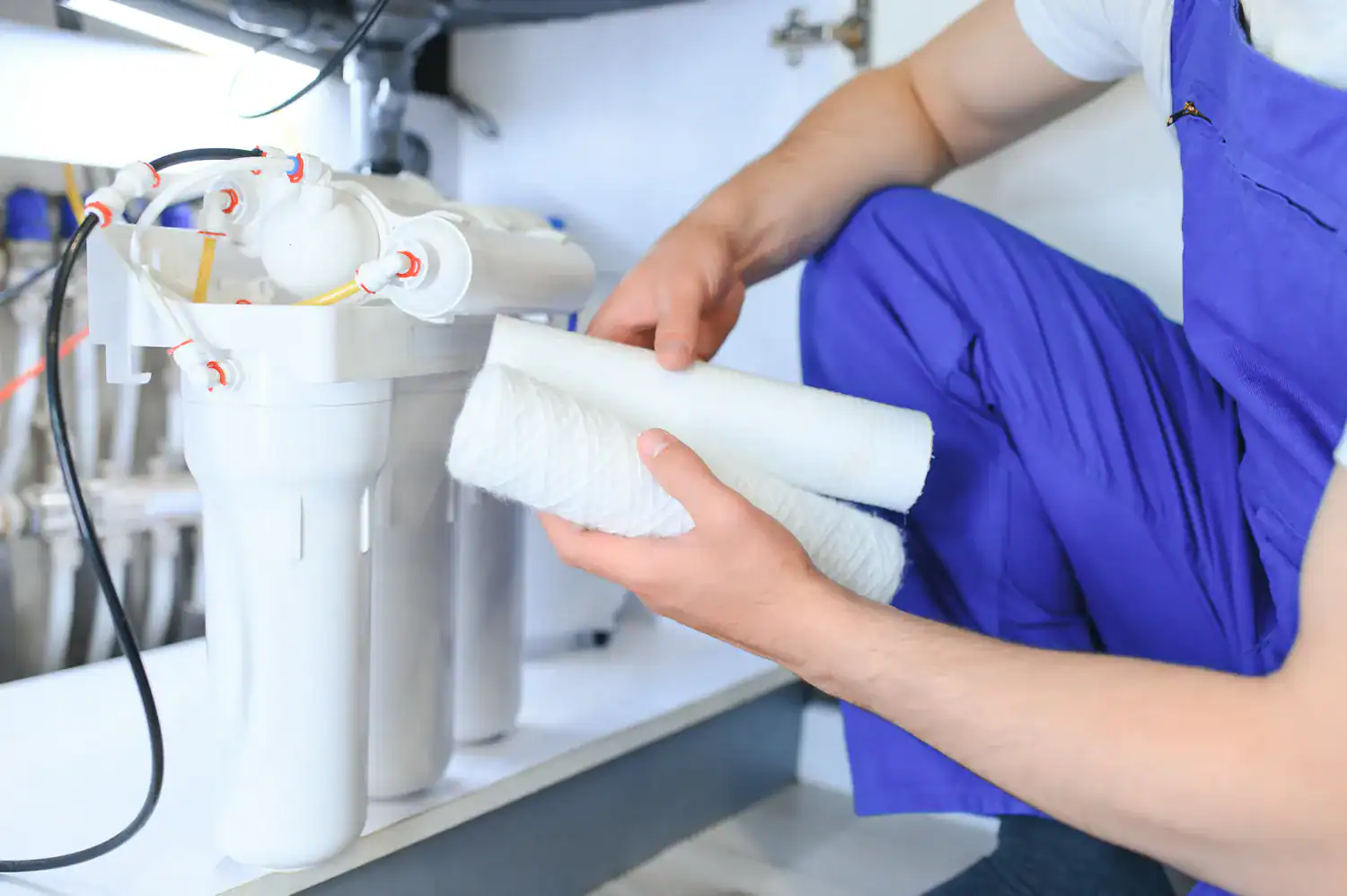
You stop wondering what’s in your water. That’s the most honest way to describe what a reverse osmosis system does for a South Point resident. The EWG confirmed that the City of Miami Beach water utility was in serious violation of federal health-based drinking water standards as recently as 2024. Lead, PFAS, chromium 6 at more than four times the recommended safety threshold, and disinfection byproducts have all been detected in Miami-Dade’s water supply.
An RO system removes up to 99% of those contaminants at the point of use right at your tap, before it ever reaches your glass.
South Point’s water also runs hard. South Florida water sits at 14 to 20 grains per gallon, which is firmly in the very hard range. If you’ve invested in premium finishes, high-end appliances, or designer fixtures inside your condo and most South Point residents have that mineral load is working against you every day. Scale builds on your ice maker, your fixtures, your espresso machine, and your shower glass.
Filtered water at the tap protects those investments and eliminates the constant battle against white buildup that no amount of cleaning fully solves.
There’s also the taste issue. Miami tap water drawn from the Biscayne Aquifer contains tannins organic compounds that give water a yellowish tint and a flat, slightly bitter flavor. Miami-Dade uses chloramine as its disinfectant, not standard chlorine, which means pitcher filters and refrigerator filters don’t address the core problem. Reverse osmosis does.
The water that comes out of an RO system tastes clean because it is clean no aftertaste, no odor, no second-guessing.
Quality Safe Water of Florida LLC is a water treatment company not a plumbing company that installs filters on the side. Every system we recommend, install, and service is within the single discipline of water treatment. That focus matters when you’re a South Point resident dealing with a water supply that has documented federal violations and a contaminant profile that requires the right system configuration, not a generic one pulled off a shelf.
We hold an A-rating with the Better Business Bureau, a 5-star score, and zero complaints on record. You can verify this yourself at bbb.org right now. In an industry where the most common complaint is “they sold me a system and disappeared,” that track record stands out.
We’re also members of the National Water Quality Association, which means our technicians are trained specifically in water treatment science including the Biscayne Aquifer’s unique challenges, Miami-Dade’s chloramine disinfection system, and the condo-specific installation requirements that come with South Beach high-rise living.
We service what we sell. When you’re a part-time resident returning to your South Point unit after months away, that’s not a minor detail it’s the whole point.
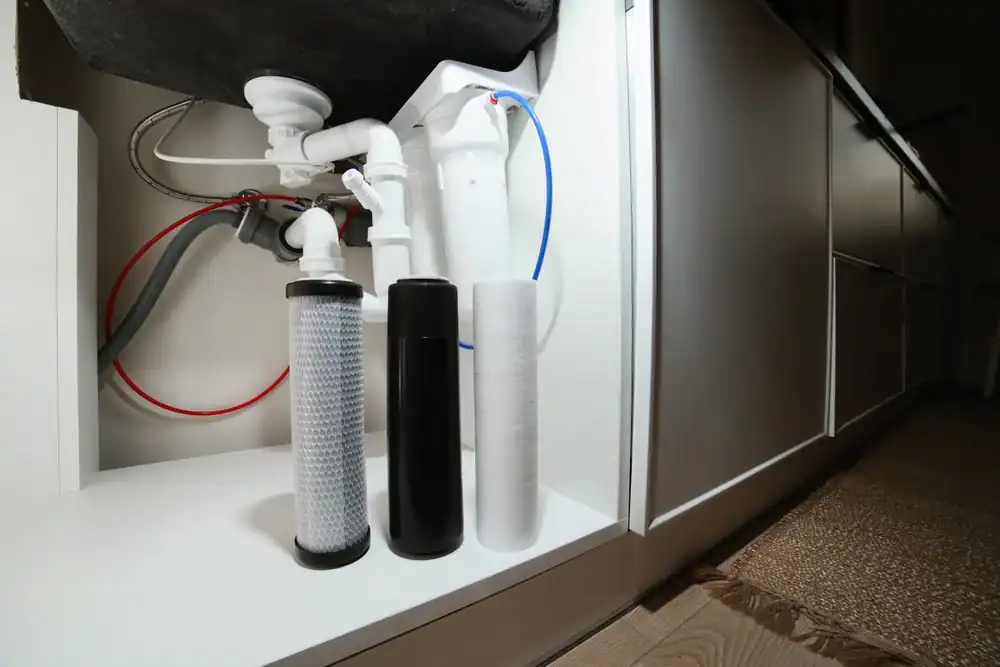
It starts with a real water analysis. Not a quick hardness test designed to justify a sale, but an actual assessment of what’s in your specific water. In South Point, that means looking at the full contaminant profile lead, PFAS, chloramines, chromium 6, disinfection byproducts, and dissolved solids from the Biscayne Aquifer.
The system we recommend for your unit is based on what’s actually found in your water, not a one-size-fits-all package.
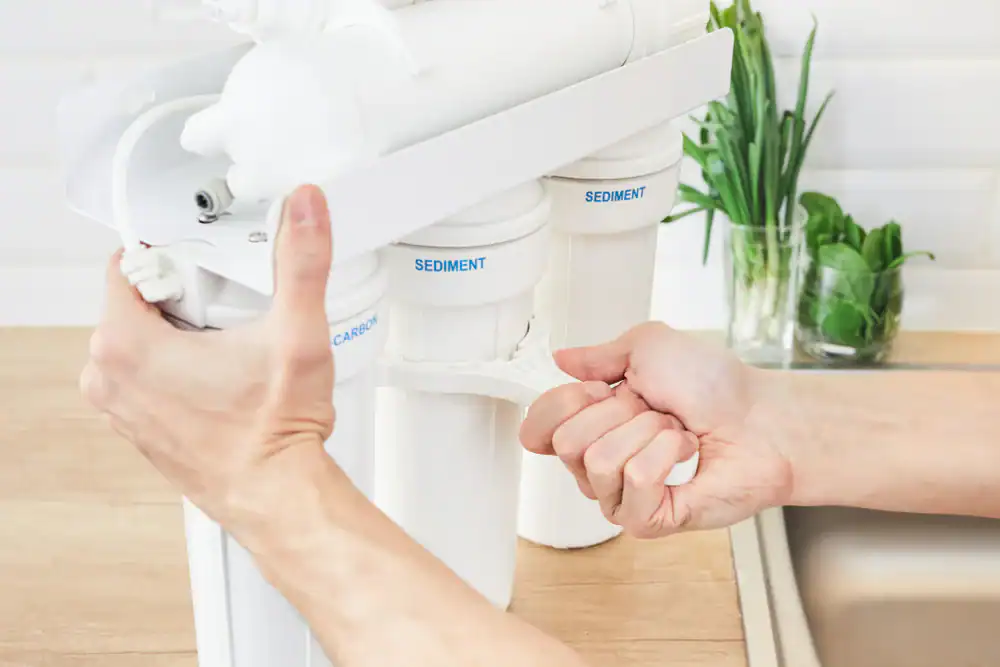
Once the right system is identified, installation is handled professionally and with the condo environment in mind. South Point’s housing stock is almost entirely high-rise condominiums, and that changes the installation context. Under-sink RO systems are the standard solution here, and the process accounts for the space constraints and plumbing configurations typical of South Beach units.
If your building’s management association has requirements around plumbing modifications which many do along South Pointe Drive and the surrounding towers that’s factored in from the start, not figured out on the day of install.
After the system is in and running, you’ll know exactly what filter replacement looks like and when to expect it. Annual maintenance on a properly installed RO system typically runs $100 to $200 in filter costs. That’s it.
Compare that to what most South Point households spend on bottled water often $600 to $1,200 a year and the math is straightforward. The system runs quietly under your sink, requires no daily attention, and delivers clean water every time you turn on the tap.
Ready to get started?
Most water treatment content is written for homeowners with yards, garages, and whole-house plumbing access. South Point is different. You’re in a condo likely a high-rise and the under-sink reverse osmosis system is the right fit for that environment.
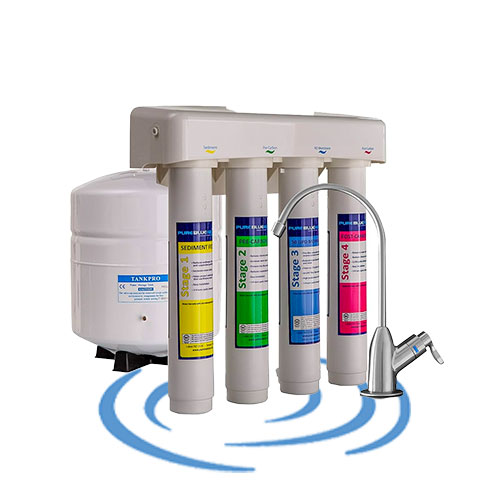
It installs cleanly beneath the kitchen sink, takes up minimal space, and delivers filtered water through a dedicated faucet without requiring any modifications to your building’s main water supply.
The systems we install are certified to NSF/ANSI 58, the specific standard for reverse osmosis systems covering TDS reduction, contaminant removal, and material safety. That certification means the equipment has been independently tested and verified to perform as claimed not just marketed as effective.
For a South Point resident investing in a premium home, that distinction matters. You’re not buying a system based on a brochure. You’re buying one that has passed third-party verification.
For residents who want whole-house filtration which in a condo context involves the unit’s internal supply lines rather than a building-wide system that conversation starts with the water analysis. Every recommendation is specific to your unit, your water, and your building’s configuration.
We also offer a $500 discount for active military, veterans, and first responders. South Florida’s large and long-standing military and first responder community has served at real personal cost, and this is a straightforward way of acknowledging that.
We’re also a proud supporter of the Tunnels to Towers Foundation, which builds mortgage-free homes for Gold Star families and fallen first responder families.
The short answer is that the City of Miami Beach water utility was cited for serious violations of federal health-based drinking water standards as recently as the April through June 2024 quarterly EPA assessment. Independent analysis of Miami-Dade County’s water supply has identified lead at levels up to 3.6 parts per billion, PFAS compounds, chromium 6 at more than four times the EWG’s recommended safety threshold, arsenic, radium, and disinfection byproducts including trihalomethanes and haloacetic acids.
That doesn’t mean the water coming out of your tap will make you immediately sick. It means the water has measurable contaminants that exceed recommended safety levels, and the municipal treatment system has not consistently met federal standards for removing them.
For South Point residents particularly those with children, health conditions, or who simply want to know what they’re drinking a point-of-use reverse osmosis system is the most effective residential solution available. It removes up to 99% of dissolved contaminants, including every one of the specific chemicals identified in Miami Beach’s water supply.
Yes, and it’s more common than most South Point residents realize. Under-sink reverse osmosis systems are specifically designed for the kind of space constraints you find in South Beach condos compact footprint, no structural modifications, and no changes to your building’s main water supply.
The system connects to the cold water line under your kitchen sink and delivers filtered water through a dedicated faucet that mounts on or near the sink.
The main thing to be aware of in a South Point condo is that your building’s management association may have rules about plumbing modifications to individual units. Buildings along South Pointe Drive and throughout the SoFi corridor vary in what they require some need advance approval, some require a licensed installer, and some have no restrictions at all.
We handle this correctly from the start. Our installation process accounts for condo-specific configurations and can work within whatever your building’s requirements are, so you’re not dealing with a surprise on installation day.
This is one of the most important questions South Point residents can ask, and most people don’t know to ask it. Miami-Dade County uses chloramine a combination of chlorine and ammonia as its primary disinfectant, not standard free chlorine.
That distinction matters because the pitcher filters, refrigerator filters, and basic carbon filters that most people rely on are designed to reduce free chlorine. They are largely ineffective against chloramines.
Chloramines produce a persistent chemical taste and odor that doesn’t go away by letting water sit out, doesn’t respond to standard filtration, and generates disinfection byproducts including trihalomethanes and haloacetic acids that are associated with long-term health risks at elevated exposure levels.
Reverse osmosis, combined with the right pre-filtration stage, is one of the few residential technologies that effectively addresses chloramines and their byproducts. This is exactly why a water analysis before system selection matters the configuration that handles chloramine-based disinfection is not identical to a standard RO setup, and getting that right requires knowing what’s actually in your water before we recommend anything.
In South Florida’s conditions year-round warm temperatures, high water consumption, and a source water profile that includes dissolved solids, chloramines, and organic compounds from the Biscayne Aquifer a standard maintenance schedule looks like this: pre-filters and post-filters every six to twelve months, and the RO membrane itself every two to three years under normal residential use.
South Florida’s climate doesn’t create a seasonal slowdown the way northern markets do. Water consumption stays consistently high year-round, which means filters work consistently hard year-round.
For South Point residents who are part-time or seasonal occupants returning to your unit after several months away it’s worth having the system checked and filters inspected before resuming regular use. A system that’s been sitting idle for an extended period may need a flush and filter assessment before it’s back to peak performance.
Annual maintenance on a properly installed RO system typically runs $100 to $200 in filter costs, which is a fraction of what most households in South Point spend on bottled water over the same period.
They solve different problems, and in South Point, you may benefit from understanding both. A water softener addresses hardness the calcium and magnesium that cause scale buildup on fixtures, appliances, and surfaces.
South Florida water runs at 14 to 20 grains per gallon, which is very hard, and a softener removes those minerals through an ion exchange process. It protects your plumbing and appliances but does not remove contaminants like lead, PFAS, chloramines, or disinfection byproducts from your drinking water.
A reverse osmosis system is a drinking water solution. It works at the point of use typically under the kitchen sink and removes dissolved contaminants, heavy metals, chemicals, and dissolved solids from the water you actually consume. It doesn’t treat every tap in your home, but it delivers the cleanest possible water for drinking and cooking.
For South Point residents dealing with Miami Beach’s documented contamination issues, an RO system addresses the health and taste concerns directly. Some households use both a softener for the whole unit and an RO system for drinking water and that combination is worth discussing during a water analysis, where the actual conditions in your unit determine what makes sense.
Please provide your email address so that we can stay in touch and answer any questions you have! We will be reaching back out shortly.
"*" indicates required fields